
Container Vegetable Gardening for Beginners: One Plant, One Pot, One Harvest
Most first container gardens don’t fail because of a black thumb. They fail because they start too big: six pots, eight different plants, a bag of the wrong soil, all of it planted in the wrong season. By the time something goes wrong, it’s hard to tell which of the twenty decisions caused it.
This post contains affiliate links, meaning we may earn a small commission at no extra cost to you — full details are on our Affiliate Disclosure page.
Quick answer: Start with one plant, one pot and one harvest before you buy anything else. For a first pot this fall, sow loose-leaf lettuce in a 12-inch pot at least 6 inches deep, with drainage holes, filled with potting mix (not garden soil). Put it where it gets 3 to 5 hours of direct sun, check the soil every day, and water when the top inch feels dry. You can start cutting baby leaves in about 3 to 5 weeks. Cut about an inch above the soil and the plant grows back for more harvests.
So we do it the other way round. One plant, one pot, one harvest. You grow a single, forgiving crop in a single, right-sized container until you’ve actually eaten something from it. Then you add the next pot.
This guide walks through that first pot from start to finish, using loose-leaf lettuce as the example. Every size and timing comes from a university extension service, and they’re all listed at the end.
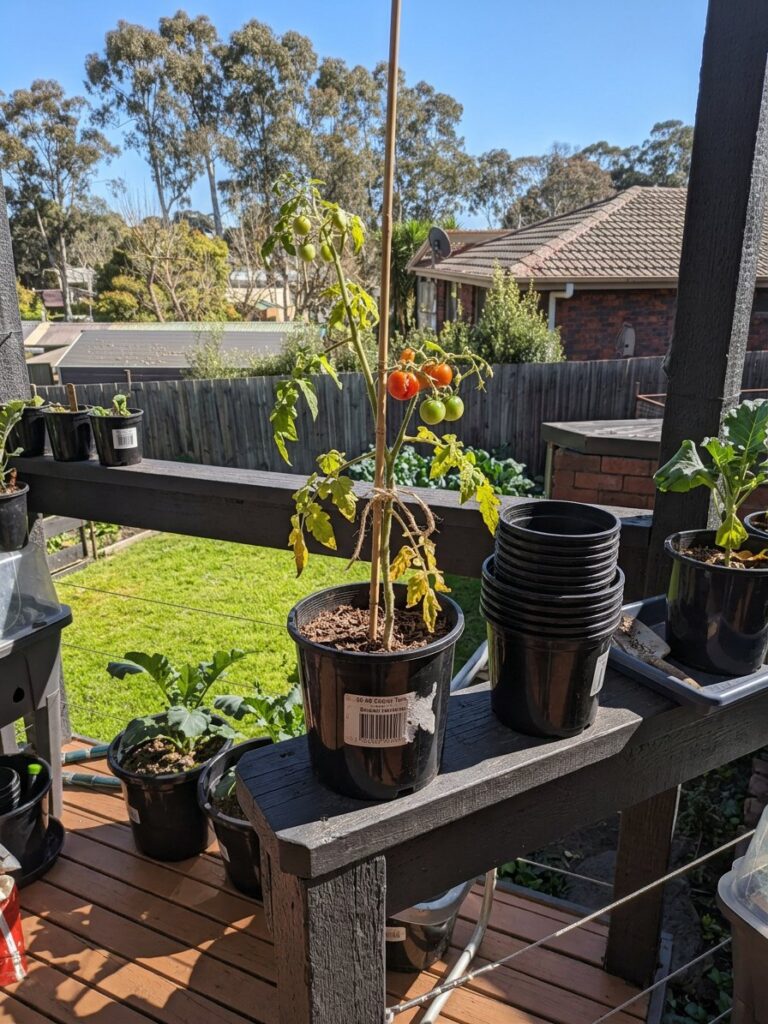
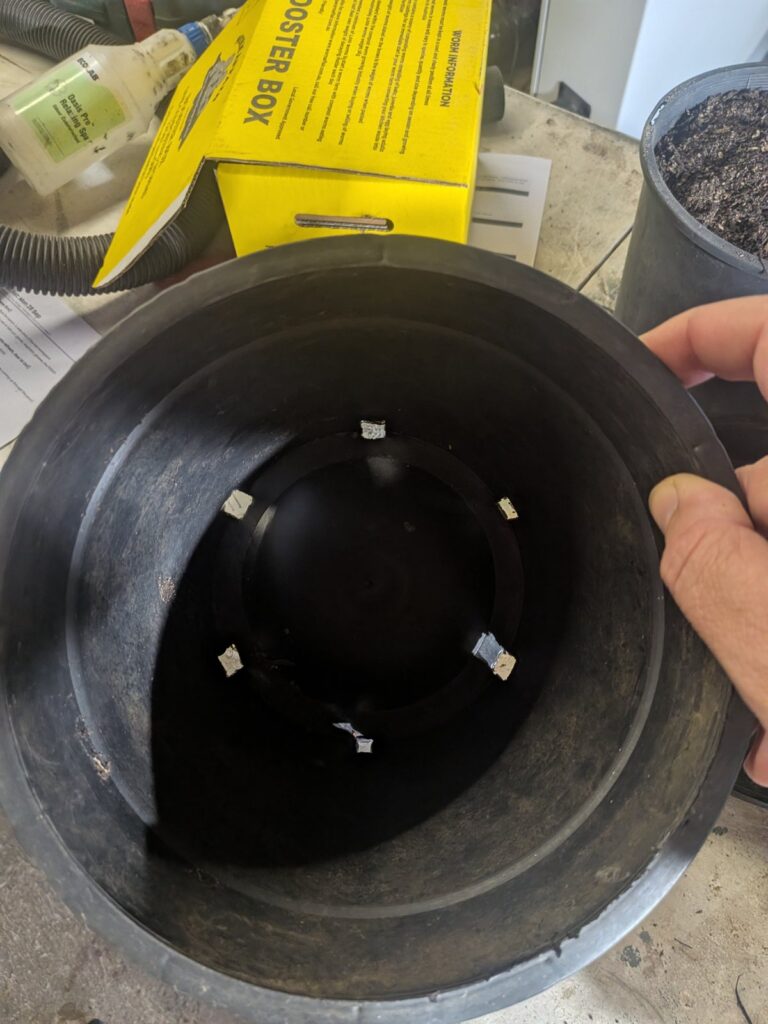
We sowed our own lettuce pots on 1 October, using a mixed salad leaves blend in two plain black 8-inch nursery pots. That’s smaller than the 12-inch pot we suggest below, so we’ll thin each one to about 3 plants instead of 4 or 5. You can follow them in the Pocket Harvest Test Garden, and we’ll add dated photos here as they grow.
Gardening in the Southern Hemisphere? You’re heading into spring. Lettuce still works now, but sow it soon and give it afternoon shade, because hot days make it bolt.
In this guide: The method in 30 seconds · Step 1: One plant · Step 2: One pot · Step 3: One harvest · Your first 8 weeks · 5 first-pot mistakes · Your second pot · FAQ · Sources
The Method in 30 Seconds
- One plant: the easiest crop that suits your season and your light.
- One pot: sized for that plant, with drainage holes and potting mix.
- One harvest: look after it until you’ve picked something. Then decide what’s next.
Starting small keeps the cost and effort low. It also teaches you the three skills every container needs: reading your light, watering by feel, and feeding. A mistake in one pot is easy to spot. Mistakes spread across six pots turn into a guessing game.
Step 1: One Plant (Why We Start With Lettuce)
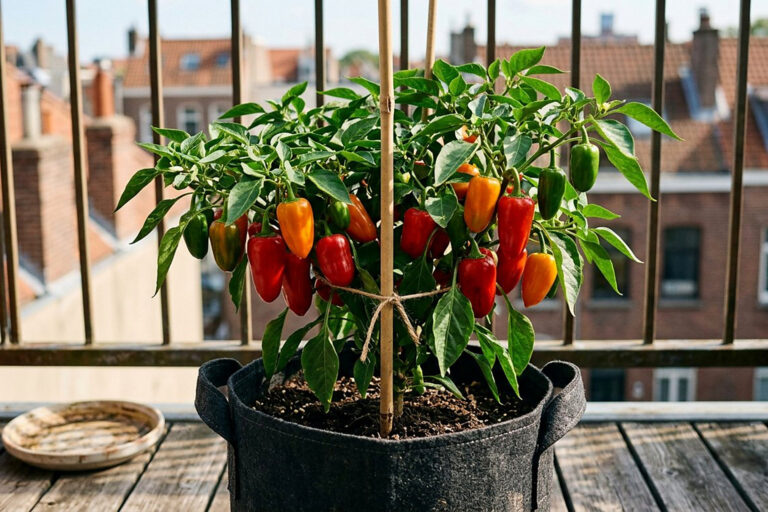
Start with your light, not the seed rack. Watch your balcony, patio or windowsill for a day and count how many hours of direct sun it gets. The University of Maryland puts it simply: leafy greens and other cool-season crops need 3 to 5 hours of direct sun, while fruiting crops like tomatoes and peppers need 6 to 8. That one number rules out more plants than anything else.
For a first pot this fall, we pick loose-leaf lettuce, the kind that grows as a loose bunch of leaves instead of a tight head. Here’s why:
- It’s the right season. Lettuce is a cool-season crop. Maryland Extension notes it can handle light frosts, though it needs protection from heavy frost or freezing.
- It copes with less sun. Texas A&M lists leaf lettuce as a partial-shade crop, so it works on a balcony that doesn’t get sun all day.
- It’s fast. Utah State says baby greens can be cut 3 to 5 weeks after sowing. Full-size leaf lettuce takes 45 to 60 days (Texas A&M).
- It keeps giving. Cut it and it grows back, so one pot gives you several harvests.
Seed or seedlings? A packet of seed is the cheapest start and will fill several pots. A six-pack of seedlings from a garden center skips ahead about 3 to 4 weeks, which is how long Texas A&M says lettuce takes to reach transplant size. Seedlings are the safer pick if your first frost is close (more on timing in Step 3).
Starting in spring or summer instead? Swap in a warm-season plant and follow the same three steps: a cherry tomato in a 5-gallon bucket, or basil on a sunny windowsill. Short on sun? See vegetables for a shady balcony. Want more options? Here are the best vegetables for pots.
Step 2: One Pot
Size. For loose-leaf lettuce, a pot about 12 inches wide and at least 6 inches deep holds 4 to 5 plants. Our lettuce spacing guide has the numbers for other types. Clemson Extension says most plants need containers at least 6 to 8 inches deep. You can go smaller: Maryland lists half a gallon as the minimum for one leaf lettuce plant, and Texas A&M suggests a 1-gallon pot for two. But a bit more potting mix holds more water, which means fewer dry-out emergencies.
If you’d like a pot you can reuse for a tomato next spring, a 5-gallon plastic nursery pot is plenty for lettuce now and the right size for a tomato later. Our pot size and drainage guide has the full chart.
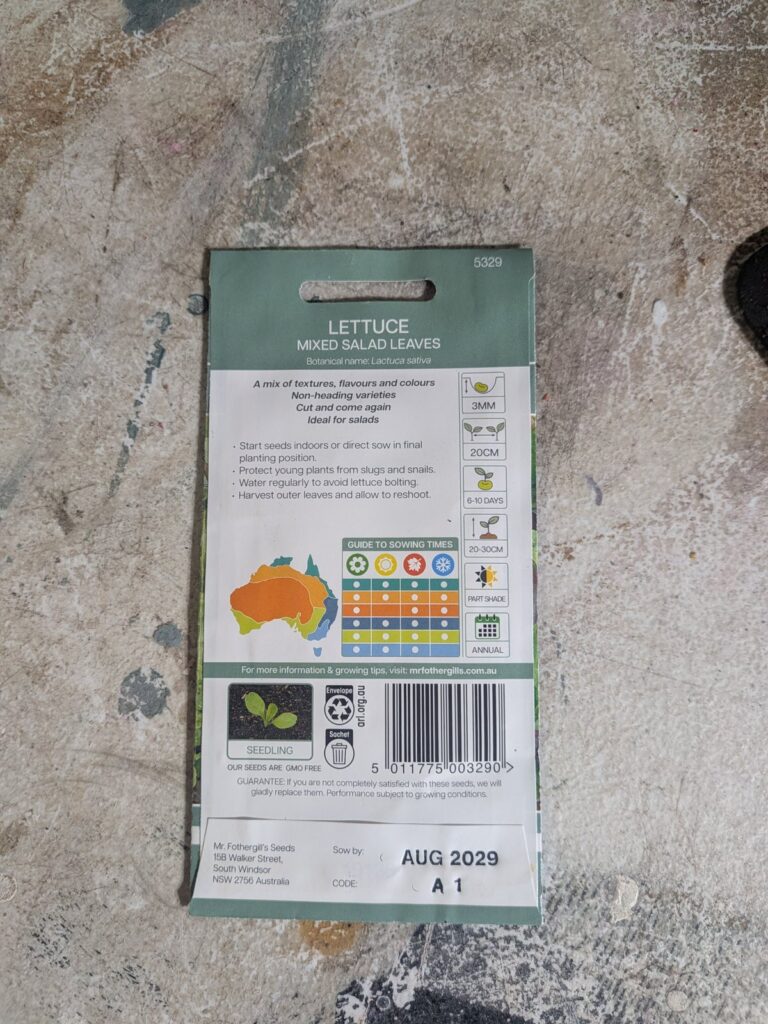
Drainage holes are non-negotiable. Maryland Extension says every container needs holes or slits to drain extra water, so roots don’t drown and rot. Put a saucer underneath to protect the floor. Renting? Our deposit-safe balcony setup covers that.
Fill it with potting mix, not garden soil. Garden soil is too dense for a pot. Maryland puts it at about 75 pounds per cubic foot, far too heavy for air and water to move around the roots. Penn State is blunt about it: “Do not use straight garden soil!” A bagged mix made for containers, like Miracle-Gro Potting Mix, is the easy option. Check whether the bag says fertilizer is added. It matters in Step 3. More in our soil and fertilizer basics.
Where it goes: the spot you picked in Step 1, with 3 to 5 hours of direct sun.
Step 3: One Harvest
Sow. Fill the pot to about an inch below the rim and water the mix so it’s evenly damp. Scatter the seed thinly and cover it about ¼ inch deep; Minnesota and Illinois extension both give ¼ to ½ inch. Water gently so you don’t wash the seed around.
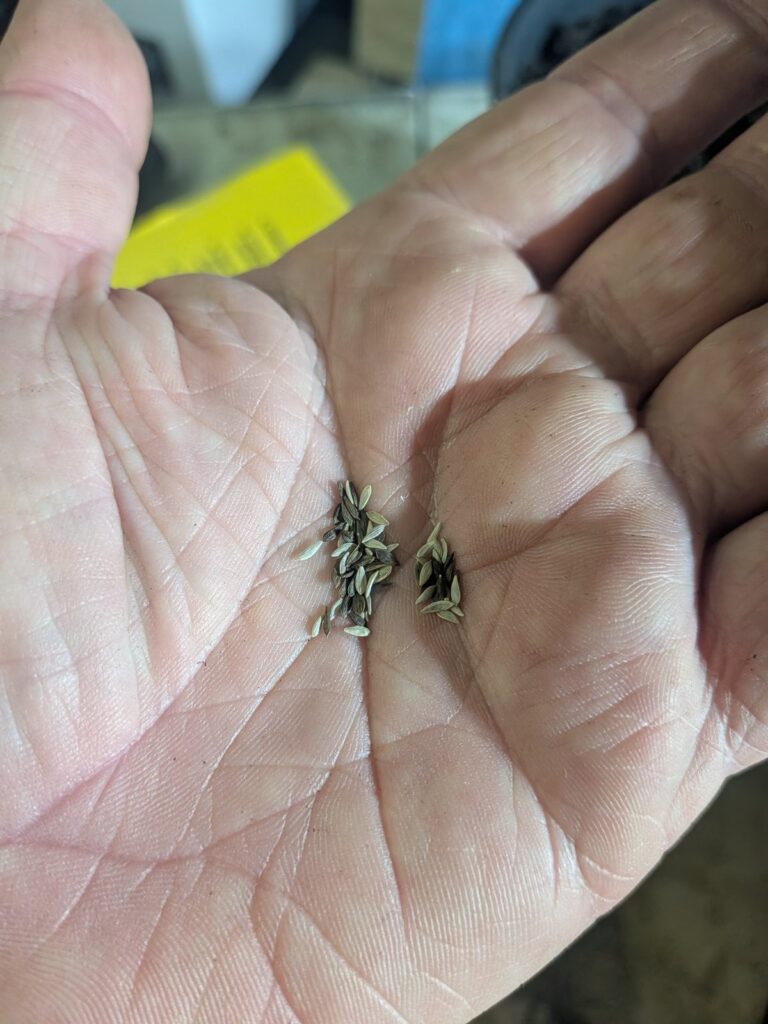
Check your own packet too. Ours says to sow 3 mm deep (about ⅛ inch), which sits at the shallow end of the extension range above, so we barely covered it.
Wait about a week. Texas A&M gives 6 to 8 days for lettuce to sprout. Keep the surface damp until then.
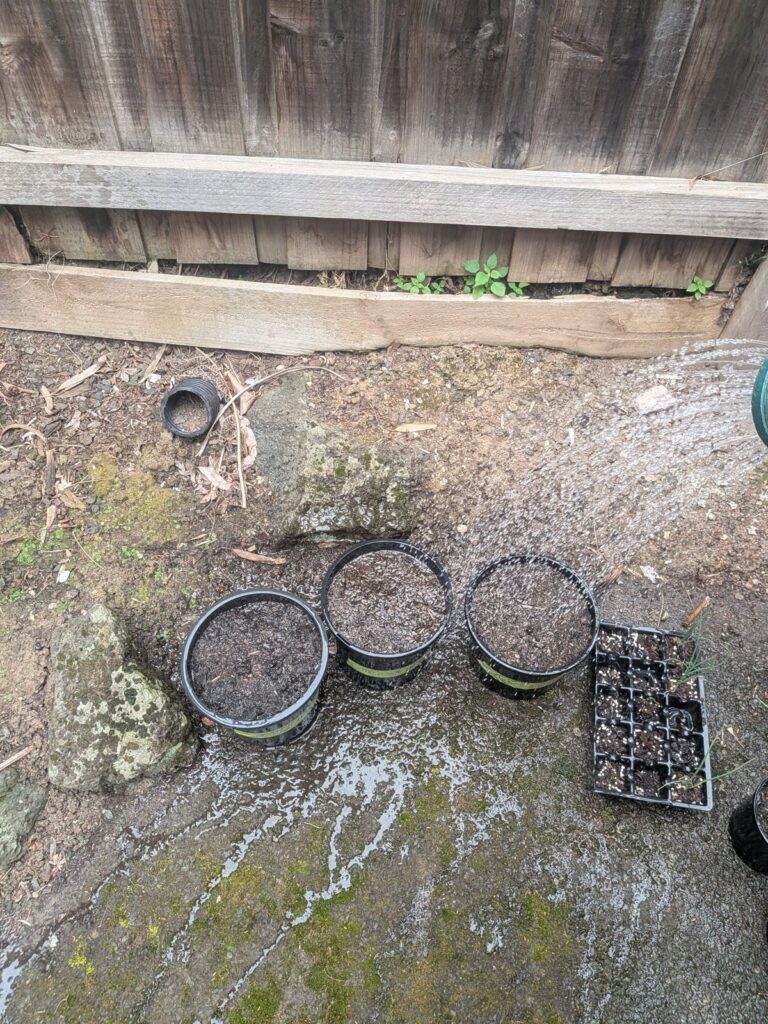
Thin. Once the seedlings have a few proper leaves, thin them to about 4 inches apart. The ones you pull are your first (tiny) salad.
Water by feel, not by schedule. Maryland says to check containers daily until you learn how fast each one dries. Clemson adds: check at least once a day and twice on hot, dry or windy days, and feel the soil to see if it’s damp. Push a finger in; when the top inch is dry, water until it runs out of the bottom. Our watering guide goes into more detail.
Feed (or don’t). If your potting mix has fertilizer added, Clemson says plants will have enough nutrients for 8 to 10 weeks. That covers most of a lettuce crop. If it doesn’t, Penn State suggests a slow-release fertilizer at planting, then a soluble fertilizer every 2 to 4 weeks.
Harvest. This is the whole point. From about 3 to 5 weeks after sowing, clip the leaves about 1 inch above the soil. Utah State notes that careful clipping lets the plants regrow for several harvests. Or pick leaf by leaf: Minnesota suggests taking single leaves as soon as they’re big enough to use, and Maryland says to use the older outer leaves first. Leave the small center leaves and the plant keeps going.
Timing in fall. Minnesota suggests sowing a fall lettuce crop about three months before your average first fall frost. If that date is close, don’t give up. Use seedlings, aim for baby leaves instead of full-size ones, and have a frost cloth ready for cold nights. Minnesota notes that freezing temperatures stop growth. Our frost protection guide shows how to cover a pot.
Watch for heat, too. Minnesota says several days above 75°F can make lettuce flower, and Illinois notes it turns bitter in hot weather. That’s called bolting, and it’s why lettuce is a spring and fall plant. If a warm spell hits, move the pot into afternoon shade or harvest everything.
Your First 8 Weeks at a Glance
| When | What you do | What you’ll see |
|---|---|---|
| Day 0 | Fill the pot, sow seed about ¼ inch deep (or plant seedlings), water gently | Bare, damp potting mix |
| Days 6–8 | Keep the surface damp; check daily | First sprouts |
| Weeks 2–3 | Thin to about 4 inches apart and eat the thinnings | Proper leaves |
| Weeks 3–5 | First cut, about 1 inch above the soil, or pick outer leaves | Your first harvest |
| Weeks 5–8 | Keep cutting; feed if your mix had no fertilizer | Regrowth; full-size leaves by days 45–60 |
| Any hot spell (several days above 75°F) | Move to shade or harvest everything | A stalk rising from the center means it’s bolting |
Timings from Texas A&M, Utah State and Minnesota extension (sources below).
5 First-Pot Mistakes (and the Fix)
- Starting with five pots. Start with one. You’ll learn faster and spend less.
- Using garden soil. It packs down and drains poorly in a pot. Use a bagged potting mix.
- No drainage holes. Drill some, or use the plastic nursery pot inside a decorative one.
- Watering on a schedule. Pots dry at different speeds depending on the weather. Check with your finger every day instead.
- The wrong plant for the season or the light. Match the crop to your sun hours and the time of year. If something’s already struggling, our symptom-by-symptom troubleshooter can help find the cause.
Your Second Pot (After the First Harvest)
Once you’ve eaten something from pot one, you’ve earned pot two. Some good next steps:
- Another cool-season green this fall: spinach on a balcony, or pick from our fall and winter container vegetables.
- Herbs on a windowsill: basil, rosemary and mint, or a windowbox of herbs that grow well together.
- Next spring: a tomato in a 5-gallon bucket. Your nursery pot from this guide is the right size.
- Short on floor space: vegetables for hanging planters.
- No outdoor light at all: indoor vegetable gardening for beginners.
And if you’d like to see how real pots actually do, including the ones that didn’t work, the Test Garden logs ours with dated photos. The Start Here page has the short version of everything above, and Recommended Gear lists the pots and mixes we point beginners to.
Frequently Asked Questions
What is the easiest vegetable to grow in a container for beginners?
Loose-leaf lettuce in cool weather, or a cherry tomato in warm weather. Both suit a single pot and forgive beginner mistakes.
How big a pot do I need for lettuce?
A pot about 12 inches wide and at least 6 inches deep holds 4 to 5 loose-leaf lettuce plants. Make sure it has drainage holes.
Can I use garden soil in containers?
No. Garden soil is too dense for pots and drains poorly, so use a lightweight potting mix instead.
How often should I water container vegetables?
Check every day by feeling the soil, and water when the top inch is dry until water runs out the bottom. Hot or windy days may need a second check.
How long until I can harvest lettuce from a pot?
You can start cutting baby leaves about 3 to 5 weeks after sowing, and full-size leaf lettuce takes around 45 to 60 days.
Can I start a container vegetable garden in fall?
Yes. Cool-season greens like lettuce and spinach suit fall, but sow early enough, or use seedlings, so they grow before hard freezes.
Sources we checked
- University of Maryland Extension: Growing Vegetables in Containers and Salad Tables
- University of Maryland Extension: Growing Lettuce in a Home Garden
- Penn State Extension: Container Vegetable Gardening, Four Keys to Success
- Clemson Home & Garden Information Center: Container Vegetable Gardening
- Texas A&M AgriLife Extension: Vegetable Gardening in Containers (E-545)
- University of Minnesota Extension: Growing Lettuce, Endive and Radicchio
- University of Illinois Extension: Lettuce
- Utah State University Extension: Leafy Greens, Harvest and Storage