Most of this site is guidance: what to grow, which pot, how often to water. This page is the proof side. It’s a running log of real plants growing in real containers, photographed as they are, with the misses left in.
A note on seasons: the test garden is in the Southern Hemisphere, so its seasons run opposite to most of our US readers. When it’s fall where you are, it’s spring here. That’s useful: the warm-season crops you’ll plant next spring are going in here now, and you can see how they do before your turn comes.
Jump to an entry:
9 · Nov 17: first salad harvest, bigger pots, blueberry dropped
8 · Nov 3: salad thinned, a bare blueberry, cool-season crops bolting
7 · Oct 22: first strawberry, broccoli in flower, onions start to differ
6 · Oct 18: broccoli pests, strawberries, potato harvest
5 · Oct 9: strawberries planted, lettuce up
4 · Oct 1: lettuce and pepper sown, potato experiment
3 · Sep 30: broccoli pot sizes, arugula bolting
2 · Sep 25: onions and pumpkins potted up
1 · Sep 24: broccoli heading, pumpkins up
Log entry 9: First salad harvest, bigger pots, and goodbye to the blueberry
Posted November 17, 2026 (late spring in the test garden). Photos were taken November 16 and 17.
US timing: West Virginia University Extension suggests starting pepper seed indoors about eight weeks before planting outside, and says warm soil is better than cool for the seedlings. Ours were sown outdoors in spring and took weeks to show (more below).
Salad mix: first harvest at about day 46
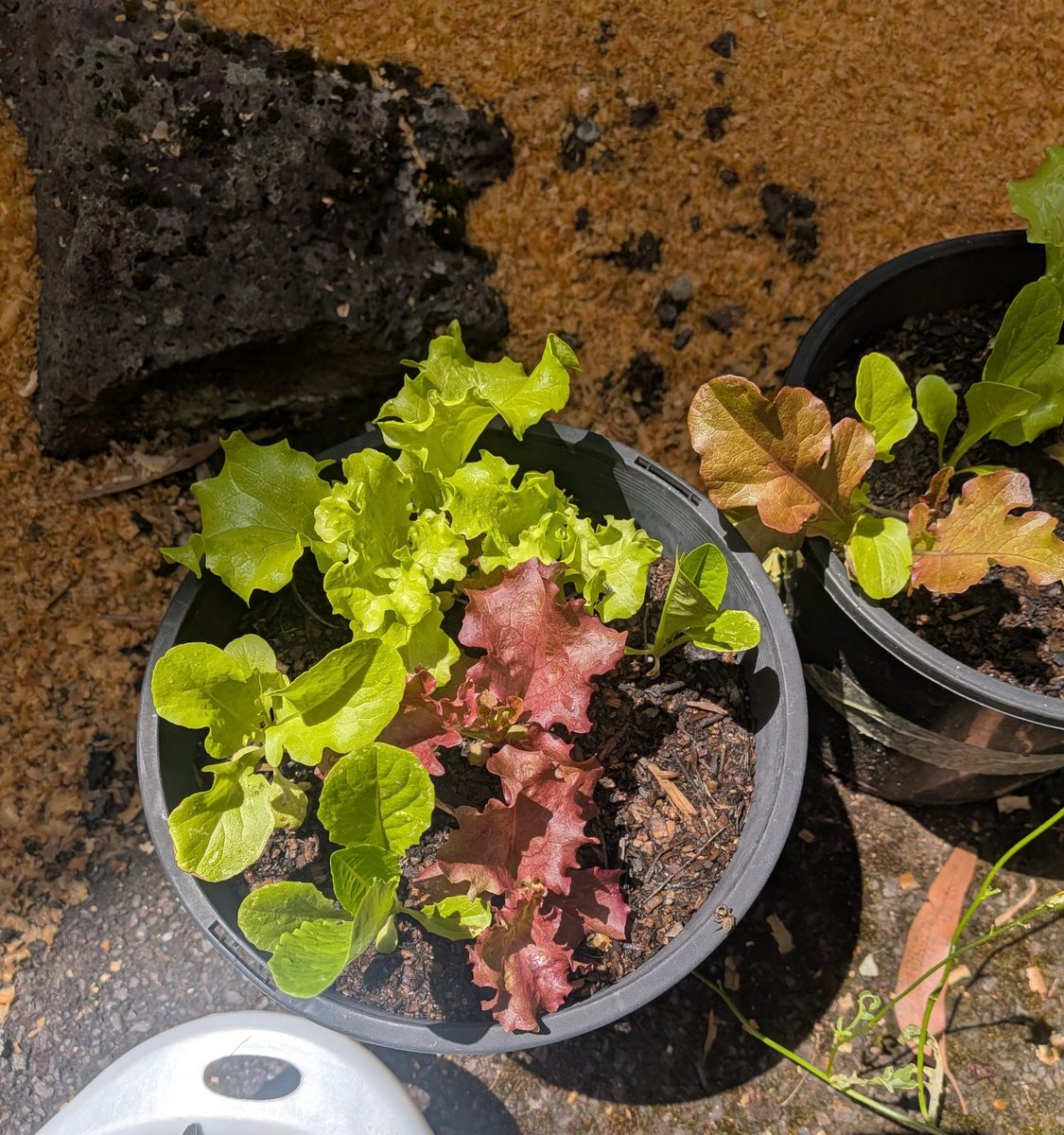
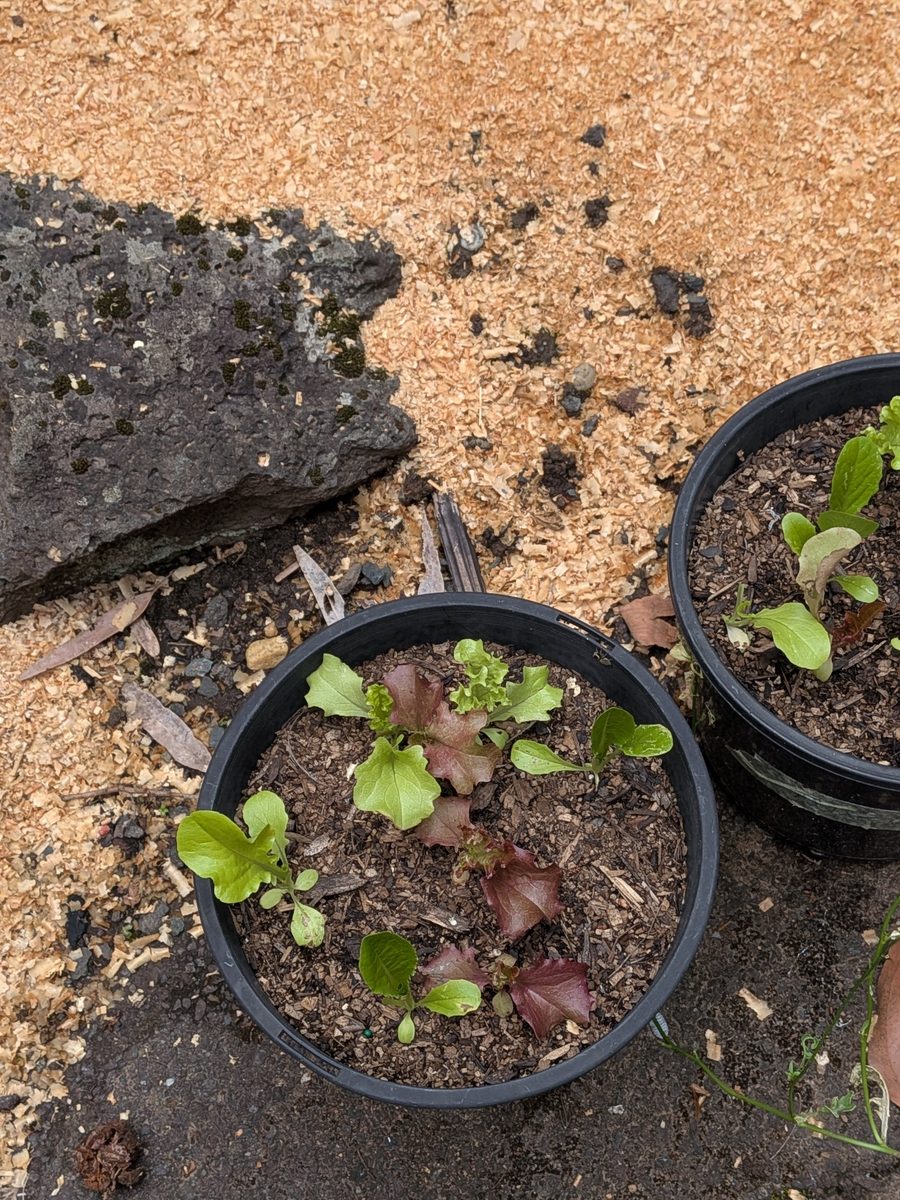
We sowed this salad mix on October 1. Around day 46 (November 16), we cut the bigger leaves and ate them. The second photo shows a pot on the morning of November 17, with the smaller plants left to keep growing. In the last entry we guessed the first cut was a week or two away; it was two weeks. How to cut salad leaves so they regrow is in our beginner’s guide.
Bell peppers: more seedlings at last
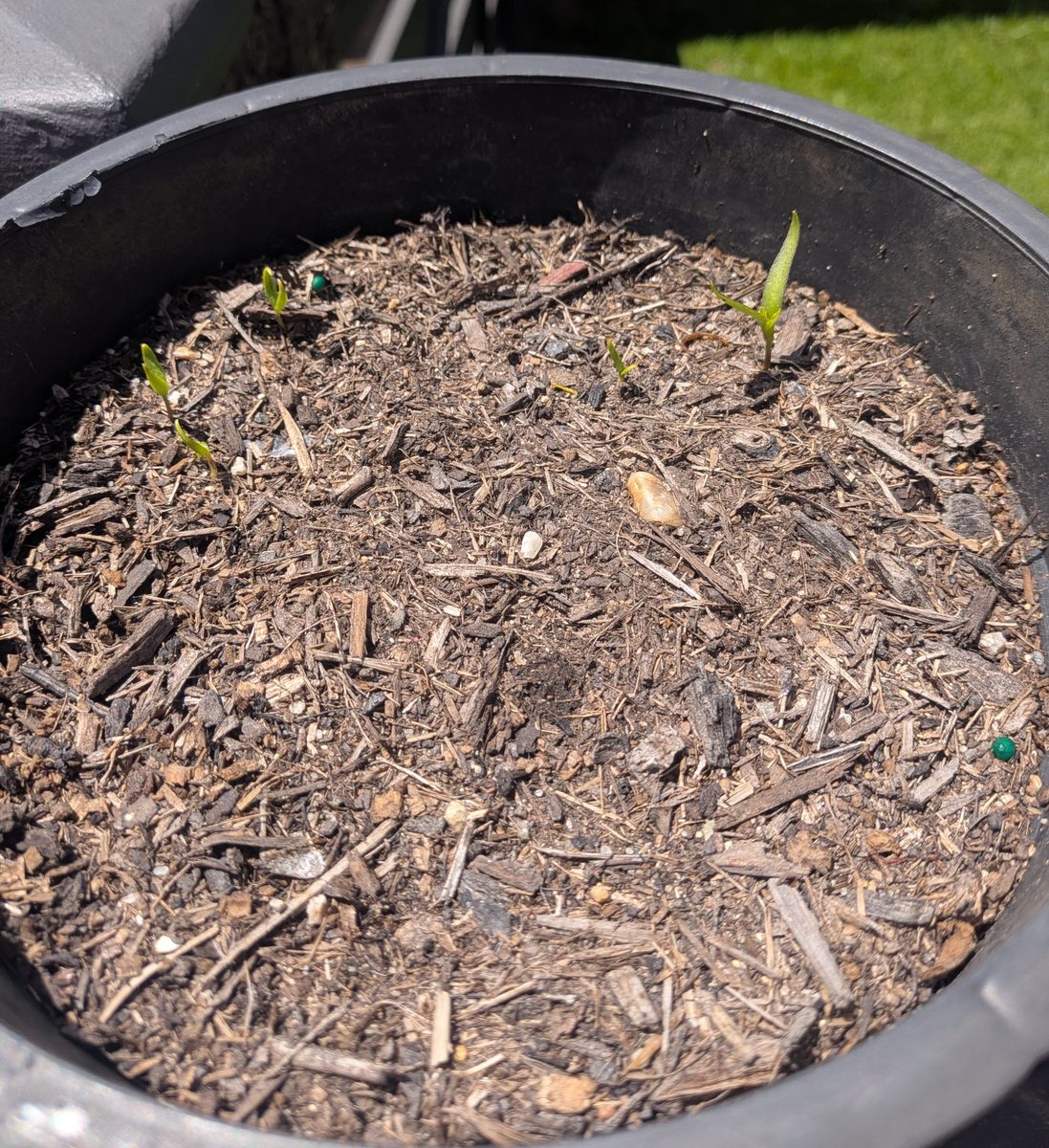
We sowed the bell pepper (capsicum) pot on October 1. It had nothing up at day 21 and one seedling at the last entry. Now at least four are up. We didn’t resow. The one change we recorded was moving the pot to a sunnier spot. We can’t say whether that move, the later season or simply more time made the difference.
Onions: a bulb is starting, and most of the 6-hour batch has moved
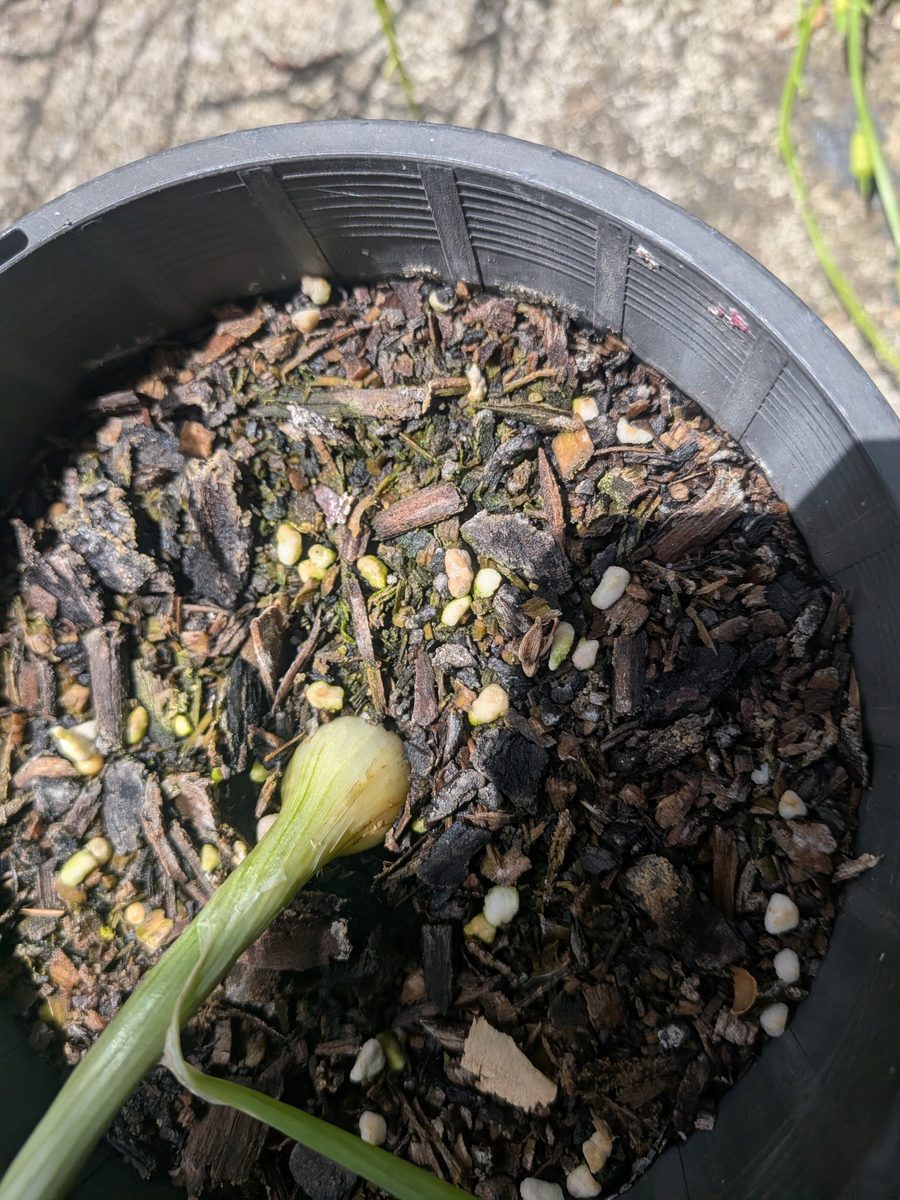
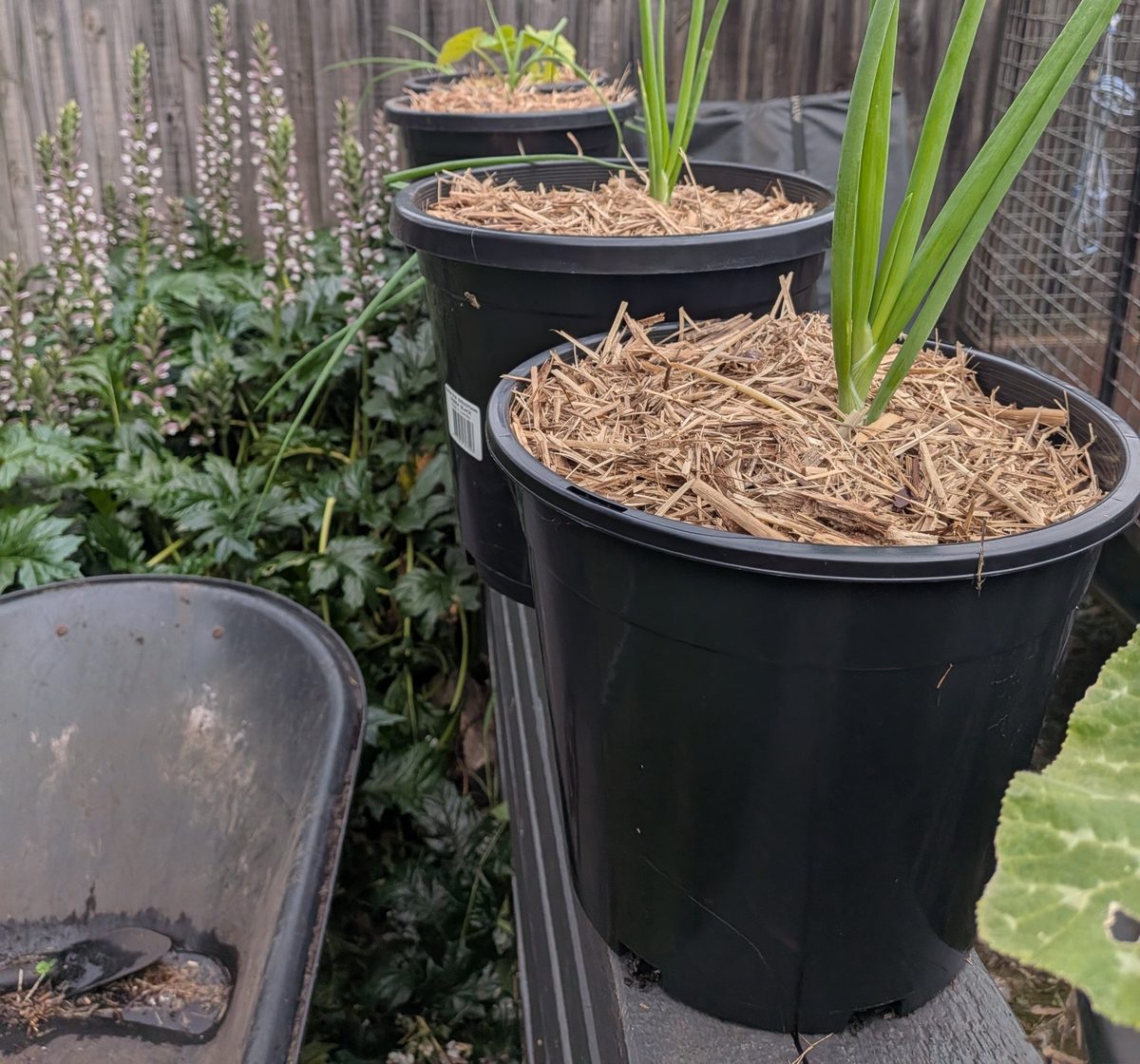
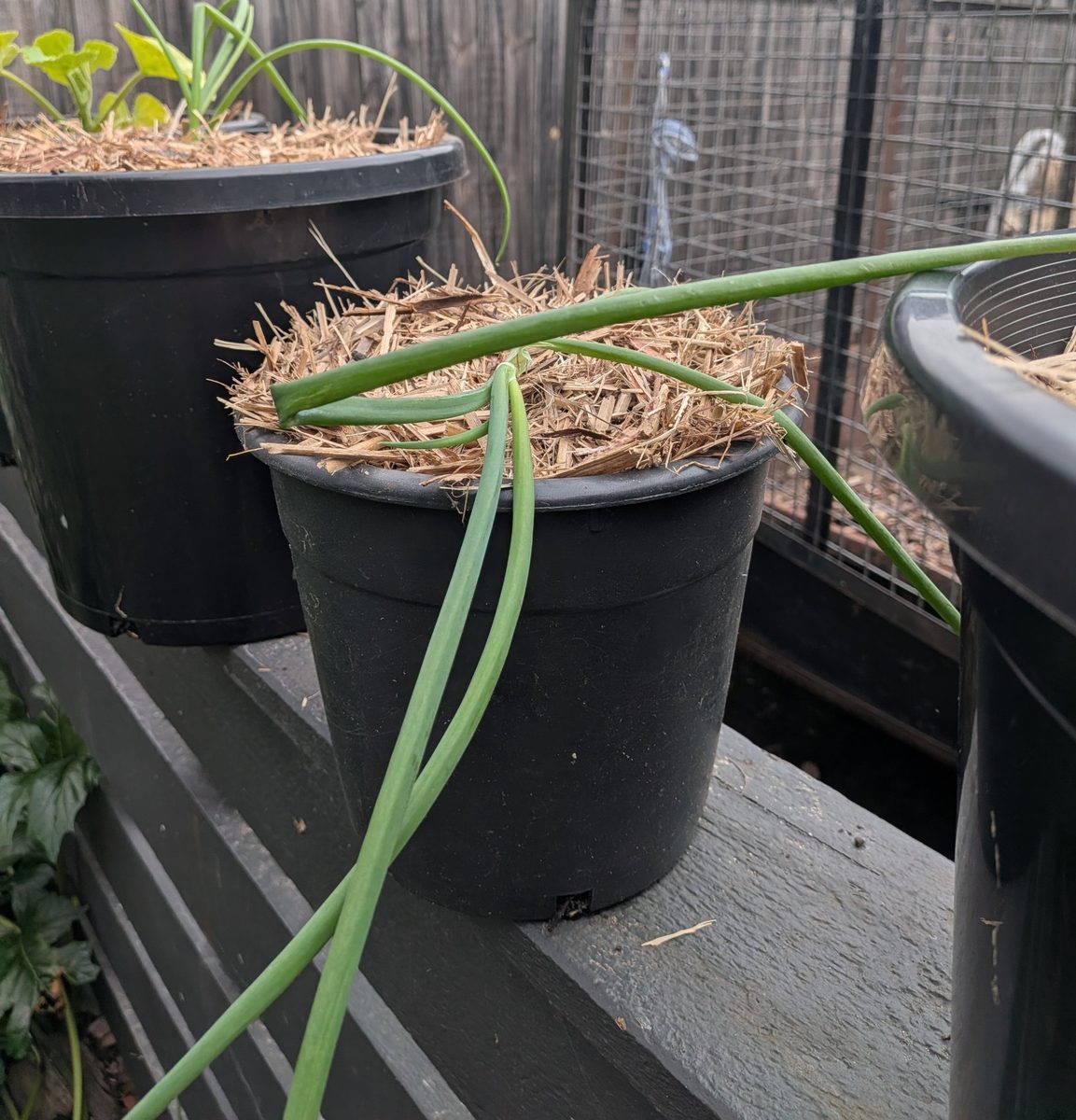
One of the onions has started to swell at the base. We have moved most of the onions from the roughly 6-hour spot out of their small pots into 12-inch and 15-inch pots, topped them with mulch, and set them in the roughly 12-hour spot. On the morning of November 17 some were standing and at least two had flopped over the rim. The onions in the 6-hour spot were already leaning before the move, so we don’t read much into that.
The move largely ends our side-by-side look at 12 hours of sun against 6: most of the 6-hour onions are now in the 12-hour spot, though several small pots are still in the 6-hour spot. What we saw before the move: at the last entry the 12-hour onions stood upright, and on November 16 the onions still in small pots in the 6-hour spot were leaning or lying flat. Pot size, wind and watering weren’t matched, so that’s an observation, not proof. Our full onion guide is growing onions from seed in containers.
Pumpkins: a clarification, and bigger pots
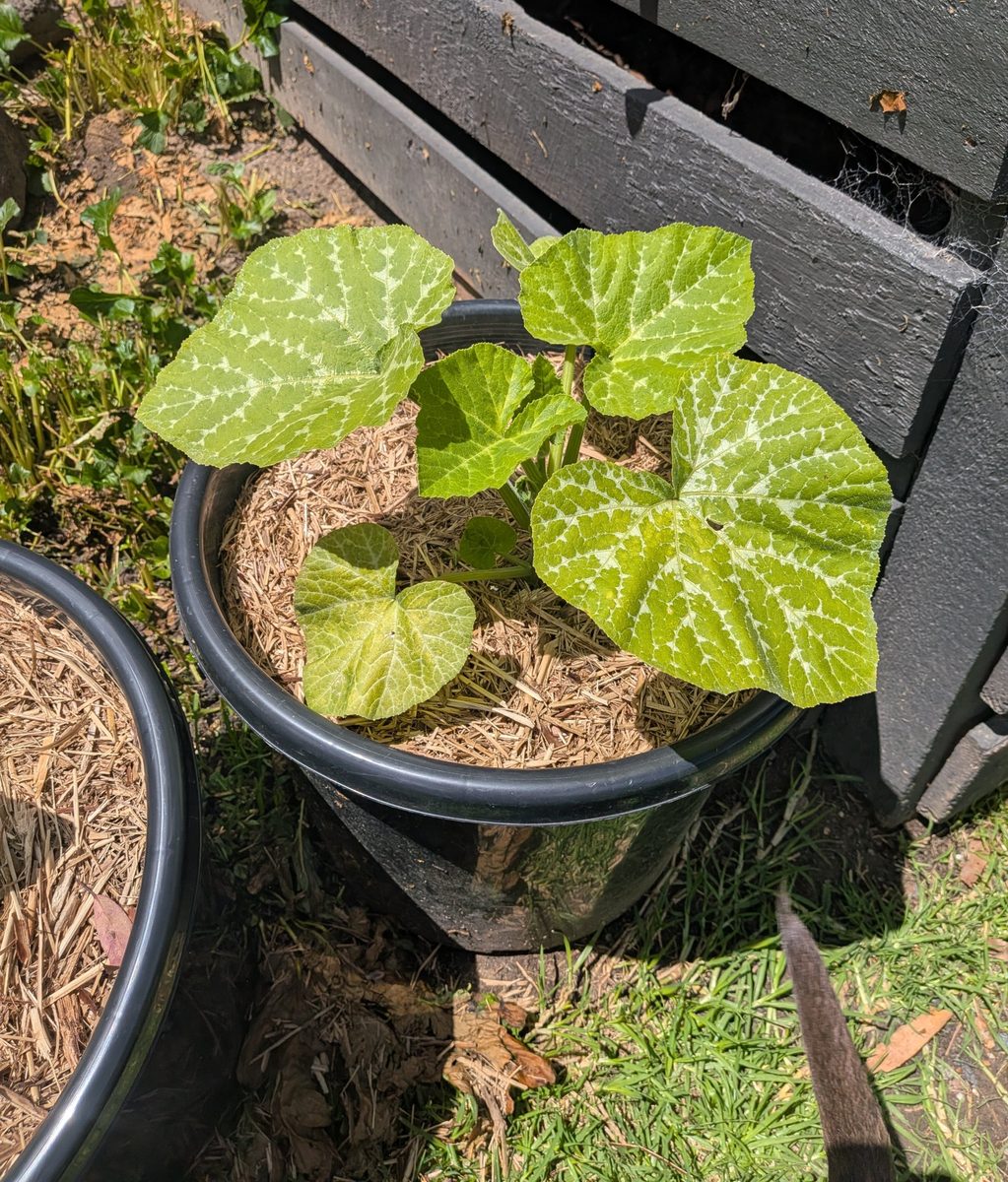
A clarification first. In earlier entries we called these Kent pumpkins. Every one of them was grown from seed we saved from a store-bought pumpkin sold as a Kent, not from a seed packet, so we can’t be sure the plants will grow true to that variety. University of Maryland Extension notes that seed saved from hybrid plants won’t come true, and that seed saved from open-pollinated squash and pumpkins can produce off-types, because these crops cross-pollinate. University of Illinois Extension makes a similar point about a pumpkin bought at a store: you may not know how it was grown. So any fruit we get may not match the pumpkin the seed came from.
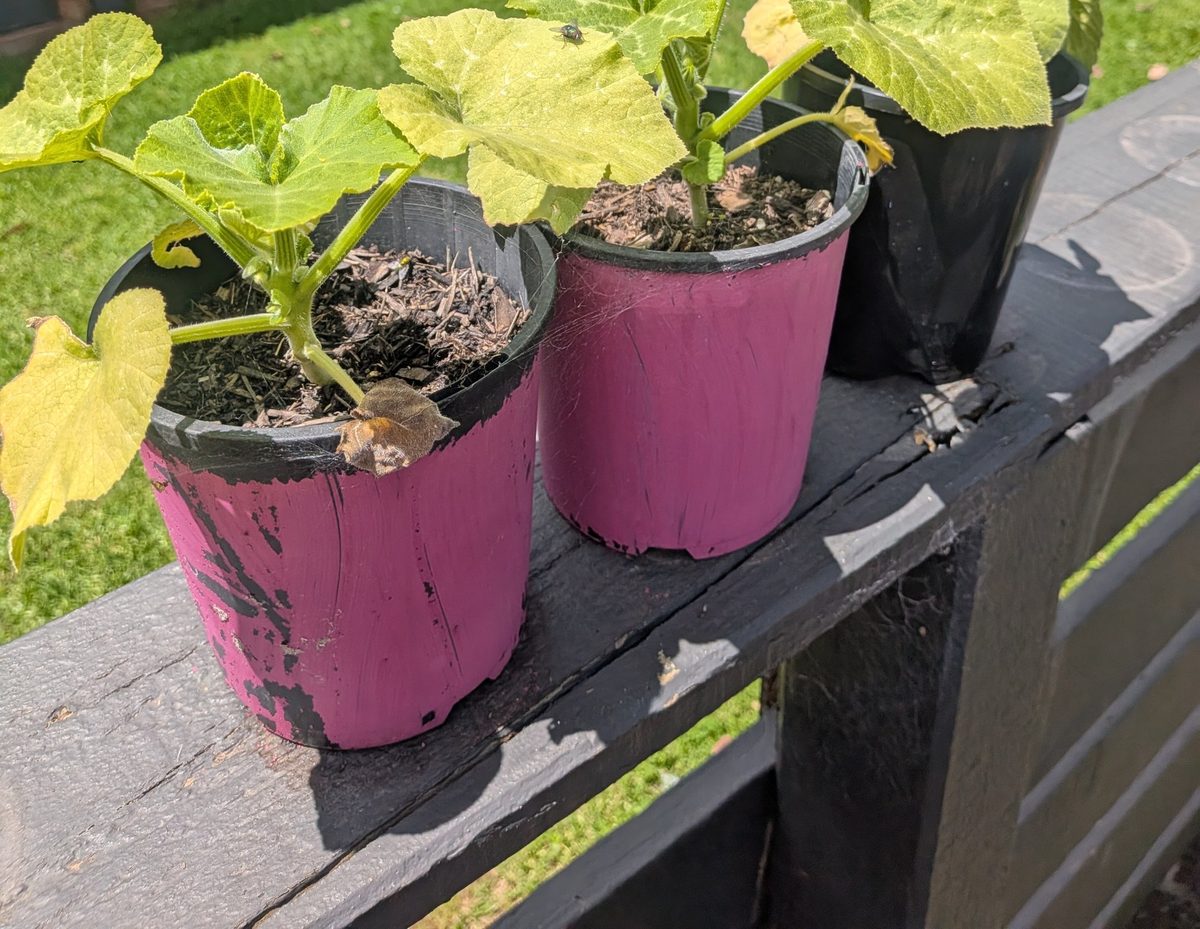
Some of the young pumpkin plants have gone into 12-inch and 15-inch pots with mulch on top. Three were still in small pots on the morning of November 17, and their leaves are yellow-green. We don’t know yet whether a bigger pot will change that.
Broccoli and spinach: mostly pulled
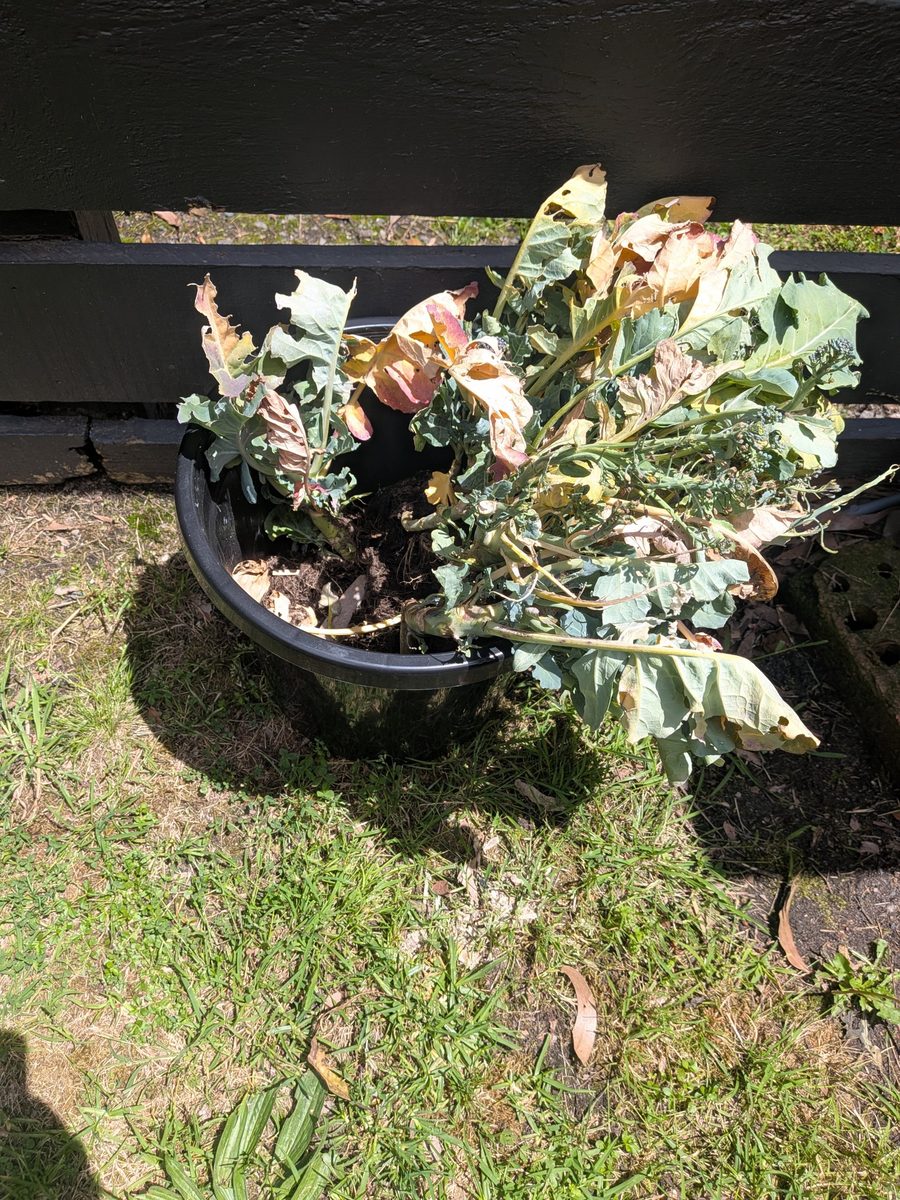
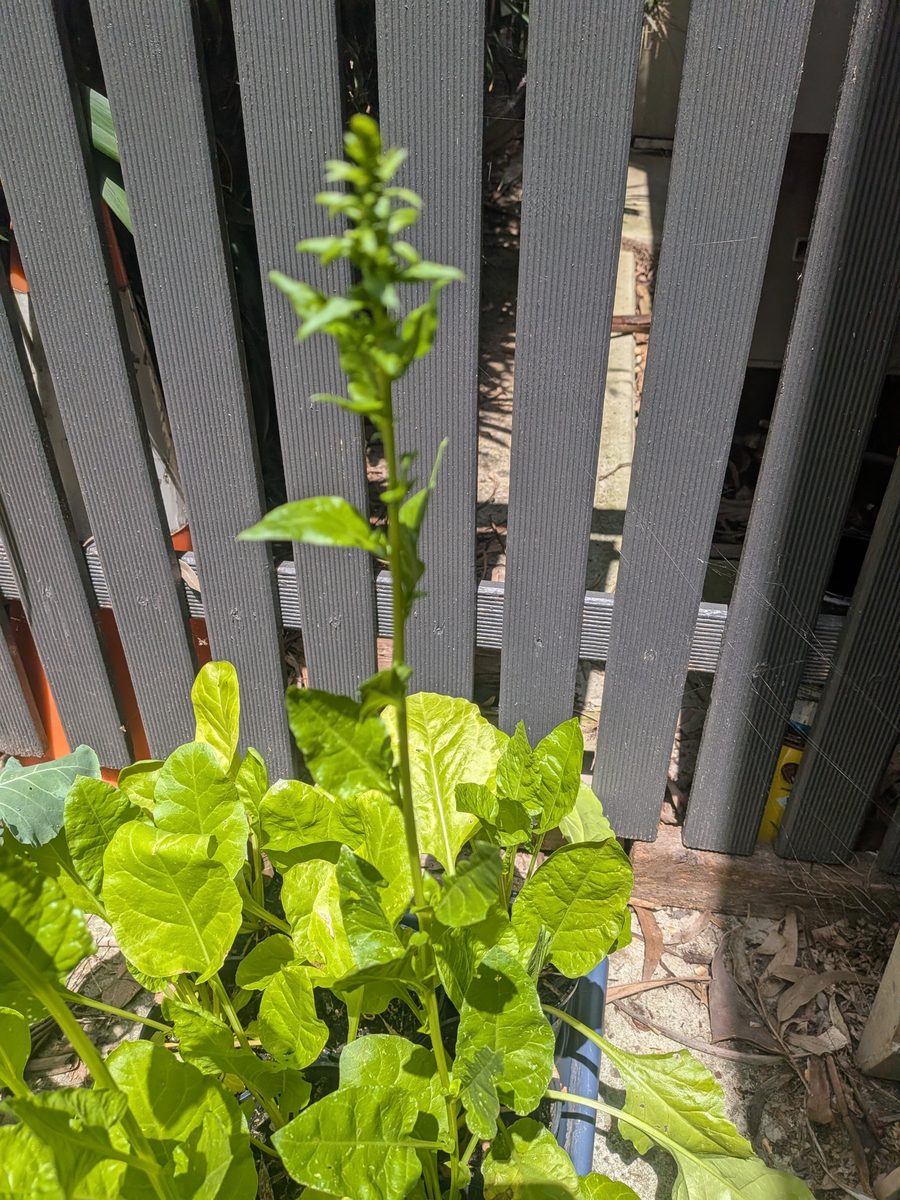
As we said in the last entry, the broccoli was coming out. Most of it has now been pulled, along with most of the spinach, which had sent up flower stalks (bolted). Two or three broccoli plants and two pots of spinach are still there, in flower. On the name: the seed packet says spinach, but the variety name is torn off, so “spinach” is as exact as we can be.
Strawberries: flowers, green berries, and one for the dog
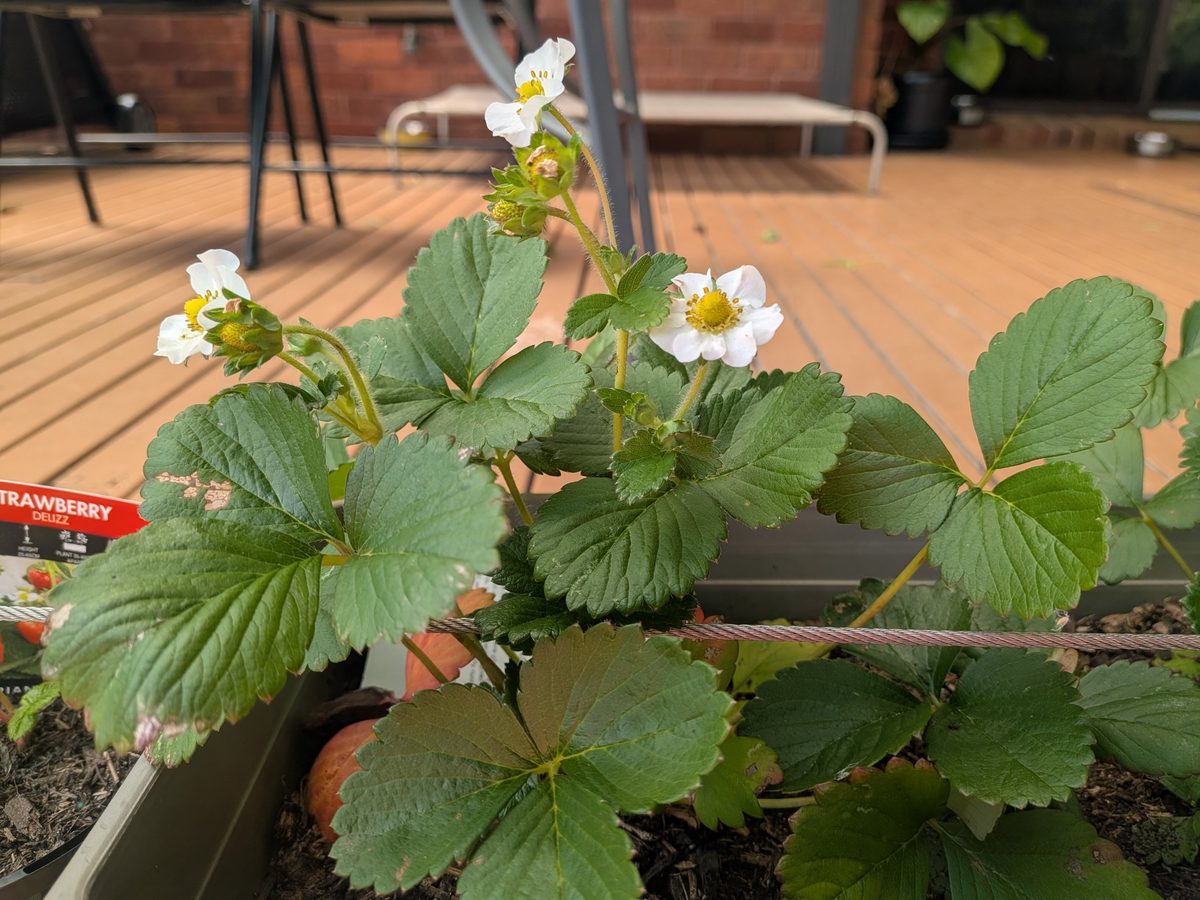
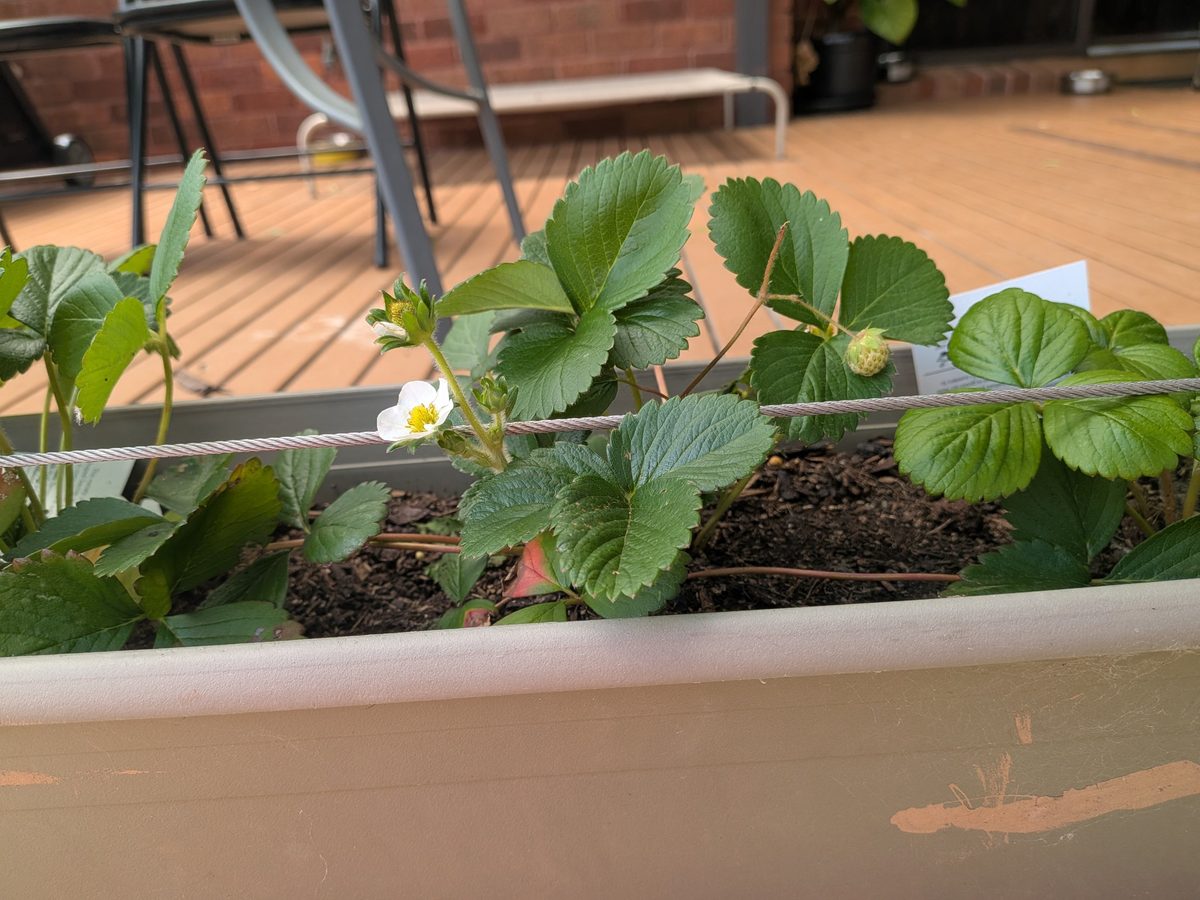
The trough plants have several open flowers and at least one green berry. The first berry to ripen went to our dog before we could photograph it, so there’s no picture and no taste report yet. The runner plantlet from the last entry is still alive in its own pot.
Passionfruit repotted, and we’re dropping the blueberry
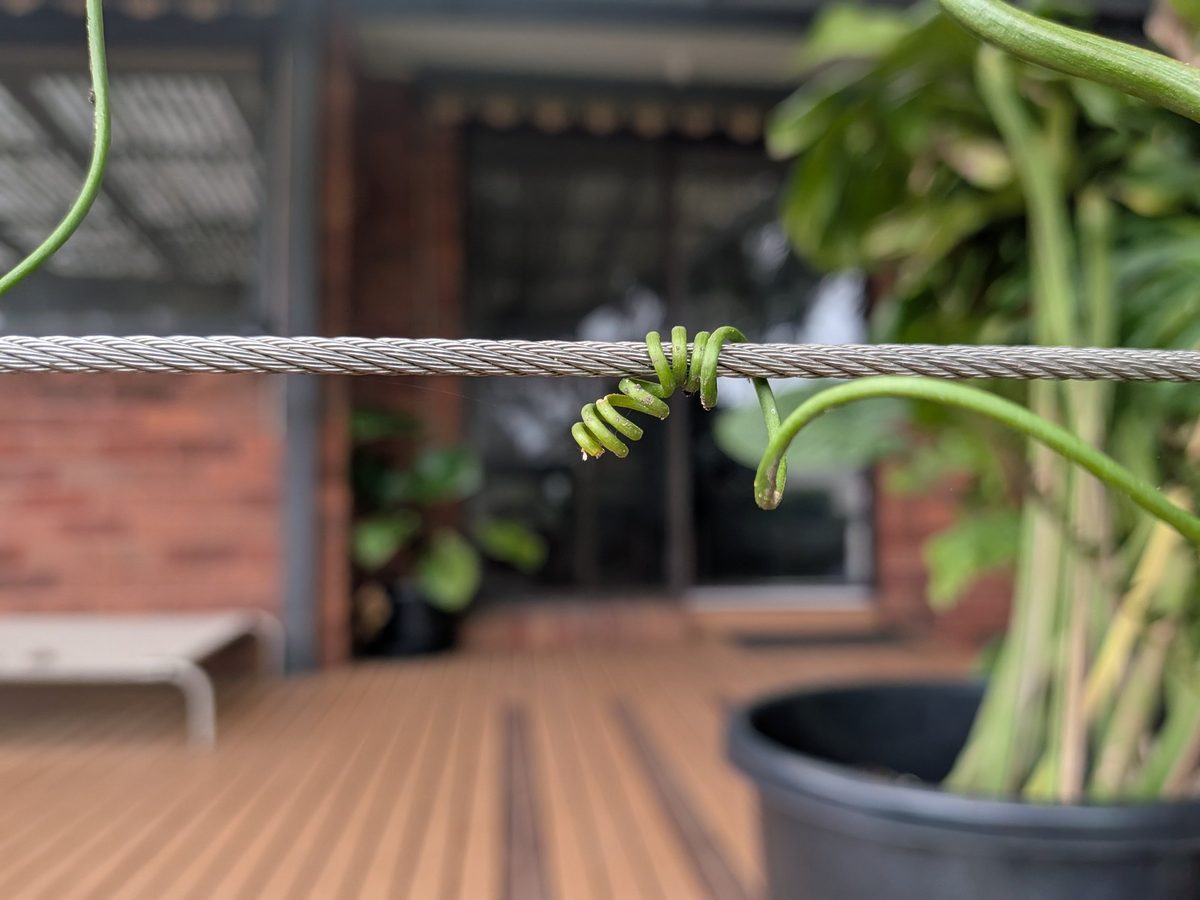
The grafted passionfruit has moved into a 12-inch pot, the largest we had on hand. A tendril is gripping the deck wire, and its leaves still have chew holes. The blueberry (Northland) didn’t recover. In the last entry it was nearly bare and we said we’d report back: it is now bare twigs, we don’t know why, and we’ve dropped it from the test garden.
Also: the cherry tomato seedlings, sown October 8, are still very small, and the arugula (rocket) is still flowering and setting pods.
Log entry 8: Thinning the salad, a bare blueberry, and the cool-season crops give up
Posted November 3, 2026 (spring in the test garden). Photos were taken November 2.
US timing: Spinach and broccoli are cool-season crops. In much of the US, that means growing them in early spring or fall, before summer heat arrives (in mild-winter areas, winter too). Our spring here is warming up, and two of them are now bolting.
Salad mix: thinned at about day 32
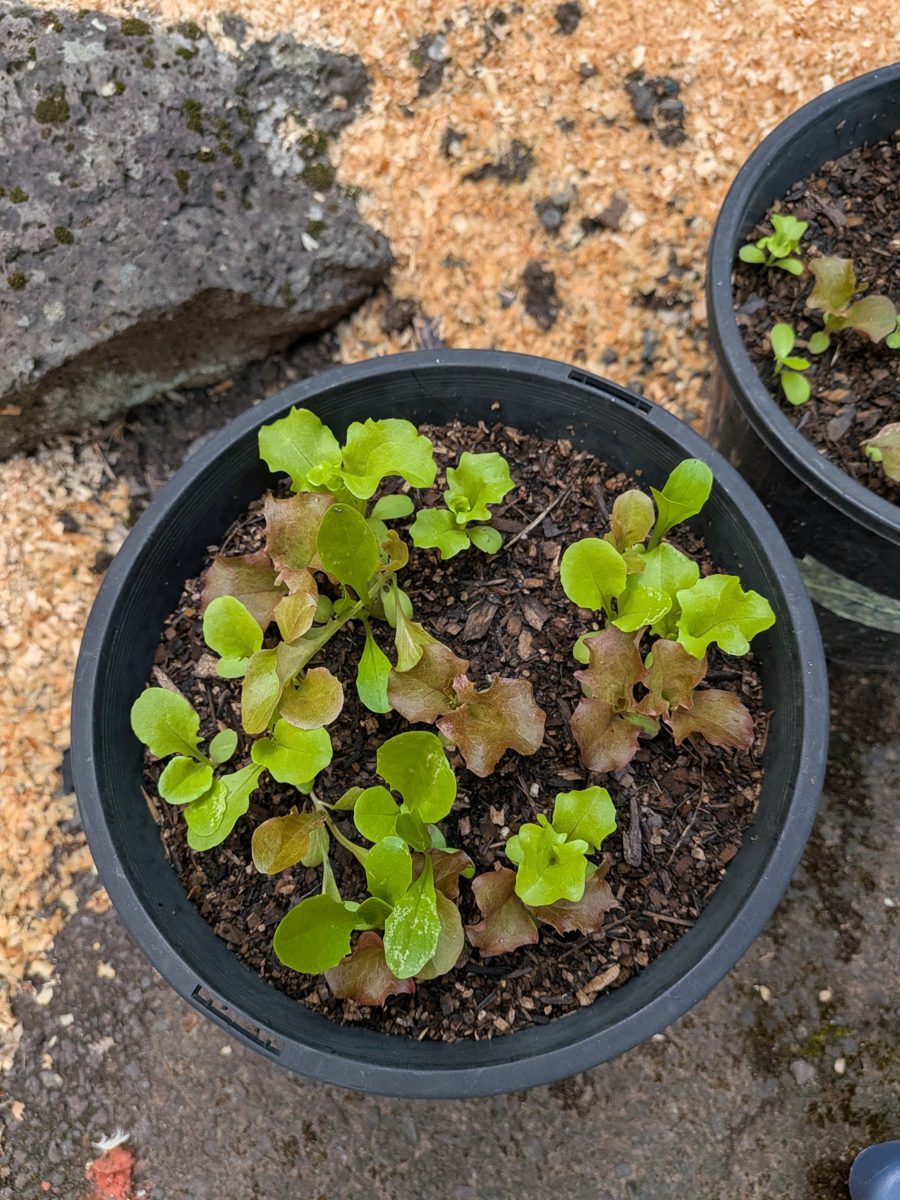
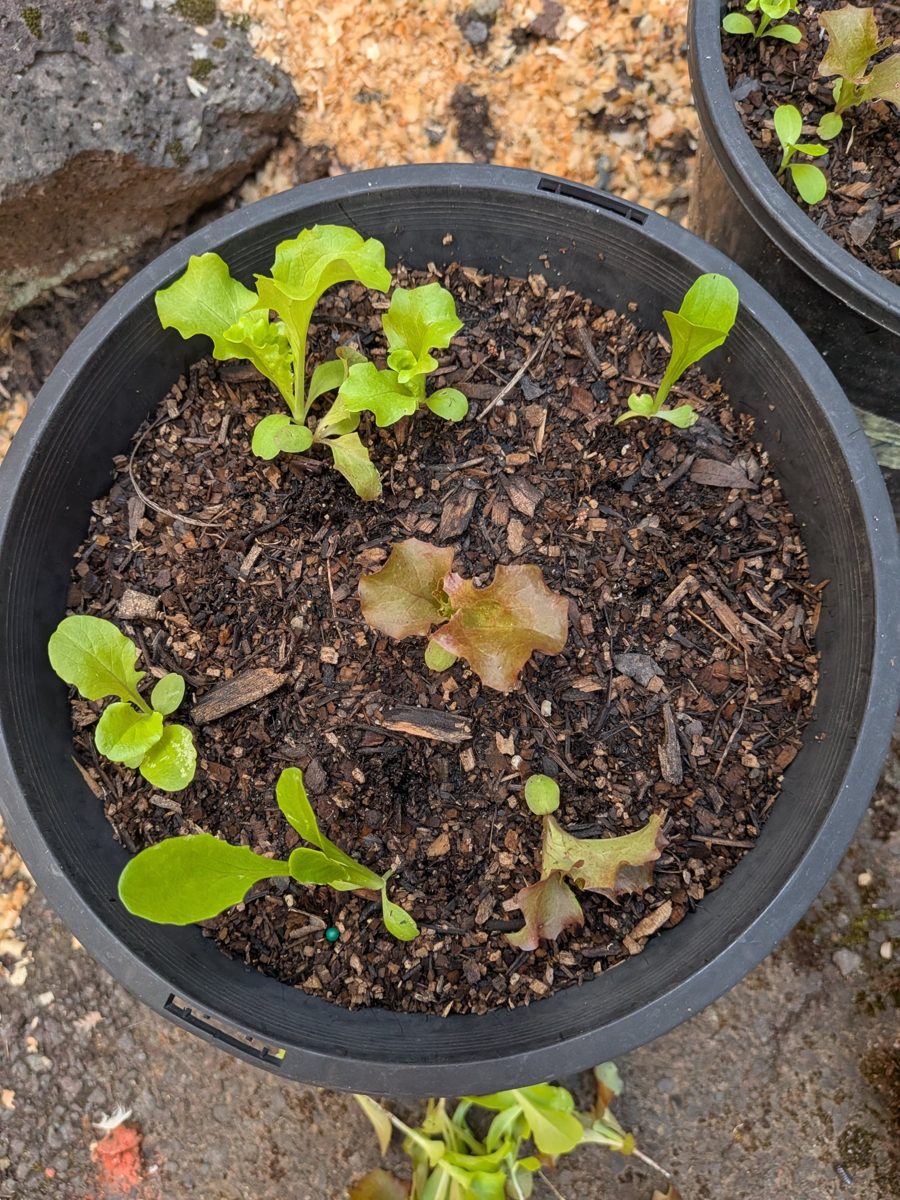
The salad mix we sowed on October 1 was crowded, so we thinned two pots by plucking the extra seedlings out by hand. A few close clumps are still in there, so this was a first pass, not a final spacing. We haven’t cut any leaves yet; the first cut is probably a week or two away, depending on growth. The full method is in our beginner’s guide.
Broccoli: flowering, chewed, and heading for the compost
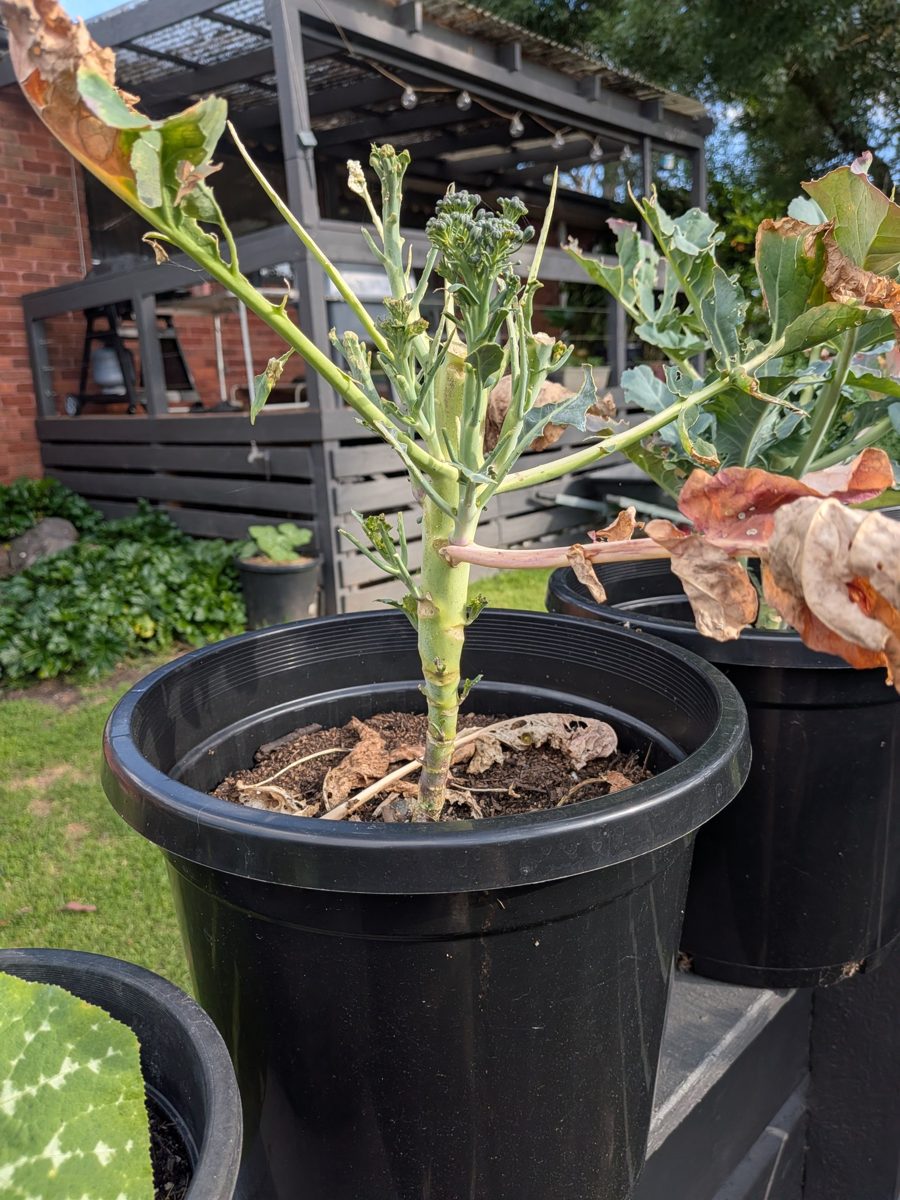
The broccoli plants have flowered and the leaves are well chewed. A snail was sitting on the rim of one pot. We didn’t use any fix for the pests, and we’re going to pull them out and compost them. University of Illinois Extension notes that yellow flowers can appear early in high temperatures, and warm weather can bring on flowering, though we can’t be sure it is the reason here. For what’s chewing broccoli leaves and what to do about it, see What’s Eating My Broccoli?
The “spinach” tray is bolting too
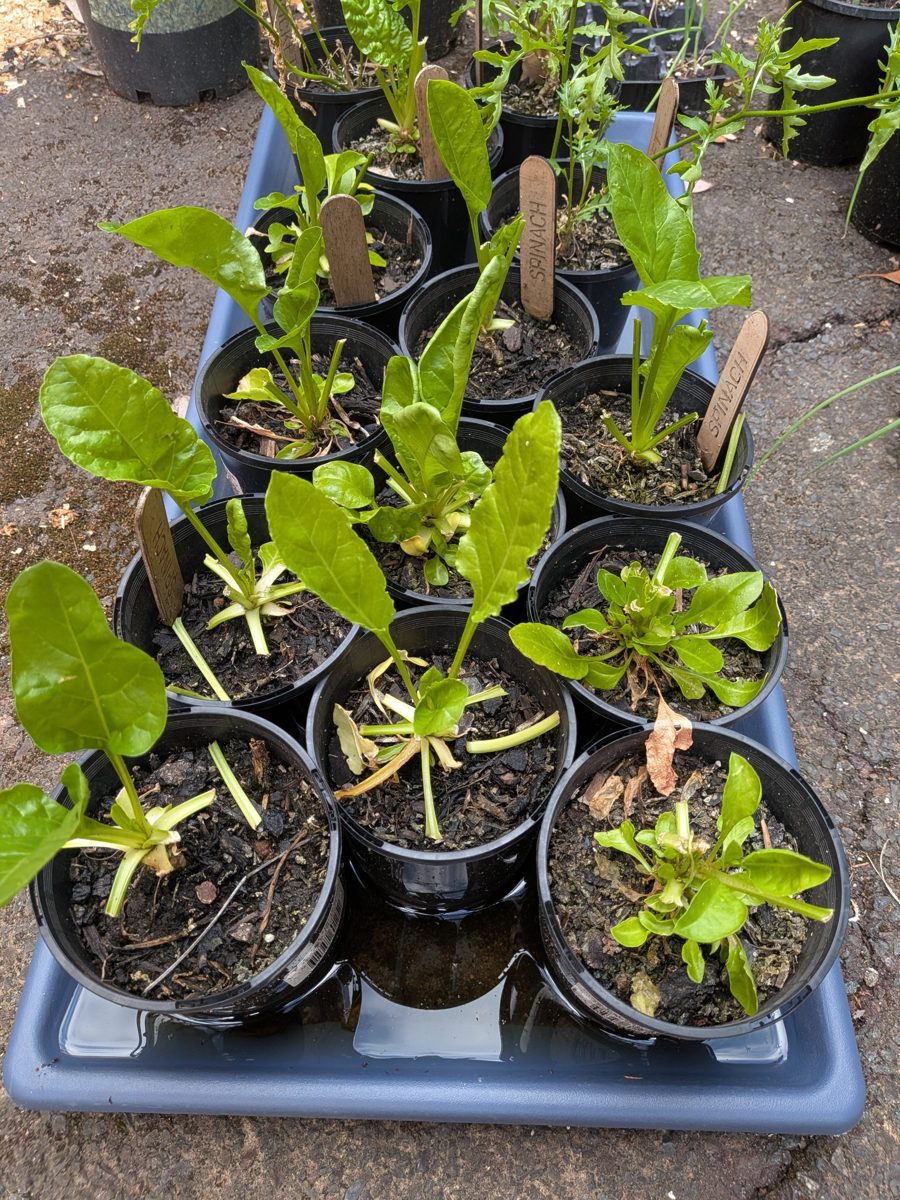
The labels in this tray say spinach, but many of the plants have the broad, thick-stalked leaves that look more like silverbeet (Swiss chard) to us. We haven’t confirmed the seed, so we’re not naming it yet. Either way, the plants are starting to bolt (send up a flower stalk), and we’ll probably pull the tray. Spinach in particular bolts quickly in warm weather and long days, according to the British Columbia Ministry of Agriculture, which is why it is mostly grown in spring and fall.
Blueberry: nearly bare, and we don’t know why
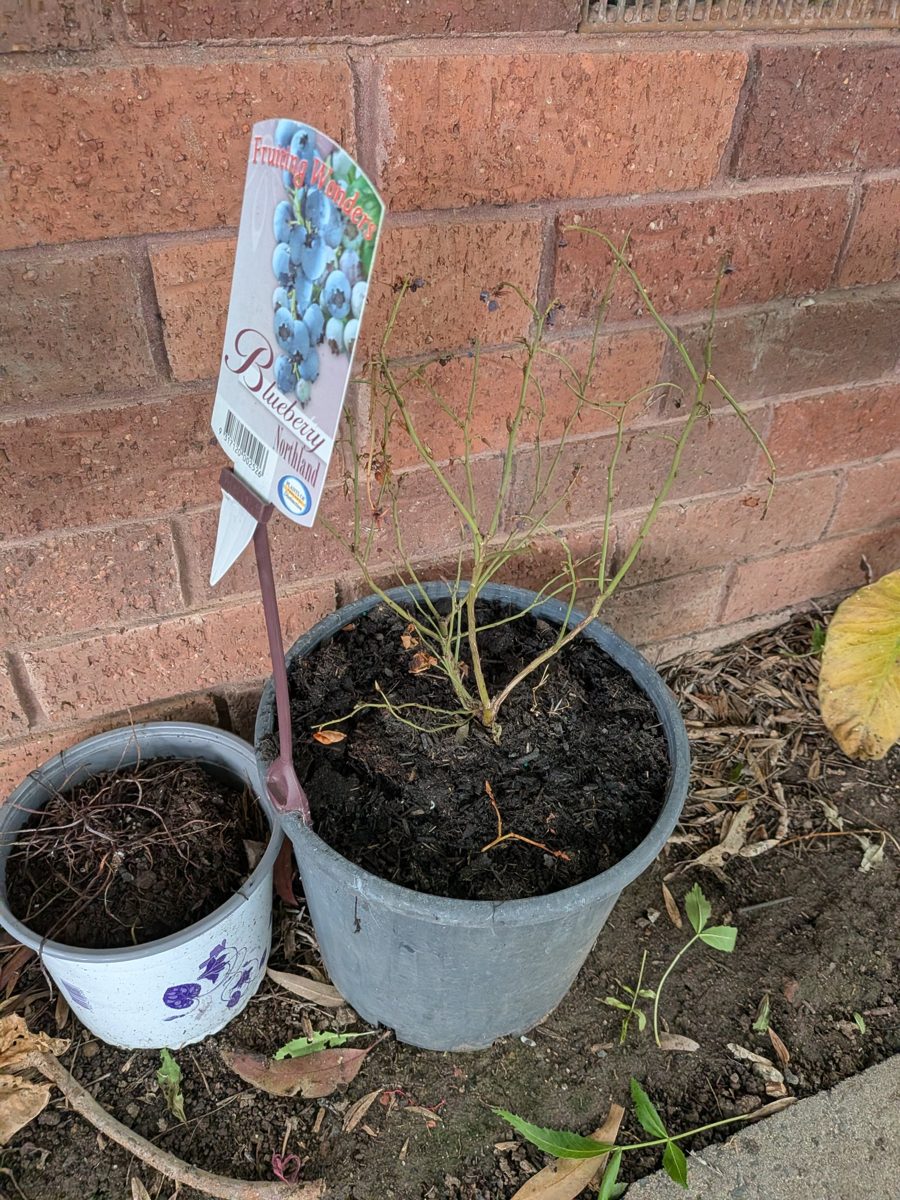
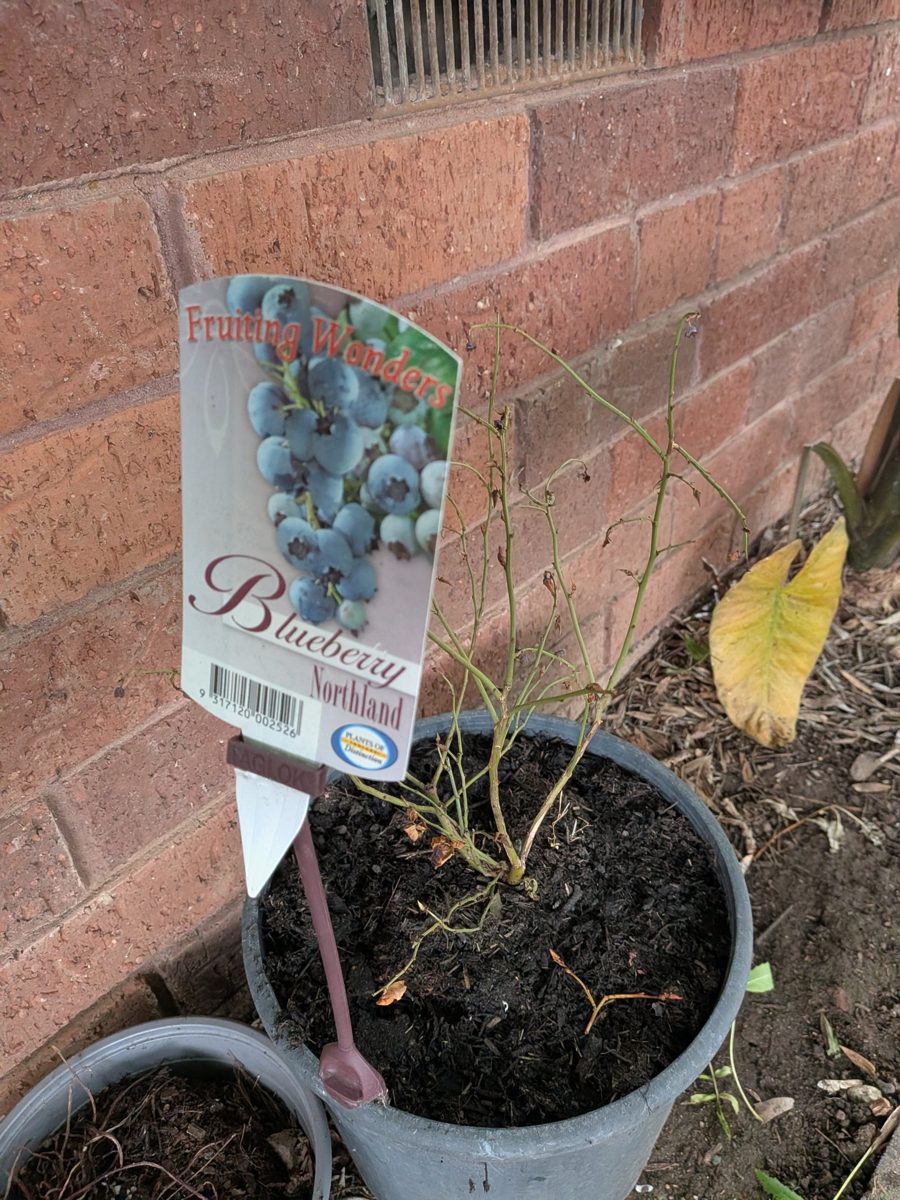
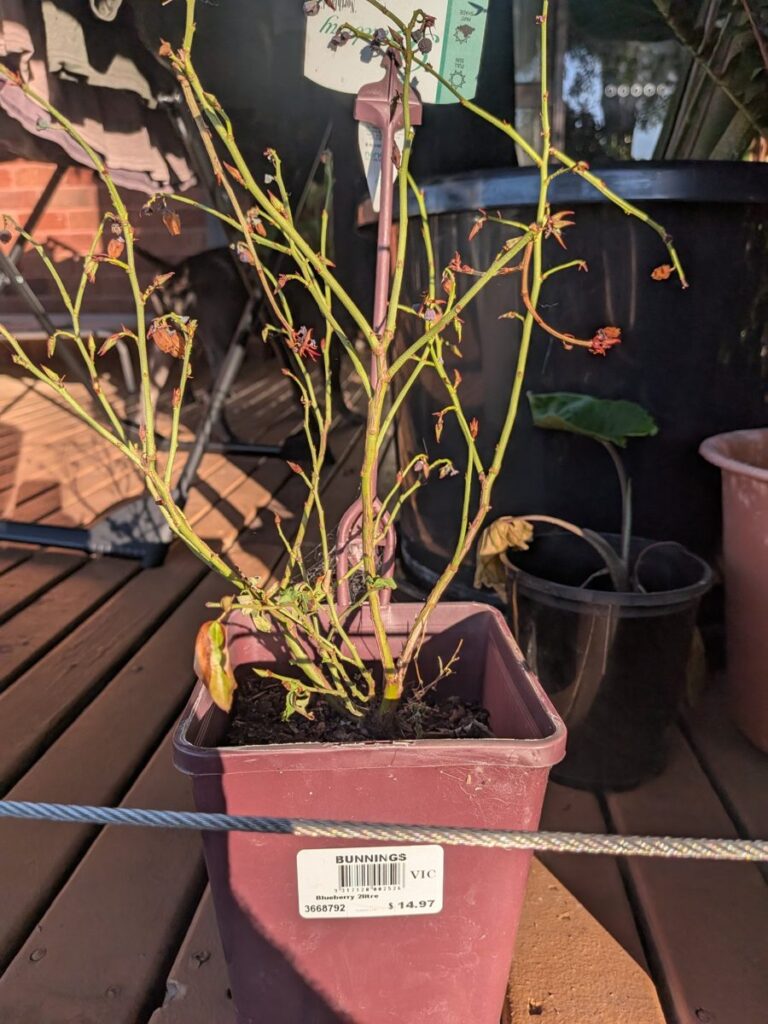
On October 22 this blueberry (the tag says Northland) was leafing out and setting small berries. Now the stems are nearly bare. We don’t know the cause. University of Delaware Extension lists stresses such as drought, excess water and root pruning that can leave perennial fruit with fewer or late leaves, and an Ask Extension answer points out that blueberries have little tolerance for getting too dry and that containers dry out faster than the ground. Some of those could apply to a pot, but they aren’t the only possible causes and we can’t tell which from a photo. We’ll look into it further and report back.
Onions: 12 hours of sun against 6
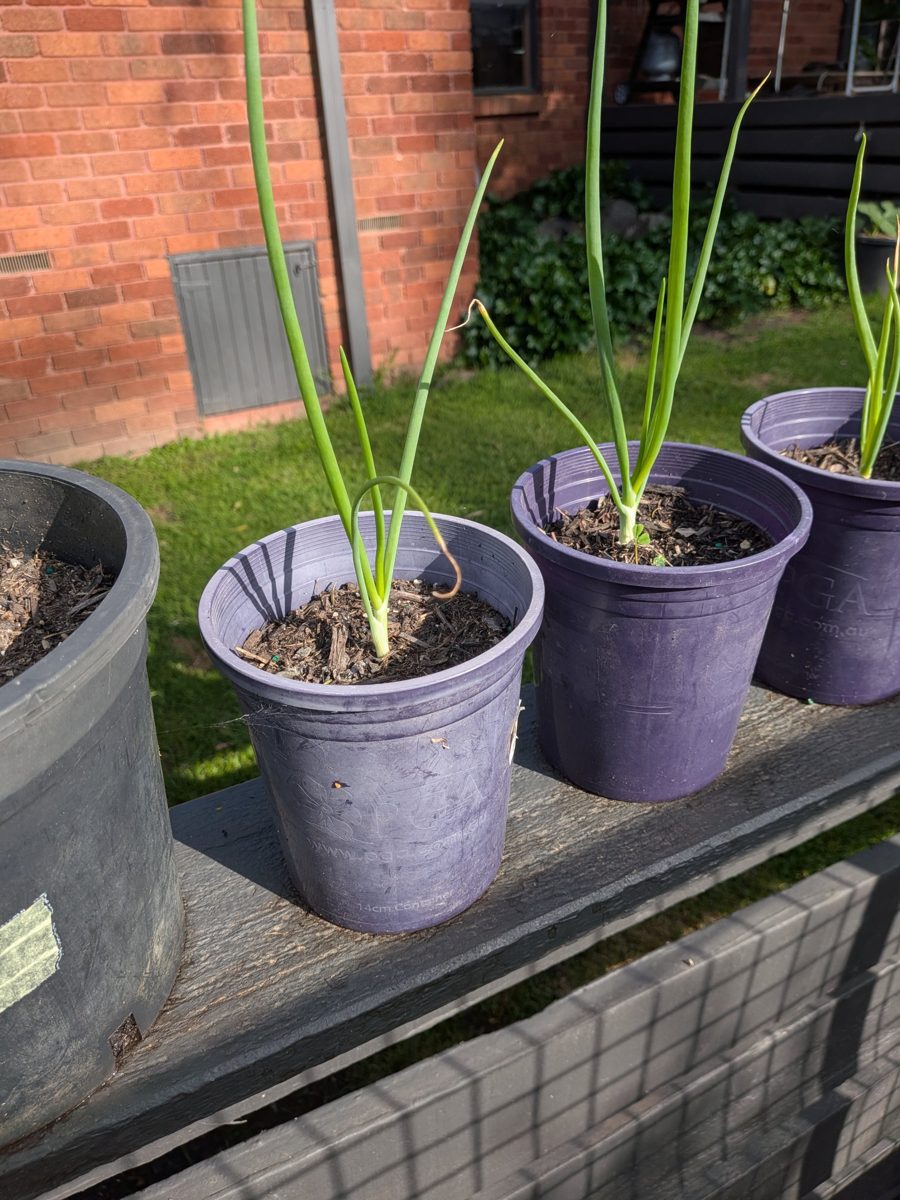
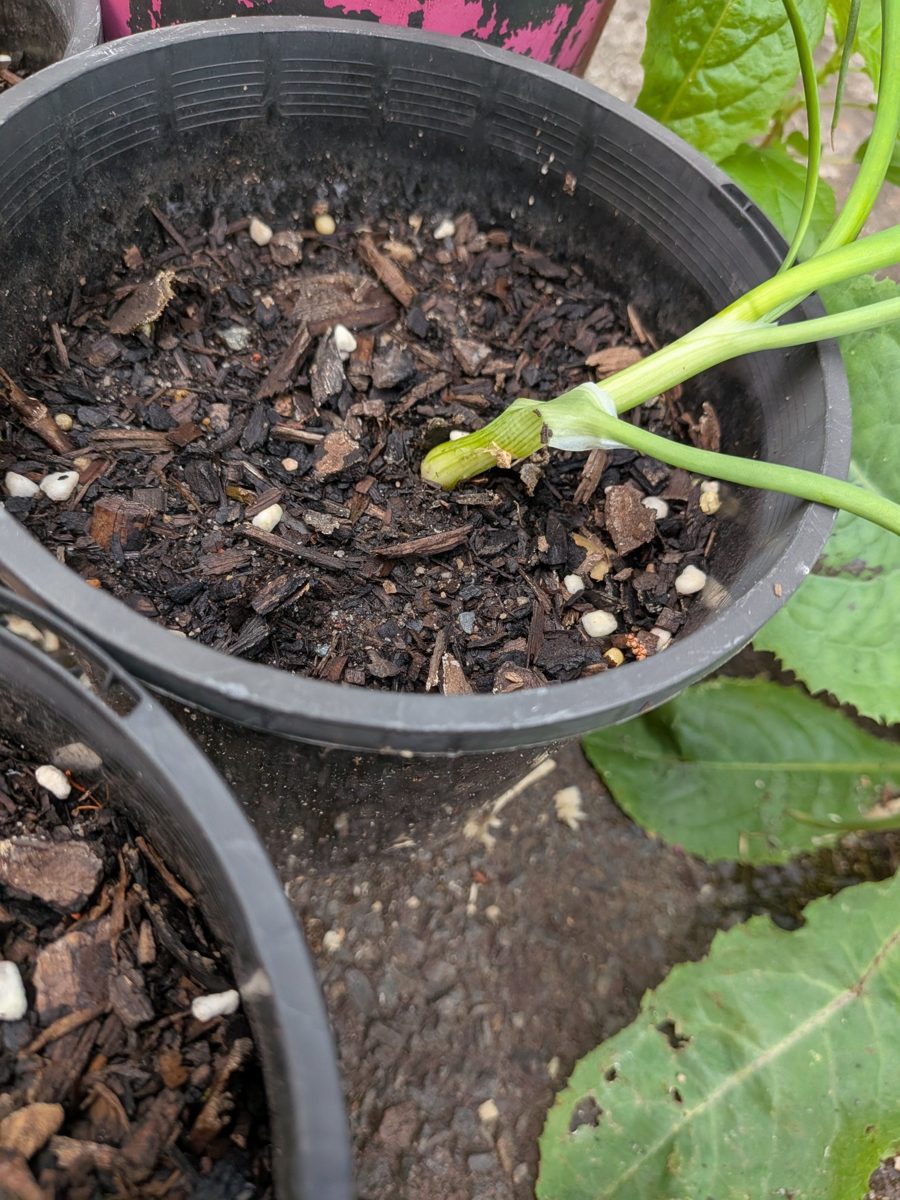
The onions in the roughly 12-hour spot are standing upright. In the roughly 6-hour spot, one has fallen over and is lying on its side. That’s one pot, so we’re not drawing a conclusion yet. The set-up is explained in growing onions from seed in containers.
Strawberries: the runner rooted
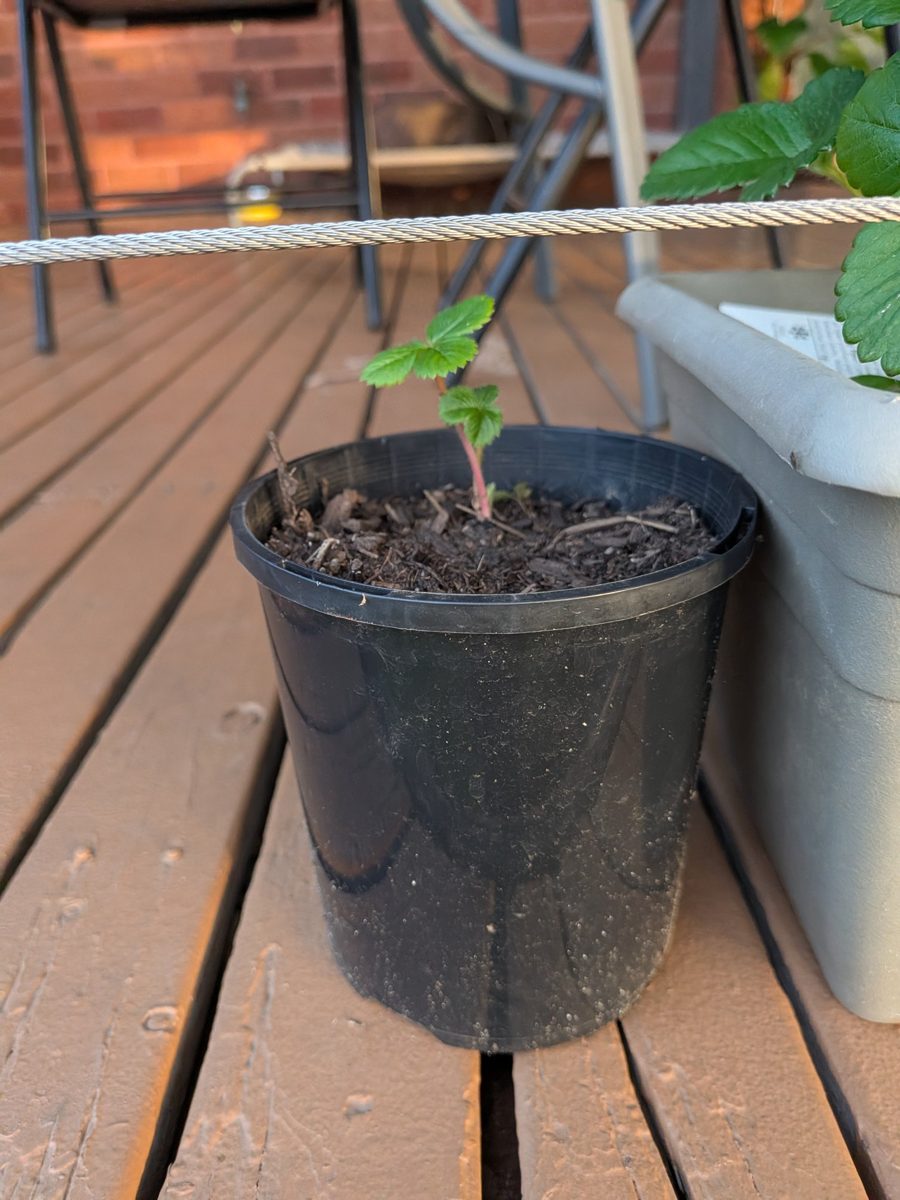
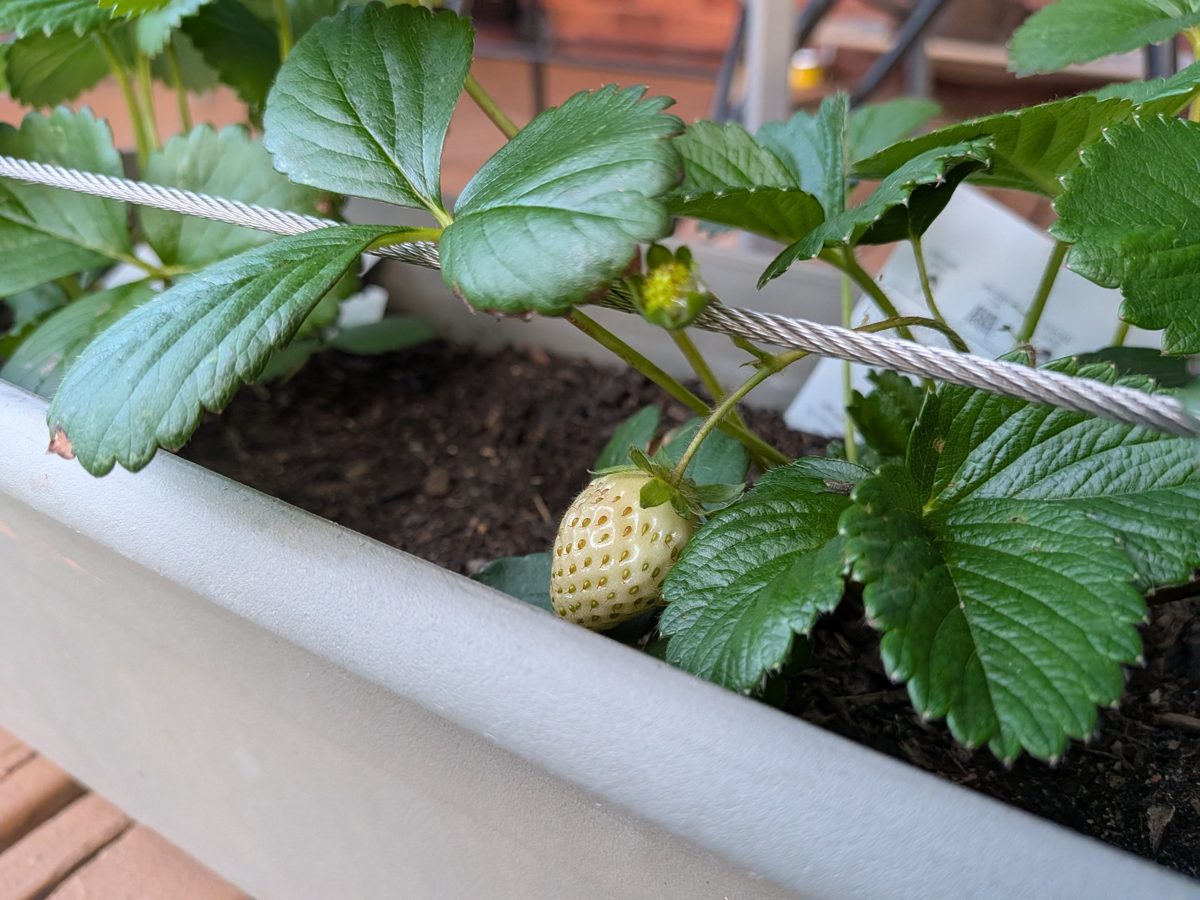
Last entry we cut a strawberry runner off before it had much root and called it a long shot. It rooted. The plantlet now has three leaves in its own small pot. On the trough plants, one berry is large but still pale, with a flower bud beside it.
Cherry tomatoes and bell peppers: a correction and a first seedling
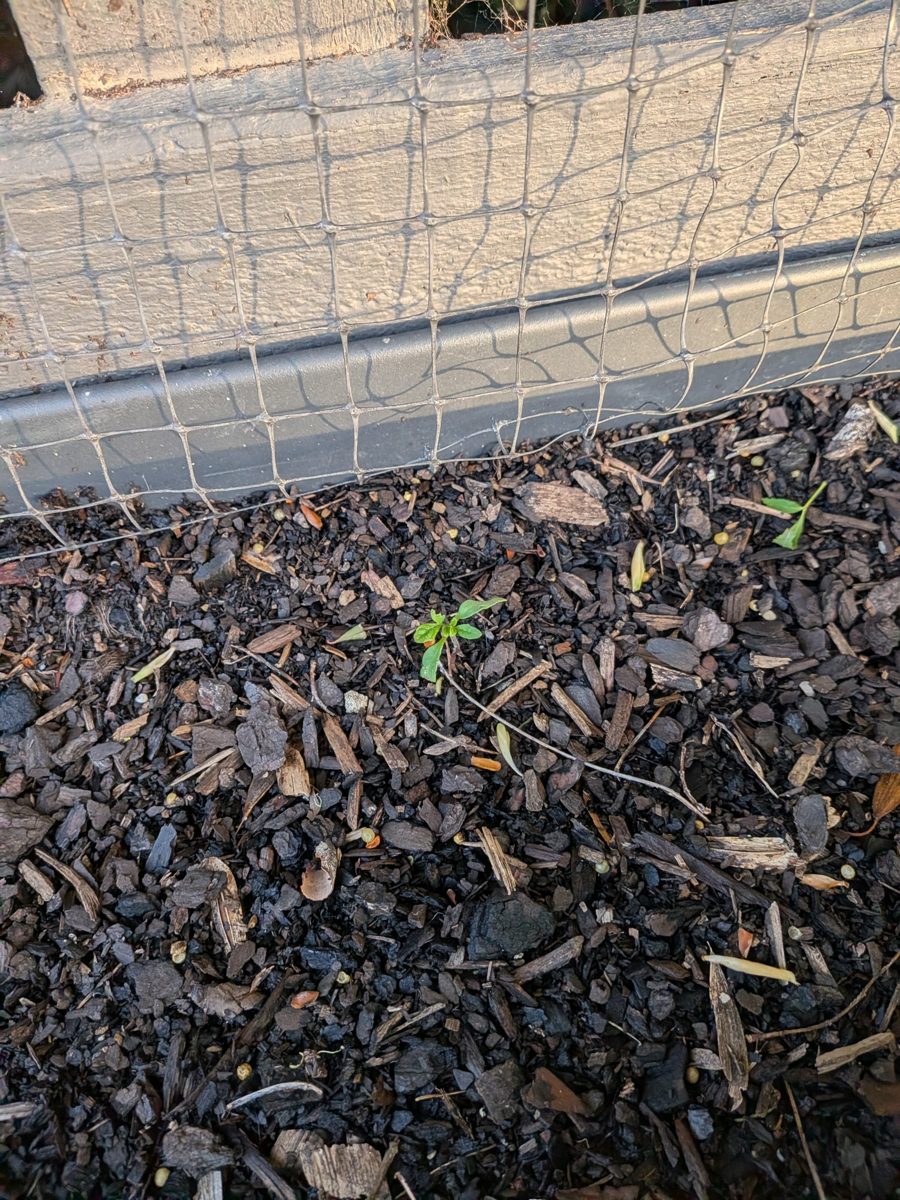
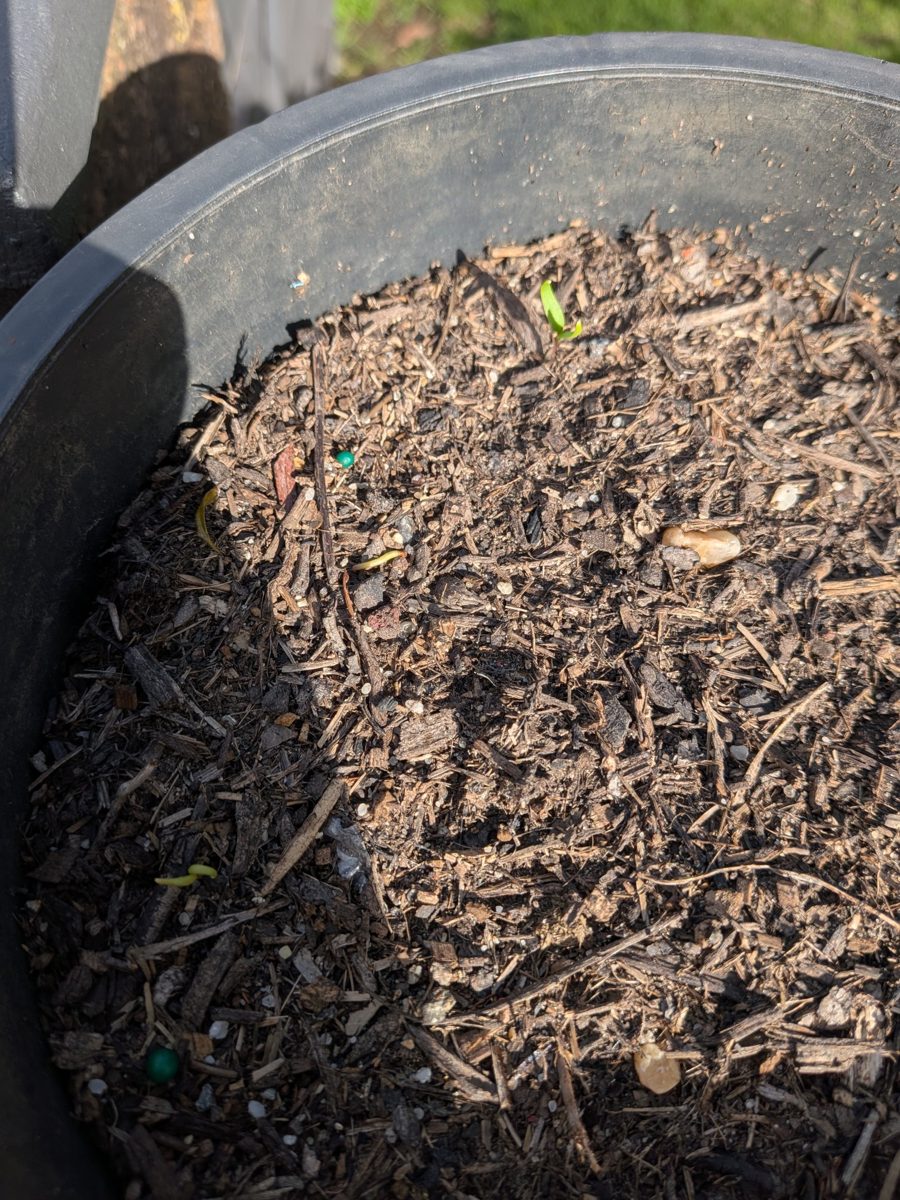
A correction to entry 7: we said there were three cherry tomato seedlings, but one was a weed. There are two tomatoes. The bell pepper (capsicum) pot had nothing up at day 21, so we moved it to the sunnier spot without resowing it, and one seedling has now come up. The chili peppers haven’t been sown yet.
Pumpkin, passionfruit and the rocket seed pods
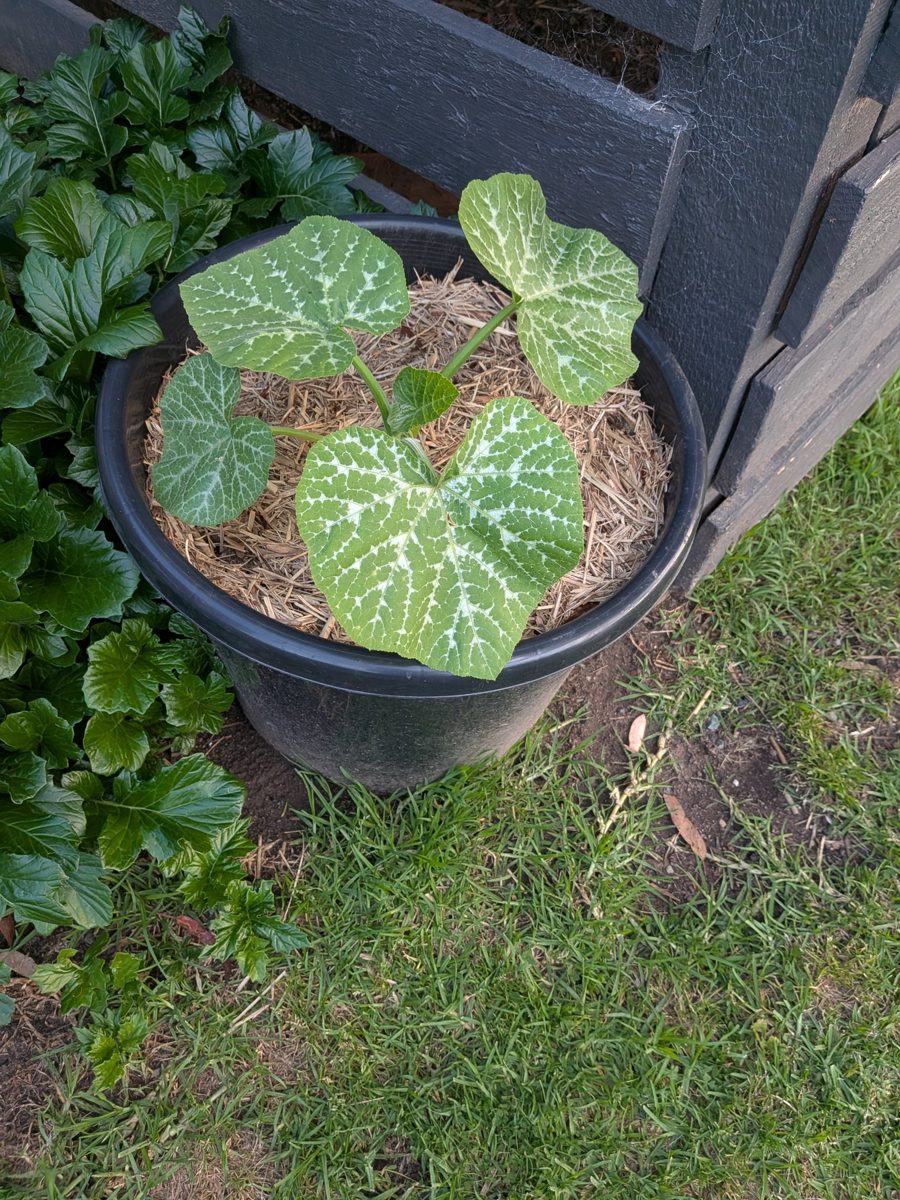
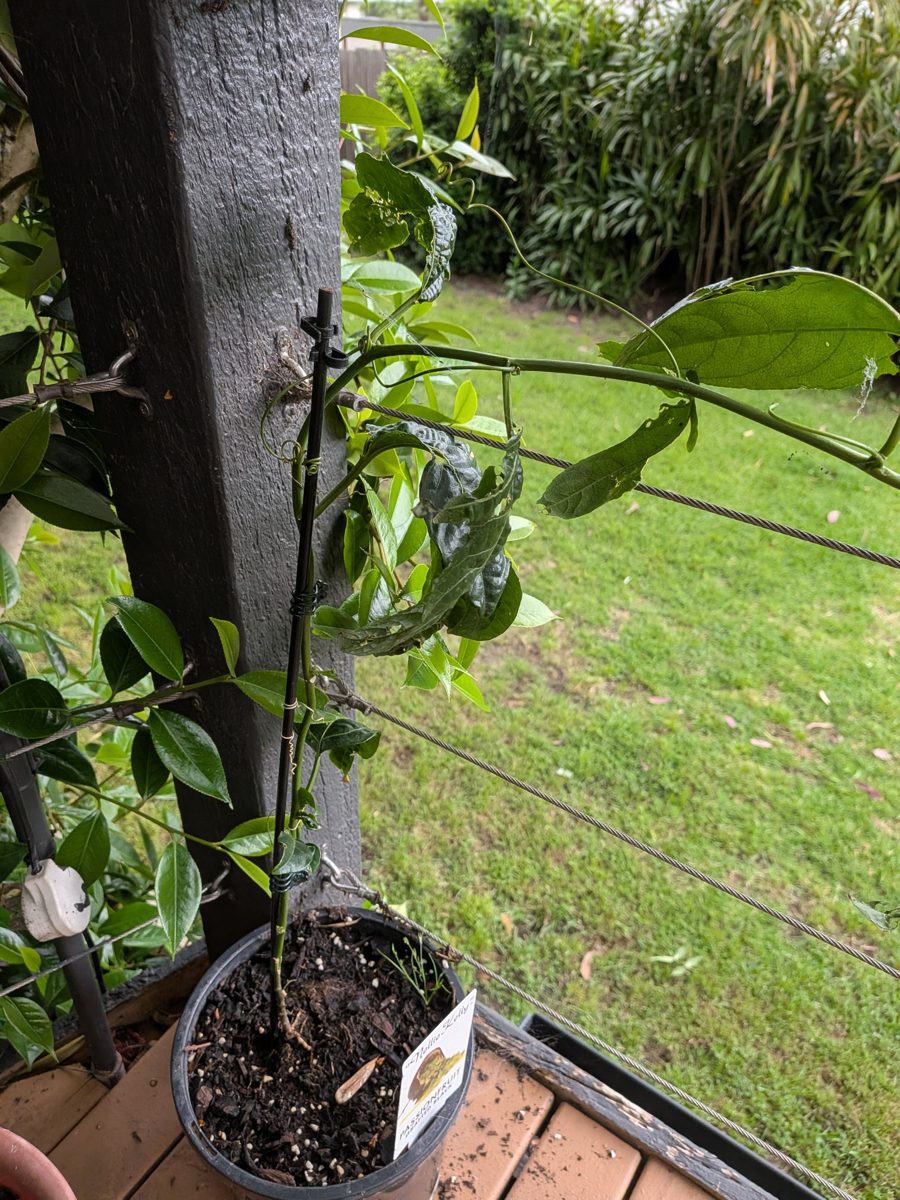
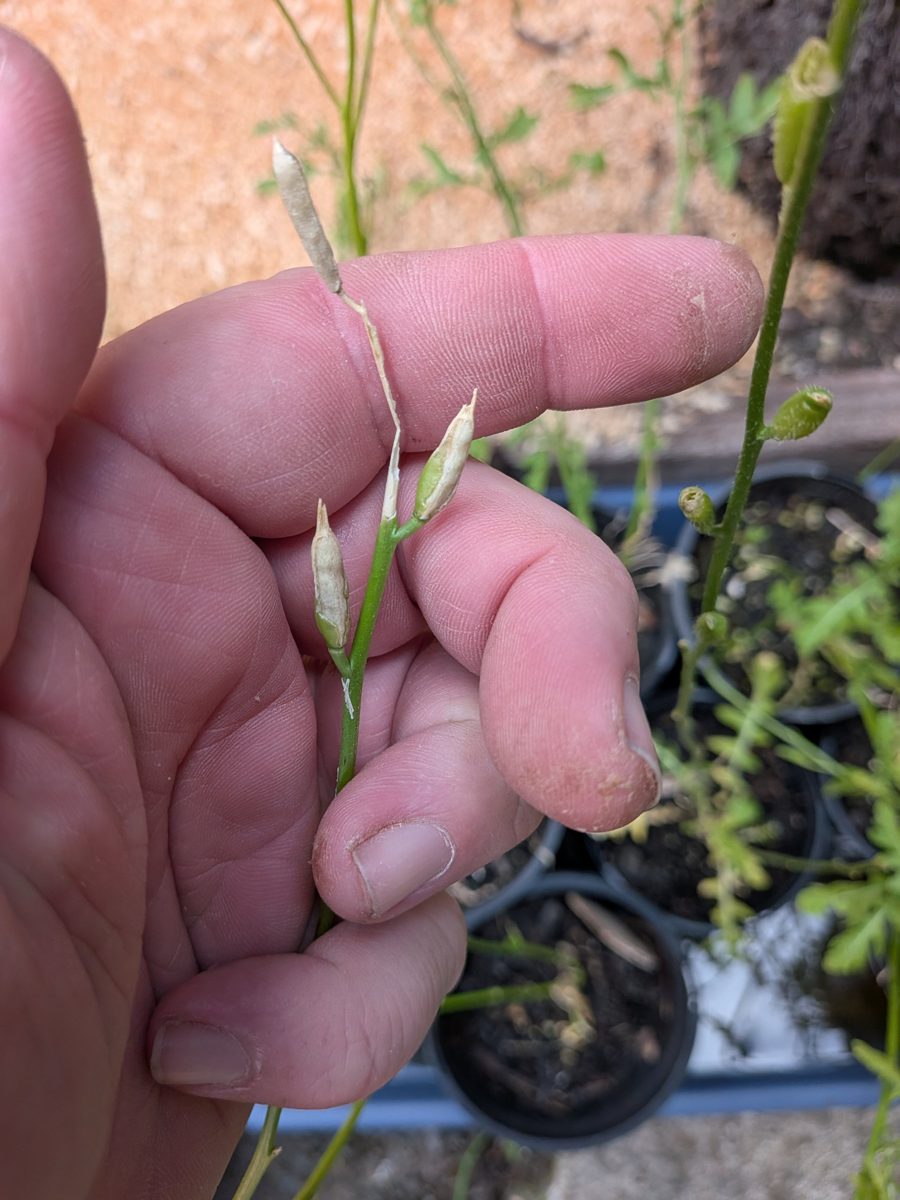
The big pumpkin in its large pot has new growth at the base of the stem. The smaller pumpkins are still in their smaller pots while we decide whether to give them bigger ones. The grafted passionfruit is still in its nursery pot with some curled, chewed leaves; we don’t know what’s eating them. And the bolted rocket now has some tan, papery seed pods. Seed savers wait until the pods turn light brown and brittle before collecting, so we’re not there yet. We cover seed saving in Why Is My Arugula Bolting?
Log entry 7: The first strawberry, broccoli in flower, and the onions start to differ
Posted October 22, 2026 (spring in the test garden). All photos taken October 22.
Strawberries: first fruit, and a runner test
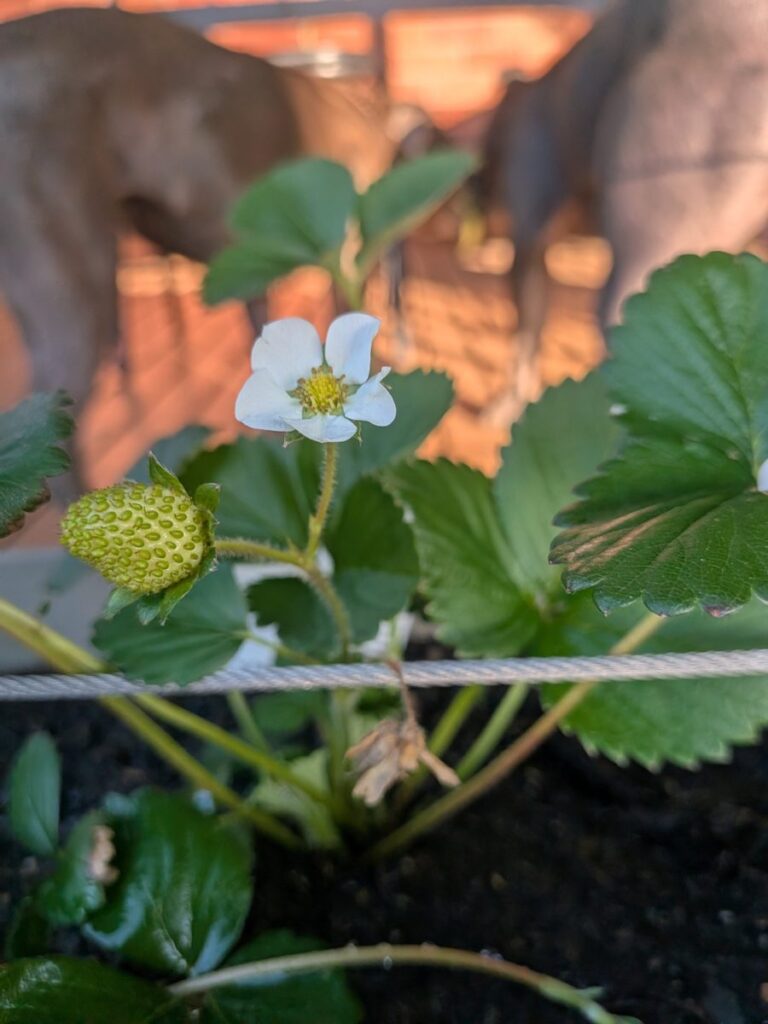
Fourteen days after planting, the strawberries in the trough have set their first fruit: one small green berry, with an open flower on the same plant. The plants have also started sending out runners. The plant label tells you to remove early runners, so we’ve been pinching them off.
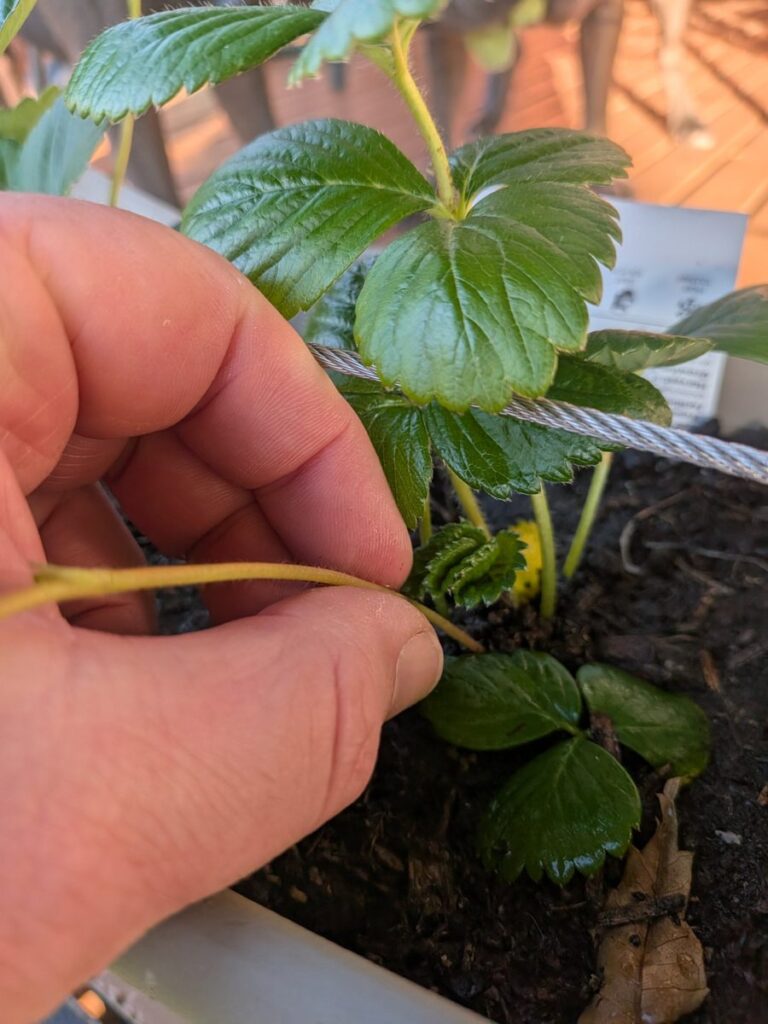
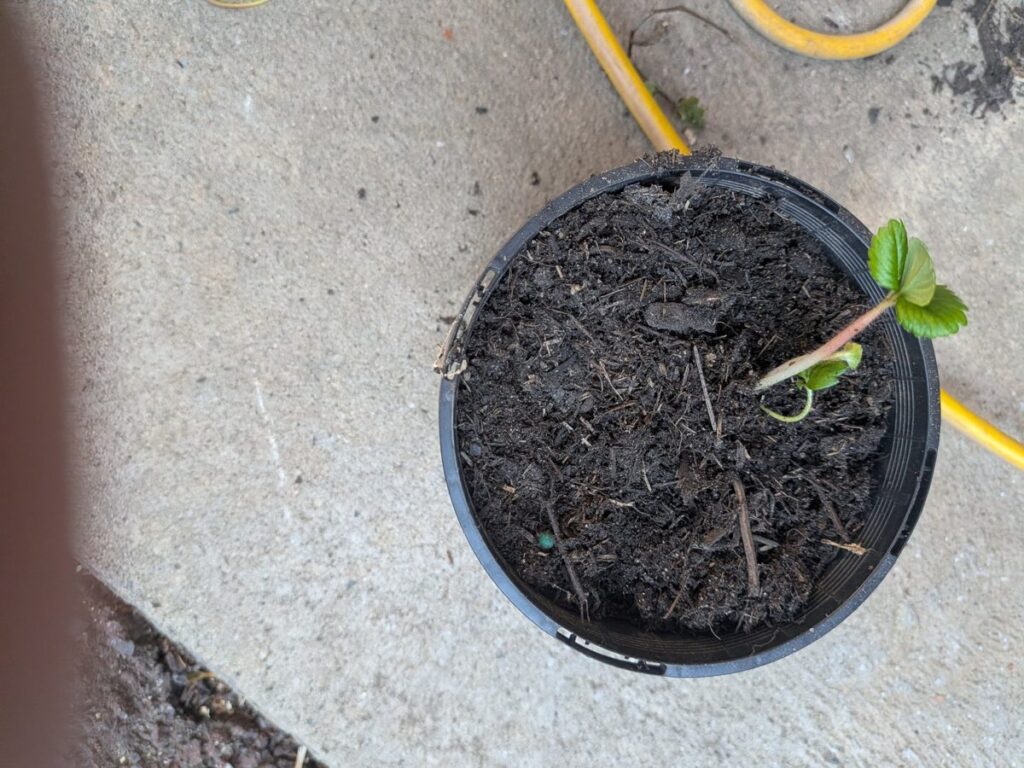
Rather than throw every runner away, we potted one of the little plantlets on the end. We cut it off first, and it had hardly any root, so this is a long shot. The usual way, as a Washington State University Master Gardener explains, is to set the plantlet in a small pot while it’s still attached to the mother plant, wait about three to four weeks for it to root, and only then clip the runner. We’ll report which way works.
Two new arrivals: a passionfruit and a blueberry
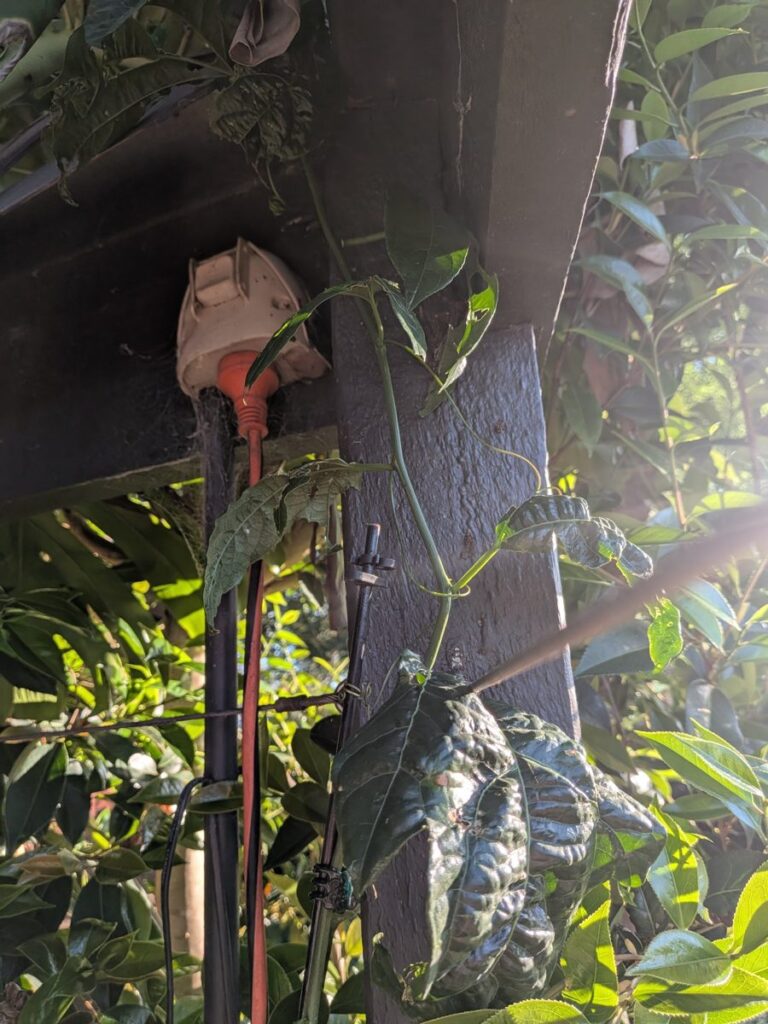
Two fruit plants we bought in early winter are now properly in the log. The first is a grafted black passionfruit (sold as Nellie Kelly), still in its nursery pot on the deck, with the vine already climbing a post. The grower’s advice for grafted vines is to cut off any growth that comes from below the graft, because those shoots come from the rootstock, not the fruiting variety. We’ll keep an eye on the base for any.
The second is a blueberry in a 2-litre pot. It has finished flowering and has tiny berries setting, with new bronze leaves coming. Blueberries need acidic soil, and University of Illinois Extension points out that containers make it easier to hold the pH between 4.5 and 5.5. Both plants are due to move into bigger pots soon, the blueberry into an acid potting mix, and we’ll log the pot sizes when we do.
Cherry tomatoes from our own saved seed
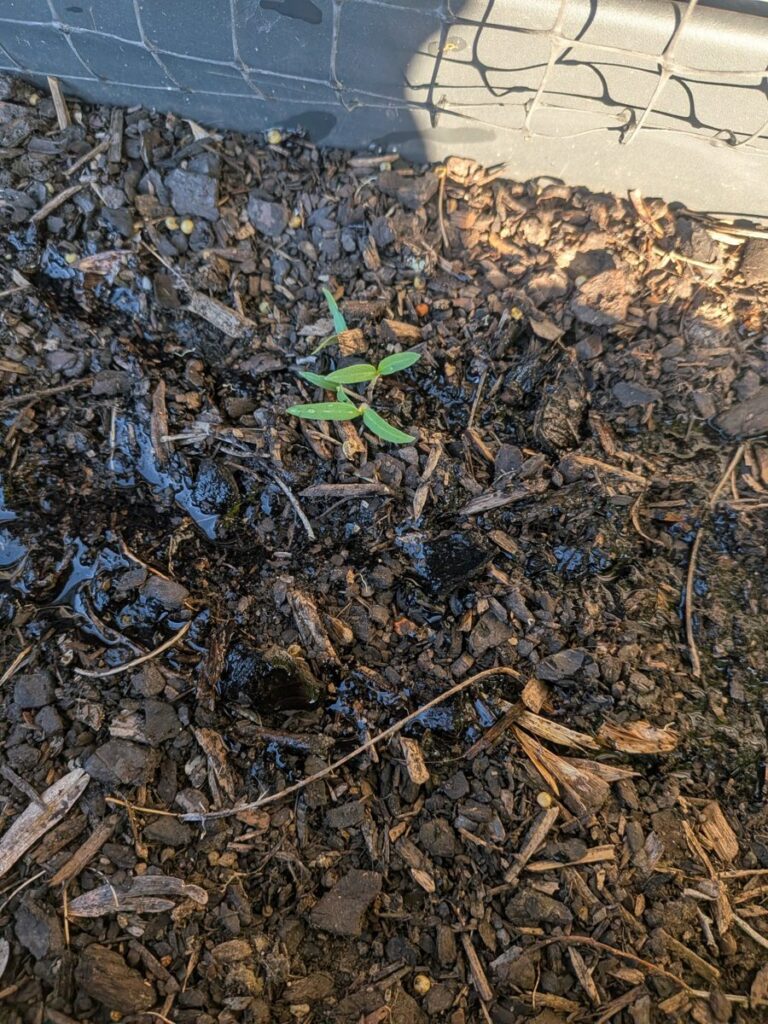
On October 8 we sowed seed saved from last season’s cherry tomatoes into a raised trough, and the seedlings are up. We don’t know what variety the parent plant was. That matters: University of Vermont Extension notes that seed from hybrid (F1) varieties won’t give plants true to the parent, while seed from open-pollinated varieties can be saved. So the fruit will tell us which kind we had, and we’ll describe exactly what it’s like.
One thing to fix: the mix in the trough is staying very wet. Damping off, the disease that makes seedlings collapse at soil level, thrives in cool, wet conditions, according to University of Minnesota Extension, which advises keeping the mix moist but not soggy. We’re going to ease off the watering, and we’ll thin to the strongest one or two seedlings once they have true leaves.
Capsicum: still nothing at day 21
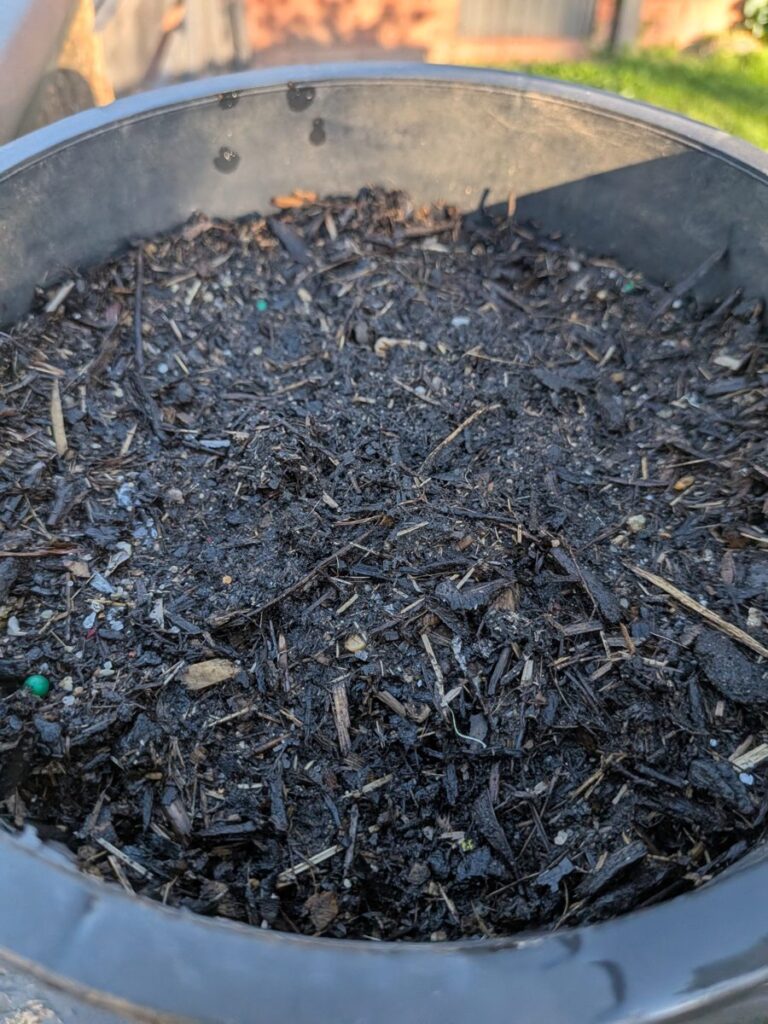
Three weeks after sowing, and a week after we moved it to the spot with about 12 hours of sun, the capsicum (Californian Wonder) still hasn’t come up. Peppers need warm soil to germinate, and a pot sown outside in early spring is a cool place to ask them to start. This week we’ll decide whether to resow it somewhere warmer or buy a seedling. We also still plan to sow a chilli this month.
Broccoli: in flower, with a caterpillar still on it
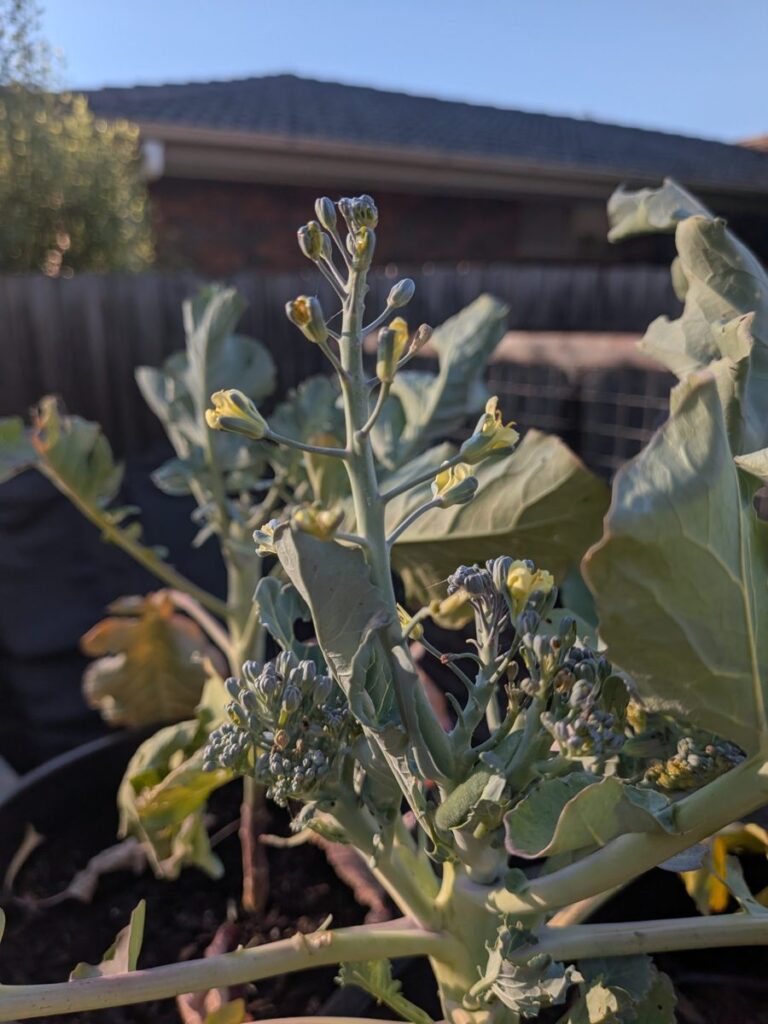
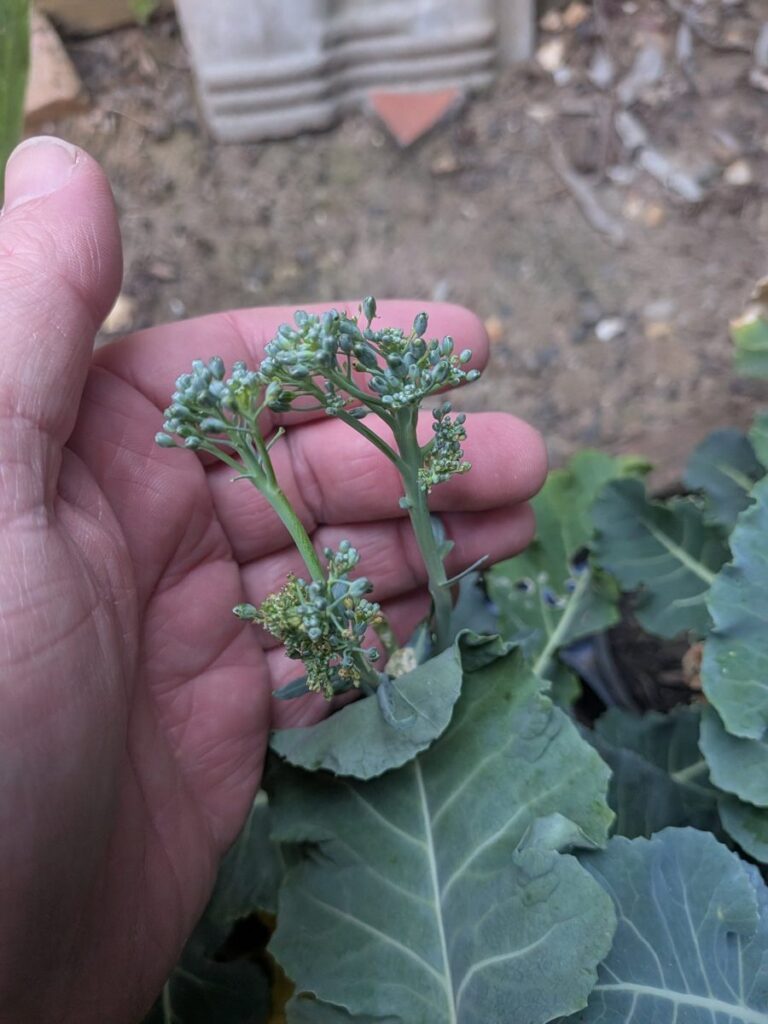
The broccoli in the 300 × 270 mm pot has gone over. Several side shoots have opened into small yellow flowers. University of Illinois Extension says to cut broccoli before the flowers open, and notes that yellow flowers can appear early in hot weather, so with spring warming up this was coming. There’s still a green caterpillar on the stem, like the one in What’s Eating My Broccoli?, and plenty of chewed leaves.
We’re leaving the flowers for the bees for a couple of weeks, then pulling the plant to free the pot for a summer crop. The smaller broccoli, in the spot with about 6 hours of sun, had one more side shoot, already loosening at the edges, so it’s time to cut it.
Onions: the first difference between 12 hours and 6
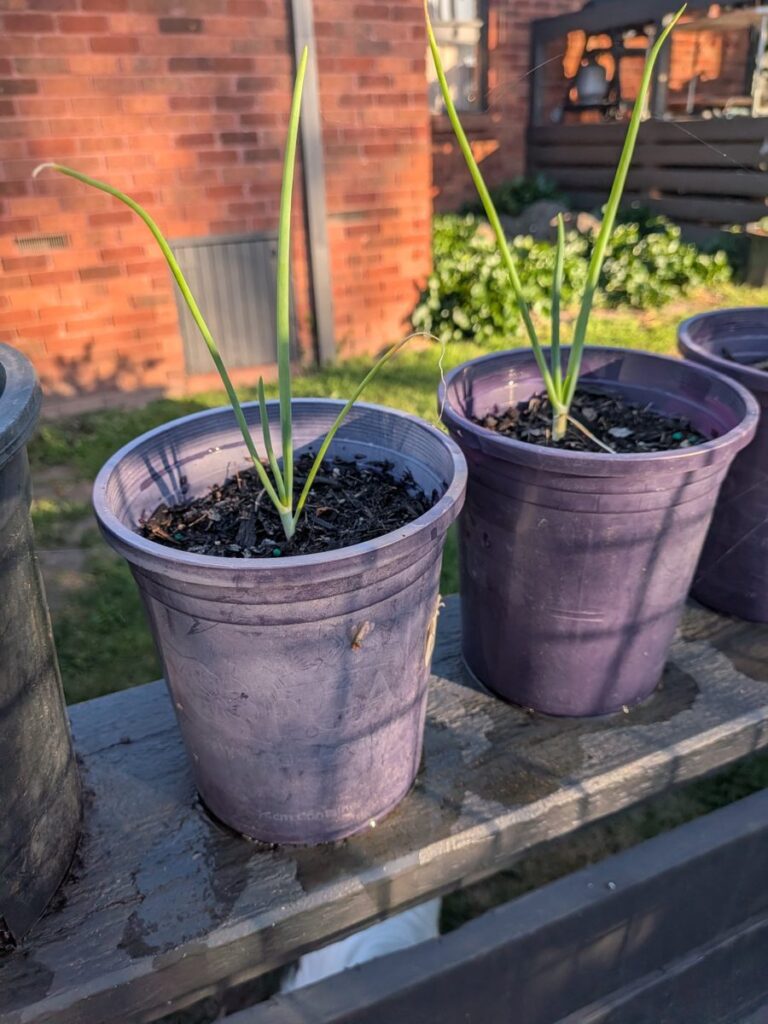
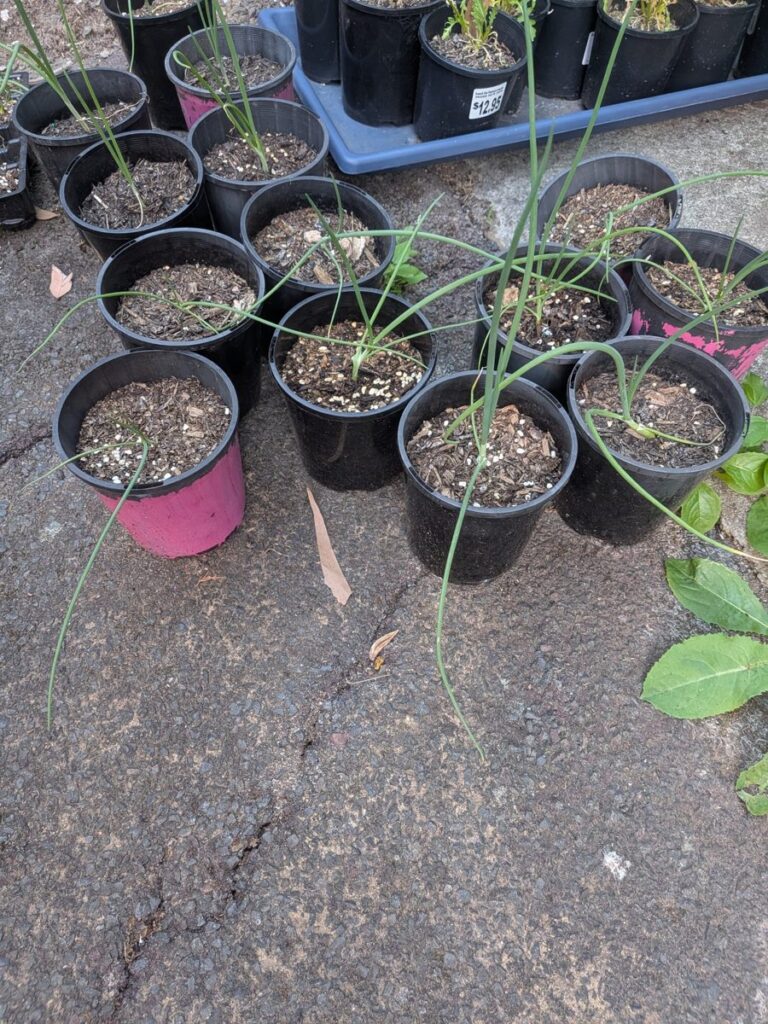
In entry 6 there was no clear difference between our two batches of onions grown from seed. A week on, there is one. The batch with about 12 hours of sun stands upright, while the batch with about 6 hours has longer, thinner leaves that flop over the pot rims. Both came from the same seed tray and were potted up at the same time.
It fits what you’d expect from less light, but it isn’t proof. The two spots also differ in pot size, wind and how quickly the pots dry out. The real test is the bulbs, so we’ll keep photographing both batches until harvest.
Pumpkins: one in its big pot
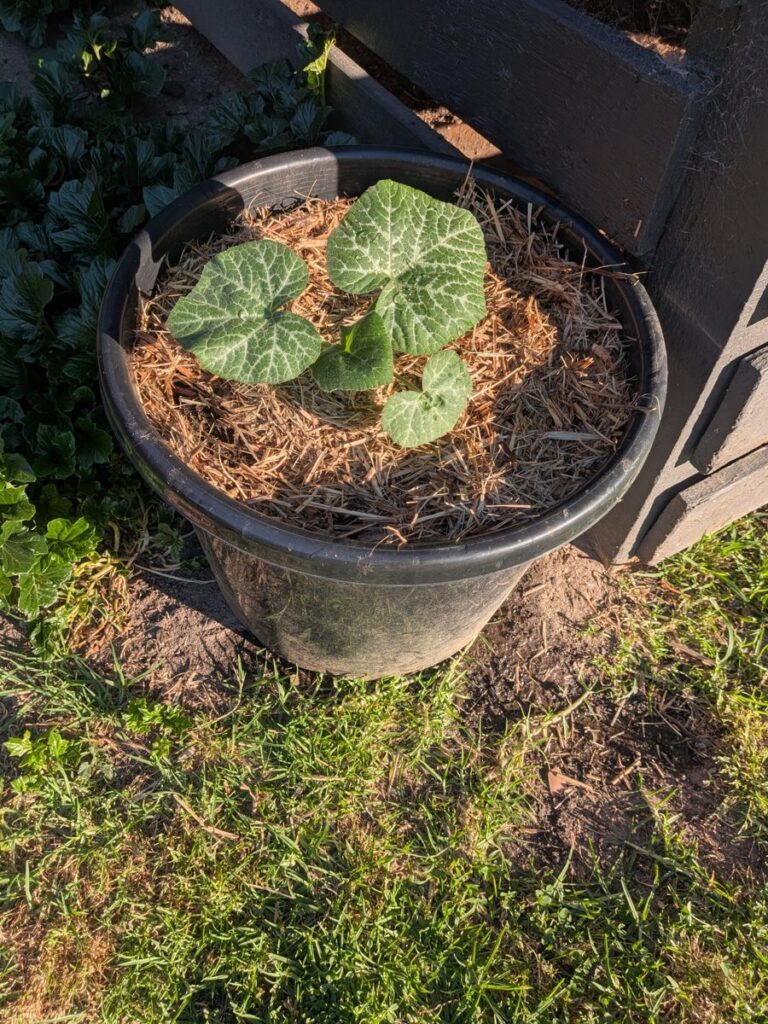
On October 20 we moved one Kent pumpkin seedling into a black pot 430 mm across and 480 mm deep (about 17 × 19 inches), filled with a mix of compost and potting mix and mulched with sugarcane. Two days later it has settled in well. The silvery patches along its leaf veins aren’t a problem: an Ask Extension expert explains that silver or grey blotches on squash-family leaves are normal and not a sign of disease. Signs worth worrying about would be insects feeding under the leaves or dried-out spots.
Rocket, salad mix and the “spinach” tray
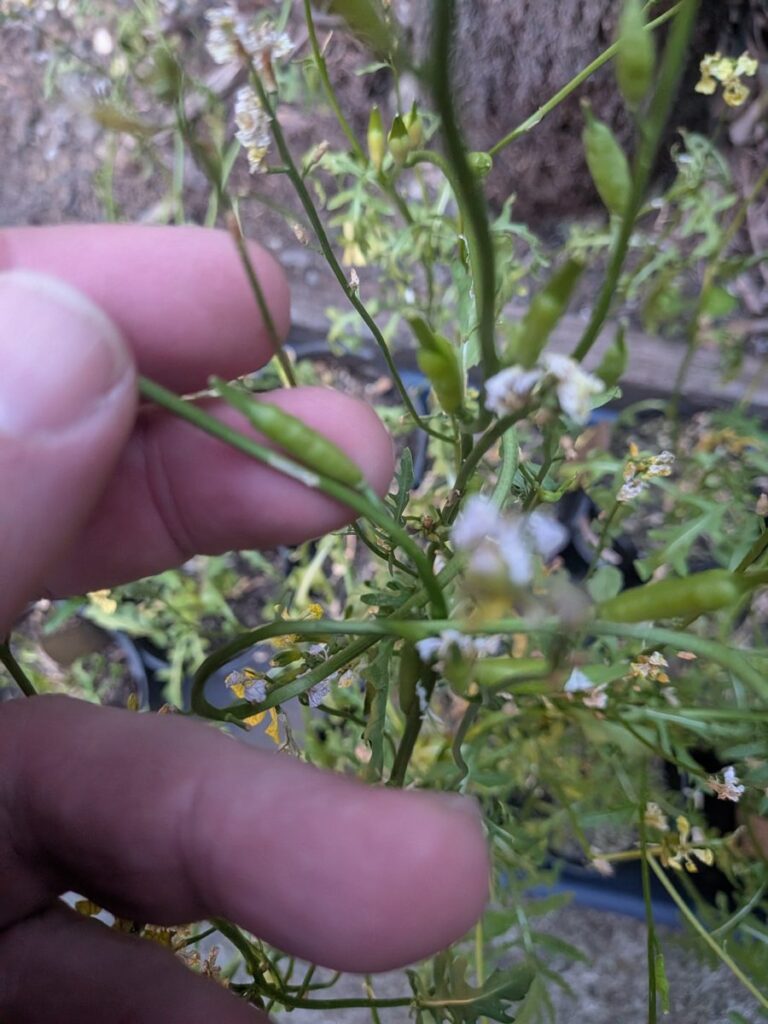
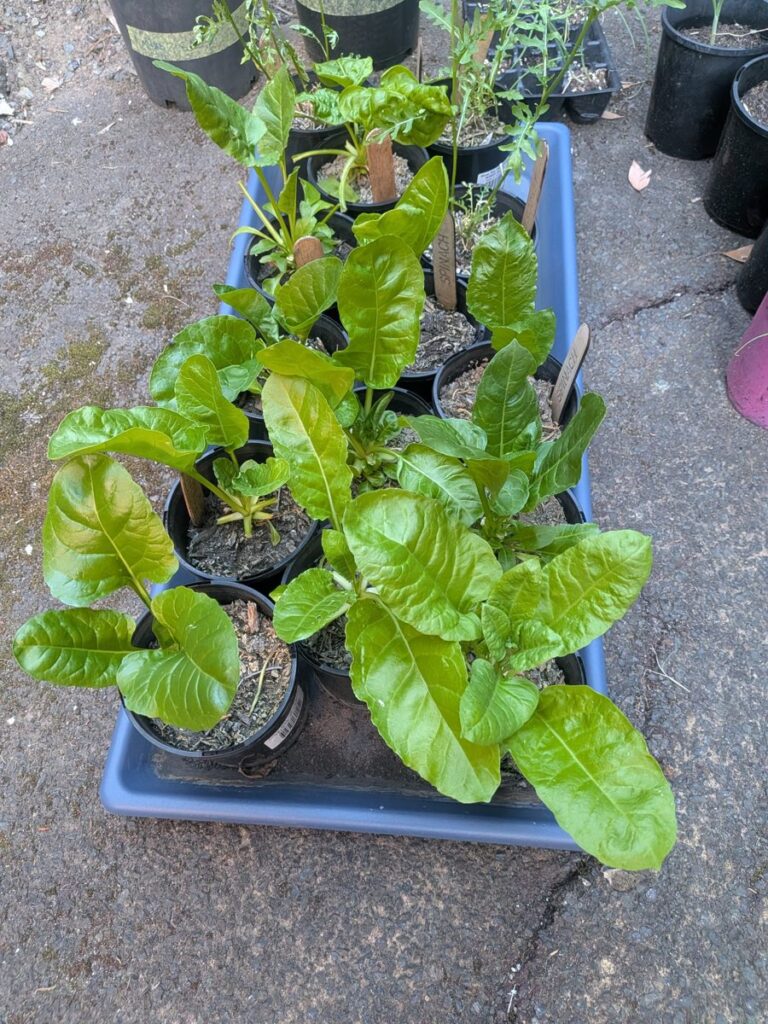
The rocket from Why Is My Arugula Bolting? has finished flowering and is covered in green seed pods. We’re going to save the seed, so we’ll leave the pods until they turn tan and dry, then collect them.
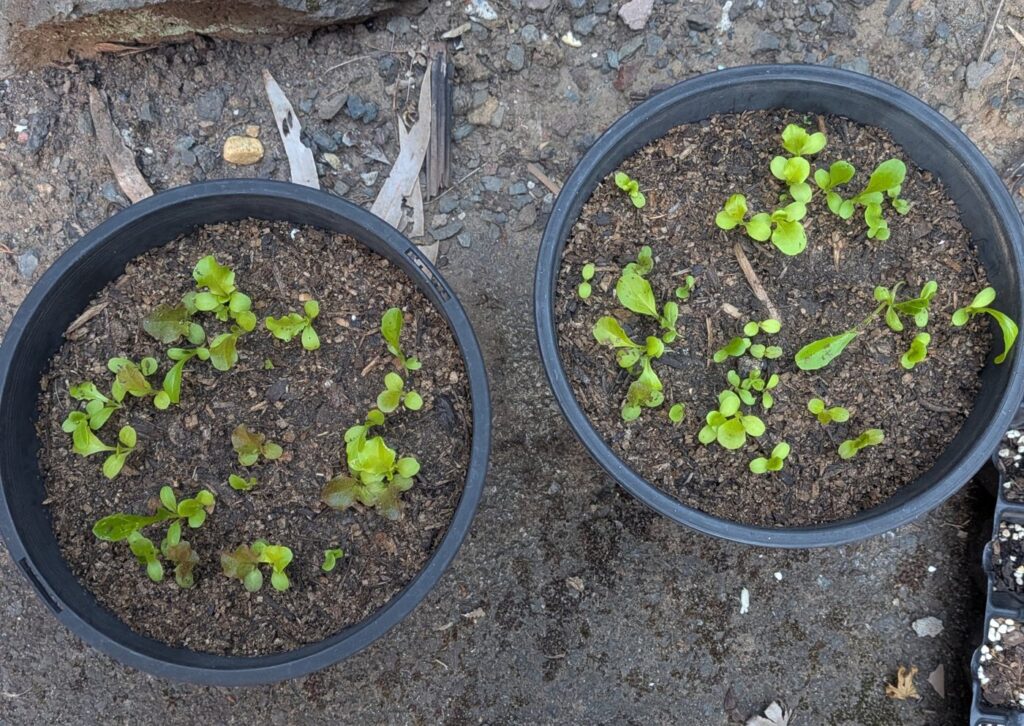
The salad mix from our beginner’s guide is three weeks old. Most seedlings now have true leaves, and the red and green lettuces in the mix are starting to show. A few are growing in tight clumps, so we’ll thin those. We’re still on track for a first baby-leaf cut in early to mid November.
Finally, a correction. In entry 6 we called the tray beside the rocket spinach, because that’s what its labels say. Its broad, glossy leaves and pale stems look more like silverbeet (Swiss chard) or perpetual spinach, so we’re checking the seed packet. We’ll confirm what it is in the next entry. Whatever it turns out to be, it’s been picked many times since we sowed it in late autumn. Its leaves have gone paler, so we’ll give it a liquid feed.
Log entry 6: Who’s been eating the broccoli, a slow start for the bell pepper (capsicum), and a supermarket potato surprise
Posted October 18, 2026 (spring in our test garden). Photos taken October 13 (broccoli), October 15 (most of the garden) and October 17 (garlic and potato).
US timing: In most of the US, this is spring work: lettuce and strawberries go in early, and pumpkins move outdoors only after your last frost. Check your own dates in our planting planner.
Broccoli: aphids, a caterpillar and an earwig
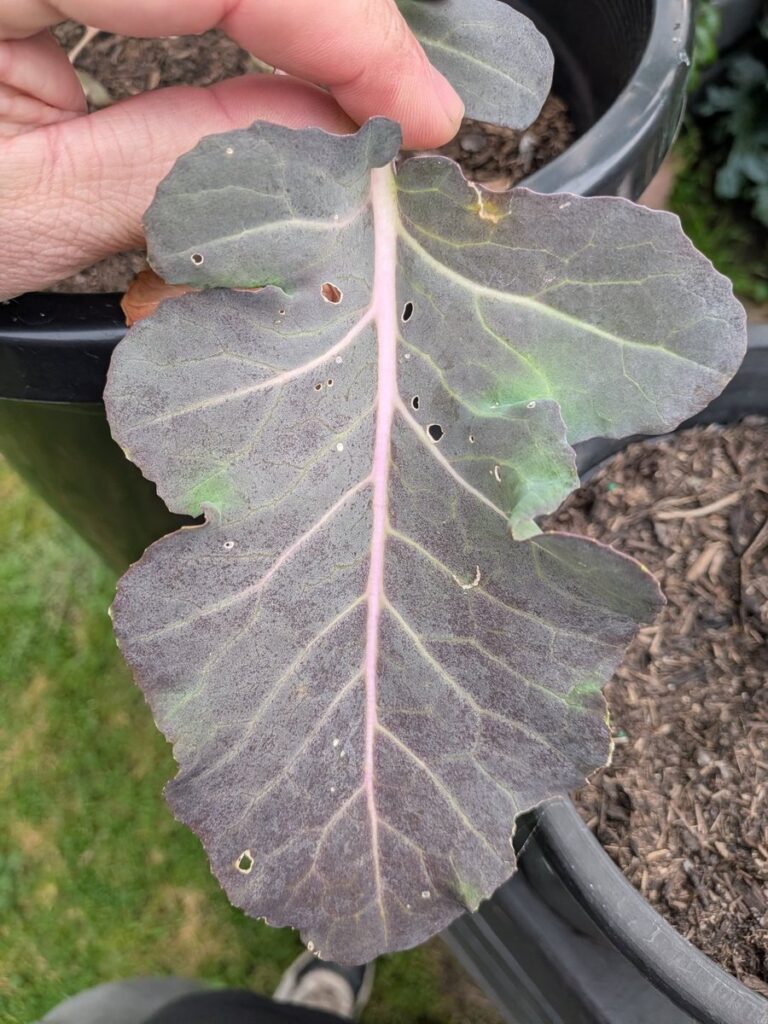
Back in entry 1 our broccoli had just a few small holes. By mid-October, with the main head cut and the plant on side shoots, there were holes in many leaves, so we checked the plant closely on October 13. We found small orange aphids under several leaves (plus a winged one), a small brown moth on a side shoot, droppings on the rail beside the pot, and an earwig underneath the pot when we lifted it. No slime trails, so probably not slugs.
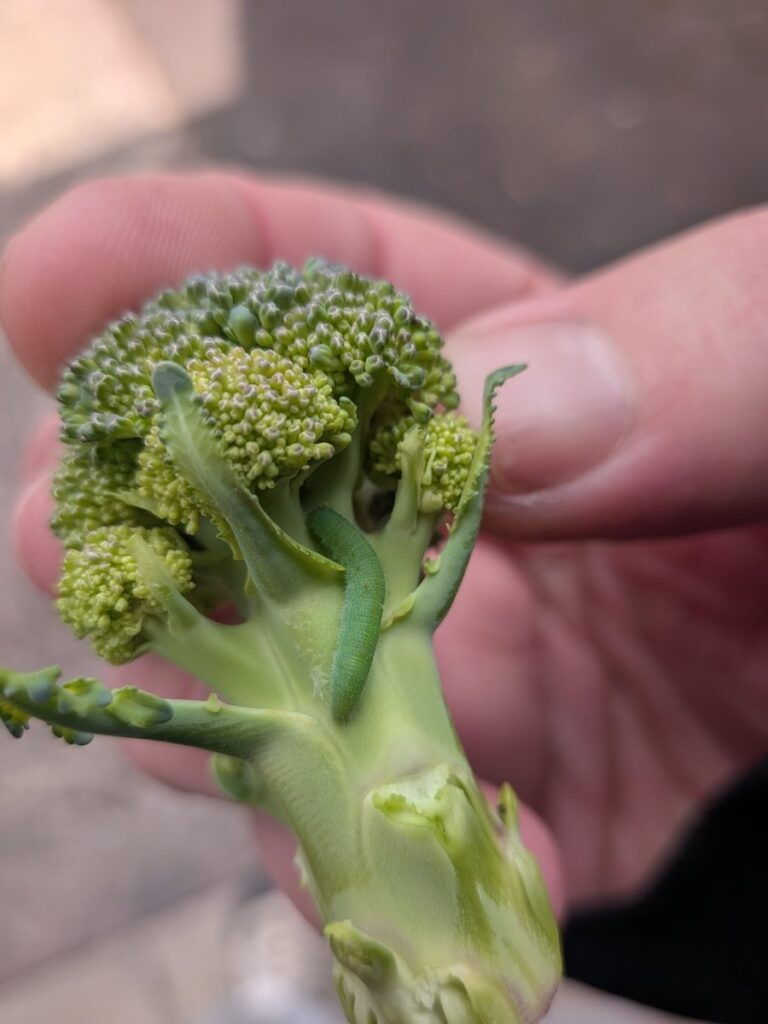
The clearest culprit turned up at harvest: a green caterpillar tucked right under the head of the side shoot we cut. It looks like a cabbage white caterpillar (in the US, the imported cabbageworm). The small holes and windowpane patches also fit diamondback moth caterpillars, and the moth may be one, but we haven’t found one of its caterpillars to confirm it.
We hosed the aphids off and they were back within 3 days. That fits what UC IPM (University of California) says: each adult aphid can produce up to 80 young in about a week, so the spray has to be repeated. Everything we found, how to tell the culprits apart and how to deal with them is in our new guide, What’s Eating My Broccoli? With the main harvest done and the plant near the end, we’re only re-checking it and hosing the aphids off, not spraying. We’ll photograph it again on October 20.
The second broccoli, the one we sowed on the same day in a much smaller pot (entry 3), has gone leggy and lost its bottom leaf. It’s another point for the bigger pot.
Strawberries: week 1 in the trough
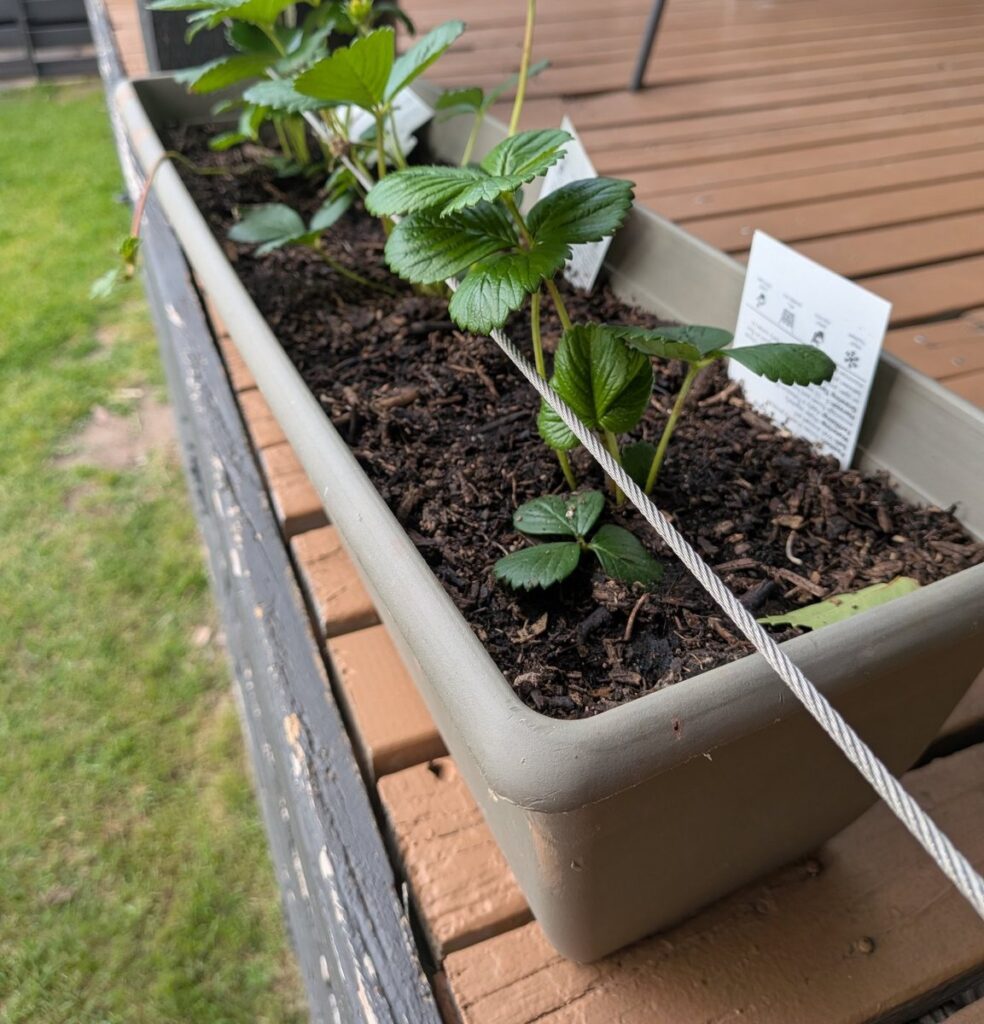
A week in, all three plants have put out new leaves and one is flowering. They’re in compost rather than potting mix, so we’re watching for the compost slumping or staying soggy; so far it looks fine. The trough sits on the deck rail, which gets about 12 hours of direct sun a day.
Lettuce and bell pepper: one up, one not
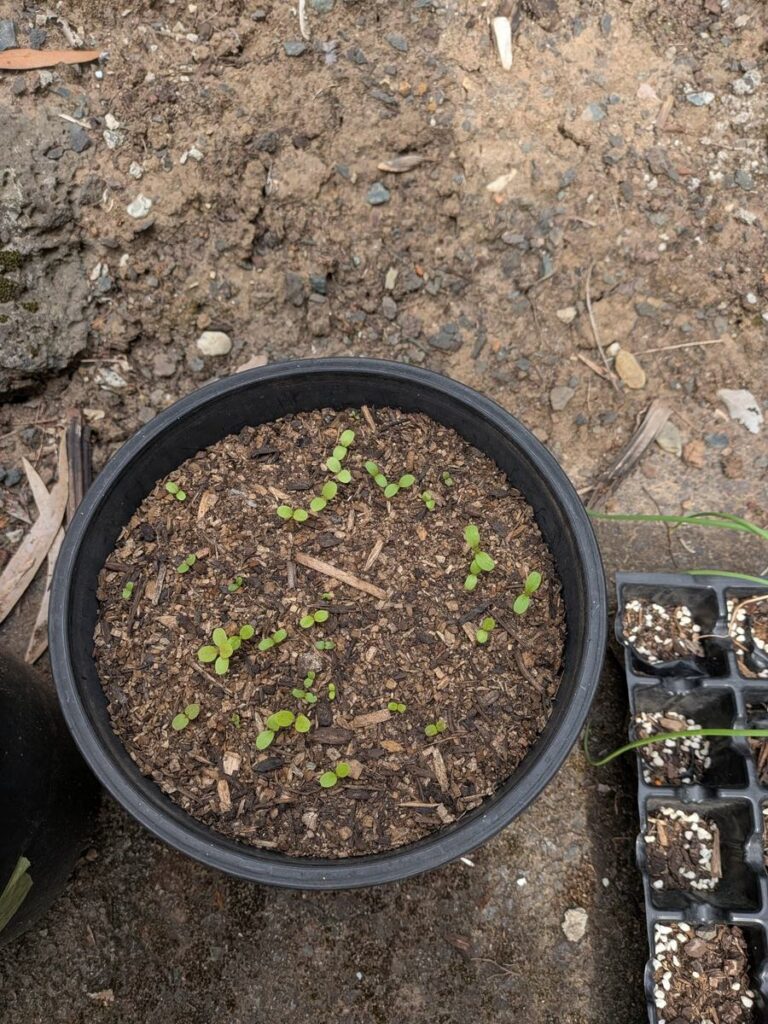
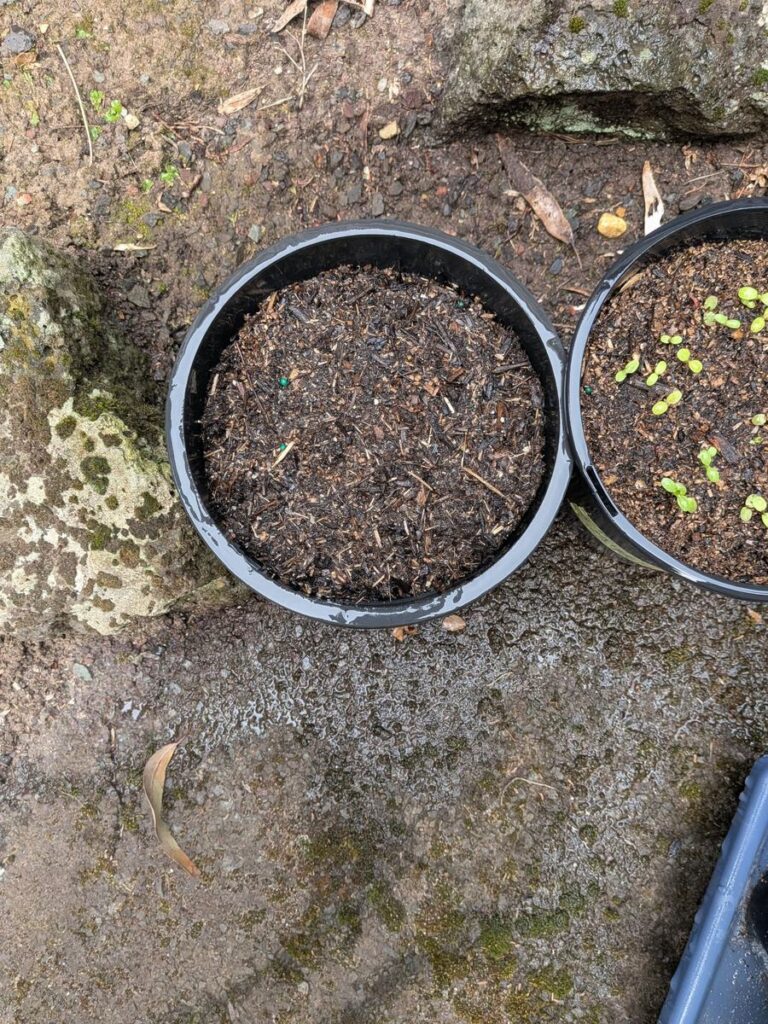
Both lettuce pots now have about 20 seedlings each, but at day 14 most are still on their first seed leaves, with the first true leaves only just starting. The packet says 8 to 10 weeks to harvest, so our first baby-leaf cut is now looking like November rather than late October.
The bell pepper (capsicum), a variety called Californian Wonder (sold in the US as California Wonder), still hasn’t come up, two weeks after sowing. Both pots have been sitting where they get about 6 hours of direct sun, from late morning to late afternoon. We’ve now moved the bell pepper pot to the sunny spot, which gets about 12 hours, to see if a warmer pot gets it going.
Onions: about 12 hours of sun against about 6
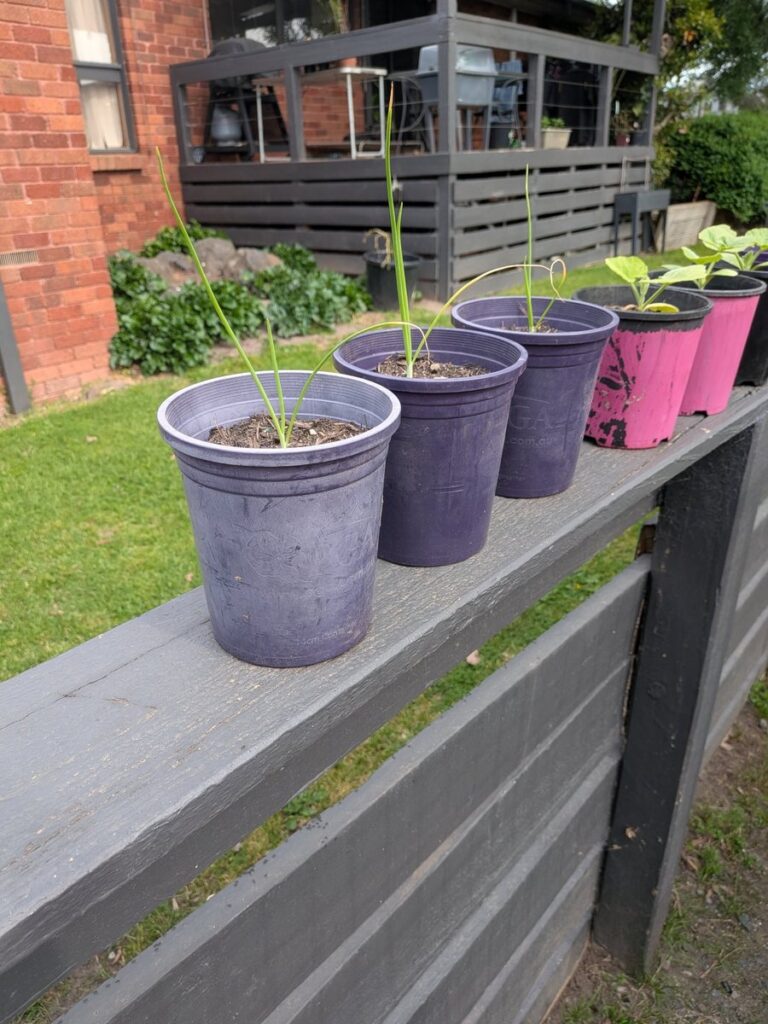
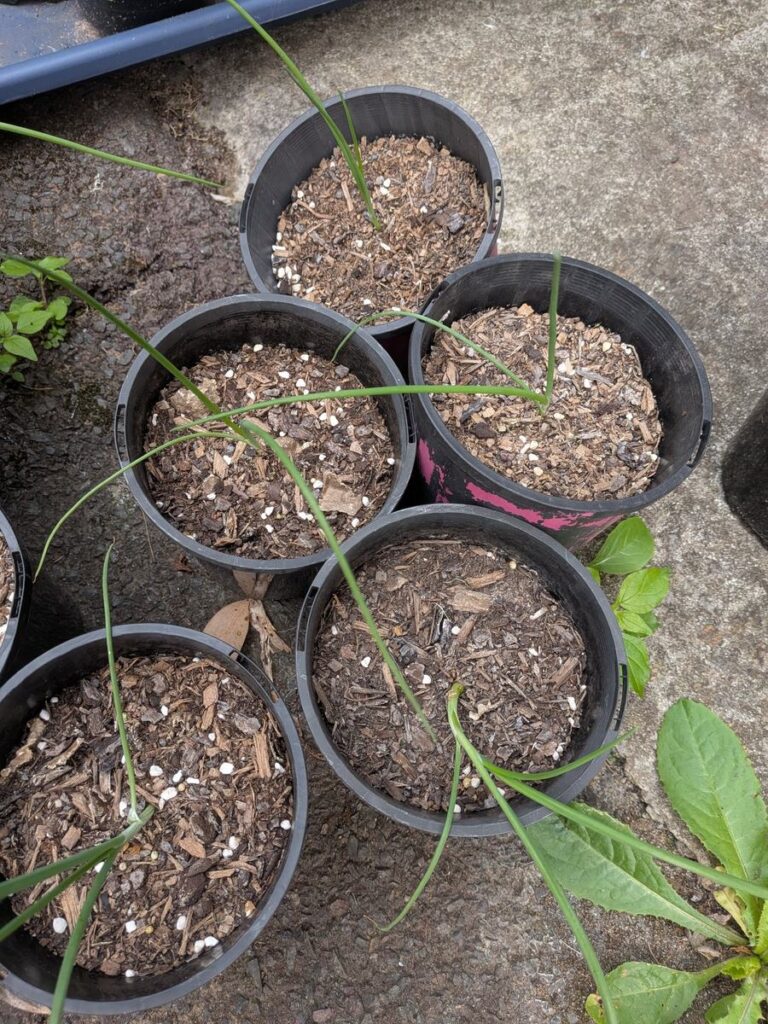
In entry 5 we called onions batch 2 the “shadier” pots. We’ve since timed the sun: batch 1 gets about 12 hours of direct sun a day, and batch 2 about 6 hours, from late morning to late afternoon. So this is really a comparison of 12 hours against 6, not sun against shade. Penn State Extension says most vegetables need at least 6 to 8 hours of sun a day, which puts batch 2 at the low end. For now there’s no clear difference: both batches have one to three thin leaves per pot, and a few leaves in each have flopped over or yellowed at the tip. We’ll keep photographing them side by side.
Pumpkins: ready to move
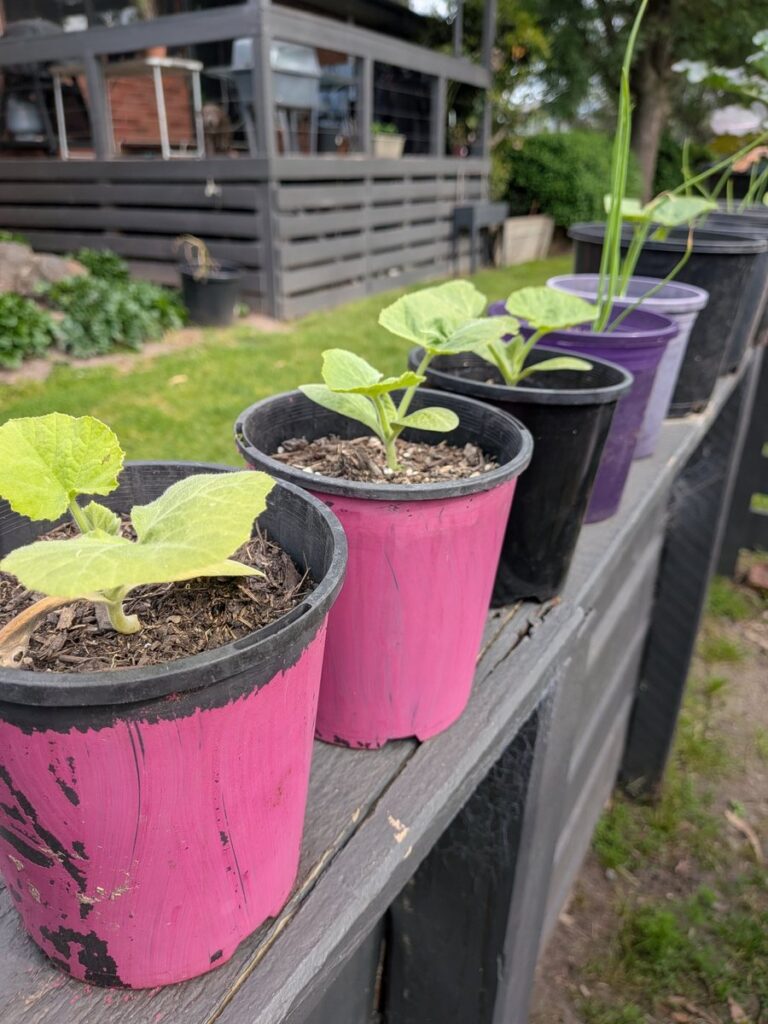
We have six Kent pumpkin seedlings, five in the sunnier spot and one in the spot with about 6 hours of sun, each with one or two true leaves. University of Minnesota Extension suggests moving pumpkin seedlings once they have two to three true leaves, so they’re about ready. Kent is a big, long-season vining pumpkin, and the seed supplier’s advice is a sunny position with plenty of space for the vines to spread. That’s a lot to ask of a pot, but that’s the test: we’re moving the strongest seedling into a pot about 17 × 19 inches (430 × 480 mm), roughly 15 US gallons and letting the vine run along the ground. We’ll report how it copes.
Rocket (arugula) and spinach
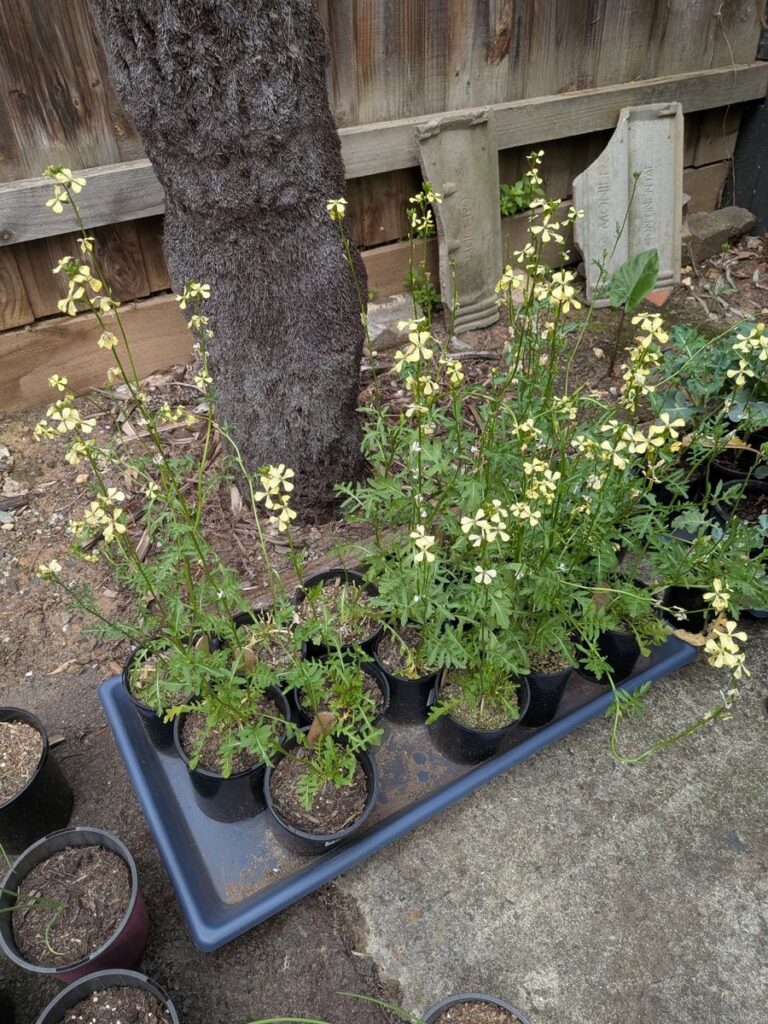
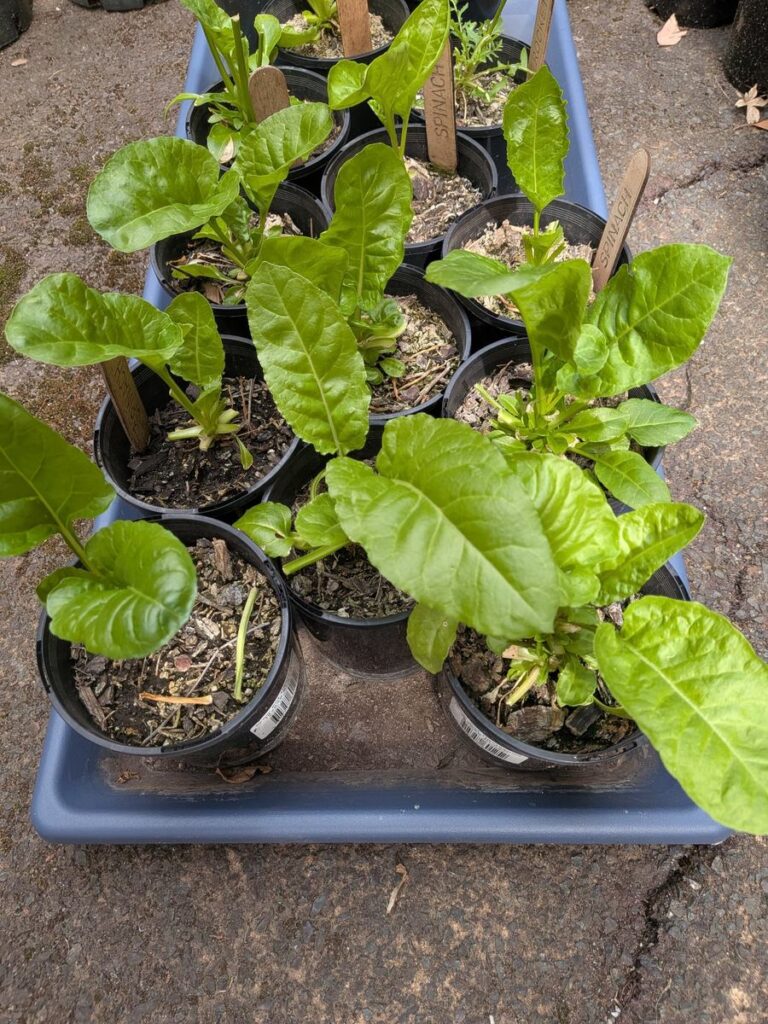
The rocket (arugula) we followed in Why Is My Arugula Bolting? is now in full flower right across the tray. We’re leaving it to set seed pods. The spinach beside it has big leaves, and one or two plants look like they’re starting to send up a center stalk, so those are the ones we’ll pick first.
Garlic dug up, and the supermarket potato tipped out
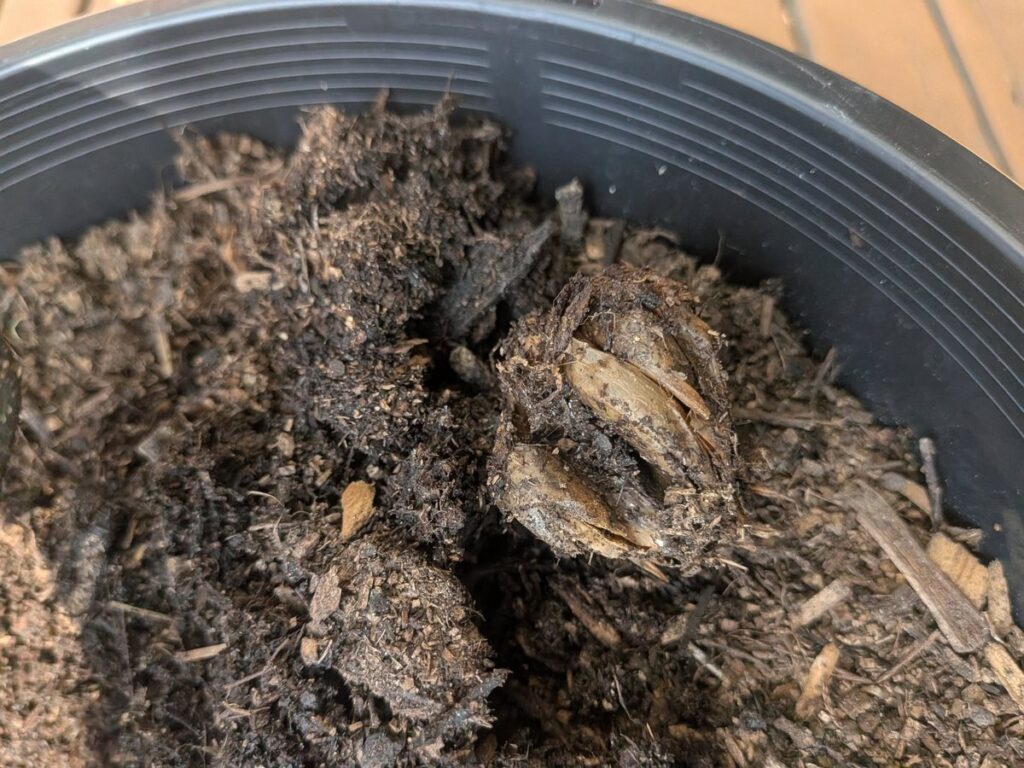
Two weeks after the garlic’s only shoot disappeared, we dug the pot on October 17. We found most of the cloves still in the mix, and they had rotted. So spring planting hasn’t worked in this pot. That was always the experimental part; the usual timing is in our garlic in containers guide.
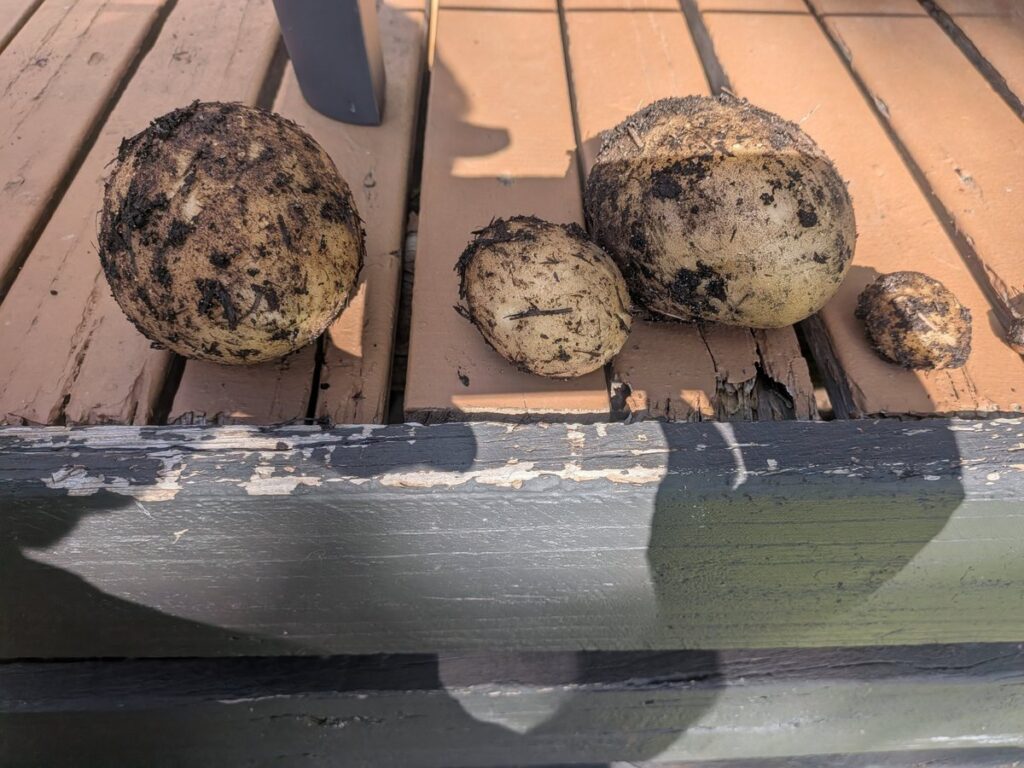
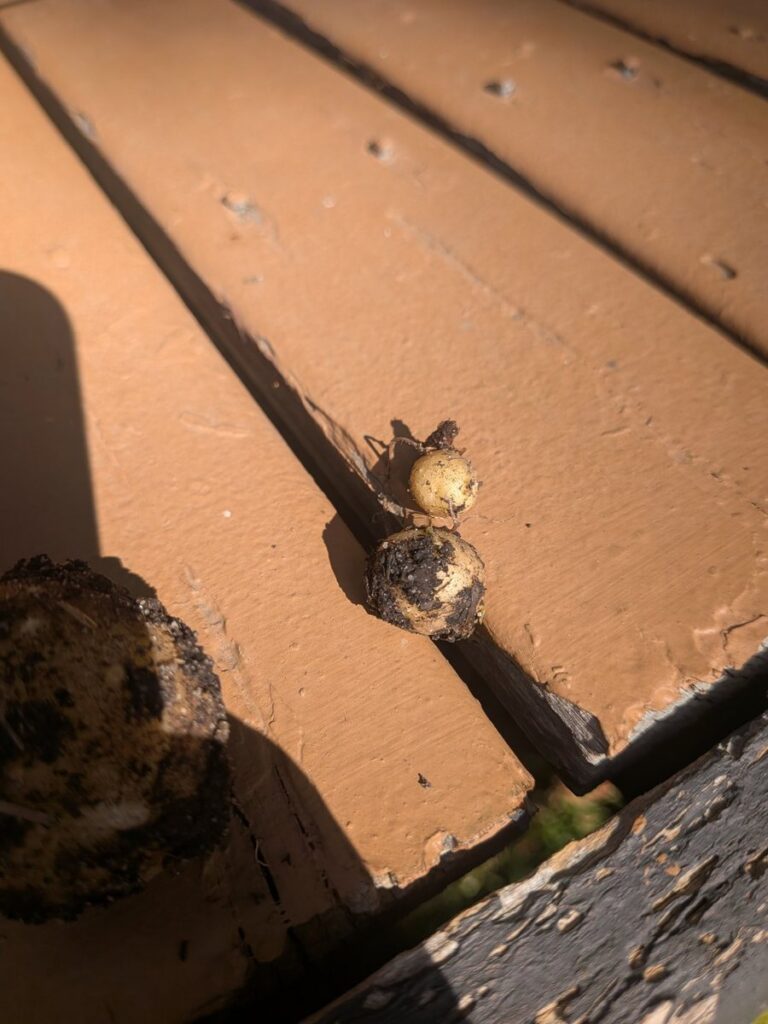
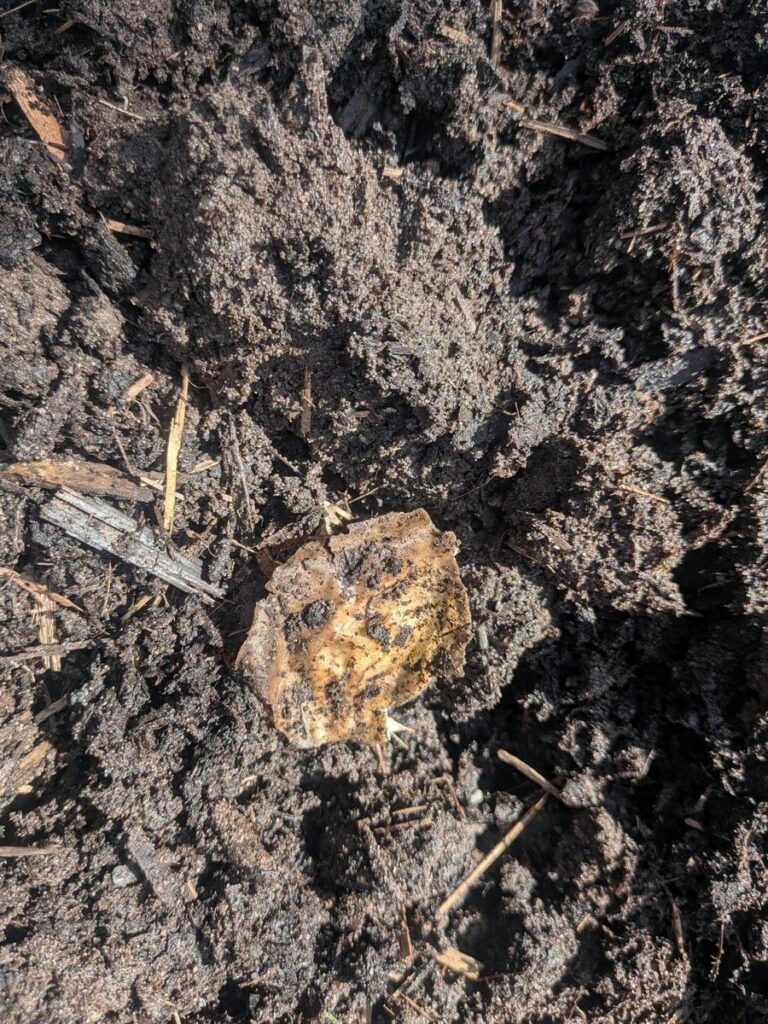
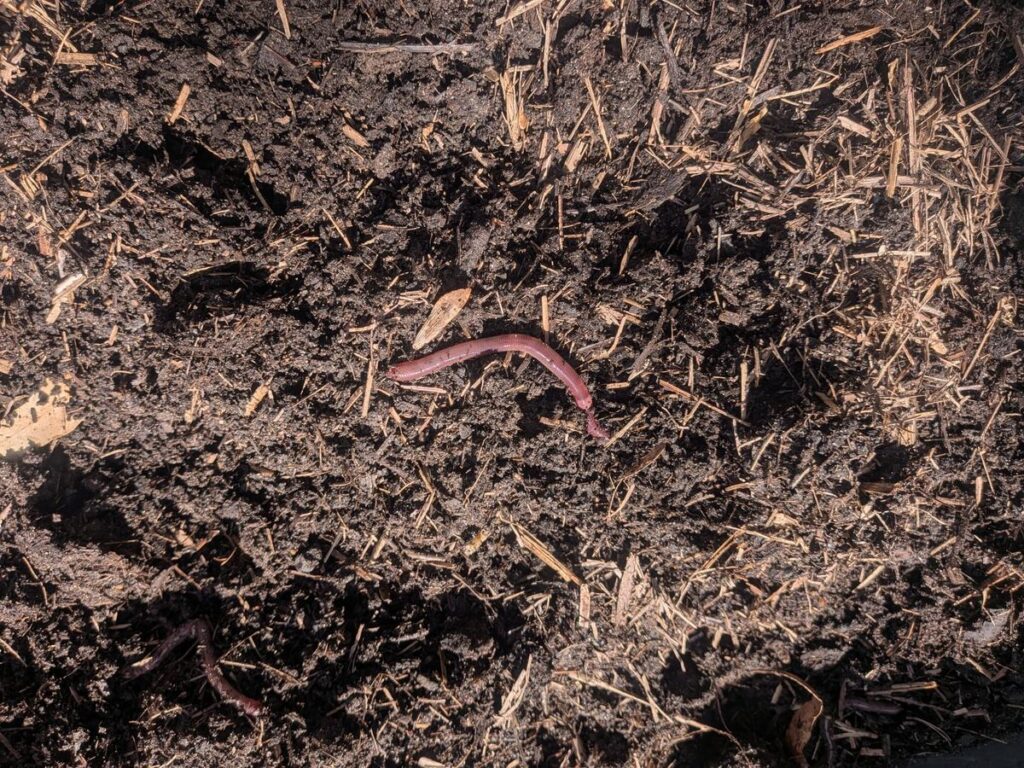
The supermarket potato we planted in June died right back in early October, so on October 17 we tipped the pot out. From that one potato we got four good-sized potatoes (two big, one medium and one small) plus two marble-sized ones that were still forming. The potato we planted had rotted down to a soft, papery skin, and the mix was full of earthworms.
That’s a better result than we expected from a supermarket potato, but one pot doesn’t change the advice. Colorado State University Extension recommends certified seed potatoes, because supermarket potatoes are usually treated to stop them sprouting and can carry disease into your mix. We won’t be replanting any of these. Instead we’re brushing the soil off and curing them somewhere dark and well ventilated for 7 to 10 days, as Oregon State University Extension suggests, which helps them store longer. We’ll eat the smallest ones and any with a nick first.
Log entry 5: Strawberries planted, lettuce up, and a missing garlic shoot
Posted October 9, 2026 (spring in the test garden)
US timing: In most of the US, this is early-spring work: plant strawberries as soon as your soil can be worked, and sow lettuce a few weeks before your last frost.
Strawberries: three plants in one trough
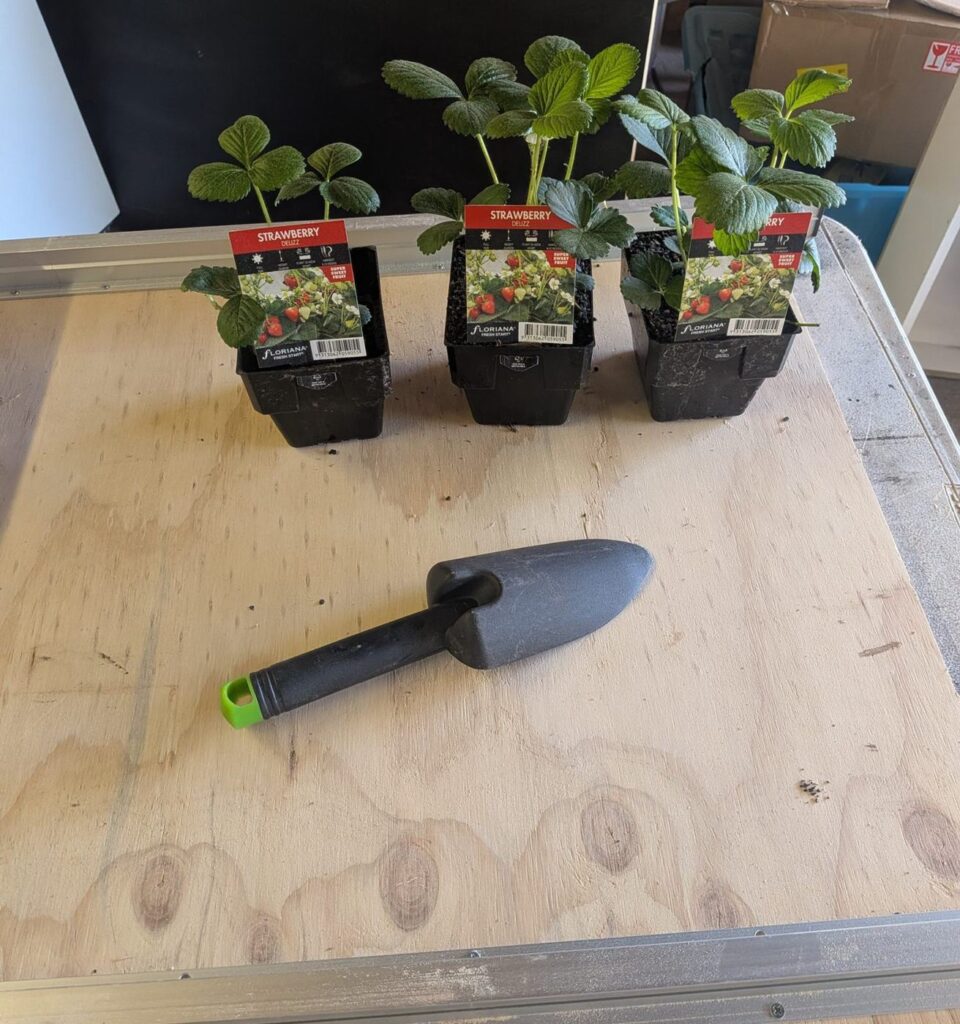
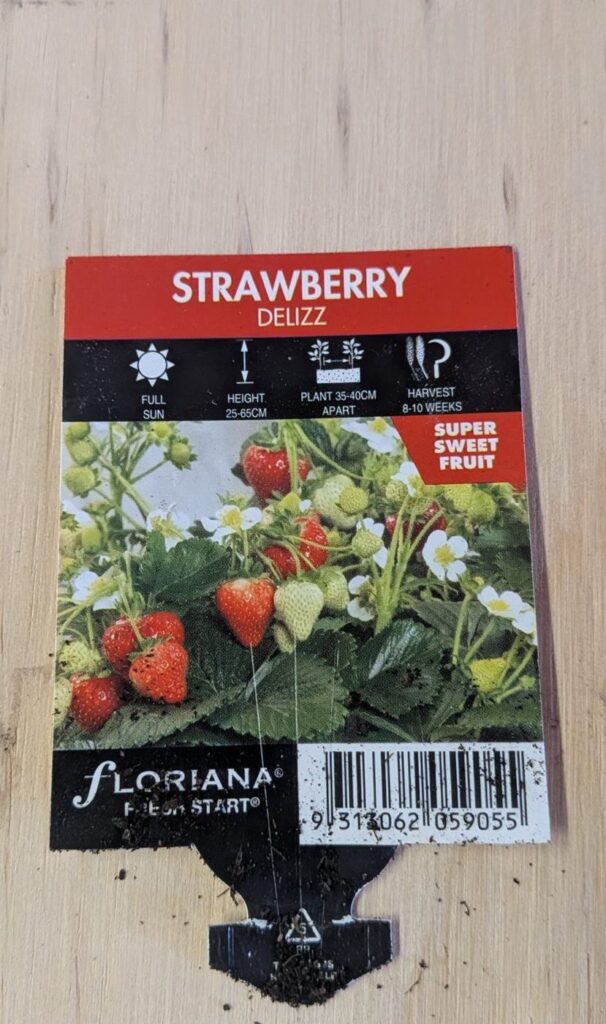
The strawberries for our summer log went in on October 8. They’re Delizz, an F1 garden strawberry (Fragaria × ananassa). The label describes a compact plant with conical berries through summer and autumn, and gives 8 to 10 weeks to harvest. It asks for full sun, well-drained soil, regular watering and a potassium-rich feed to help the plants flower and set fruit.
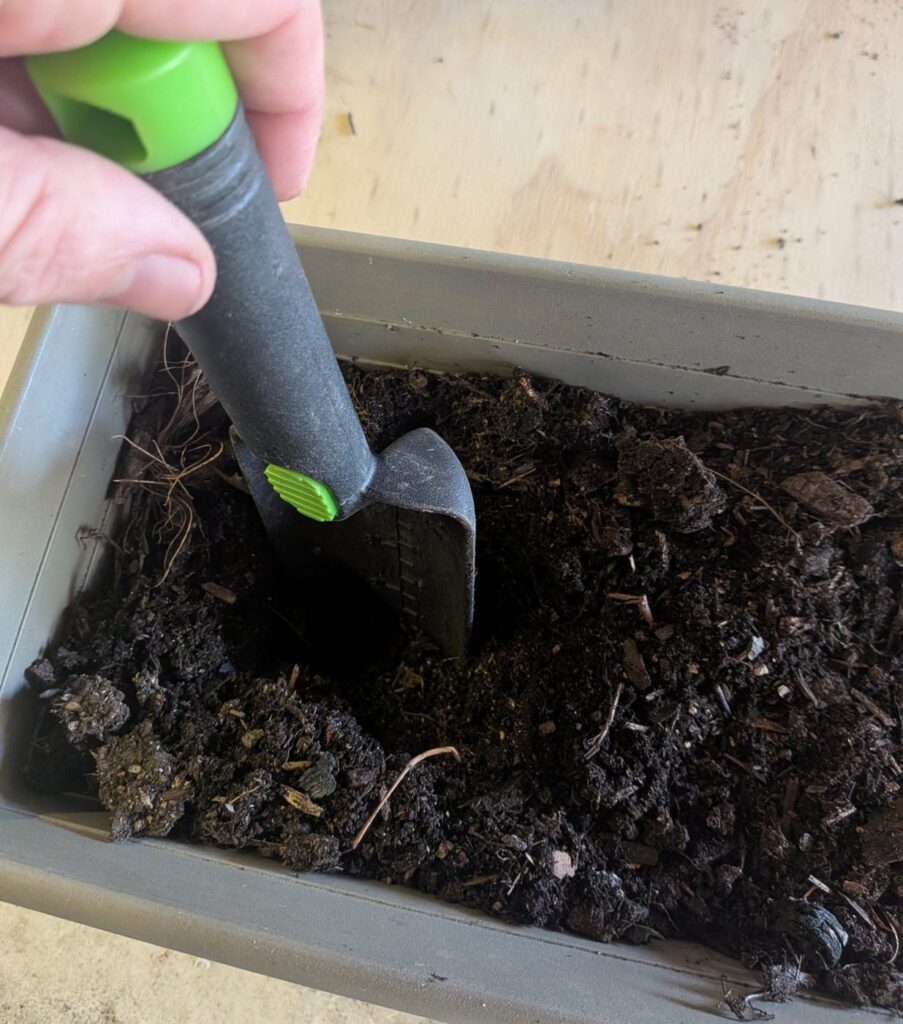
We planted all three in one plastic window-box trough about 28 inches (70 cm) long, filled with compost. That’s tighter than the label wants: our plants sit roughly 8–10 inches (20–25 cm) apart, against the 14–16 inches (35–40 cm) on the tag. We’ll report honestly whether they crowd each other or crop well anyway.
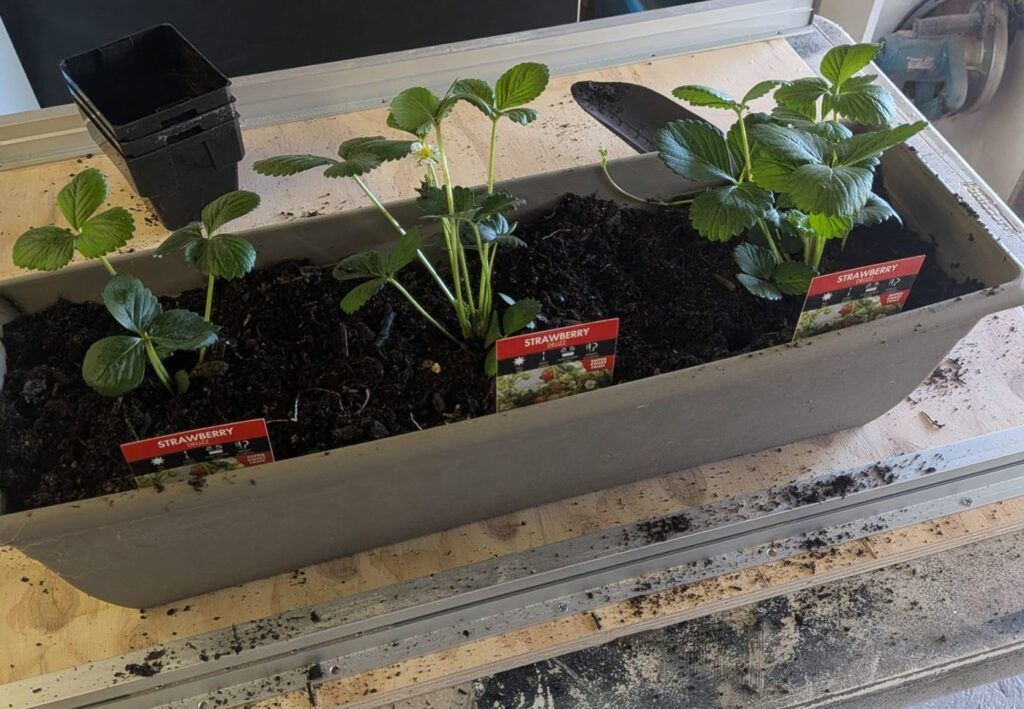
The middle plant already had an open flower when it went in. We watered the trough in with a seaweed solution, diluted as the bottle directs, then moved it to the edge of the deck.
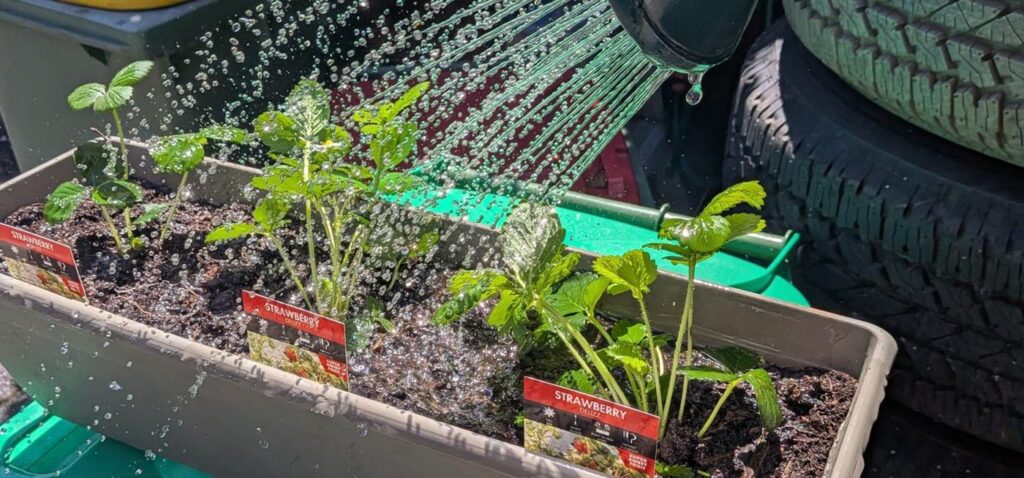
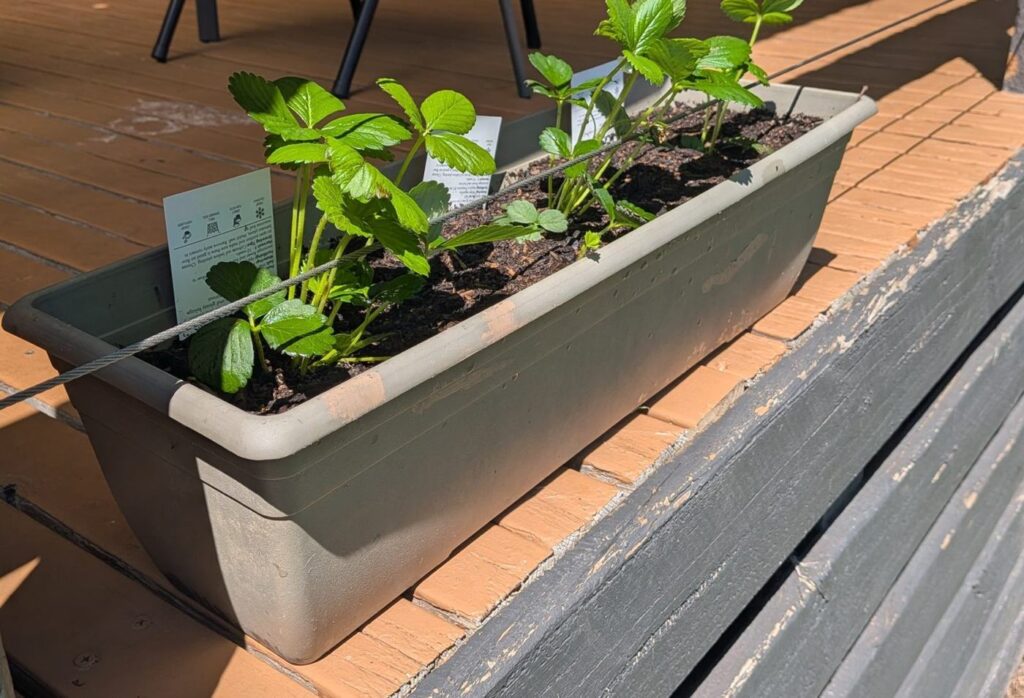
For readers in the US, this is the planting you’d do in spring. We’ll log flowers, fruit and any problems as they come, so you can see how a single trough of strawberries goes before your own season starts.
Lettuce: up on day 7
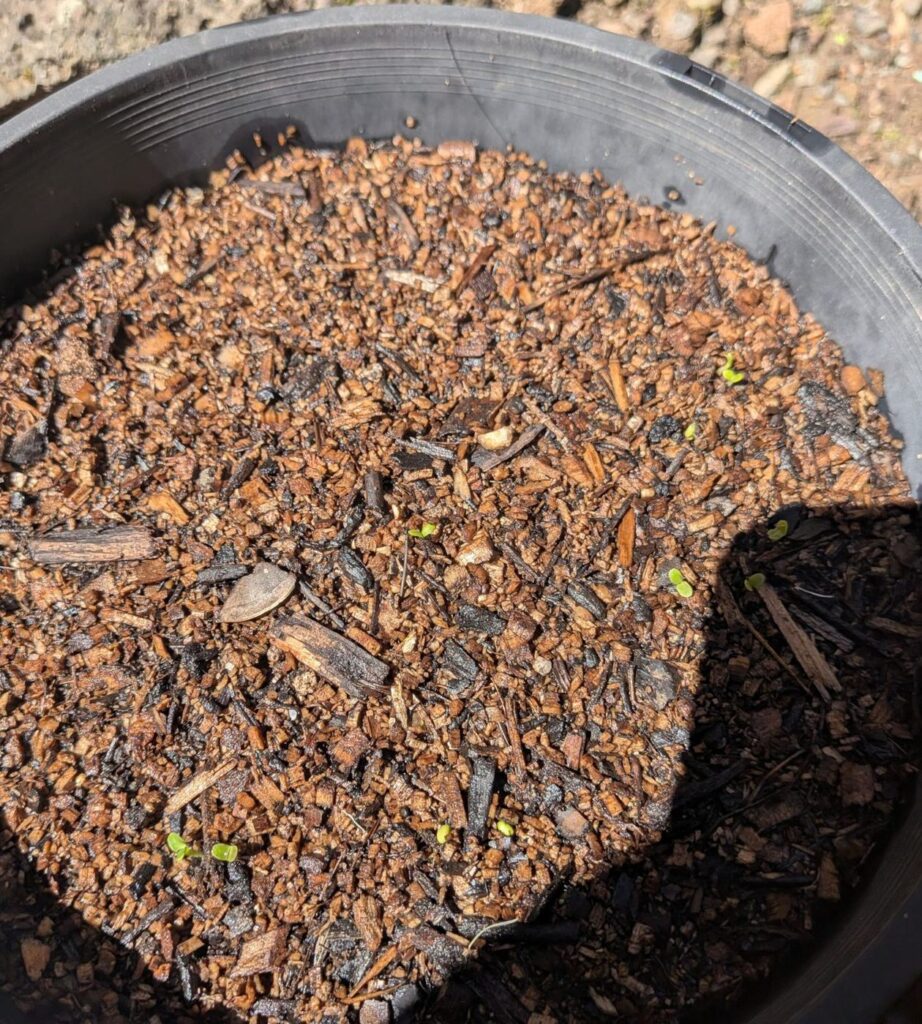
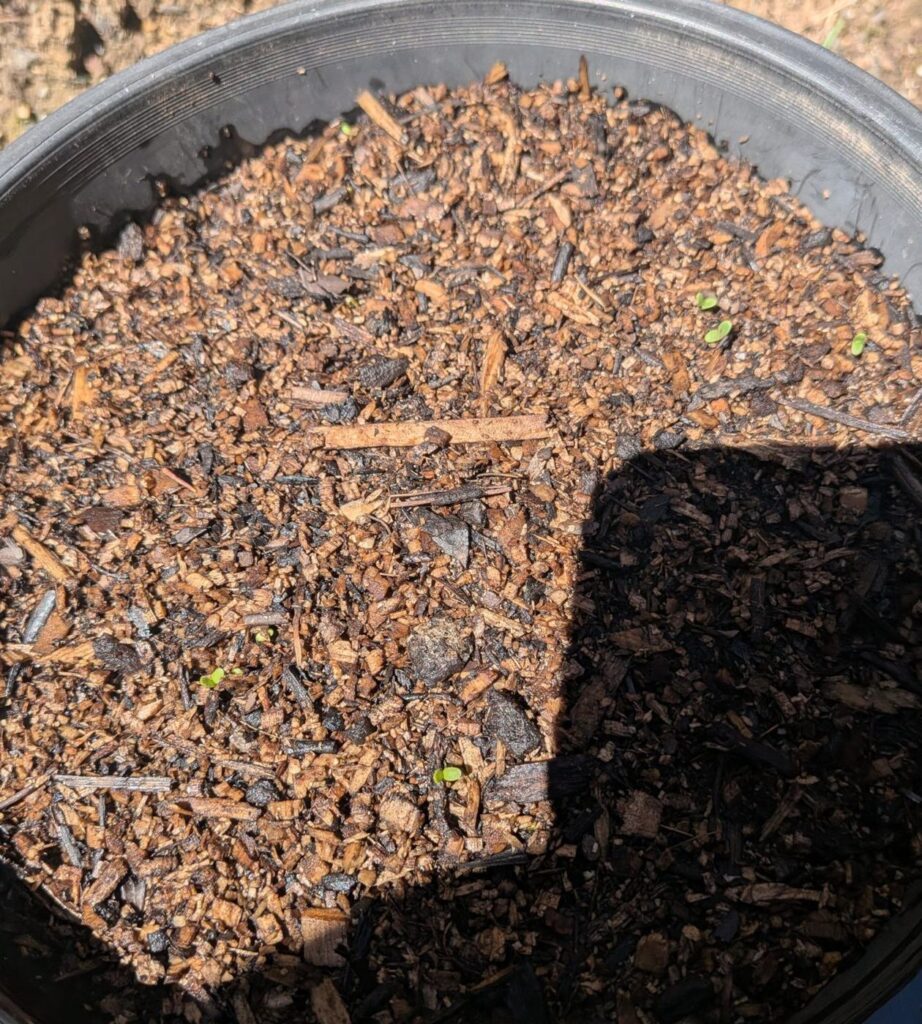
Both lettuce pots from entry 4 are up. We sowed them on October 1 and saw the first seedlings on October 8, day 7, inside the 6 to 10 days the packet gave. Later we’ll thin each pot to about 3 plants, as planned in our container vegetable gardening for beginners guide. Both lettuce pots and the bell pepper sit in the less sunny part of the garden, which gets about 6 hours of direct sun a day, from late morning to late afternoon.
Bell pepper (capsicum): not up yet
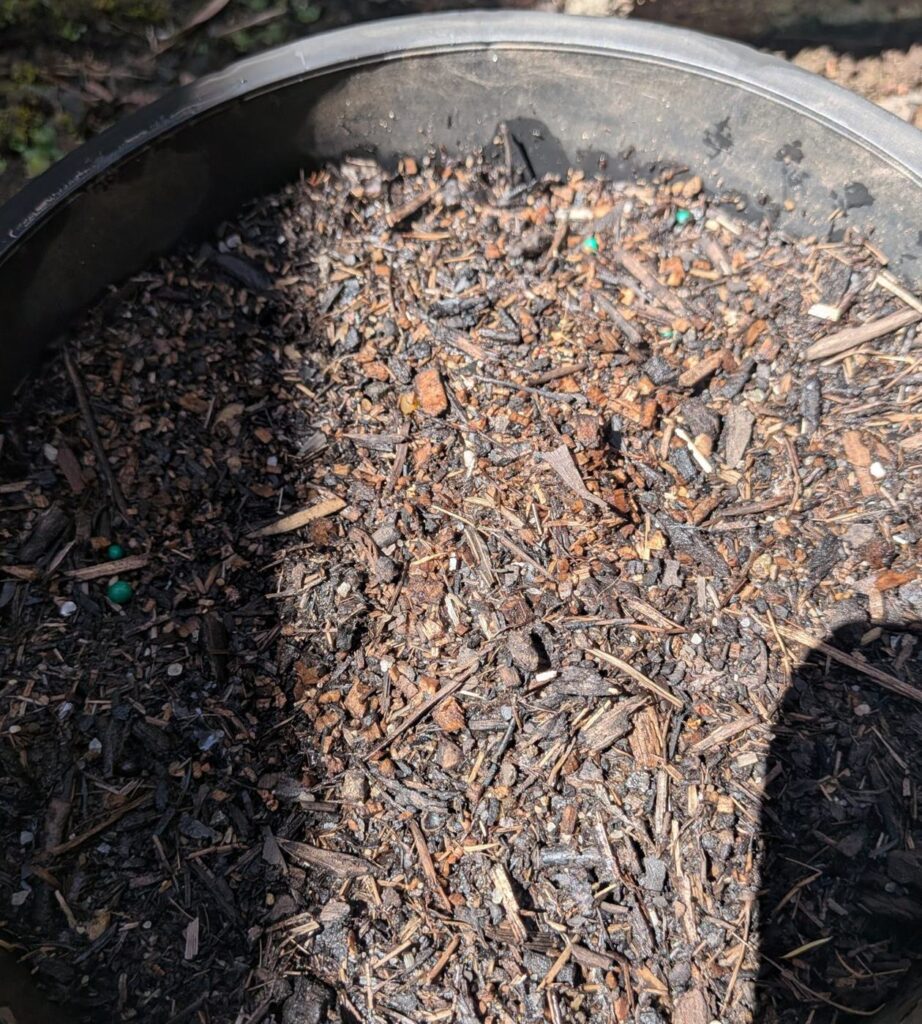
The bell pepper pot sown the same day shows nothing yet. In entry 4 we said we expected it to be slower than the lettuce, and so far it is. We’ll check it again next week.
Garlic: the first shoot has gone
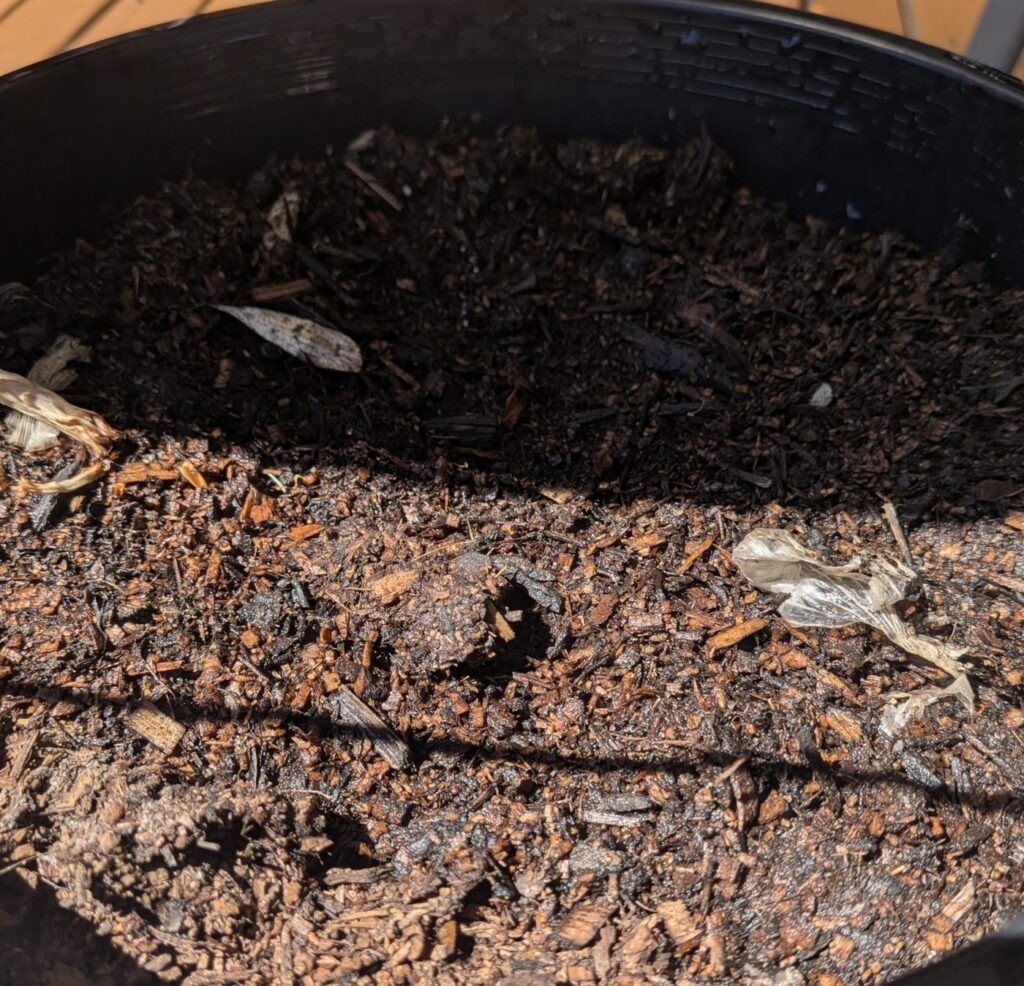
In entry 4 the spring-planted garlic had put up its first small green shoot. A week later we can’t find it, and there’s a hollow in the mix. It looks like that shoot has been lost, and we don’t know what caused it. We’ll keep watching the pot. Planting in spring was always the experimental part of this one; the usual timing is in our garlic in containers guide.
Onions and pumpkin
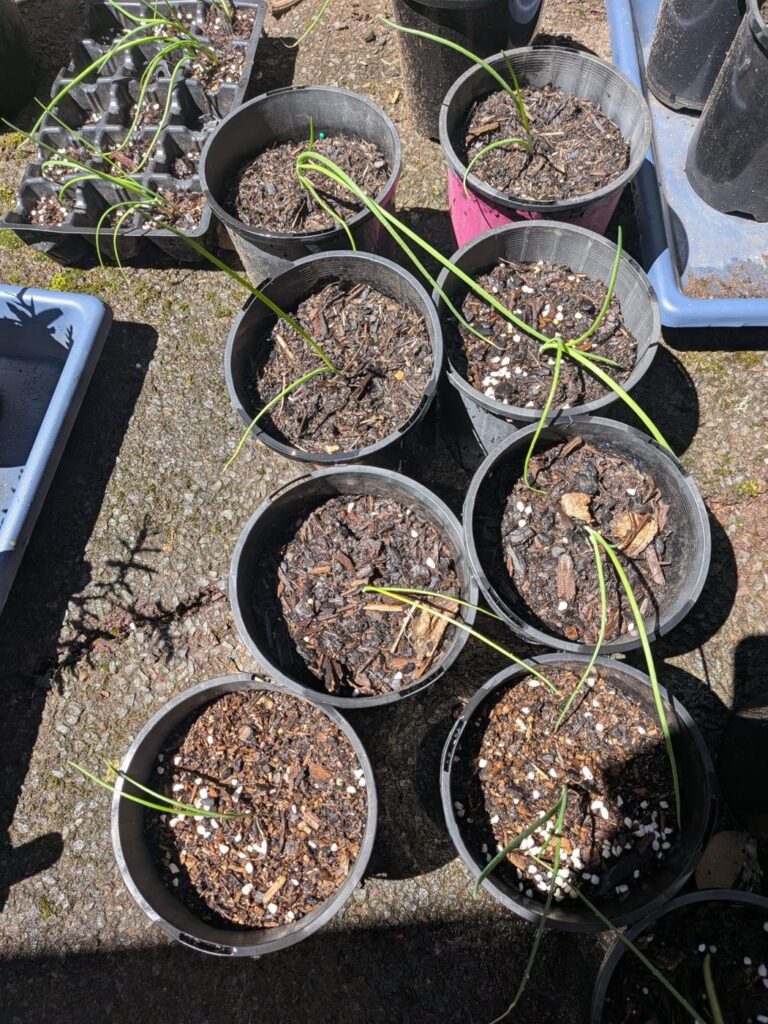
Some of our onions sit in a shadier part of the garden than the rest. We’re calling these batch 2 and will keep photographing both batches, which gives us a rough look at how much the shade holds them back.
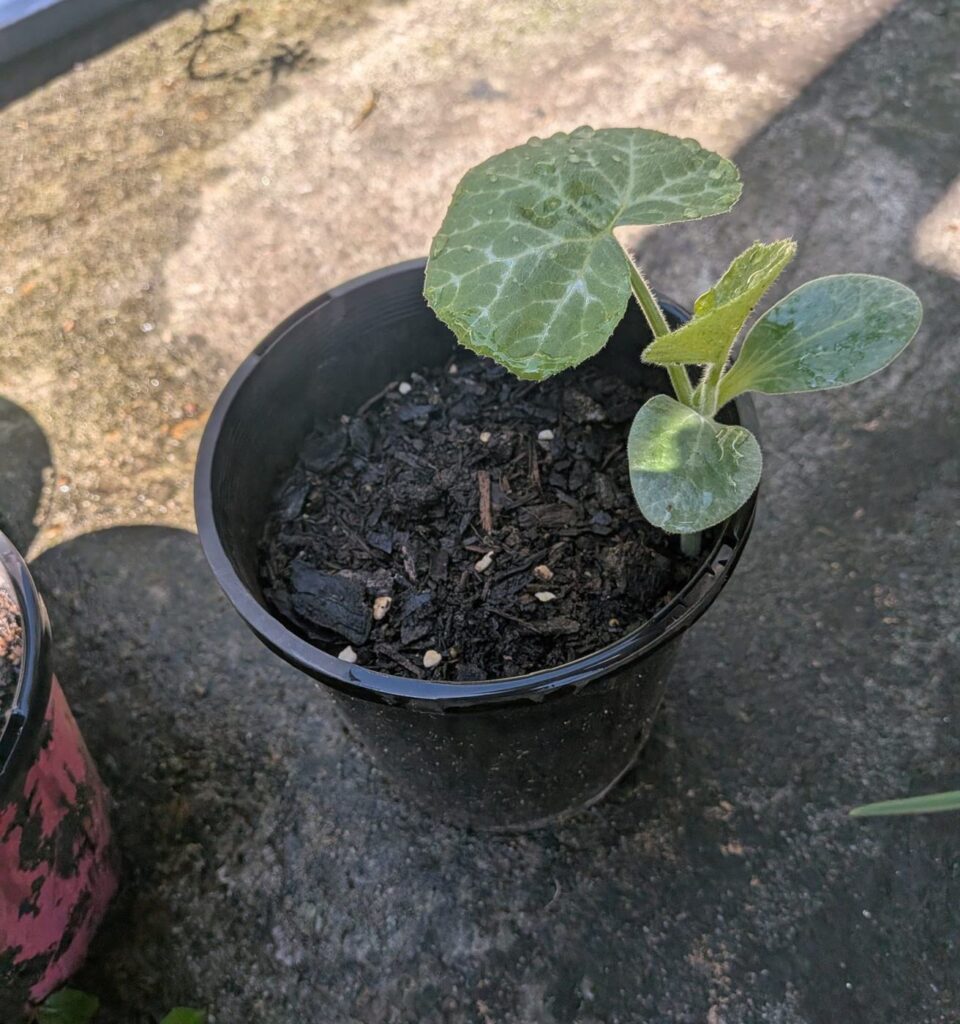
The Kent pumpkin keeps putting on leaves. It still needs a much bigger container before the vine starts to run.
Supermarket potatoes: fully died back
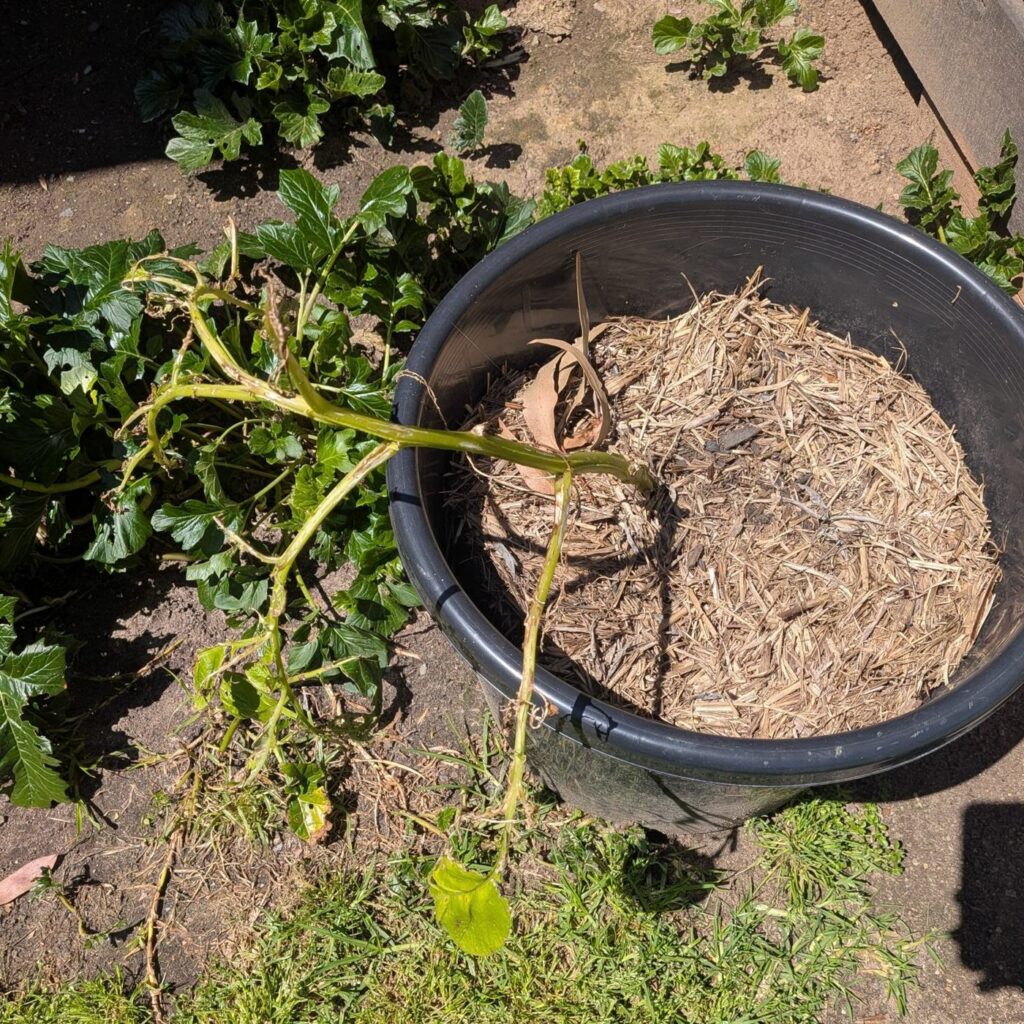
The supermarket potato plant from entry 4 has now died right back. Later this month we’ll tip the pot out and show every potato we find, good or bad.
Log entry 4: Lettuce and bell pepper sown, broccoli side shoots, and a supermarket potato experiment
Posted October 1, 2026 (spring in the test garden)
US timing: In most of the US, bell peppers are started indoors in late winter (or bought as transplants) and set out a week or two after your last frost, once nights stay warm. Garlic is best planted in fall.
Lettuce: two pots sown for the beginner’s guide
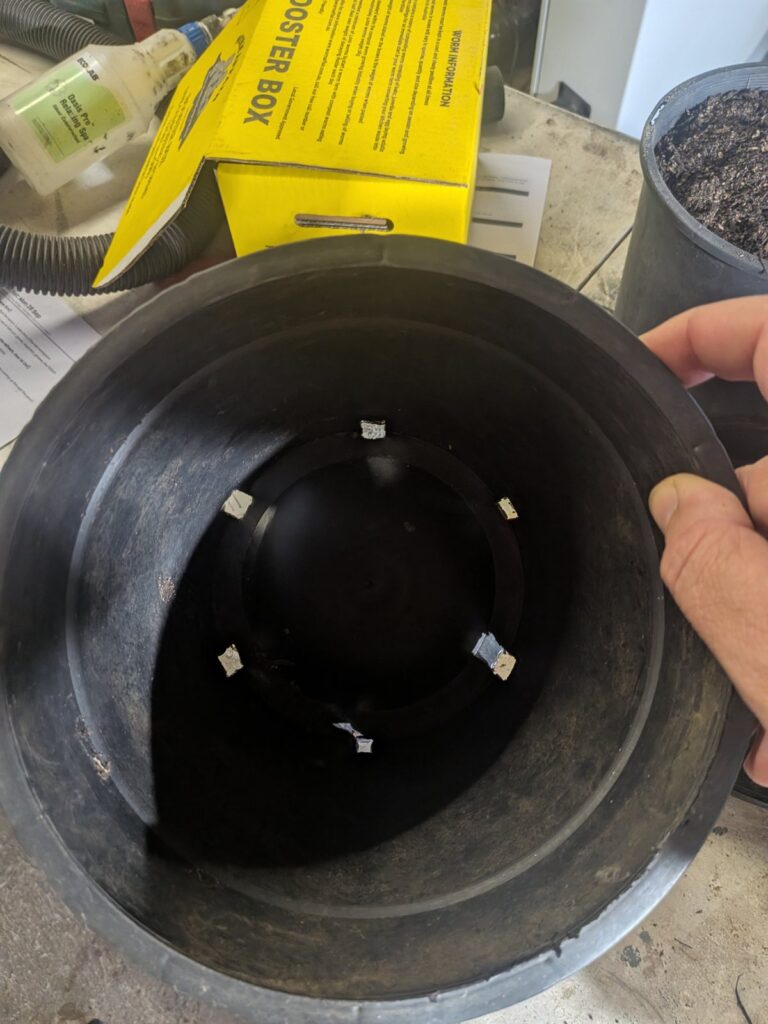
Today we sowed the lettuce from our container vegetable gardening for beginners guide, in two 8-inch nursery pots so we have a backup. At about 4 inches between plants, each pot will be thinned to roughly 3 lettuces. The seed is a mixed salad leaves blend: non-heading, cut-and-come-again types. The packet says to sow about ⅛ inch (3 mm) deep, expect sprouts in 6 to 10 days, and give the pots part shade. We checked the drainage slots, filled the pots with potting mix, scattered the seed thinly, covered it lightly and watered it in with a fine rose.

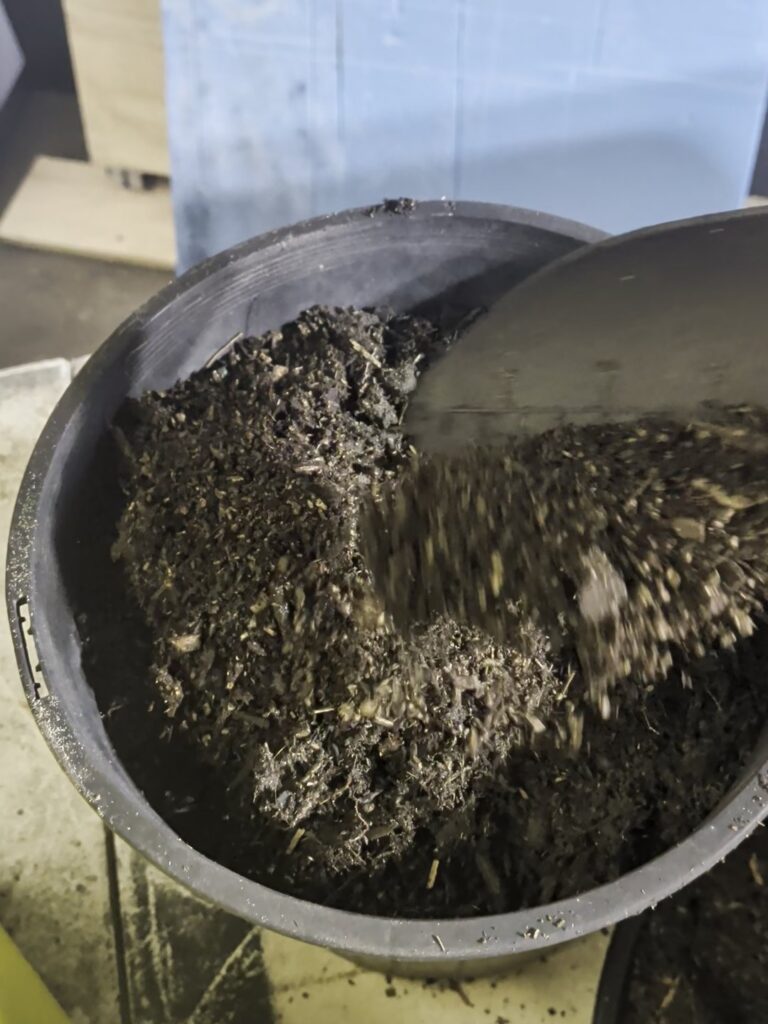
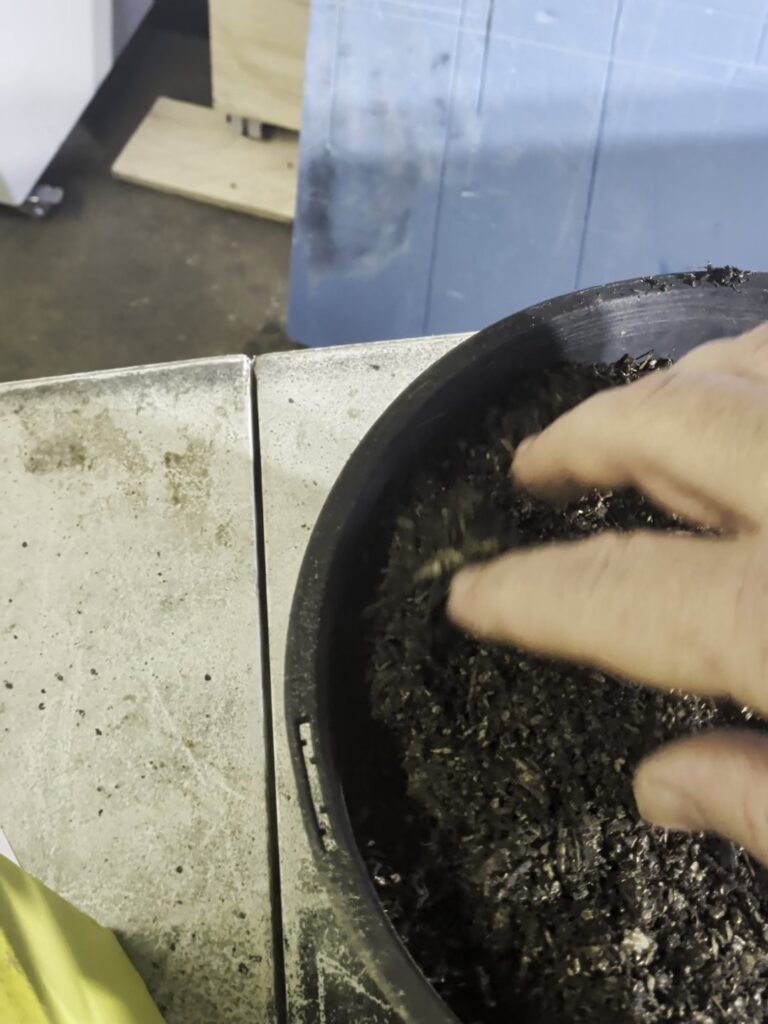
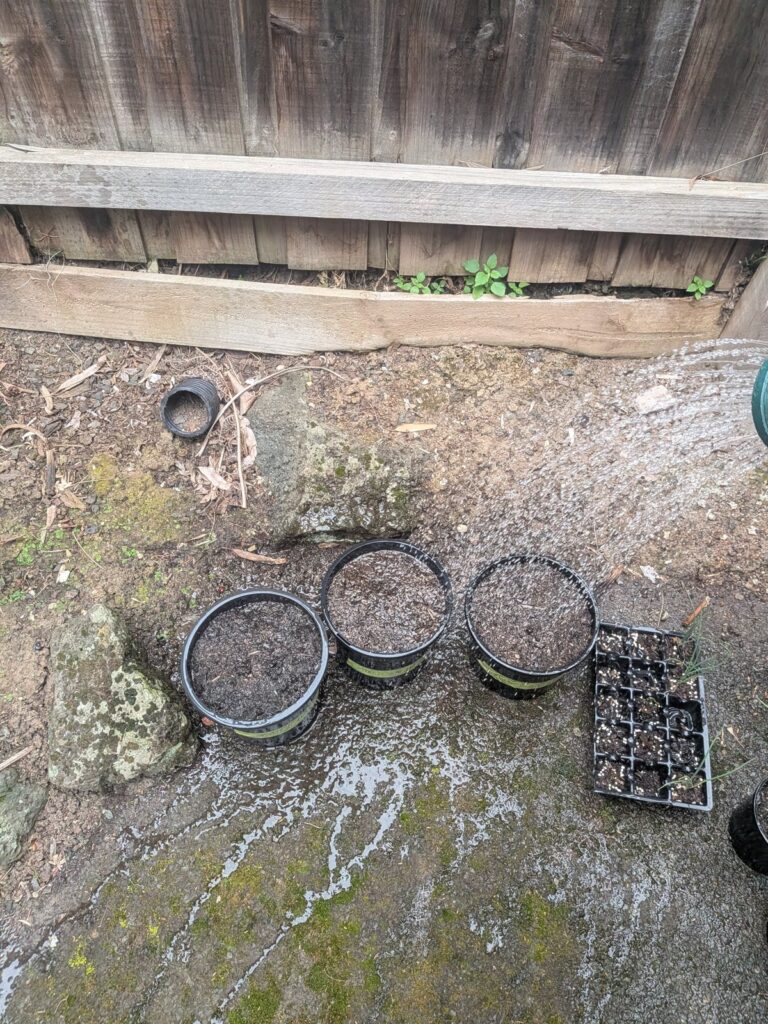
Next photo: the first seedlings, due around 7 to 11 October if the packet is right.
Bell pepper (capsicum): one pot sown for summer

The third pot, also 8 inches, holds Californian Wonder bell pepper, sown the same day. That pot is only a starting point: a full-size bell pepper needs 8 to 10 gallons of mix to crop well, so it will move up to a much bigger container once it’s a sturdy seedling. Peppers like warmth to sprout, so we expect this one to be slower than the lettuce. It’s the start of our summer pepper log, which will feed into our growing peppers in containers guide.
Broccoli: side shoots after the main head

We’ve cut the main head from one of our broccoli plants. Don’t pull the plant out at that point. Smaller side shoots grow from the leaf joints along the stem, and you can keep cutting those as they size up. Ours already has two. More on pot size for broccoli in our pot size guide.
Garlic: the first shoot
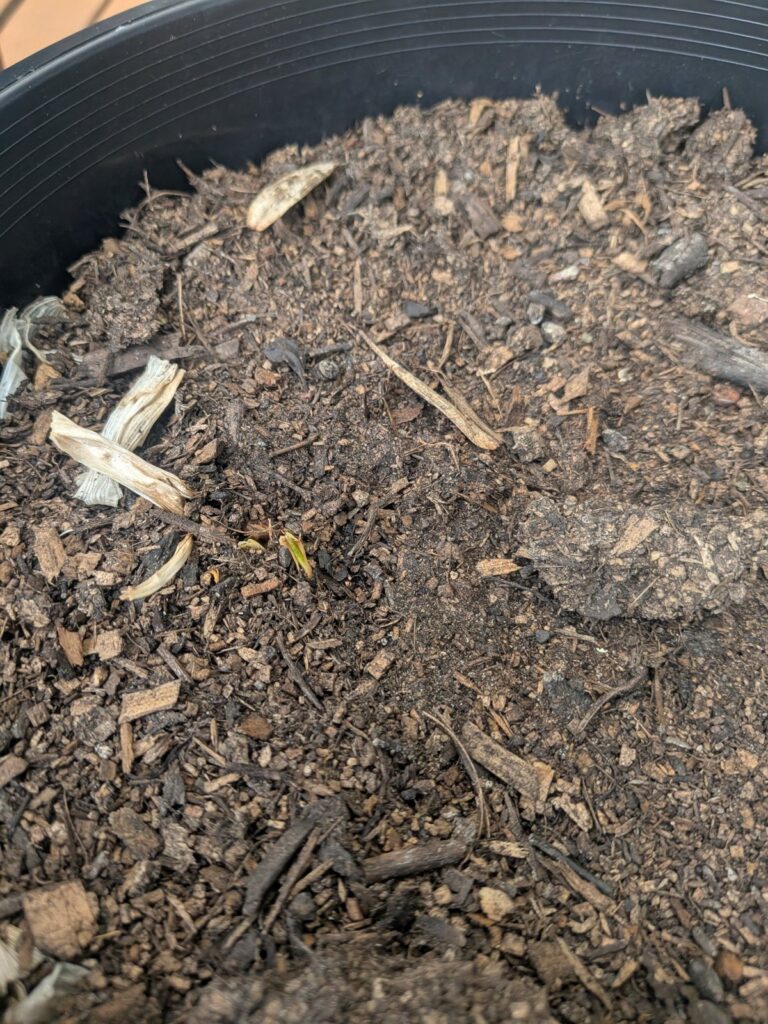
Garlic cloves we planted in a 10-inch (250 mm) pot two weeks ago have put up their first green shoot. Spring is late for garlic, which is normally planted in autumn, so treat this pot as an experiment: we may get small bulbs, or we may end up using it as green garlic. The usual way to do it is in our garlic in containers guide.
Onions and pumpkins: settling in
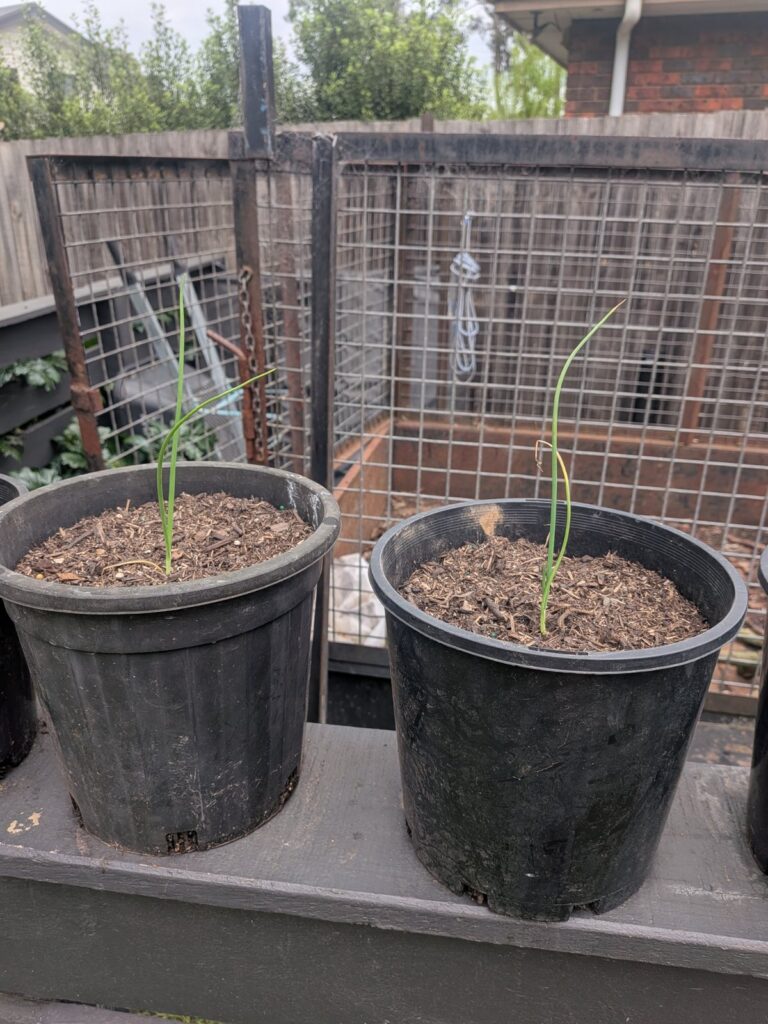
The brown onions we potted up in entry 2 are standing up and putting on new growth.

The Kent pumpkins now have their first proper rough leaves. They still need a much bigger container before the vines start to run.
An experiment: supermarket potatoes grown through winter
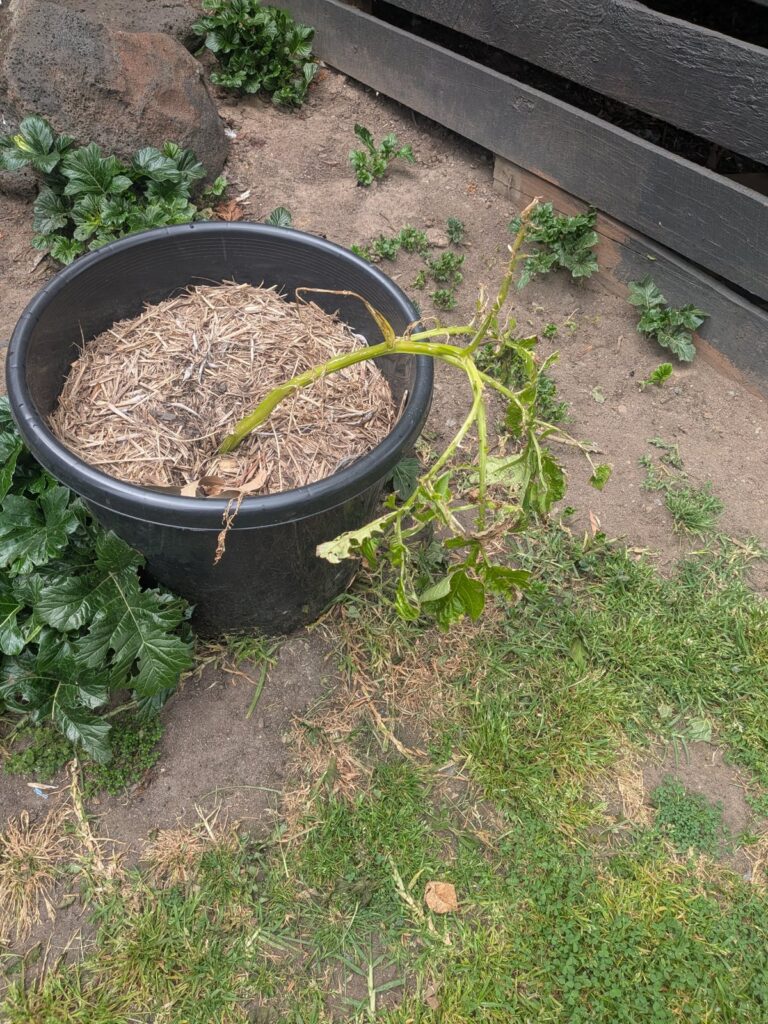
In June we planted a few potatoes from the supermarket in a big pot, mulched with straw, to see what they would do over winter. The plant grew, but the main stem has now snapped and the leaves are dying back. We’ll tip the pot out soon and show exactly what we got. Most guides recommend certified seed potatoes instead, because shop potatoes can carry disease and are sometimes treated to slow sprouting. This pot is our small test of whether that matters in a home container.
Log entry 3: Broccoli shows why pot size matters, and the rocket goes to seed
Posted September 30, 2026 (spring in the test garden)
US timing: Broccoli and arugula both like cool weather. In most of the US, grow them in early spring or as a fall crop planted in mid to late summer, since warm days make arugula bolt.
Broccoli: same sowing day, two pot sizes
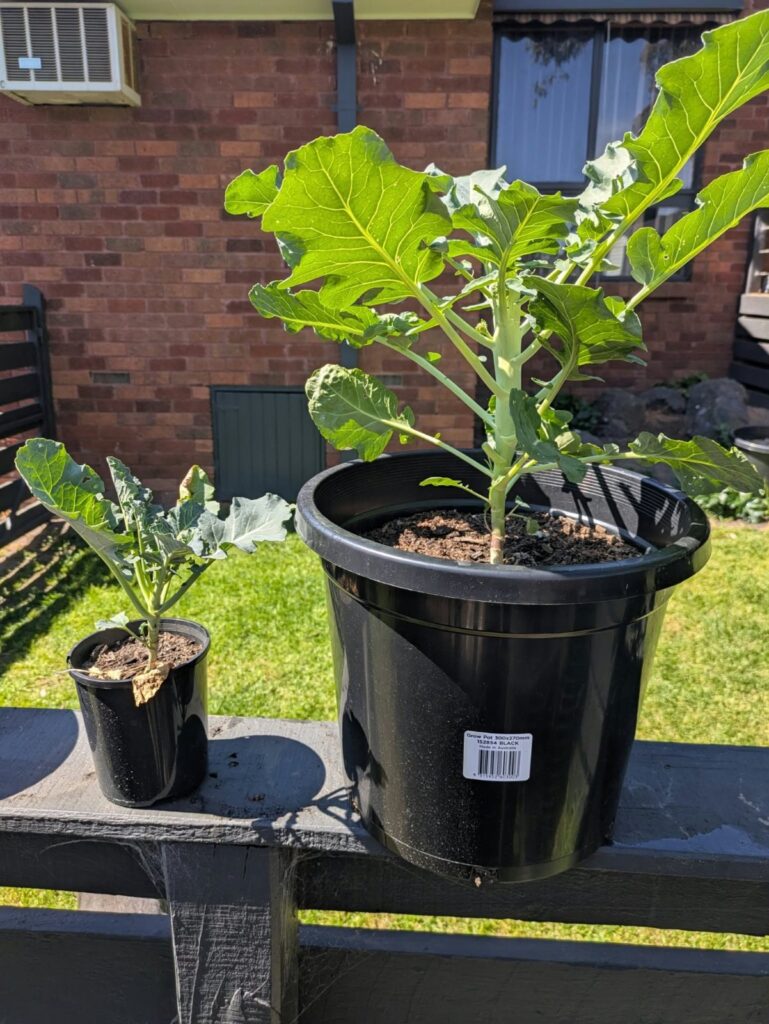
These two broccoli plants were sown at the same time. The one on the right went into a grow pot about 12 inches across and 10½ inches deep (300 × 270 mm), or roughly 4 gallons of potting mix. The one on the left stayed in a 5-inch nursery pot, which holds under half a gallon. Both grew in the same part of the deck, the big pot on the boards and the small one up on the handrail, and both were watered at the same time. We didn’t note the sowing date.
The difference is hard to miss. The big-pot plant is several times the size, with a thick stem and broad leaves. The small-pot plant is stunted, and its lowest leaves have gone yellow and papery. With that little mix, the roots have far less room, water and food to draw on. Extension guides put broccoli’s minimum at 2 gallons (Texas A&M) to 5 gallons (Colorado State), and the small pot is well short of both. Our pot size chart has the minimums for 25 crops.
Rocket (arugula): the whole tray has gone to seed
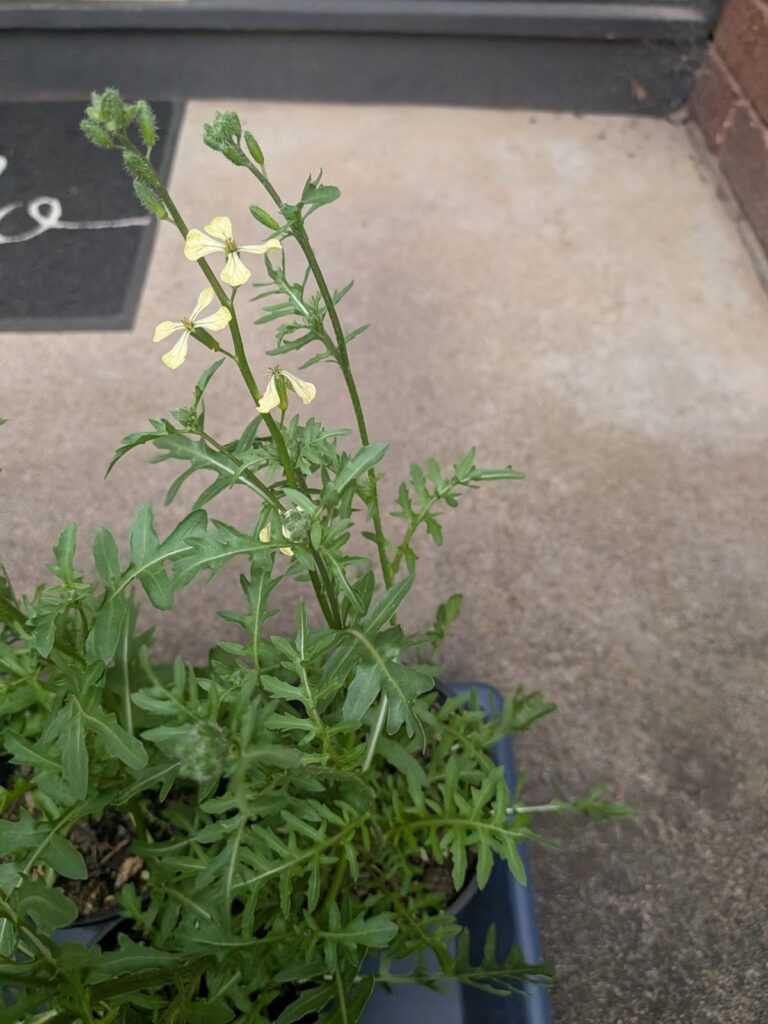
Nearly every pot in our tray of rocket has sent up flower stalks. That’s right on schedule for spring here: lengthening days are one of the main triggers, and small black pots that heat up and dry out quickly don’t help. The flowers are edible, and pods left to dry on the stalk give seed for an autumn sowing. More photos, and what to do with a bolted plant, are in our new guide: why is my arugula bolting?
Log entry 2: Onions into pots, pumpkins split up
Posted September 25, 2026 (spring in the test garden)
US timing: If you grow onions from seed, start them indoors in late winter and move them outside in early spring. Pumpkins are sown after your last frost, once the soil has warmed.
Brown onions: out of the tray and into pots
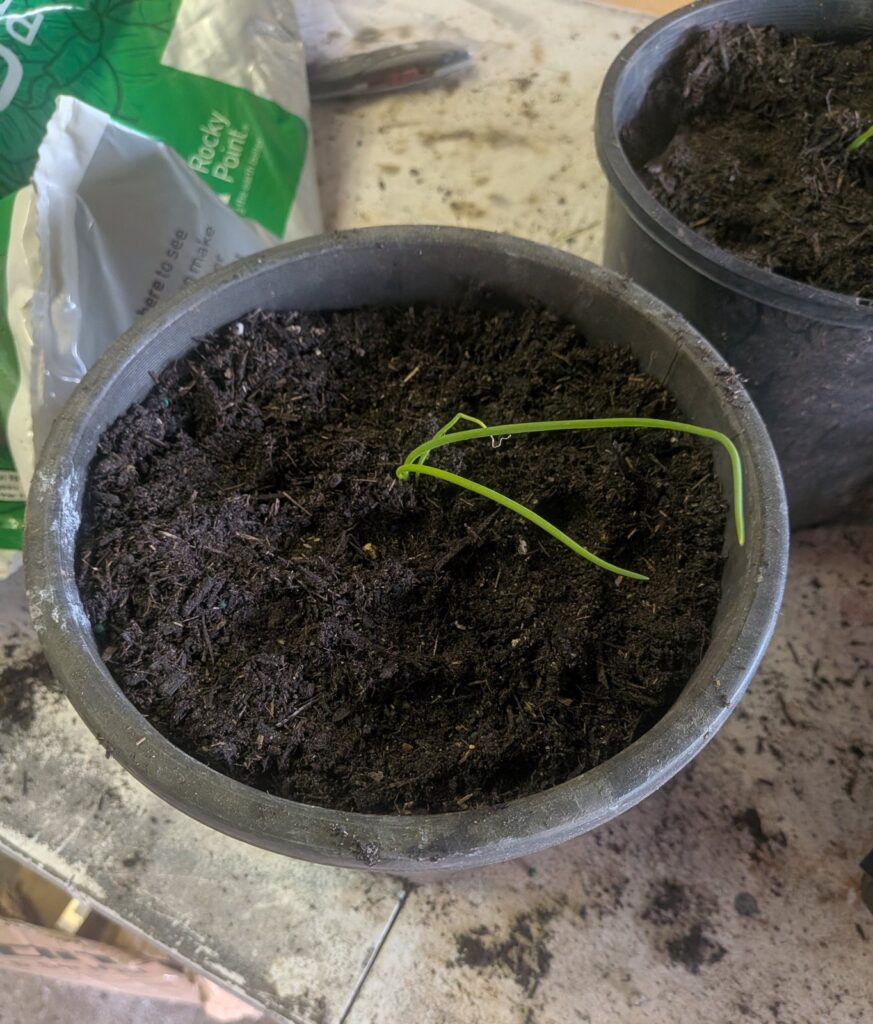
The brown onions we started from seed in a cell tray had got long and tangled, flopping over the sides of their cells, so it was time to move them. Each cell held a small clump of seedlings. We tipped the plugs out, teased the seedlings apart (onions don’t mind bare roots), and set them into nursery pots of potting mix.
What we’d do differently: give them a haircut in the tray. Iowa State Extension recommends trimming onion seedlings back to 4 inches once they reach 5 inches tall, which keeps them upright and easier to handle. We skipped it, and the floppy leaves made planting fiddly. The full step-by-step, with more photos from this batch, is in our new guide to growing onions from seed in containers.
Kent pumpkins: three pots instead of one

In entry 1, three Kent pumpkin seedlings were sharing one small pot. We went with the “keep all three” option: tipped the pot out while they were still small, pulled them apart with as much mix on each root ball as possible, and gave each one its own pot.

All three now have their first true leaf showing. These pots are only a stop-over: a pumpkin vine needs a far bigger container than this (our pot size chart has the numbers), and waiting too long risks the roots circling the pot, as covered in why is my vegetable root-bound?

Log entry 1: Broccoli heading up, pumpkins just up
Posted September 24, 2026 (spring in the test garden)
US timing: In most of the US, broccoli heads up like this in late spring or early summer from an early-spring planting, or in fall from one planted in mid to late summer. Pumpkins go in after your last frost.
Broccoli: one plant, one pot, one head on the way
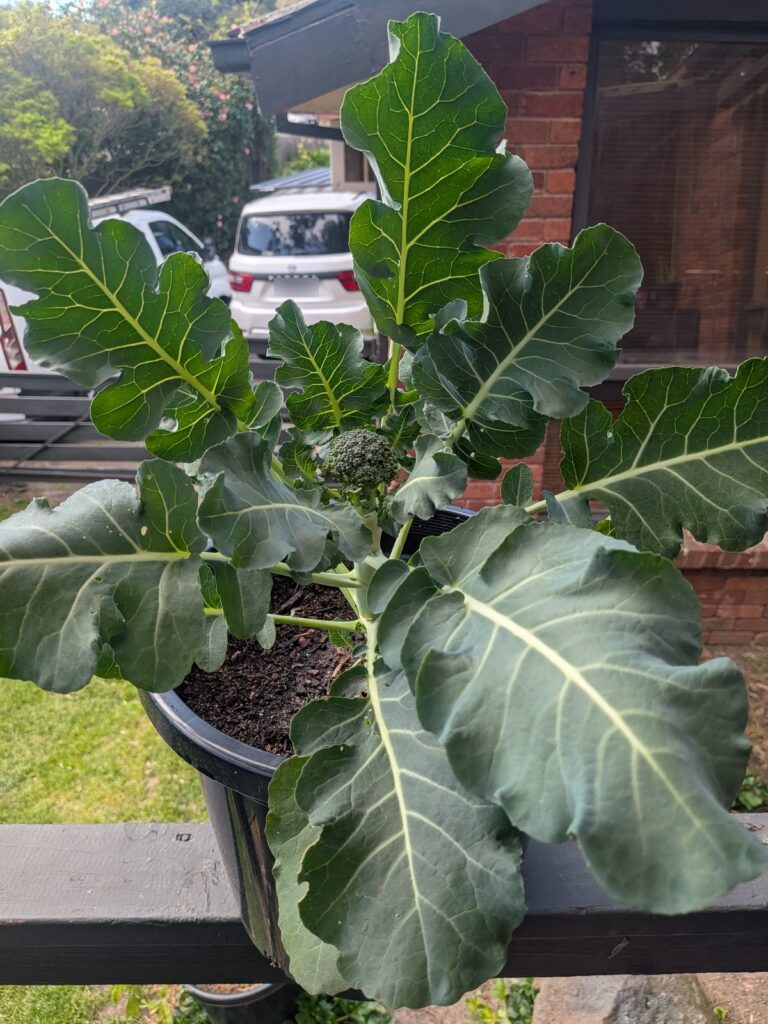
This is one broccoli plant in one container, sitting on a deck railing. The leaves are big, dark and healthy, with only a few small holes. The part you eat is the small green dome in the centre: that’s the main head, and it’s still small.

What to watch for: the University of Minnesota Extension says to harvest broccoli “while they are still tight and before flower buds have opened.” Once you see yellow, the head is turning to flowers and the texture goes downhill fast. After the main head is cut, many plants send up smaller side shoots, so a container plant can keep producing for a while after the first cut.
If you’re growing broccoli for fall, it’s one of the cool-season crops that copes with partial sun (see vegetables for a shady balcony) and it keeps growing after light frosts. For more cold-hardy crops that suit a pot, see the best fall and winter vegetables for containers.
Pumpkins: three seedlings, one small pot

Three pumpkin seedlings came up in the same small nursery pot. Right now they only have their seed leaves (the first pair of rounded, fuzzy leaves); the true leaves come next. They look healthy, but three pumpkins can’t share a pot this size for long. Pumpkins are big, hungry vines, and their roots fill a small pot quickly.
What they need next: the University of Maryland Extension’s advice is to “pinch out all but the strongest seedling” and to “disturb the root system as little as possible” when transplanting. In practice you have two choices:
- Keep one: snip the two weaker seedlings off at soil level with scissors. Cutting rather than pulling leaves the keeper’s roots undisturbed.
- Keep all three: tip the pot out gently while the seedlings are still small, tease them apart with as much soil on each root ball as you can, and give each one its own larger container.
Wait too long and the roots tangle together and circle the pot, which is exactly the problem covered in why is my vegetable root-bound? For choosing the next pot, see pot size and drainage.
What’s next
New entries go at the top of this page as the plants change: the broccoli harvest and whether side shoots follow, what happens with the pumpkins, and whatever goes wrong along the way. If something here is different from what one of our guides says, we’ll say so and update the guide.
New to container growing? Start with Start Here, then how often to water container vegetables.
Sources
- Growing broccoli in home gardens, University of Minnesota Extension
- Growing pumpkins in a home garden, University of Maryland Extension