How to Grow Onions From Seed in Containers
Onion seed is cheap, a single packet will fill several pots, and it gets you varieties you’ll never find as sets at the garden center. The one catch is time. Onions from seed are slow starters: you’re looking at two months of grassy little seedlings before they’re ready to go outside.
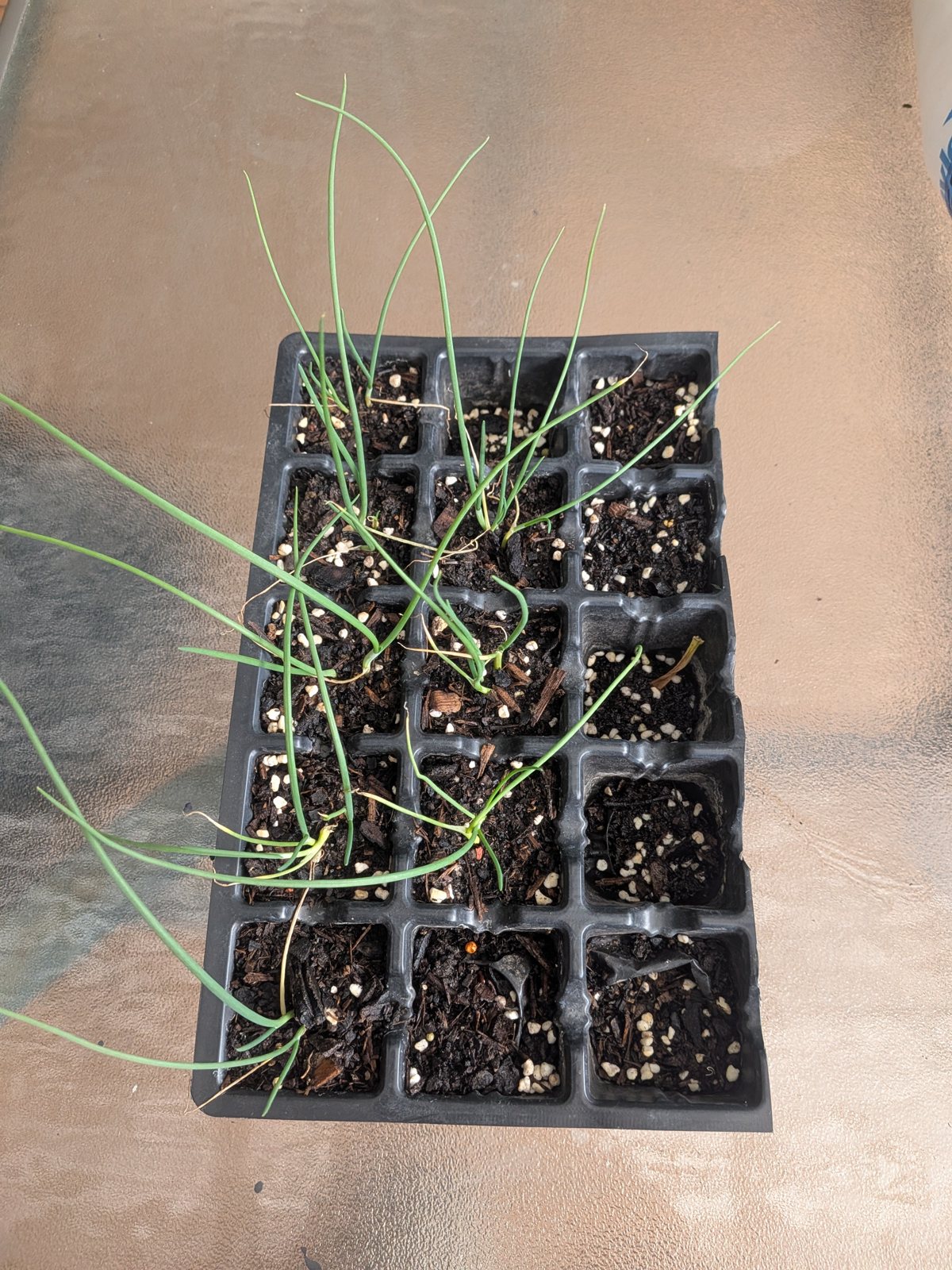
This guide covers the whole process for a container: which onion to grow, when to sow, the “haircut” trick that makes seedlings sturdier, how to move them into pots, and when to pull them. Every number here comes from a university extension service, and they’re all listed at the end. The photos are our own brown onion seedlings being moved into pots in the Pocket Harvest Test Garden.
Quick answer: Sow onion seed indoors 8–10 weeks before you plan to set plants outside, ¼–½ inch deep, and grow them cool (55–65°F) under bright light. Trim the tops back to about 4 inches whenever they flop. Move them into a pot at least 6 inches deep once temperatures reach about 50°F. Bunching (green) onions are the easiest win in a container. For bulbs, choose a day-length type that matches your zone.
In this guide: Which onion · Container · When to sow · Sowing indoors · The haircut · Moving to a pot · Care · Bolting · Harvesting · Mistakes · FAQ
First, Decide What Kind of Onion You Want
There are two ways to grow onions in a pot, and the choice decides almost everything else.
Green onions (bunching onions or scallions) are the beginner pick. They don’t form a proper bulb, so day length doesn’t matter. Oregon State University puts bunching onions at roughly 60–70 days from seed, and you can start snipping earlier than that. Texas A&M suggests 3–5 plants per 1-gallon container, which means a windowbox can hold a whole row.
Bulb onions are the ones you cure and store. They’re very doable in a pot, but they take 90–120 days (Iowa State) and they need the right day-length type for where you live.
Match bulb onions to your day length
A bulb onion only starts swelling once the days reach a certain length. Plant the wrong type and you get a long wait and a small bulb.
| Where you garden | Type to buy | Why |
|---|---|---|
| Zones 8–11 (the South, Gulf Coast, Southern California) | Short-day | Starts bulbing with about 12 hours of daylight (University of Maryland) |
| Zones 6–7 (the middle band of the country) | Short-day or intermediate | Either works; intermediate gives bigger bulbs further north |
| Zones 3–5 (the North) | Intermediate or long-day | Long-day types need 14 or more hours of daylight to bulb (University of Minnesota) |
Southern Hemisphere readers: the same rule applies, just with the seasons flipped. Pick short-day types if you’re closer to the equator and long-day types if you’re further toward the pole.
Choose the Right Container
Onion roots are shallow. Utah State University notes that onions root shallowly, which is why they’re so sensitive to drying out. That’s good news for containers, because you don’t need a deep pot.
- Green onions: a 1-gallon pot for 3–5 plants (Texas A&M). A windowbox or long trough is ideal.
- Bulb onions: the University of Maryland suggests 4 inches between plants for medium bulbs. A 12-inch-wide round pot fits about 5–6 onions at that spacing.
- Depth: Maryland Extension lists 4–6 inches as the minimum depth for small crops like scallions. We’d aim for at least 6 inches for bulbs, and 8 inches if you can. The extra mix holds water longer between waterings, and water is what makes bulbs size up.
- Drainage holes are non-negotiable. More on that in our pot size and drainage guide, which also has a pot size chart for 25 crops.
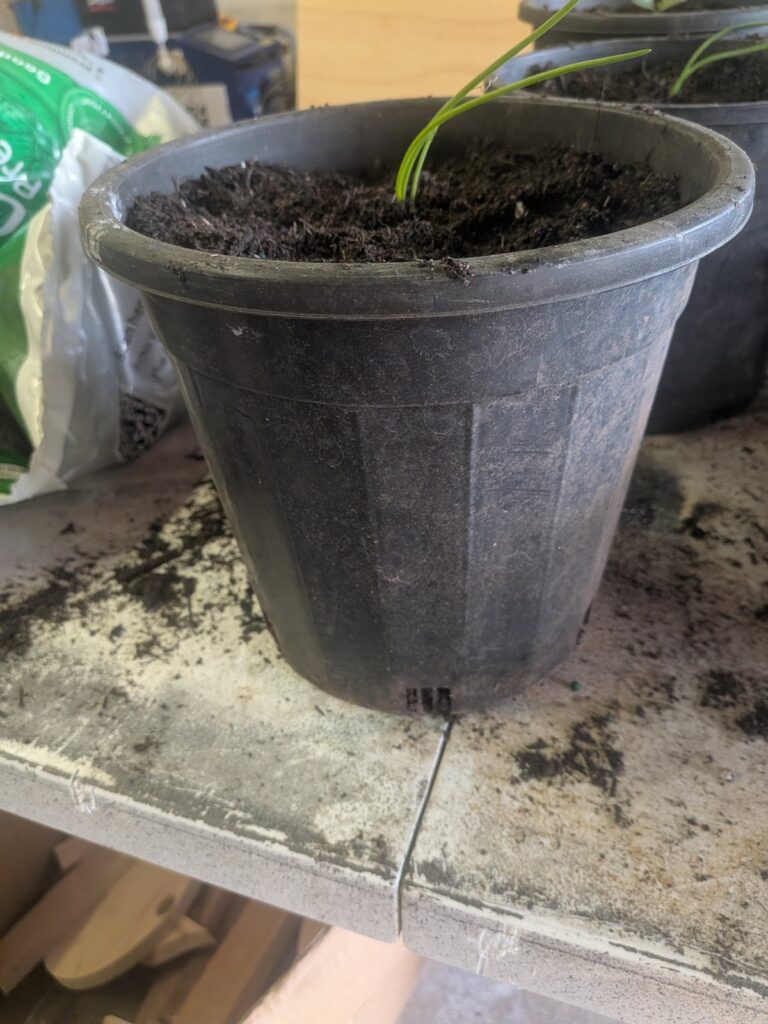
Fill the pot with a quality potting mix, not garden soil. Our soil and fertilizer basics explain why.
When to Sow Onion Seed
Count back 8–10 weeks from the date you want to move plants outside. That’s Iowa State’s timing; the University of Minnesota allows a little longer, 10–12 weeks.
- Northern zones (3–6): sow indoors in late winter (roughly February into early March) and move seedlings outside in April or early May, once the soil can be worked.
- Southern zones (8–11): onions are a cool-season crop here. Texas A&M’s planting window for short-day transplants in the warmest zones is January 1–15, so seed goes in around late October to early November. If you’re in the South, this fall is your window.
- Green onions: far more flexible. Sow them in pots from early spring through fall, and indoors under lights in winter.
Use fresh seed. Iowa State says onion seed loses vigor quickly and recommends buying new seed each year. Oregon State gives it less than two years even when stored well. An old packet is the most common reason for patchy germination.
How to Sow Onion Seed Indoors
- Fill a tray or small pot with moist seed-starting mix.
- Sow thickly, about ¼–½ inch deep (University of Maryland; Utah State). You can scatter seed in a small pot or drop a pinch into each cell of a tray and separate them later, because onion seedlings handle transplanting well.
- Keep the mix evenly moist, not soggy (University of Minnesota).
- Wait. Oregon State notes onion seed germinates anywhere from 46 to 86°F, best above 60°F. In a warm room, expect sprouts in about a week (Texas A&M lists 6–8 days); cool conditions can stretch that to 2–3 weeks (Utah State).
- Give them strong light as soon as they’re up. Iowa State suggests a simple shop light hung 4–6 inches above the seedlings. A windowsill alone usually gives floppy seedlings. Our grow light guide covers budget options.
- Grow them cool. Iowa State’s range is 55–65°F. A cool spare room is better than the top of the fridge once they’ve sprouted.
Give Your Seedlings a Haircut
This is the step that surprises people. When the seedlings reach about 5 inches tall, cut them back to 4 inches with scissors (Iowa State). Do it again whenever they get long and start to flop.
It feels wrong, but it keeps them upright, pushes energy into the roots and base, and makes them much easier to handle at transplant time. The clippings are edible: use them like chives.
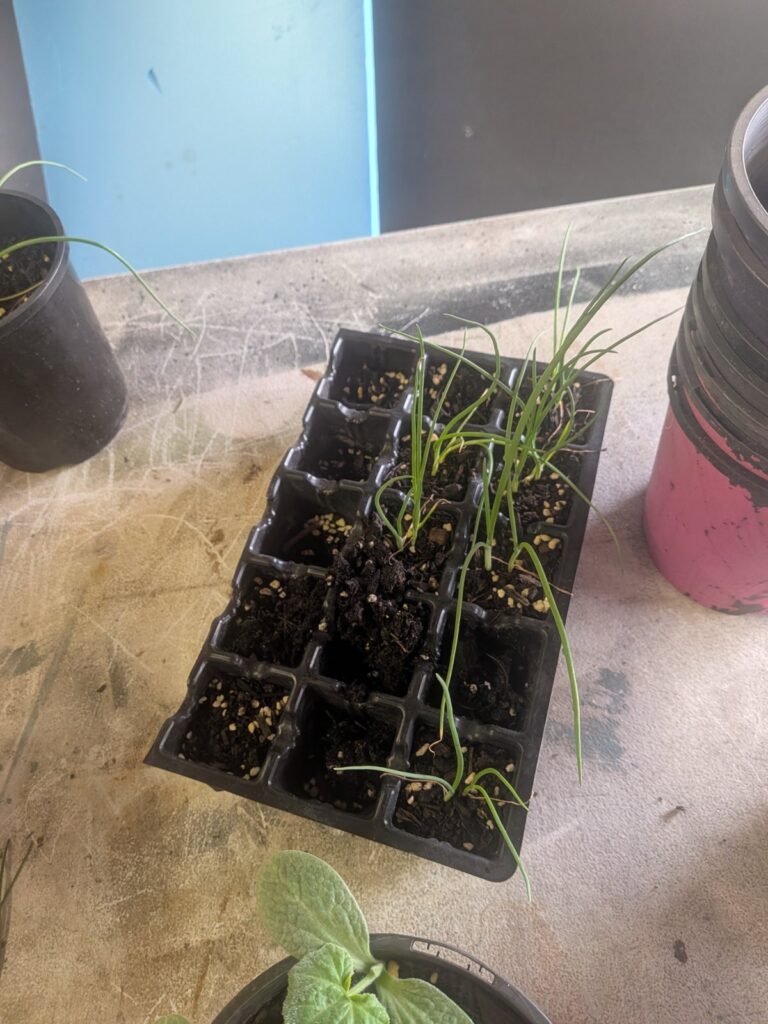
If the tray is crowded, thin the seedlings within 2–3 weeks of germination (Iowa State), or tease them apart into small groups.
Moving Seedlings Into Their Pot
Harden them off first. Iowa State recommends 7–10 days: start in a shady, sheltered spot and give them a little more sun each day. Bring them back inside if a frost of 32°F or lower is forecast.
Plant when it’s around 50°F. The University of Minnesota suggests waiting for temperatures of about 50°F.
How to plant:
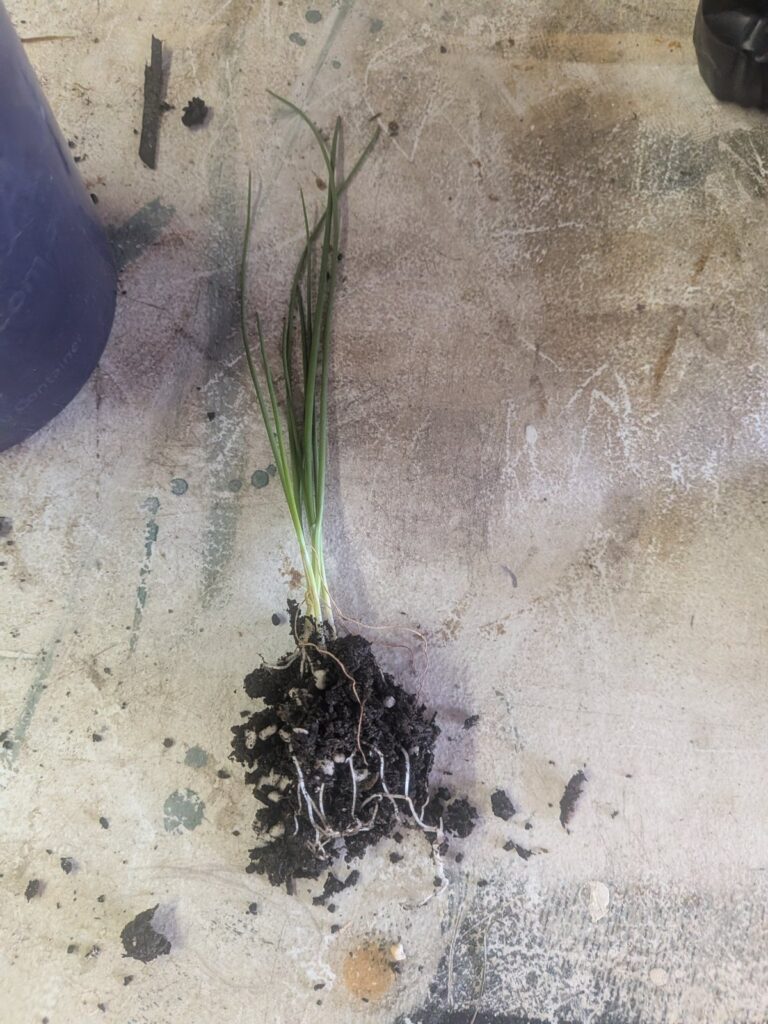
- Gently separate the seedlings. It’s fine if the roots are bare.
- Minnesota suggests trimming the roots to about ½ inch and the tops to about 4 inches before planting, which makes them easier to set in.
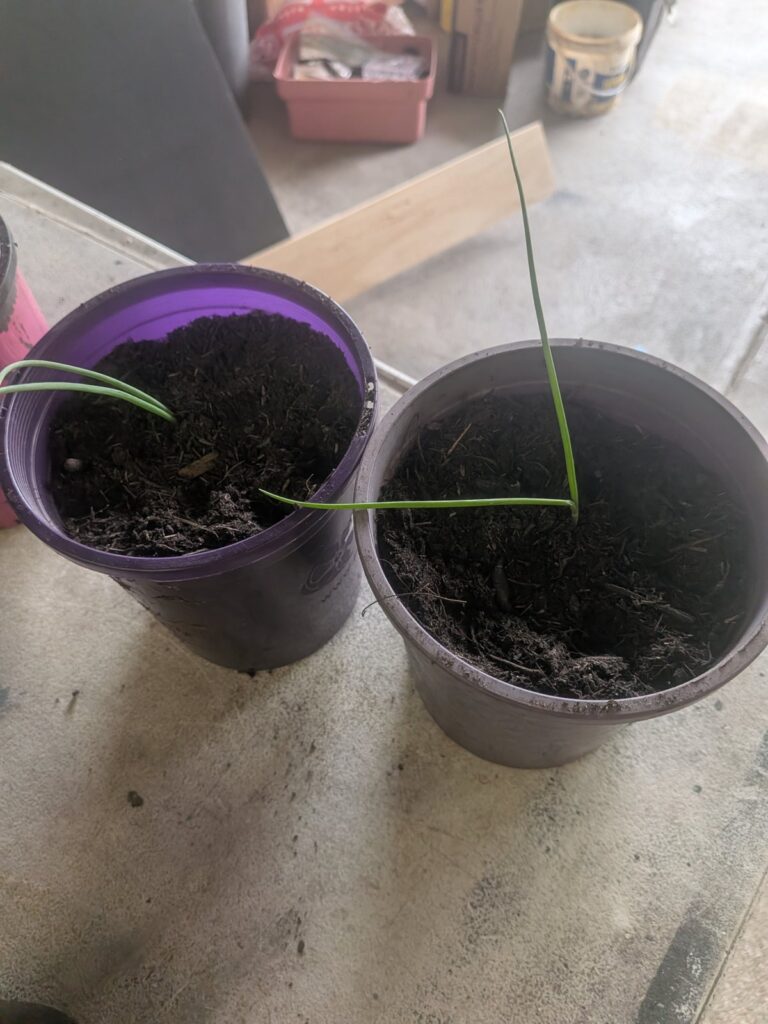
- Make a hole in moist potting mix and plant each seedling 1–1½ inches deep (Iowa State), about 4 inches apart for bulbs, or in small clusters for green onions.
- Firm the mix around the base and water them in well.


Don’t plant seedlings that have already grown thick. Utah State warns that transplants thicker than about ⅝ inch are more likely to bolt (send up a flower stalk) instead of forming a bulb.
Caring for Onions in a Pot
Water: steady is everything. Minnesota says onions need constant moisture, and Maryland puts it plainly: bulb size is directly proportional to the amount of water they get. In a pot, check the mix every day or two in warm weather and water when the top inch is dry. Our watering guide has a simple routine.
Feed, then ease off. Onions are hungry (Maryland), so mix a slow-release fertilizer into the potting mix at planting and use a balanced liquid feed as the label directs while the leaves are growing. Ease off once the bulbs are well on their way. Minnesota warns that too much nitrogen late in the season gives thick necks that are hard to cure.
Keep weeds out. A weedy pot steals water from those shallow roots.
Give them sun. Bulb onions want full sun. Green onions will put up with a bit less.
Why Onions Bolt (and What to Do)
A bolting onion sends up a thick, hollow stalk with a round flower bud on top. Once that starts, Iowa State says bulb quality falls off quickly.
The main cause is cold, not heat. The University of Missouri explains that once an onion plant has about five leaves, several weeks below 50°F (about 3–4) can trigger a seed stalk. That’s why planting large seedlings too early in a cold spring is risky, and why Utah State flags big transplants.
If one bolts: pull it and use it now as a green onion, as Missouri recommends. Snapping off the flower stalk won’t turn it back into a good storage bulb.
Leafy greens bolt too, but mostly from heat and long days rather than cold. See why is my arugula bolting? (with photos from our own test pots) and our lettuce spacing guide for that side of it.
Harvesting Green Onions and Bulbs
Green onions: start pulling when the base is about ¼–½ inch across (Oregon State), or just snip the tops and let them regrow a few times.
Bulb onions:
- They’re ready when the tops fall over. Minnesota says to harvest when about half the tops have fallen and dried; Maryland says about two-thirds.
- Stop watering once the tops start to fall (Utah State).
- Pull them on a dry day and lay them out to cure somewhere warm, airy and out of direct sun. Minnesota suggests 75–90°F for two to four weeks.
- Once the necks are fully dry, trim the tops to about 1 inch (Iowa State).
- Store them cool and dry: 32–40°F at 65–70% humidity (Iowa State) in a mesh bag or open crate.
Sweet onions don’t keep long. Iowa State notes that varieties like ‘Walla Walla’ and ‘Candy’ store for only a few weeks, while keepers like ‘Copra’ last several months. Eat the sweet ones first.
Common Mistakes
- Old seed. Buy fresh each year.
- Too warm, too dark. Leggy, floppy seedlings are usually a light problem, not a water one.
- Skipping the haircut. Trim at 5 inches back to 4. (We skipped it this time, and the tray photo above shows why you shouldn’t.)
- Wrong day-length type. A long-day onion in Texas or a short-day onion in Minnesota gives small bulbs.
- Letting the pot dry out. Shallow roots and a small pot dry fast, and dry spells mean small bulbs.
- Feeding too late. Heavy nitrogen as bulbs mature gives thick necks that won’t store.
Frequently Asked Questions
How long do onions take to grow from seed?
Plan on 8–10 weeks indoors before transplanting, then about 90–120 days to mature bulbs (Iowa State). Green onions are much faster, roughly 60–70 days (Oregon State), and you can snip them earlier.
Can you grow onions from seed in pots?
Yes. Onions have shallow roots, so a pot at least 6 inches deep works. Green onions fit 3–5 to a 1-gallon pot (Texas A&M). Bulb onions need about 4 inches between plants.
Why are my onion seedlings falling over?
Usually not enough light, or they’re simply long. Move the light closer (4–6 inches above them) and trim the tops back to about 4 inches.
Should I trim onion seedlings?
Yes. Iowa State recommends cutting them back to 4 inches once they reach 5 inches tall. It keeps them sturdy. The trimmings are edible.
Why did my onion bolt?
Most often, cold. Several weeks below 50°F after the plant has about five leaves can trigger a flower stalk (University of Missouri). Pull a bolted onion and use it fresh.
Follow Along in the Test Garden
The brown onions in these photos are growing in pots in the Pocket Harvest Test Garden, alongside three Kent pumpkin seedlings. We’ll add updates there as they grow. For other crops that suit a pot, see our best vegetables for pots. If you like alliums, garlic in containers is planted in fall and pairs nicely with a spring onion crop.
Sources we checked
- University of Minnesota Extension: Growing onions in home gardens
- Iowa State University Extension: All about onions
- Iowa State University Extension: When to sow onion seed indoors
- University of Maryland Extension: Growing onions in a home garden
- University of Maryland Extension: Types of containers for growing vegetables
- Utah State University Extension: Onions in the garden
- Oregon State University: Green bunching onions
- Texas A&M AgriLife: Onions, when to plant
- Texas A&M AgriLife: Vegetable gardening in containers (E-545)
- University of Missouri IPM: Why onions bolt