How to Keep Bugs Off Container Vegetables: 8 Habits That Prevent Pests in Pots
Quick answer: To keep bugs off container vegetables, start with fresh potting mix and clean pots, cover young plants with fine netting, and check leaf undersides every week. If you do reach for a spray, read the label for your crop first.
Pots have one real advantage over a garden bed: they are easy to protect. University of Maryland Extension says containers are easier to shield with netting, so plants in them usually have fewer pest problems than in-ground food gardens. It also says that fine-tuning conditions to meet plant needs helps plants resist pests and disease. This guide is about stopping trouble before it starts. If bugs are already on your plants, our guides to what is eating your broccoli and fungus gnats in herb and vegetable pots cover what to do next.
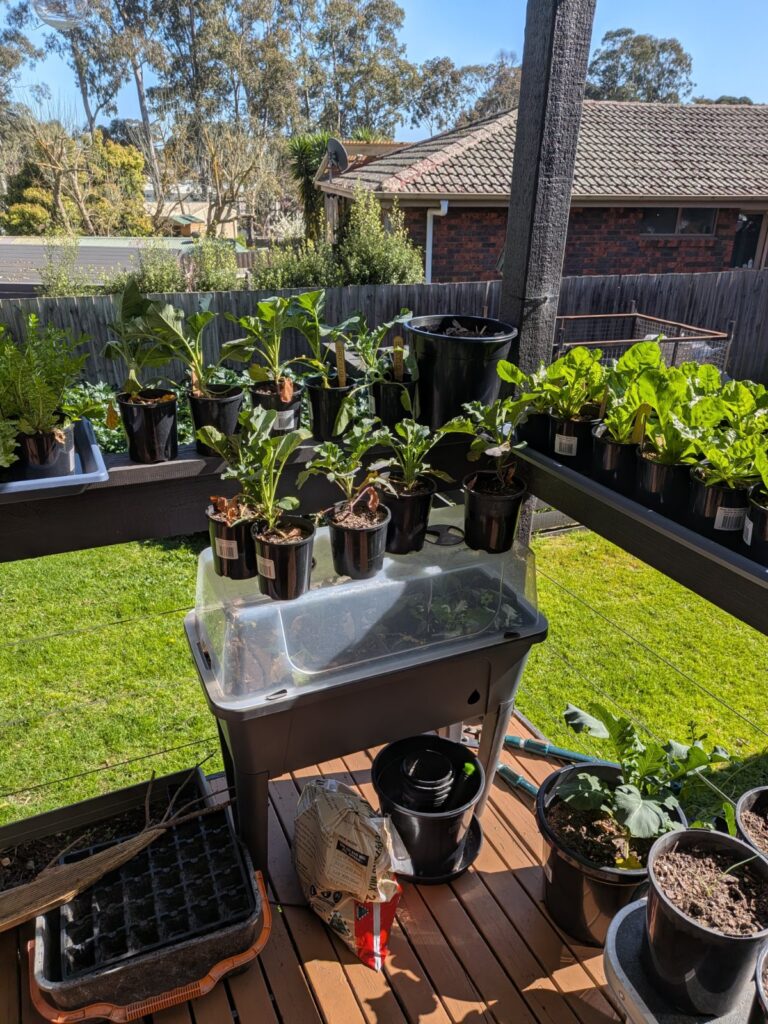
The advice below comes from university extension services, and where they disagree we say so. The photos are from our Test Garden in the Southern Hemisphere, where it is spring. The byline explains extension advice. It is not a report of experiments on our own plants.
In this guide: At a glance | Start clean | New plants | Watering | Feeding | Netting and row cover | The weekly look | Helpers | Tidying up | Home remedies | FAQ
The 8 habits at a glance
| Habit | What it helps stop | When |
|---|---|---|
| 1. Fresh mix and clean pots | Pests and diseases carried over in old mix or on old pots | Before planting |
| 2. Check and isolate new plants | Pests arriving on bought plants or plants brought in from outside | Before buying and for the first weeks at home |
| 3. Let the top of the mix dry | Fungus gnats and soggy-soil problems | Every watering |
| 4. Feed lightly | Soft, sappy growth that aphids like | Each feed |
| 5. Cover young plants | Flea beetles, aphids and other pests a cover can keep off | Soon after planting |
| 6. Look once or twice a week | Small problems turning into big ones | Weekly, more while plants grow fast |
| 7. Keep the helpers | Aphids and other soft-bodied pests | All season |
| 8. Tidy up | Hiding places and breeding spots near the pots | Every week or two |
1. Start clean: fresh mix and clean pots
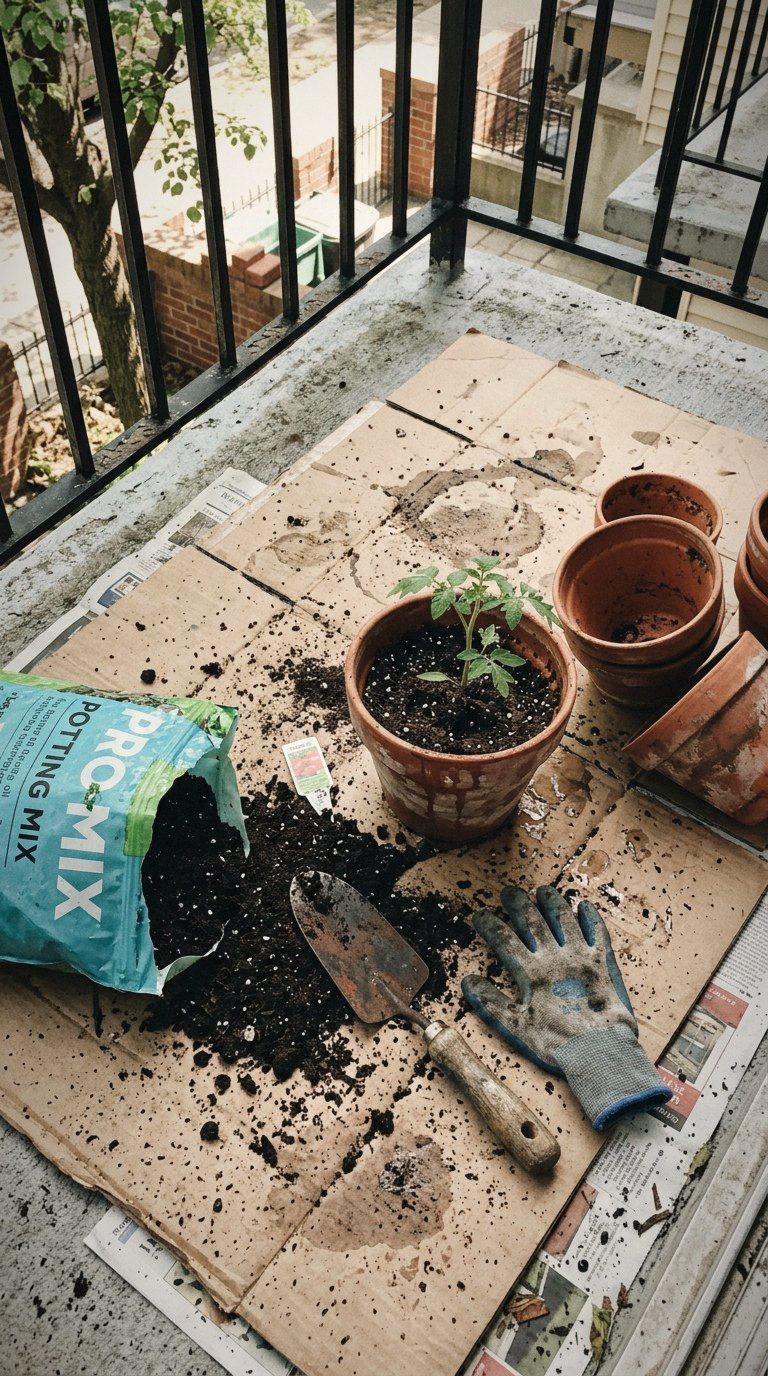
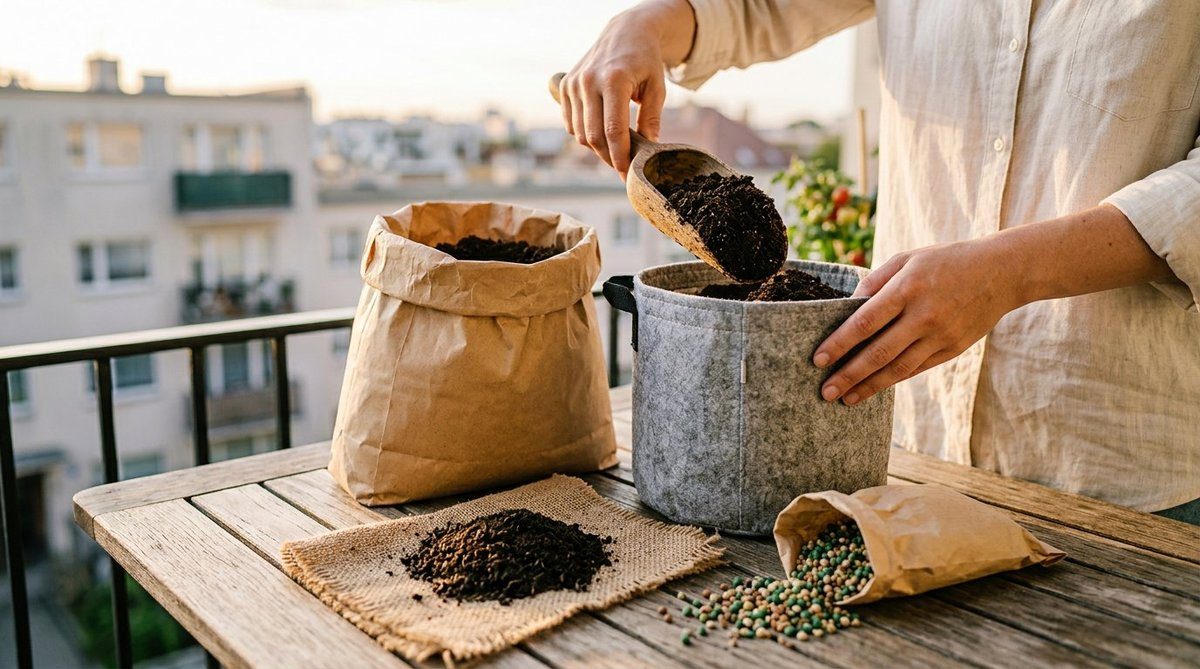
University of Maryland Extension says fresh soilless potting mix is generally free of weeds, insects and disease organisms, and that garden soil can carry plant pests and pathogens. Our reading: that is the case for buying potting mix rather than digging up the backyard.
Reusing old mix is where sources disagree. University of Maryland Extension says you can reuse it if root disease was not a problem: remove plant debris, then blend it half and half with fresh mix or compost. Colorado State University Extension says never to reuse the previous season’s mix, and Oklahoma State University Extension says not to reuse it year to year. Our reading: if pests or disease troubled a pot last season, start that pot with fresh mix.
Old pots and supports need cleaning too. University of Minnesota Extension says to remove dirt and plant debris from used pots, tools and supports such as trellises and cages, then clean everything with a 10 percent bleach solution, which is 1 cup of bleach to 9 cups of water. Oklahoma State adds a thorough rinse afterward. For food-grade containers, University of Maryland Extension says to wash with soap and rinse, soak for 10 minutes in a 10 percent bleach solution, wash and rinse again, and let them air dry.
2. Check new plants, and isolate them
Pests often arrive on plants you bring home. Penn State Extension Master Gardeners suggest poking the soil near the base of a plant before you buy it and looking for glossy larvae or flying gnats. In its guide to indoor plants, University of Minnesota Extension says to examine all plant parts and containers before bringing plants home from the store, or indoors for winter, and to isolate newly acquired plants so any problem has time to show.
How long to wait for houseplants depends on the source. University of Minnesota Extension says one to two weeks. Colorado State University Extension says at least three weeks. Washington State University Extension says a few weeks for a new plant, and about a week for a plant that spent the summer outdoors. Our reading: a week or two is the minimum, and longer is safer. Our guide to moving a container garden indoors for winter has more on bringing plants in.
3. Water so pests don’t settle in
University of Maryland Extension says extra nutrients can stress plants and worsen a pest or disease outbreak, and that watering too often leaves the mix short of air and can lead to root rot. Oregon State University Extension says fungus gnat larvae live in the top half inch or so of the mix and need moisture, so check that the top inch is dry before you water. Our watering schedule for container vegetables explains how to tell when a pot needs water, and our guide to fungus gnats covers what the extension sources say once they have arrived.
Saucers matter too. University of Maryland Extension says to empty them regularly, because standing water can encourage root rot and breed mosquitoes. It also suggests propping pots a few inches off the ground on pot feet or bricks so water drains freely, without blocking the drainage holes.
4. Feed lightly
Extra fertilizer can backfire. University of Maryland Extension says applying more nutrients than a plant needs can worsen a pest or disease outbreak. Missouri Extension, writing about indoor plants, says aphids, mealybugs and scale thrive on overly succulent growth, which is often due to high nitrogen. Follow the label on whatever you use. Our soil and fertilizer basics guide covers feeding container vegetables.
5. Cover young plants with row cover or insect netting
The extension pages we read put a lot of weight on this habit. University of Maryland Extension says a row cover is an exceptional organic pest management tool, because it physically keeps insects off. University of New Hampshire Extension lists aphids, cutworms and flea beetles as pests it can exclude on tomatoes and peppers, and cucumber beetles and squash bugs on cucumbers, melons, pumpkins and squash.
- Put it on early. University of Maryland Extension says to install it soon after planting and hold it tightly to the ground. UC IPM says to cover seedlings early so insects cannot lay eggs under the cover.
- Choose the weight. University of Maryland Extension describes a lightweight grade, 0.45 ounce per square yard, marketed as an insect barrier. It lets through 90 to 95 percent of light. Heavier grades let through less light, 70 to 85 percent for medium and 30 to 50 percent for heavy.
- Mind the mesh. University of Maryland Extension says mesh sizes vary, and the smallest size excludes thrips.
- Seal the edges. University of Maryland Extension suggests securing a cover with bricks, boards, pins or soil. It also shows a large raised container covered with see-through netting. Our reading: in a pot, a hoop or stakes can hold the cover up, with a string or clip around the rim.
Know when to take it off. Plants that need insects to pollinate them can’t stay covered. University of Maryland Extension says to remove covers from squash, cucumbers, melons and strawberries when they flower, while leafy greens and green beans can stay covered until harvest. For tomatoes the sources differ: University of New Hampshire Extension lists tomatoes among insect-pollinated crops and says to remove the cover when flowers bloom, while University of Maryland Extension says to remove it when it is time to stake or cage the plants. Summer is another limit. University of Maryland Extension says the temperature under a row cover can run 5 to 15 degrees Fahrenheit above the air outside, and that bean, tomato and pepper flowers may drop above 90 degrees Fahrenheit. It suggests insect netting in summer, which lets through about 80 percent of light.
A cover can trap pests in. University of Maryland Extension says insects can get trapped under a cover if they were already on the plant or in the soil. University of Minnesota Extension says not to use a row cover where onions or root crops grew the year before, because root maggots overwinter in the soil near their host plants. For squash vine borers it says the same for squash-family crops. Our reading: the same worry applies to a pot of reused mix, which is another reason to use fresh mix under a cover.
Our Recommended Gear page lists one floating row cover. It is sold as a frost cloth, which is a heavier weight than the insect-barrier grade described above, so it will let through less light. See Recommended Gear for what we list.
6. Look once or twice a week
A quick look catches trouble while it is small. Maryland Master Gardeners say to monitor plants regularly, including leaf undersides, and to hand-pick pests where you can. UC IPM says to check for aphids at least twice a week when plants are growing rapidly. In its guide to indoor plants, University of Minnesota Extension suggests checking for pests whenever you water, fertilize or clean plants.
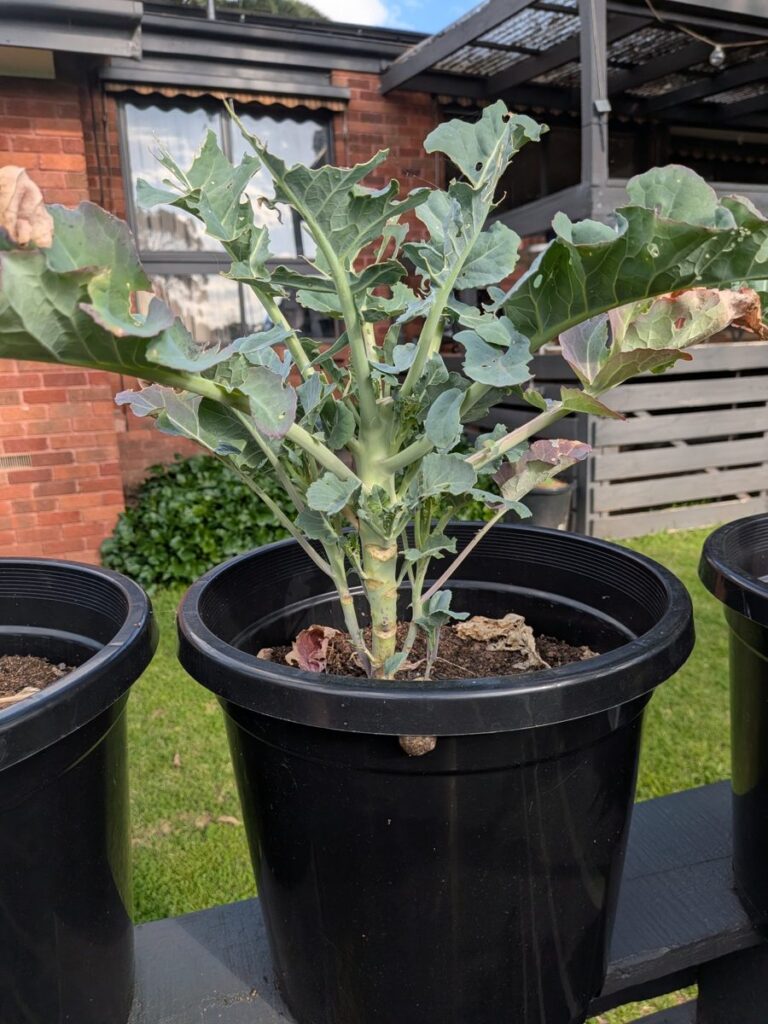
- Turn over a few leaves and look along the veins and at the base of new growth.
- Look at the pot too: the rim, the saucer and underneath. That guide also says to check pot edges, rims and crevices, and the bottom of pots and saucers.
- If you see aphids, Illinois Extension says plain water from a hose can wash them off.
- Sticky traps can show you what is flying around, but the same indoor-plant guide says they help detect adults and should not be your only method.
Not sure what you found? Our damage-to-pest table for potted broccoli shows how to tell aphids, caterpillars and slugs apart, and our guide to finding the cause by symptom covers other problems.
7. Keep the helpers
Oregon State University Extension says to attract beneficial insects with small-flowered plants such as daisies, alyssum, yarrow and dill, and to keep something in flower all season. Illinois Extension says to provide a shallow dish of water with a few rocks for insects to perch on, and to change the water every 2 to 3 days. It also warns that many insecticides kill both good and bad insects.
These flowers don’t repel pests in the sources we read. They bring in insects that eat them. That is also why it pays to spot-check before spraying anything.
8. Tidy up around the pots
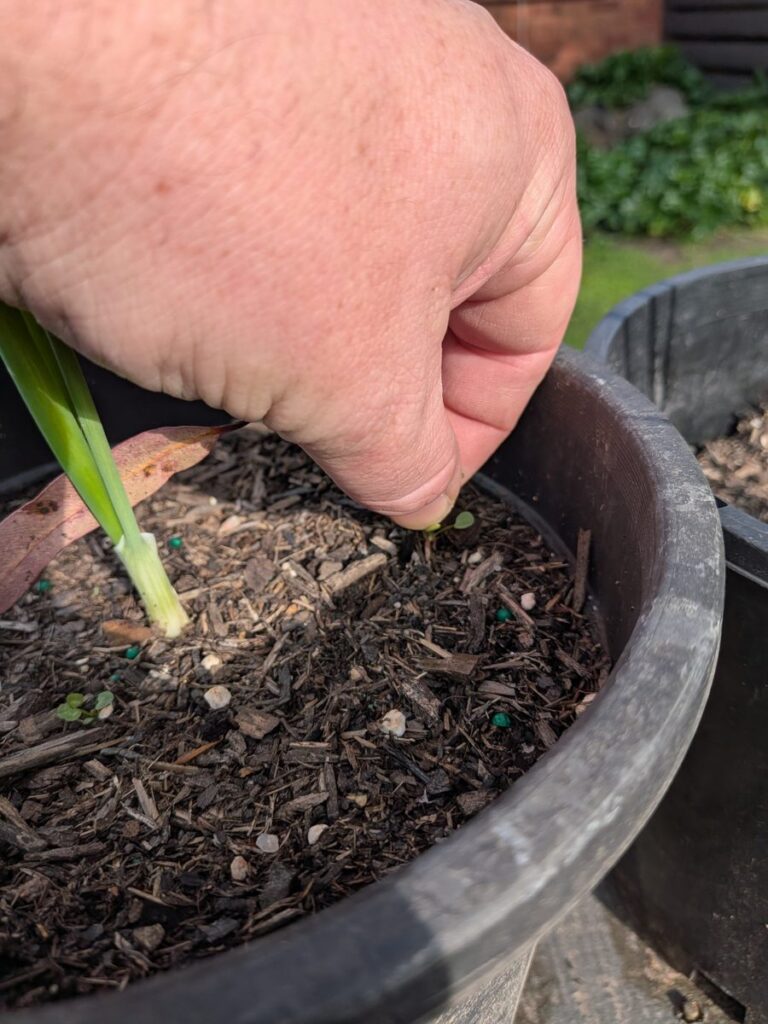
Maryland Master Gardeners say to remove nearby weeds and debris that harbor garden pests, and Oregon State University Extension says weeds can serve as a reservoir for insects and diseases. Our reading: pull dead leaves off the surface of the mix too.
What about vinegar and other home remedies?
Many searches ask whether vinegar or a homemade spray will keep bugs off vegetables. The University of Minnesota Extension page on preventing pests warns that home remedies may do more harm than good. Its concerns include these:
- Ingredients may not be safe around people, pets or other living things.
- With no product label, there is no tested guidance on how strong to make a mix, how often to apply it, what protective gear to wear, or what it does to the environment.
- Mixing and cooking remedies can create toxic fumes or contaminate surfaces where you prepare food.
- Soaps can damage the protective coating on plants.
- Vinegar and salt may change soil pH or harm helpful soil microbes.
The page we read gives no recipe for a homemade vegetable spray, and neither do we.
If you do need a spray
The University of Minnesota Extension page says the label is the law: use a product only on plants listed on its label, and observe the days between application and harvest. Illinois Extension says that for whitefly sprays on vegetables, if no pre-harvest interval is listed, you should not use that insecticide on them. Our reading: apply the same caution to any spray on a plant you eat. For more on trying water and soap first on a potted vegetable, see our broccoli pest guide.
FAQ
How do I keep bugs off container vegetables?
Extension sources suggest starting with fresh potting mix and clean pots, checking and isolating new plants, letting the top of the mix dry between waterings, covering young plants with row cover or fine netting, and checking leaf undersides once or twice a week.
Should I reuse potting mix from last year?
Sources differ. University of Maryland Extension says you can reuse it if root disease was not a problem, mixed half and half with fresh mix or compost. Colorado State University Extension says never to reuse it, and Oklahoma State University Extension says not to reuse it year to year.
Does vinegar keep bugs off vegetable plants?
The University of Minnesota Extension page on preventing pests warns that home remedies may do more harm than good. It says vinegar and salt may change soil pH or harm helpful soil microbes, and that without a label there is no tested guidance on strength or timing.
What flowers keep bugs off vegetable plants?
In the sources we read, small flowers such as alyssum, daisies and dill attract beneficial insects that eat pests, according to Oregon State University Extension. They are not described as repellents.
How long should I isolate a new plant?
For houseplants the sources differ. University of Minnesota Extension says one to two weeks, Colorado State University Extension says at least three weeks, and Washington State University Extension says a few weeks. Our reading: a week or two is the minimum and longer is safer.
When should I take the row cover off?
University of Maryland Extension says to remove it from squash, cucumbers, melons and strawberries when they flower so insects can pollinate them, while leafy greens and green beans can stay covered until harvest. It also warns that covers can run hot in summer, so insect netting is the suggested alternative.
Sources we checked
- Growing Vegetables in Containers and Salad Tables. University of Maryland Extension
- Vegetable Garden Weather and Pest Protection. University of Maryland Extension
- Row Covers. University of Maryland Extension
- Vegetable Garden Problems. Charles County Maryland Master Gardeners (PDF, 2025)
- Using Row Covers in the Garden. University of New Hampshire Extension
- Preventing pests in your yard and garden. University of Minnesota Extension
- Managing plant diseases in the home garden. University of Minnesota Extension
- Managing insects on indoor plants. University of Minnesota Extension
- Cabbage and onion maggots. University of Minnesota Extension
- Squash vine borers. University of Minnesota Extension
- Disease and Insect Problems. University of Illinois Extension
- Beneficial Insects. University of Illinois Extension (PDF)
- Growing Your Own. Oregon State University Extension
- I have fungus gnats everywhere. Can you help? Oregon State University Extension, Ask Extension
- Managing Houseplant Pests. Colorado State University Extension
- Container Gardens. Colorado State University Extension
- Container Gardening. Oklahoma State University Extension
- Take a Close Look at Plants That Are Coming Inside for the Winter. Penn State Extension, Adams County Master Gardeners
- Houseplants. Washington State University Extension, PNW Gardener’s Handbook
- Least-Toxic Control Methods to Manage Indoor Plant Pests. Missouri Extension
- Aphids, Pest Notes 7404. UC IPM
- Protective Covers. UC IPM