Balcony Setup for Renters: A Deposit-Safe Container Garden
Why Renters Need a Different Setup
Most container-gardening advice assumes you own the place. It doesn’t always account for the fact that you can’t drill into the railing, that you might move next year, or that your landlord’s definition of “reasonable use” of the balcony probably doesn’t include soil, standing water, and heavy pots. Renting changes the setup — not what you can grow, just how you get there.
This post contains affiliate links, meaning we may earn a small commission at no extra cost to you — full details are on our Affiliate Disclosure page.
Wondering whether a raised bed would be better than pots? For most renters it isn’t, and our raised beds vs. containers guide explains why.
Everything in this guide works whether you’re in a house you plan to leave in a year or a fourth-floor walk-up you’ve committed to for a while. The goal is the same: a garden that’s genuinely yours, that you can take with you, and that never becomes a line item on your move-out inspection.
Quick answer: Check your lease and ask your landlord before you buy anything. Use lightweight plastic pots or fabric grow bags with a saucer under every one, and spread the weight around the edges of the balcony instead of piling pots in the middle. Water slowly so nothing drips onto the balcony below. Never drill or screw anything into the railing or walls. Clean up with the move-out checklist below and your deposit is safe.
In this guide: Check your lease · Weight limits · Damage-free containers · Wind and sun · Drips and neighbors · Landlord email template · Move-out checklist · FAQ
Step 1: Check Before You Buy Anything
Before you buy a single pot, read your lease. Most leases address alterations to the unit, and some specifically mention balconies, railings, or exterior fixtures — look for language about drilling, attaching items to railings, or weight restrictions. If your lease is silent on it, a quick message to your landlord or property manager (“I’d like to put some potted plants on the balcony — anything I should know?”) is worth the two minutes it takes. It’s a much better conversation to have before you’ve spent money than after something’s already gone wrong.
Step 2: Understand Your Balcony’s Weight Limits
Wet containers are much heavier than they look. University of Maryland Extension warns that a single 20-inch container filled with moist potting mix and plants can weigh 100 pounds. Water alone weighs about 8.3 pounds per gallon, so a pot is at its heaviest right after you water it.
Building codes set a minimum design load for balconies. The International Residential Code uses 40 pounds per square foot for balconies and decks, and many older or commercial-code buildings were designed differently. You can’t tell your balcony’s real limit by looking at it, so treat it as a question for your landlord, not a guess. Until you know, keep things light and spread out:
- Use plastic, resin or fabric containers rather than ceramic, concrete or stone.
- Use potting mix, never garden soil. UMD notes that garden soil is too dense for containers, and it is also heavier.
- Keep the heaviest pots near the wall and along the edges. The New York Botanical Garden points out that the middle is the weakest point of a balcony.
- Leave space between pots instead of grouping them all in one corner.
- Skip water features, big raised beds and anything that holds standing water.
Step 3: Choose Containers That Won’t Damage Anything
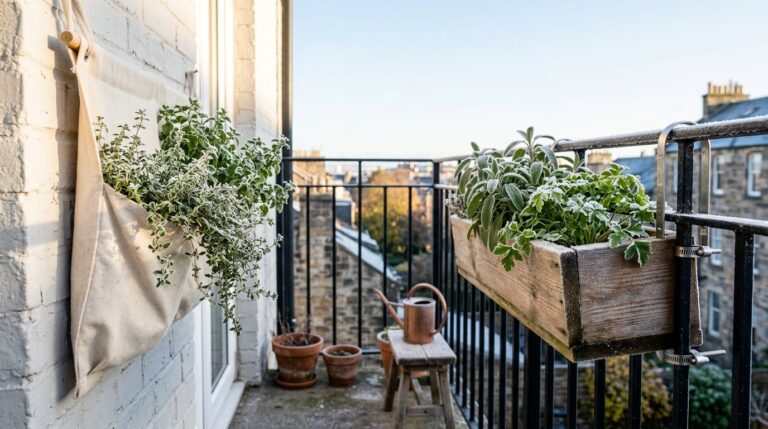
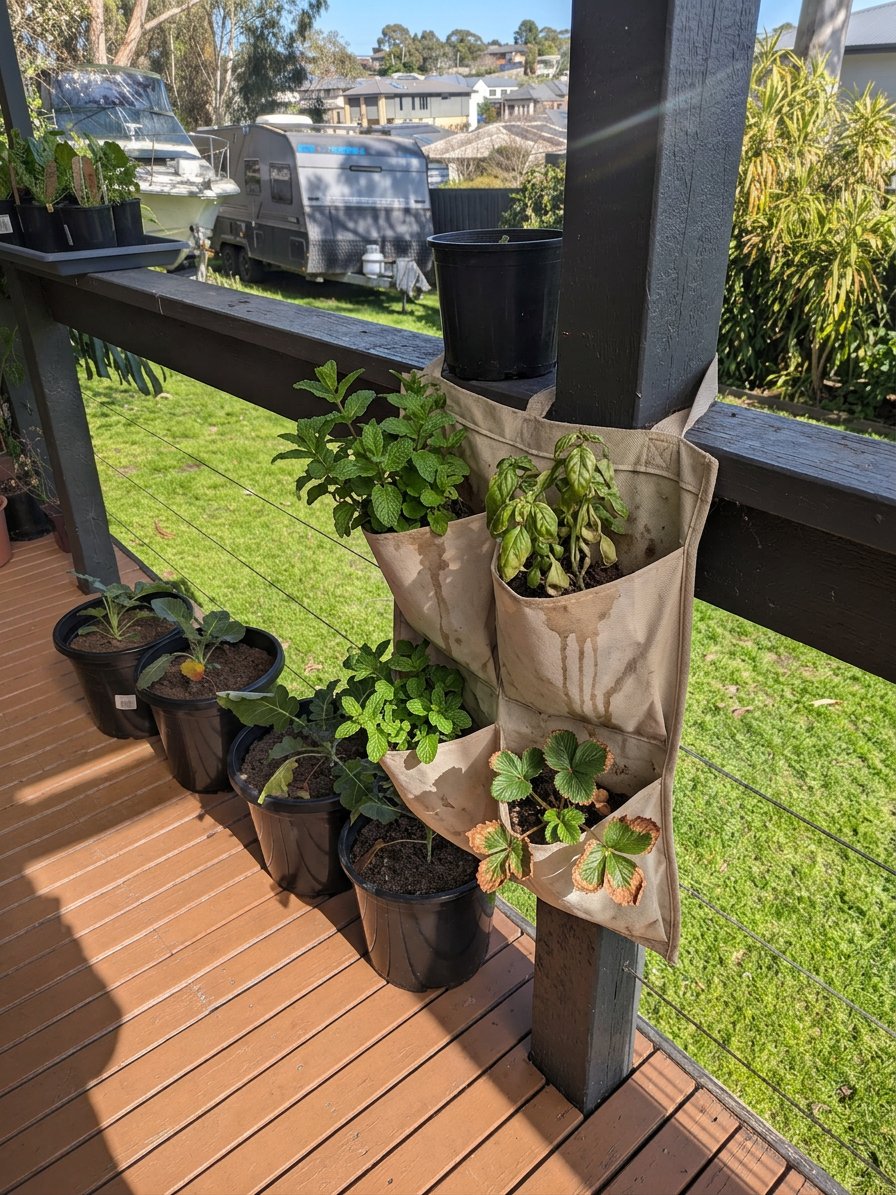
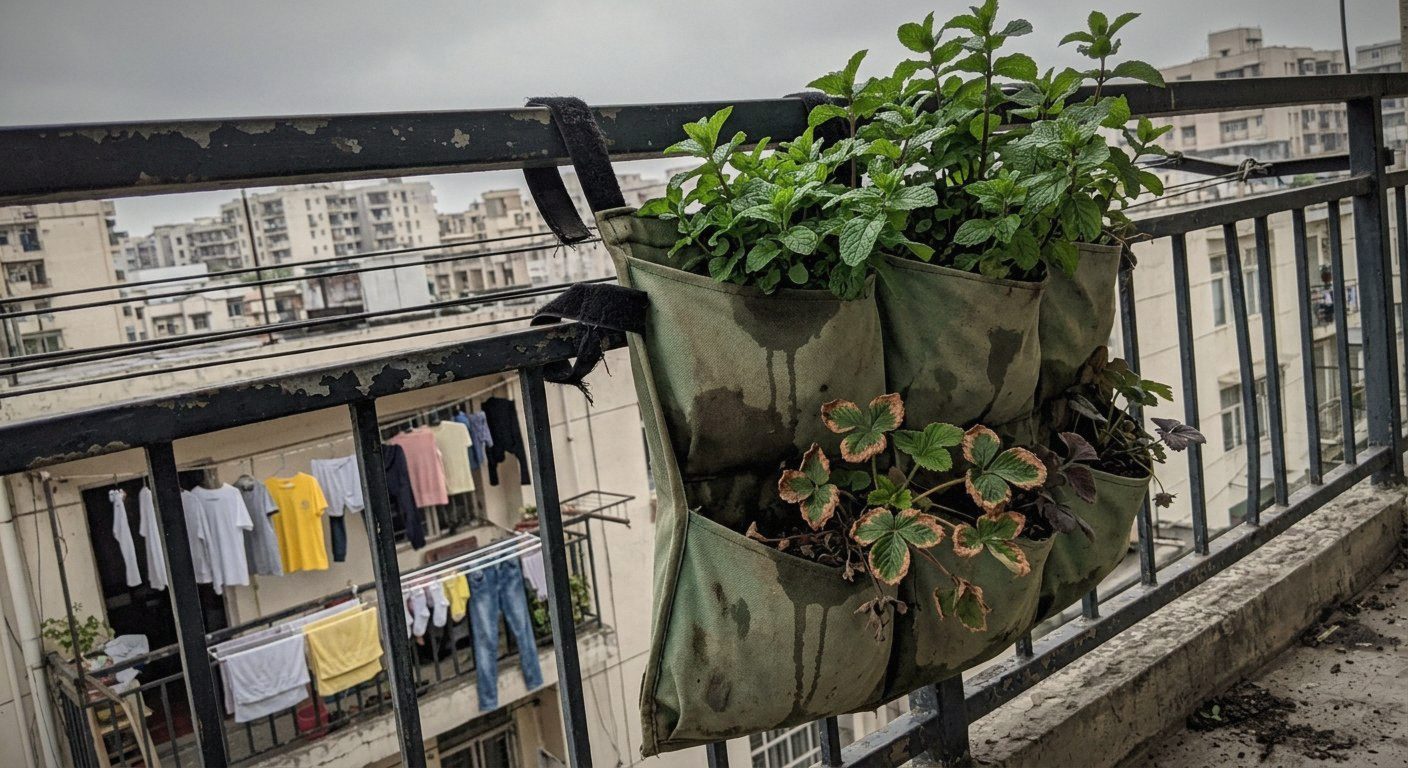
Every pot needs a saucer or tray underneath it — drainage water that runs onto wood decking or concrete can leave stains that come straight out of your deposit. If you’re set on railing planters, use brackets rated for your specific rail thickness rather than generic clip-on hooks, which can scratch or dent the railing over time. Fabric grow bags are worth considering too: they’re much lighter than ceramic or plastic pots, fold flat for storage when you move, and their breathable material helps roots grow into a fuller, more fibrous system instead of circling the inside of a hard pot. The tradeoff is that they dry out faster and need more frequent watering, especially in wind. Gardzen’s 10-pack of fabric grow bags is a reasonable starting point if you want to try a few. For everything else, a plastic or resin pot is lighter than ceramic and much less likely to crack if it ever gets knocked over.
Two more deposit-savers from Maryland Extension: empty saucers after watering so standing water doesn’t rot roots or breed mosquitoes, and choose loose saucers over built-in ones because they’re easier to empty. If you go with fabric bags, the University of Florida explains why roots don’t circle in them: air dries the mix at the edge of the root ball, which stops roots growing there. Put fabric bags on a saucer or tray too. They drain from the sides as well as the bottom. Maryland Extension also notes that dark containers heat up more in the sun, which can injure young roots. On a hot balcony, light-colored pots are the safer choice.
Step 4: Deal With Wind and Sun Honestly
Don’t assume your balcony gets the sun the listing photos suggested — track it yourself for a few days before you buy plants, since a “sunny balcony” can still be mostly shaded by the building next door or the floor above. Wind is the other factor renters often underestimate: higher floors and corner units tend to get more of it, and wind dries out pots faster than still air and can topple top-heavy plants like a tall tomato in a small pot. If your space is windy, water more often than you’d expect, choose sturdier or wider-based containers over tall narrow ones, and skip trellises or stakes that aren’t firmly anchored in the pot itself.
How much sun is enough? UMD Extension recommends 6–8 hours of direct sun for warm-season crops like tomatoes and peppers, and 3–5 hours for cool-season greens like lettuce and spinach. If you get less, see our shady-balcony crop list. For wind, NYBG suggests an open-textured screen. On a rental, choose one that ties or clamps on. Avoid anything that screws in or punctures the balcony’s waterproof floor membrane.
Step 5: Keep Water Off Your Neighbors (and the Floor)
In an apartment, the water that runs out of your pots goes somewhere. Often that’s onto the balcony, windows or laundry of the people below you. Neighbor complaints bring landlords around faster than anything else. NYBG’s balcony guide advises watering with a gentle spray that won’t reach your neighbors’ balconies.
- Water slowly, and stop when the first drops reach the saucer. Pouring until water gushes out is the main cause of drips over the edge.
- Use saucers that are wider than the pot and empty them after watering.
- Keep pots back from the edge, especially on balconies with open railings or gaps at the floor.
- Don’t hose down the balcony. Sweep up spilled soil and wipe the floor with a damp cloth instead.
- Water early in the morning or in the evening, when neighbors are less likely to be out below.
- Hang railing planters on the inside of the rail so drips land on your floor, not someone else’s.
Common Mistakes Renters Make
The three we see most often: drilling into railings or siding for a “quick” hook instead of using a clamp-on or freestanding option; grouping every heavy container in one corner instead of spreading the weight out; and buying a full setup before checking the lease, only to find out drilling or permanent fixtures aren’t allowed. All three are easy to avoid once you know to look for them — and all three are exactly why this guide exists.
What to Ask Your Landlord (Copy-and-Paste Email)
Asking in writing takes two minutes and gives you a record if anything is questioned at move-out. Here’s a short email you can copy and paste:
Hi [name], I’d like to keep a few potted vegetable plants on my balcony at [unit]. My plan is [number] lightweight plastic or fabric containers with saucers under each one, spread around the edges. Nothing will be drilled, screwed or attached permanently to the railing or walls. Could you let me know: (1) Is there a weight limit or a maximum number of pots for the balcony? (2) Are railing planters that clamp or hang on the inside of the rail OK? (3) Are there any building rules about balcony plants, water or fire safety I should follow? Thanks, [your name]
Keep the reply with your lease. If your building has a board or a property manager, NYBG also suggests asking about local fire rules and balcony inspections, since some cities require regular inspections of exterior structures on taller buildings.
Move-Out Checklist
Start about two weeks before your inspection so you have time to fix any marks:
- Harvest what you can. Give the rest of the plants away or compost them.
- Bag up used potting mix to reuse at your next place, or give it away. Don’t tip it into the building’s drains or planters.
- Remove all railing planters, clamps, hooks and screens.
- Lift every pot and saucer and check underneath for rings, stains or rust marks.
- Scrub stains while they’re fresh. Mild soapy water and a soft brush handle most water marks on concrete and composite decking.
- Sweep up soil, leaves and seed husks, including the corners and the gaps between floorboards.
- Check the railing and walls for scuffs where pots or brackets rubbed.
- Check that the balcony drain or scupper is clear of soil.
- Take dated photos of the empty balcony for your records.
For more on hanging pockets, tiered shelving, and railing planters — including how to think about weight and water runoff for vertical setups — see Pocket Vertical. Heading into fall? Our Pre-Frost Checklist for Hanging Planters and Railing Gardens covers what to protect, bring in, or let go before the first frost. Wondering what to actually plant once your setup is ready? Our guide to the best vegetables for hanging planters covers exactly that. Ready to shop? Our Recommended Gear page covers what to look for in lightweight, renter-friendly containers. And if you haven’t picked your first plant yet, our guide to Best Vegetables for Pots is a good place to start, or Start Here walks you through the basics.
And if a plant is already struggling, our guide to diagnosing dying container vegetables by symptom can help you figure out the cause.
Frequently Asked Questions
How much weight can an apartment balcony hold?
It depends on the building. The International Residential Code uses a minimum design load of 40 pounds per square foot for balconies, but older and larger buildings may be designed to different standards. Ask your landlord or building manager. Meanwhile keep pots light and spread out, since University of Maryland Extension notes a 20-inch pot of moist potting mix can weigh 100 pounds.
Can I attach planters to my balcony railing as a renter?
Usually, if they clamp or hang on and come off without marks, and your lease doesn’t forbid it. Never drill into the railing. Hang planters on the inside so they can’t fall and drips stay on your balcony, and check with your landlord first.
How do I stop my balcony plants dripping on my neighbors?
Water slowly and stop when the first drops reach the saucer. Use saucers wider than the pot and keep pots back from the edge. Don’t hose down the balcony floor; sweep and wipe it instead.
Will potted plants damage my balcony floor?
They can if water sits under them. Put a saucer under every pot, empty it after watering, and lift pots now and then to check for stains. Maryland Extension recommends emptying saucers so standing water doesn’t cause root rot or breed mosquitoes.
What are the best containers for a rental balcony?
Lightweight plastic, resin or fabric containers. They’re lighter than ceramic or concrete, easy to move when you leave, and fabric bags fold flat. Use potting mix rather than garden soil, which is denser and heavier.
Sources we checked
- University of Maryland Extension: Growing Vegetables in Containers and Salad Tables
- University of Maryland Extension: Types of Containers for Growing Vegetables
- New York Botanical Garden: A Balcony Garden (Container Gardening research guide)
- University of Florida IFAS: Air-pruning containers and root circling
- International Residential Code, Section R301.5: Live load