
Why Are My Container Vegetables Dying? Find the Cause by Symptom
When a vegetable plant in a pot starts going downhill, it almost always comes down to one of three things: water (too much or too little), a pot that’s too small for the plant in it, or temperature (roots cooking in afternoon sun, or a cold night the plant wasn’t built for). Pests and disease are real, but they sit further down the list than most beginners expect. So if you’ve just typed “why are my container vegetables dying” into a search bar, the fastest answer isn’t to guess — it’s to look at what the plant is actually doing. This guide is organised that way: find the symptom that matches what you’re seeing, and follow it to the cause and the fix.
This post contains affiliate links, meaning we may earn a small commission at no extra cost to you — full details are on our Affiliate Disclosure page.
Quick answer: Lift the pot and push a finger two inches into the mix. A light, dry pot means water (soak it from below if water runs straight through). A heavy, soggy pot with a wilting plant usually means root rot, so stop watering and fix drainage. Wilting at 3pm with damp soil is heat, so shade the pot. Yellow lower leaves usually mean it needs feeding, and a sudden overnight collapse is cold or frost. In fall, a slowly fading tomato or pepper is often just the end of its season.
In this guide: Two-minute check · Wilting · Yellow leaves · Collapsed overnight · No fruit · Pests · Leggy · October slowdown · Save it? · Prevention · FAQ
Before You Change Anything: The Two-Minute Check
Most container problems can be narrowed down in about two minutes, with no tools at all:
- Lift the pot. A properly watered pot has real weight to it. If it feels surprisingly light, the mix is dry all the way through — even if the surface looks dark. If it’s heavy and the surface has been wet for days, drainage is the problem, not thirst.
- Push a finger in to the second knuckle. The top inch of a pot dries out fast and tells you almost nothing. Two inches down is where the roots live. Dry there means water; wet and cold there means wait.
- Look at the drainage hole. Roots poking out, or a pot that has stopped draining freely, both point to a plant that has outgrown its container. Water still sitting in the saucer half an hour after watering points to a plant standing in water.
- If none of that explains it, tip the plant out. Hold the stem between your fingers, turn the pot over, and ease the root ball out. Healthy roots are white or cream and firm. Brown, mushy, sour-smelling roots have rotted. A solid mat of roots circling the outside of the ball means the plant has run out of room.
Keep those four results in mind as you work through the symptoms below — between them, they explain most dying container vegetables.
Wilting Even Though You Watered
This is the most confusing symptom on the list, because the obvious fix — more water — is sometimes exactly the wrong thing. Four different causes produce the same droop.
The water ran straight through the pot
Peat-based potting mix (which is most bagged mix) turns water-repellent once it dries out completely. Water then runs down the gap between the shrunken root ball and the pot wall and straight out the bottom. It looks like good drainage, but as the University of California Master Gardeners describe it, the centre of the root ball is left dead dry. The lift test gives it away: you just watered, and the pot is still light.
The fix: water from below. Stand the pot in a bucket, sink, or tray of water that comes a third of the way up its side and leave it for an hour or more, until the surface of the mix is visibly damp. A small pot can be held under until the air bubbles stop rising. Rewetted mix absorbs water normally again — the trick is not letting it dry out completely a second time.
The roots have filled the pot
A plant that wilts every afternoon and perks up every evening, needs watering more than once a day in warm weather, and has roots showing at the drainage hole has simply run out of room. There isn’t enough mix left in the pot to hold water between waterings, however often you water. Tomatoes and peppers in anything smaller than 5 gallons usually reach this point by midsummer.
The fix: move it to a bigger container — a couple of inches wider and deeper at least, and ideally the right size for the crop from the start (our pot size and drainage guide has the numbers by vegetable). Tease the circling roots loose before replanting so they grow outward instead of continuing to spiral.
It’s wilting at 3pm in full sun, and the soil is damp
This one isn’t thirst — it’s heat. University of Kentucky horticulture research on container-grown plants found that root-zone temperatures in pots standing in full sun consistently exceed 104°F for 5 to 10 hours a day in some part of the container, and that the sun-facing wall usually passes 120°F in summer. Roots can’t take up water properly at those temperatures, so the plant wilts with damp soil around it, then recovers as the evening cools. More water in an already-damp pot just adds root rot to the problem.
The fix: cool the pot, not the plant. Move it so the pot itself is shaded in the afternoon even if the leaves are still in sun, stand something in front of the sun-facing side (another pot, a board, a folded towel), or wrap dark pots in something pale — the same research found the mix inside white and light-coloured containers runs 9 to 18°F cooler than inside black ones. If you’re buying pots for a west-facing balcony, that’s the reason to pick tan or grey over black.
The soil is wet, and the plant is wilting anyway
If the pot is heavy, the mix has been wet for days, and the plant is drooping, the roots are probably rotting. Sitting in waterlogged mix with no air, they’ve died — and dead roots can’t take up water, so the plant wilts in the middle of a puddle. Tip it out and check: brown, soft, sour-smelling roots confirm it.
The fix: stop watering and get the pot draining — empty the saucer, clear the drainage holes, and raise the pot on a couple of bricks or pot feet so water can actually leave. If there are still firm white roots in the ball, trim away the rotted ones with clean scissors and replant in fresh, barely damp mix in a pot with generous drainage. If every root is brown and the base of the stem is soft, the plant isn’t coming back — see “Save It or Start Over?” below.
Leaves Turning Yellow
Where the yellowing starts tells you most of what you need to know, because plants can move some nutrients around inside themselves and not others.
Bottom leaves first, working upward
Nitrogen is a nutrient plants can shift from old leaves to new growth, so when it runs short the plant strips its oldest, lowest leaves first: they turn evenly yellow while the top stays green. It’s very common in containers from midsummer on — every watering washes a little fertilizer out of the bottom of the pot, and bagged mix only carries a few weeks’ worth to begin with. The same bottom-up pattern also shows up on an overwatered plant, because suffocating roots can’t take up nitrogen even when it’s there. The lift test settles it: light pot, feed it; heavy, soggy pot, let it dry out first.
The fix: a liquid vegetable fertilizer at the strength on the label, repeated every one to two weeks through the growing season. Don’t double the dose to catch up — that feeds the salt problem below. Our soil and fertilizer basics guide covers what to use and how often.
New leaves yellow, with green veins
When the youngest leaves at the tips are pale yellow between the veins while the older leaves stay green, the plant is short of iron or another nutrient it can’t move around — usually because the mix has drifted too alkaline for the roots to absorb it, or because the roots are cold and waterlogged. It’s much less common in containers than the bottom-up pattern, and rarely fatal.
The fix: check watering and temperature first (cold, wet roots are the usual container cause in fall). If the plant is otherwise growing and the weather is warm, a balanced liquid feed that lists micronutrients on the label usually greens it up within a couple of weeks.
The whole plant has gone pale after cold nights
Tomatoes, peppers, basil, cucumbers, and beans all sulk once nights drop into the 40s and low 50s: growth stalls, leaves go pale or take on a purplish tint underneath, and the whole plant looks tired rather than one part of it. That isn’t a nutrient problem, and feeding won’t fix it — it’s the season ending, which gets its own section further down. Lettuce, spinach, kale, and chard don’t do this and keep going.
A white crust on the soil or pot rim, with browning leaf edges
A white, crystalline crust on the surface of the mix, on the pot rim, or on the outside of a terracotta pot is fertilizer salt — the residue of every feed you’ve given, concentrated as water evaporates. Enough of it and the roots struggle to take up water, so the plant shows scorched leaf edges and tips and looks drought-stressed even when it’s been watered. Small pots fed on a fixed schedule are the usual candidates.
The fix: flush the pot. Scrape off the surface crust, then run clear water through slowly — the University of Maryland Extension’s rule is at least three times the volume of the pot — and let it drain completely. Then go back to feeding at label strength, not above.
It Collapsed Overnight
A plant that was fine yesterday and is limp, dark, and water-soaked this morning has almost always been hit by cold — either an actual frost, or a night cold enough to chill the roots right through in a small pot even without one.
- Frost. Tomatoes, peppers, basil, cucumbers, squash, and beans are all frost-tender: leaves turn dark, translucent, and limp, then brown, after a night at or just below freezing. Roots in containers get colder than roots in the ground because cold reaches them from every side of the pot, so a pot on a balcony can take frost damage on a night the forecast called 35°F.
- Cold-soaked roots, no frost. A small pot of wet mix chills through on a clear, still night. The plant wilts the next morning as if it were thirsty, even though the soil is wet, and usually recovers by afternoon — but a run of nights like that will finish a warm-season plant.
The fix: if frost is forecast, bring the pot inside overnight or cover it. A lightweight frost cloth draped over the plant and clipped so it doesn’t rest on the leaves buys several degrees of protection — the Gardzen frost cloth on our gear page is a good balcony pick because it’s light enough to clip to a railing. Cover the pot too: a towel or bubble wrap around the container protects the roots, which matter most. After damage, don’t prune anything for a few days — leaves that look dead sometimes only look dead, and the stem will tell you whether the plant is alive (see “Save It or Start Over?”). Our frost protection for containers guide has the full routine, and the pre-frost checklist for hanging planters covers the exposed vertical setups that freeze first.
Growing Fine, But No Fruit (or Fruit That Rots at the Bottom)
A big, healthy, leafy plant with nothing to show for it is frustrating precisely because nothing looks wrong. Three causes cover almost every case.
- The temperature is outside the window the plant sets fruit in. This has hard numbers, and they matter in a container garden because pots heat and cool faster than the ground. According to the University of Maryland Extension, peppers drop their flowers and small fruit when nights fall below 60°F or rise above 75°F, or when days go above 95°F; tomato flower and fruit production drops off below 55°F or above 95°F; and beans stop flowering, or lose the flowers they have, above 85°F. High heat can also kill pollen outright. If your nights are already in the 50s in late September, a pepper dropping its flowers isn’t sick — it’s finished setting fruit for the year, and the right move is to harvest what’s on it.
- Nobody is pollinating. On a high balcony or indoors there may be no bees and not much wind. Tomatoes and peppers can pollinate themselves if the flower gets shaken — tap each flower cluster daily, or hold an electric toothbrush against the stem just behind the flowers. Squash and cucumbers have separate male and female flowers and need pollen moved from one to the other with a small paintbrush if nothing else is doing it.
- Too much nitrogen. A plant fed generously on an all-purpose or lawn-type fertilizer puts everything into leaves and stems and delays flowering — lush, dark green, enormous, and empty. Switch to a fertilizer made for tomatoes or fruiting vegetables (a lower first number on the label, higher middle and last numbers) and stop feeding altogether for a couple of weeks.
If fruit is forming but the bottom end turns black and sunken, that’s blossom-end rot, and in a container it’s almost always a watering problem rather than a soil problem. The fruit needs a steady supply of calcium, and the plant can only deliver it when water is moving steadily too. The University of Connecticut’s Home & Garden Education Center puts it plainly: a cycle of dryness followed by overwatering — the normal rhythm of a container in hot weather — is what promotes the deficiency, and calcium sprayed on the leaves does little because calcium doesn’t move from leaves to fruit. Eggshells or a calcium spray won’t fix it this season; even, consistent watering will. Pick off the affected fruit, mulch the surface and use a saucer to slow the drying-out, and the next fruits are usually fine.
Holes, Sticky Leaves, Fine Webbing, or Tiny Flies
Pests sit lower on this list than most people expect, and for a reason: in containers they usually follow a plant that’s already stressed by one of the problems above. Fix the stress and the pests get much easier to deal with.
- Ragged holes in leaves, chewed edges. Caterpillars (look for dark droppings on the lower leaves) or slugs and snails (silvery trails, damage that appears overnight). Pick them off by hand in the evening or early morning — a pot is small enough that this actually works.
- Clusters of tiny green, black, or grey insects on the new growth, with sticky leaves below. Aphids; the stickiness is what they excrete. Blast them off with water from a spray bottle every couple of days, or wipe them off with your fingers. They rarely kill a plant outright, but they weaken it fast.
- Speckled, dusty-looking leaves with very fine webbing underneath. Spider mites, which thrive in warm, dry air — very common on plants brought indoors near a heater. Rinse the leaves, especially the undersides, and raise the humidity by grouping pots together or standing them on a tray of wet pebbles.
- Tiny black flies hovering over the soil. Fungus gnats. The flies themselves are mostly harmless; the message is that the mix is staying too wet, because their larvae live in constantly damp soil. Let the top inch or two dry out between waterings and they disappear on their own.
If you’re bringing pots inside for the winter, the pest check in our overwintering herbs guide is worth doing on vegetables too — a few aphids on the balcony are far easier to deal with than an infestation spread across every plant in the room.
Stretching, Pale, and Leaning Toward the Window
A plant with long gaps between its leaves, thin stems, a washed-out colour, and an obvious lean toward the light is telling you exactly what it needs. Gardeners call it “leggy,” and it means not enough light. It starts happening on windowsills from October onward as the sun drops lower and the days shorten — even in a south-facing window that was plenty in July.
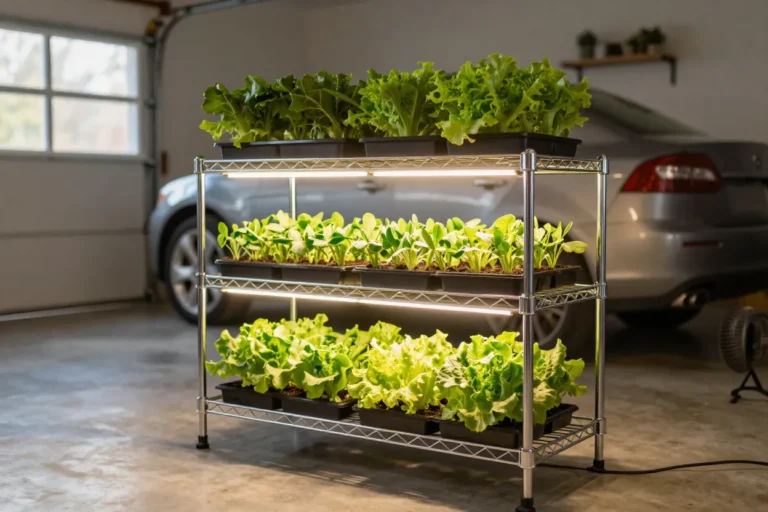
The fix: more light, not more fertilizer. Move the plant to the brightest window you have, and if it’s still stretching, add a lamp. The University of Minnesota Extension’s guideline for seedlings is 16 to 18 hours a day under a light kept 4 to 6 inches above the leaves and raised as they grow; established herbs and greens are less demanding but still want a lamp within a foot for most of the day. Pale, leggy growth won’t thicken up again, so once the plant has decent light, pinch the stretched tips back and let it regrow compactly. Our grow lights guide for small-space herbs covers what a clip-on light can and can’t do. For a tray of lettuce or other greens, see our best grow lights for indoor vegetables.
An October Slowdown Isn’t Dying
If you’re reading this in fall, there’s a good chance nothing is wrong with your plant at all. As the days shorten and the nights cool, warm-season vegetables — tomatoes, peppers, eggplant, cucumbers, squash, beans, basil — slow down, stop setting new fruit, yellow a little from the bottom, and generally look like they’re giving up. They are. That’s what an annual does at the end of its season, and it isn’t something to diagnose or fix.
The useful questions in October are different. Is there fruit on the plant worth ripening? Tomatoes and peppers keep colouring up slowly in cool weather, and green tomatoes can finish indoors on a windowsill. And would the pot be better used for something that actually likes the cold? Lettuce, spinach, kale, chard, and garlic all prefer fall conditions — our fall container setup plan and our guide to spinach on a balcony in fall show how to turn a finished summer pot over to a fall crop in an afternoon.
Save It or Start Over?
When a plant looks bad enough that you’re not sure, this is the decision rule:
- Check the stem, not the leaves. Scratch the stem with a fingernail near the base. Green and moist underneath means alive. Brown, dry, or soft and dark means that part is dead — work upward until you find green, or don’t.
- Check the roots. Some firm, white or cream roots means the plant can recover. All brown and mushy means it can’t.
- Ask how much season is left. A tomato with root rot in June is worth trimming and repotting. The same plant in late September, with the first frost a few weeks out, isn’t — harvest what’s on it and start a fall crop in the pot instead.
- Give it two weeks. Once you’ve fixed the cause — rewetting the mix, flushing the salts, moving it out of the heat, adding light — a plant that’s going to recover shows new growth at the tips or from the base within about two weeks. If there’s nothing new by then, it isn’t coming back.
Can you reuse the potting mix? Usually, yes. If the plant died of thirst, heat, cold, running out of room, or salt build-up, the mix is fine to use again once you’ve flushed it and mixed in about a third fresh mix plus some slow-release fertilizer. If it died of root rot, or had a serious pest or disease problem, don’t reuse it for the same family of vegetable (tomato, pepper, and eggplant are one family; cucumber, squash, and melon are another) — start that pot fresh.
How to Stop It Happening Again
Nearly everything above traces back to four setup decisions:
- Pot size. One tomato or pepper per 5-gallon container, minimum. A crowded or undersized pot dries out too fast, cooks in the sun, runs out of nutrients, and fills with roots by midsummer — half the symptoms on this page in one decision. Our pot size and drainage guide lists sizes by crop, our tomatoes in a 5-gallon bucket guide shows the one-plant-one-pot setup in practice, and the 5-gallon pots on our gear page are the size we’d start with.
- Potting mix, not garden soil. Bagged potting mix drains and holds air; soil dug from a bed compacts into a brick in a container and suffocates roots. Our soil and fertilizer basics guide explains what to buy.
- A watering rhythm, not a schedule. Check every pot every day by lifting it or pushing a finger in. Water until it runs from the drainage holes, then empty the saucer within half an hour. Neither “every morning” nor “when it looks dry” works — the same pot might need water twice a day in August and once a week in October.
- Feed little and often. A container has no soil reserve to fall back on. Liquid feed at label strength every one to two weeks during active growth, none once cold weather stalls the plant, and a flush with clear water every couple of months to keep salts from building up.
Frequently Asked Questions
Why is my potted plant wilting even after I watered it?
Either the water ran straight through bone-dry mix without soaking in, the roots have filled the pot, the pot is overheating in afternoon sun, or the roots have rotted from constant wet. Lift the pot: light means one of the first two, heavy means one of the last two.
Why are the lower leaves yellow but the new growth is green?
Usually nitrogen: the plant is moving what little it has to its new growth. Feed it with a liquid vegetable fertilizer at label strength, unless the pot is also heavy and soggy. In that case it is overwatered and needs to dry out before you feed.
Can a container vegetable really die overnight?
Yes, from frost. Tender crops like tomatoes, peppers and basil collapse after a single night at freezing, and pots chill faster than the ground because cold reaches the roots from every side. Cover or bring in pots whenever the forecast dips near 35°F.
Should I repot a dying plant?
Only if the roots have outgrown the pot or rotted. Repotting a plant that is suffering from heat, thirst or too little light just adds transplant shock, so fix the actual cause instead.
How do I get rid of the white crust on my potting soil?
That crust is fertilizer salt. Scrape it off, then slowly run clear water through the pot, at least three times the pot’s volume, and let it drain completely. Afterwards, feed at label strength rather than above it.
How long does a plant take to recover once I fix the problem?
A plant that is going to recover usually shows new growth at the tips or from the base within about two weeks. If nothing new appears by then, it is time to start over with a fresh plant or a fall crop.
Sources we checked
- University of Kentucky: Reducing Heat Stress to Container-Grown Plants (HO-119)
- University of Maryland Extension: Poor Blossom and Fruit Set of Vegetables
- University of Maryland Extension: Mineral and Fertilizer Salt Deposits on Indoor Plants
- University of Minnesota Extension: Lighting for Indoor Plants and Starting Seeds
If this is your first plant to go wrong, don’t take it personally — every symptom on this page is something a small pot makes more likely than a garden bed does, and every one is fixable next time with a bigger pot, a better watering rhythm, or a paler container. Start Here walks through the setup decisions from the beginning, our Fall Container Garden Guide covers what to do with your pots from now until winter, and our Recommended Gear page has the frost cloth and 5-gallon pots mentioned above.
If watering turns out to be the culprit, see our full watering schedule guide by plant type to build a routine that actually works for what you’re growing.