Basil, Rosemary & Mint: Complete Windowsill Herb Care for Small Spaces
Basil, rosemary, and mint are the three herbs almost everyone tries first on a windowsill — and the three most likely to disappoint if you grow them the same way. They don’t want the same pot, the same water, or even quite the same light. Get those differences right and this trio can keep a kitchen in fresh herbs through fall and winter with barely any fuss.
This post contains affiliate links, meaning we may earn a small commission at no extra cost to you — full details are on our Affiliate Disclosure page.
Quick answer: Give each herb its own pot with drainage holes and put all three in your sunniest window. Rosemary needs the most light, mint copes best with less, and basil needs warmth. Let rosemary dry out between waterings, keep basil lightly moist and never let it dry out completely, and keep mint evenly moist. Add a grow light (12–16 hours, 6–12 inches above the leaves) if the window gets less than about 6–8 hours of direct sun. Keep basil above 50°F.
In this guide: Why this trio is tricky · Light · Separate pots · Care cheat-sheet · Temperature · Troubleshooting · Harvesting · FAQ
Why This Trio, and Why Together Trips People Up
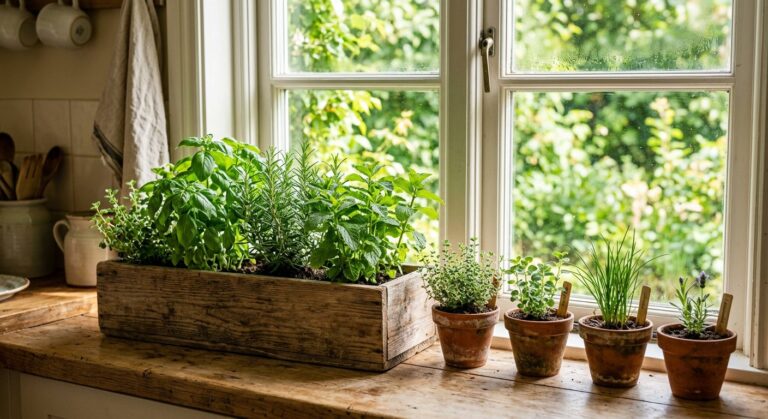
Basil, rosemary, and mint show up together in almost every “starter herb garden” kit for a reason: they’re the three most-used herbs in home cooking, and all three will grow indoors on a sunny windowsill. The trouble is that beginners often plant all three in one bowl or one long windowbox, treat them identically, and end up with one thriving herb and two sulking ones. Basil wants steady moisture and warmth. Rosemary wants to dry out between waterings and hates humidity. Mint wants to take over everything it touches. None of that is compatible in a shared pot.
Light: What Each One Actually Needs
Indoors, herbs get much less light than they would outside. Iowa State University Extension says most herbs need around eight hours of direct light a day when grown inside. Penn State Extension puts the minimum at about 6 hours. A south-facing window is best in the Northern Hemisphere, and a bright east or west window can also work. In the Southern Hemisphere it’s the other way round: a north-facing window is the sunny one.
The three herbs don’t need the same amount of light:
- Rosemary needs the most. Iowa State lists rosemary with sage and bay as herbs with higher than normal light needs. Give it the brightest spot you have, and a grow light in winter.
- Mint copes best with less. Iowa State lists it among the herbs that handle indoor light, humidity and temperatures well.
- Basil sits in the middle. It grows indoors but stretches and goes pale quickly when light runs short, so the fix is usually more light, not more water.
If your window falls short, use a grow light. Iowa State suggests 6–12 inches above the leaves for 12–16 hours a day, and Penn State suggests 14–16 hours. A plug-in timer makes this easy.
If your sunniest window still isn’t cutting it once the days shorten, a small clip-on grow light closes the gap without turning your kitchen into a growroom. The GooingTop 6000K Full Spectrum clip-on grow light is our pick for exactly this — a flexible gooseneck to aim it at the pots, full-spectrum LEDs, and a built-in timer so it turns itself on and off even when you forget.
Why Each Herb Needs Its Own Pot
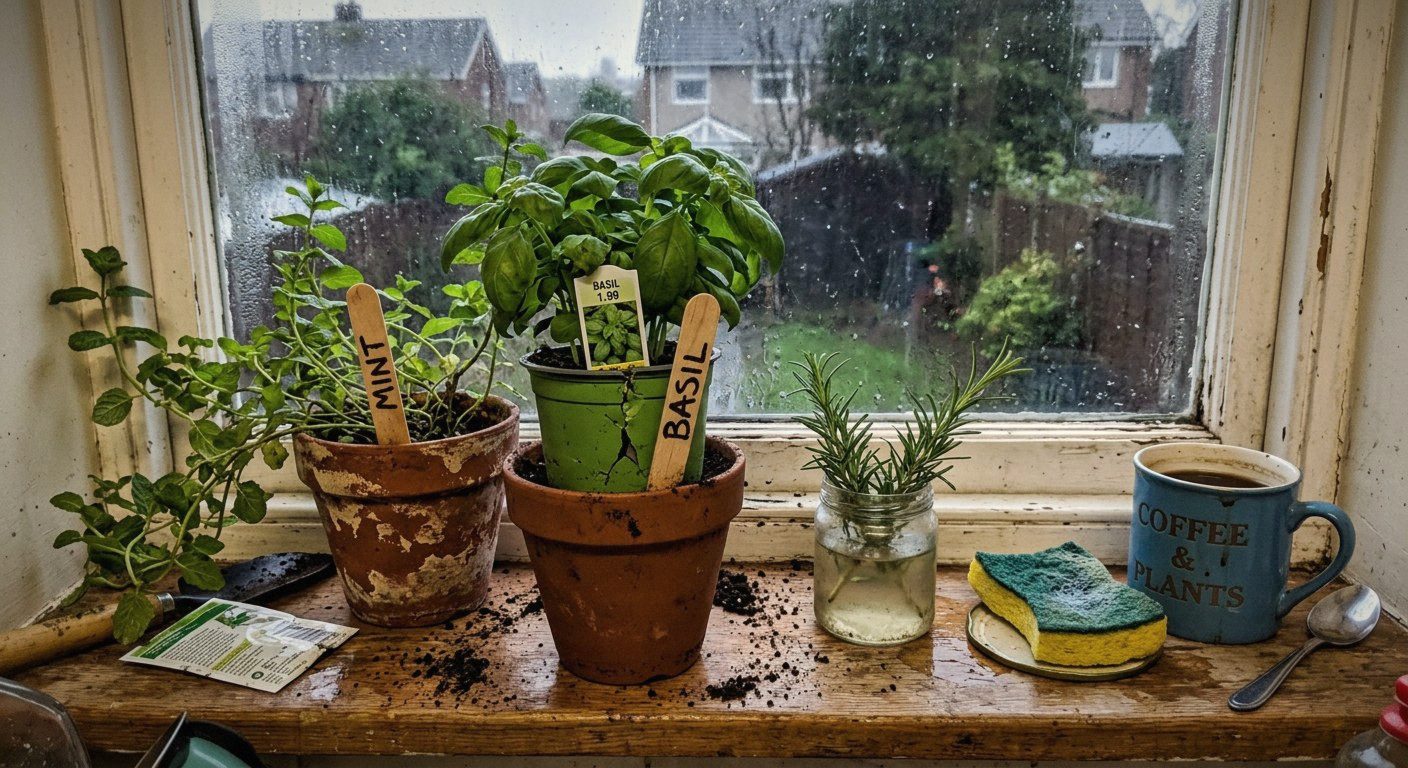
Give each herb its own container, even if they end up sitting side by side on the same windowsill tray. Three reasons:
- Different watering needs. Basil wants soil that stays lightly moist; rosemary wants to dry out almost completely between waterings. Sharing a pot means one of them is always wrong.
- Mint spreads by runners. Given any shared soil, mint’s roots will crowd out slower neighbors within a season — it’s the reason gardeners say to grow mint “in exile,” even indoors.
- Airflow matters differently. Rosemary is prone to fungal problems in still, humid air; basil is more tolerant. Separate pots make it easier to give rosemary the airier spot it needs.
A 6-inch pot with real drainage holes is enough for any one of the three to start. Basil and mint will eventually want to size up to 8–10 inches if you’re growing them for the long haul; rosemary is happy staying snug.
Care Cheat-Sheet
- Basil: water when the top inch of soil is dry. Penn State says to never let basil’s potting mix dry out completely, but don’t leave it soggy either. Pinch off flower buds as soon as they appear so it keeps making leaves.
- Rosemary: let the mix dry slightly between waterings. Penn State groups it with the Mediterranean herbs that need this. Indoors it’s more often killed by too much water than too little. Good airflow helps it more than fertilizer.
- Mint: keep the soil evenly moist. It wilts dramatically when it dries out, then usually recovers after a drink.
- All three: herbs need less fertilizer than most container plants. Iowa State recommends a light feed with all-purpose liquid fertilizer at half or quarter strength from spring through summer, and none in winter. Penn State uses a low dose about every 2 weeks while plants are growing. Somewhere in that range is plenty.
Temperature and Placement
Normal room temperatures suit all three. Penn State Extension recommends at least 65–70°F during the day and 55–60°F at night, and notes that basil can’t survive below 50°F. That makes a cold windowsill the main risk for basil in fall and winter. Keep pots a few inches back from the glass, move basil off the sill on the coldest nights, and keep all three away from heating vents, which dry them out fast.
Troubleshooting
- Leggy, stretched-out basil — almost always a light problem. Move it to the brightest spot you have, add a grow light, and pinch back the top set of leaves to force bushier growth from lower on the stem.
- Rosemary turning brown or dropping needles — usually overwatering, not underwatering, especially indoors where airflow is poor. Let the soil dry out further than feels natural and make sure the pot actually drains.
- Sparse, slow mint — often just needs a bigger pot or more consistent moisture. Unlike basil and rosemary, mint rarely suffers from too much water; it suffers from too little.
Harvesting the Right Way
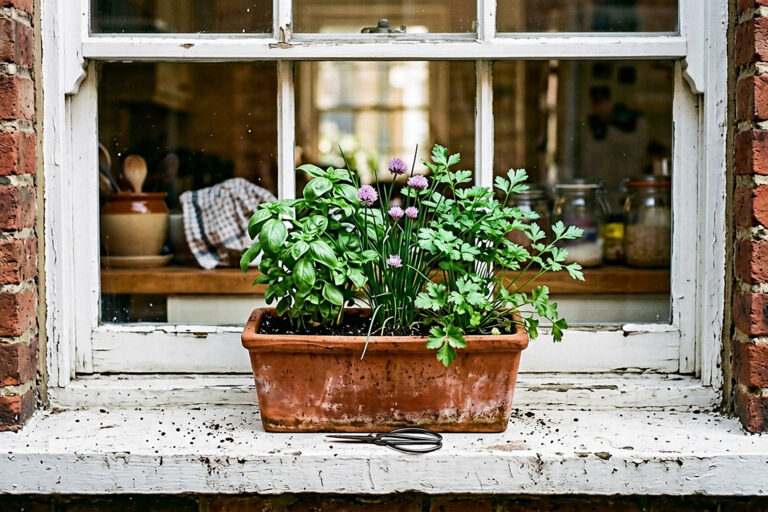
Cut, don’t strip. Iowa State Extension advises cutting just above a leaf or a pair of leaves and leaving about 4–6 inches of stem so the plant can regrow. For basil, snip above a leaf pair partway down the stem. The plant branches from that point and comes back bushier. For mint and rosemary, snip the stem tips rather than pulling off single leaves. Don’t take more than about a third of the plant at once. Harvest basil regularly even if you don’t need it yet: frequent light picking keeps it productive much longer than letting it grow untouched and then cutting it hard.
Planning to grow these together outdoors? Our guide to companion herbs for a windowbox shows which herbs can share a box, and why basil and rosemary are better kept apart.
Get the soil right before any of this matters — our soil and fertilizer basics guide covers what a container mix actually needs that garden soil doesn’t. And if this is your first windowsill pot of any kind, Start Here walks through the fundamentals before you plant. And once fall arrives, our guide to overwintering herbs before the first frost covers which of these are worth moving indoors for winter. And our indoor vegetable gardening guide covers what else can grow alongside them once they’re inside.
Cooking for the holidays? Our Thanksgiving herbs plan shows how to have sage, thyme and rosemary ready to snip by late November.
Frequently Asked Questions
Can basil, rosemary and mint be planted in the same pot?
It’s better not to. Basil wants steady moisture, rosemary wants to dry out between waterings, and mint spreads by runners and crowds out its neighbors. Give each one its own pot; they can still sit side by side on the same tray.
How much light do indoor herbs need?
Iowa State Extension says most herbs need around eight hours of direct light a day indoors, and Penn State says at least 6. If your window can’t provide that, use a grow light 6–12 inches above the leaves for 12–16 hours a day.
Why is my indoor rosemary dying?
Indoors, the usual causes are too little light and too much water. Rosemary has higher than normal light needs (Iowa State) and should dry slightly between waterings (Penn State). Move it to your brightest window or under a grow light, and water only when the mix has dried.
What temperature is too cold for basil?
Penn State Extension says basil can’t survive below 50°F. Keep it off cold windowsills on chilly nights, since the air next to the glass can be much colder than the rest of the room.
How often should I fertilize windowsill herbs?
Lightly. Iowa State recommends a half- or quarter-strength all-purpose liquid fertilizer from spring through summer and none in winter. Penn State uses a low dose about every 2 weeks during active growth.