
Why Is My Arugula Bolting? What to Do When Rocket Goes to Seed
One week your pot of arugula is a tidy rosette of peppery leaves. The next, a stalk shoots up from the middle, the new leaves come in small and narrow, and there are little cream flowers on top. That’s bolting, and arugula (also called rocket) is famous for it.
The good news: it isn’t a disease, you didn’t kill the plant, and a bolted arugula plant is still useful. Here’s why it happens, what to do with the plant you’ve got, and how to get a longer harvest next time. The photos are our own rocket plants, which bolted this spring in the Pocket Harvest Test Garden.
Quick answer: Arugula bolts, meaning it sends up a flower stalk, when days get long, temperatures climb above about 85°F, or the soil dries out. Containers heat up and dry out faster than garden beds, so potted arugula often bolts first. You can’t reverse it, but the flowers, young pods and seeds are all edible. Sow again in cool weather, give afternoon shade, and keep the pot evenly moist.
In this guide: Signs · Why it bolts · Why pots make it worse · Can you stop it? · What to do with it · Next time · Southern Hemisphere · FAQ

How to Tell If Your Arugula Is Bolting
- A stalk rises from the center of the rosette and keeps getting taller.
- Leaves on the stalk are smaller and narrower than the big basal leaves.
- Flower buds appear at the tip, then open into small four-petaled flowers, cream with dark veins.
- The leaves taste sharper. Some bitterness is normal once flowering starts.
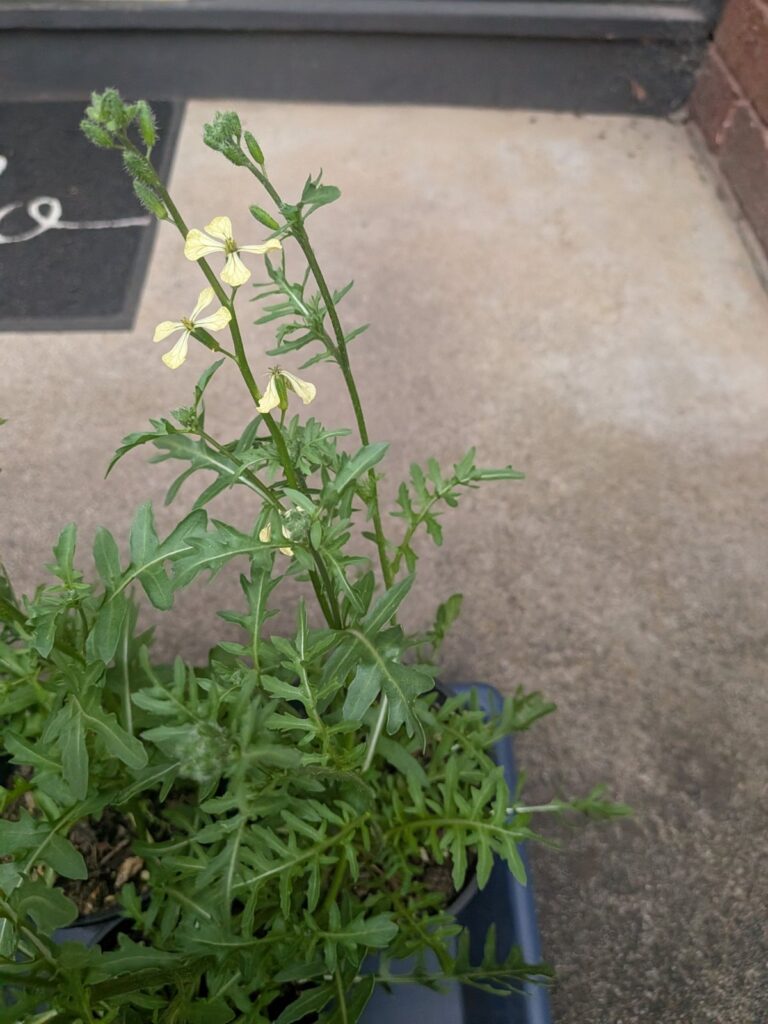
Once the plant commits to flowering, North Carolina State Extension notes that leaf growth stops and the flavor changes. The plant’s energy goes into seed now, not leaves.

Why Arugula Bolts
Arugula is a cool-season crop. Kansas State Extension says it grows best between 50 and 65°F and tolerates light frost but struggles in heat. The University of Wisconsin lists the conditions that push it into flowering: long days, high temperatures and/or dry soil. Usually it’s a mix.
1. Longer days
As spring moves toward summer and daylight stretches, arugula takes it as the signal to flower. This is why a spring sowing that started well can bolt suddenly in late spring even without a heat wave. You can’t change day length in a garden, but you can time your sowing around it (see below).
2. Heat
Kansas State and the University of Florida both put the danger line at about 85°F. Above that, arugula bolts quickly. One hot spell can be enough.
3. Dry soil
Drought stress tells the plant to hurry up and set seed. Wisconsin notes that drought and summer heat also make the flavor stronger, which is why stressed arugula tastes so hot.
4. Crowding
The University of Maryland lists close spacing as a trigger for bolting in leafy crops. A pot sown thickly and never thinned is a crowd of plants all competing for the same water.
Not every crop bolts for the same reason. Onions, for example, are pushed into flowering mainly by cold, not heat; see why onions bolt.
Why Pots Make It Worse
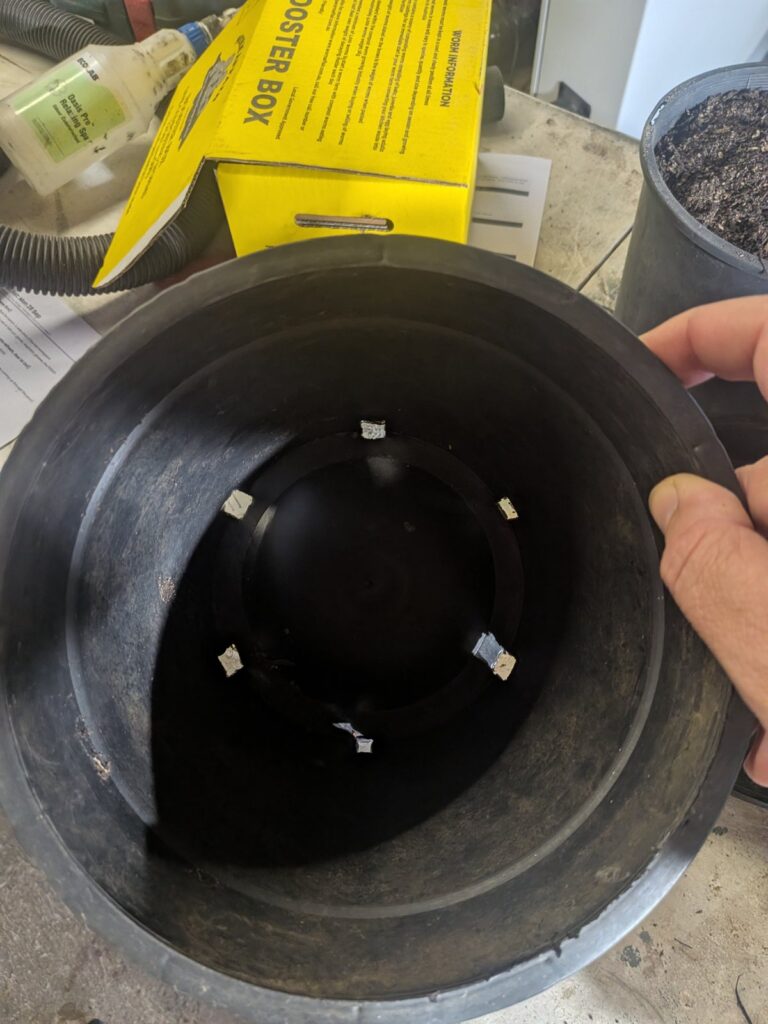
A container on a sunny balcony gets hotter than the ground, and a small volume of potting mix dries out far faster than a garden bed. So a potted plant hits two of the triggers, heat and dry soil, sooner. A dark pot in afternoon sun is the worst case: Maryland Extension warns that dark containers absorb extra heat that can damage roots. Our own test plants, as you can see in the photos, are in small black nursery pots, which is exactly the setup that runs warm and dries out fast.
| Trigger | What you’ll notice | Fix for next time |
|---|---|---|
| Long days | Bolts in late spring even in mild weather | Sow in early spring or late summer to fall |
| Heat above ~85°F | Bolts right after a hot spell | Afternoon shade, or 30–50% shade cloth |
| Dry soil | Wilting between waterings, very hot flavor | Check the pot daily in warm weather; bigger pot |
| Crowding | Thin, stretched plants all bolting together | Thin to about 6 inches apart |
Can You Stop It Once It Starts?
Not really. Once the flower stalk is up, the switch has flipped. Pinching out the stalk may buy you a few more days of leaves, but it won’t make the plant go back to producing big rosettes.
So the better question is what to do with it. You have three good options.
What to Do With a Bolted Arugula Plant
Option 1: Eat it, flowers and all
- Leaves: taste one. If they’re still pleasant, pick them all now. If they’re harsh, Kansas State notes bolted leaves can become too bitter to enjoy raw; try them cooked into pasta or wilted into eggs, where the heat softens the bite.
- Flowers: the University of Wisconsin says arugula flowers are edible and milder than the leaves. Scatter them over salads or soup.
- Young seed pods and seeds: North Carolina State lists the flowers, young seed pods and seeds as edible. Pick pods while they’re young and green, because they get tough and bitter with age.

Option 2: Let it feed the pollinators
Arugula flowers are small but pollinators visit them. If you’ve got the space, leaving one pot to flower is a nice thing to have on a balcony, and it sets you up for option 3.
Option 3: Save the seed
Let the pods stay on the stalk until they turn tan and papery. Cut the stalks, put them head-first in a paper bag somewhere dry for a week or two, then crumble the pods to release the seed. Cornell’s guide notes arugula seed can be saved for about five years, so one plant can supply several seasons of sowing.
How to Keep Arugula From Bolting Next Time
1. Sow in the cool part of the year. Sow in early spring as soon as the soil can be worked; Wisconsin notes it handles frost, so you can start several weeks before your last spring frost. Then sow again from late summer into fall. Fall is the easiest season of all, because the days are getting shorter and cooler instead of longer and hotter. In the South, the University of Florida recommends sowing from early fall through late spring and skipping summer.
2. Sow little and often. Wisconsin and Cornell both suggest a new sowing every 2–3 weeks. Arugula is ready in as little as 3–4 weeks (Wisconsin), so a new pot coming along means you’re never waiting on one that’s bolting.
3. Give afternoon shade in warm weather. The University of Florida suggests afternoon shade once temperatures pass 85°F, and Kansas State suggests 30–50% shade cloth. On a balcony, moving the pot to the shadier side of the railing after lunch does the same job. Arugula grows fine with 4–6 hours of sun (Kansas State), so it’s a good fit for a shady or north-facing balcony.
4. Keep the mix evenly moist. Don’t let the pot dry out between waterings in warm weather. Our watering guide for container vegetables explains the finger test.
5. Use a bigger pot, and a pale one. More potting mix means cooler roots and more water in reserve. The University of Florida suggests 1–2 gallons; North Carolina State suggests at least 3 gallons and 4–6 inches deep. See our pot size guide.
6. Thin the seedlings. Cornell and North Carolina State both say to thin to about 6 inches apart. The thinnings are your first salad.
7. Keep harvesting. Wisconsin notes that regularly picking the small leaves helps keep the plant from going to seed. Take the outer leaves first and leave the center to keep growing (University of Florida).
8. Try wild arugula. Wild arugula (Diplotaxis tenuifolia, sold as ‘Sylvetta’ or wild rocket) grows more slowly, has smaller, more deeply cut leaves and a stronger taste (Cornell). It’s a perennial hardy to about zone 5 (Wisconsin), so a pot of it keeps coming back.
A Note for Southern Hemisphere Gardeners
If you garden in Australia, New Zealand or South Africa, your seasons are flipped. Rocket sown in late winter will run into lengthening days and warming weather from about September to November, which is exactly when it tends to bolt. That’s what happened to our own test pots: the photos on this page were taken in late September. Your easy season is autumn, sowing from about March. You can follow our pots in the Test Garden.
Frequently Asked Questions
Is bolted arugula safe to eat?
Yes. It isn’t harmful, just stronger and sometimes bitter. The flowers, young pods and seeds are edible too (North Carolina State).
Can I cut the flower stalk off to stop arugula bolting?
It may slow things for a few days, but it won’t reverse bolting. The plant has already switched to making seed. Harvest what you can and sow a fresh pot.
What temperature makes arugula bolt?
Kansas State and the University of Florida put the risk point at about 85°F. Long days and dry soil can trigger it at lower temperatures too.
Will arugula grow back after bolting?
Not as a leafy rosette. Common arugula is an annual, so once it flowers and sets seed, it’s done. Wild arugula is a perennial and does regrow.
When is the best time to plant arugula so it doesn’t bolt?
Late summer into fall, when days are shortening and cooling. Early spring is the other window, but those plants will bolt as days lengthen.
Keep Growing
Arugula is one of the easiest greens for a pot. If you’re planning your fall containers, see our best fall and winter vegetables for containers and how many lettuce plants fit in a container. Spinach bolts for the same reasons; our fall spinach on a balcony guide covers it.
Sources We Checked
- University of Wisconsin–Madison Extension — Arugula, Eruca sativa
- North Carolina State Extension — Arugula (Eruca vesicaria) plant toolbox
- Cornell Garden-Based Learning — Arugula growing guide
- Kansas State Research and Extension, Butler County — Arugula
- University of Florida IFAS Extension, Leon County — Arugula: planting and care
- University of Maryland Extension — Flower stalks form, or bolting, of vegetables and Types of containers for growing vegetables