
Best Vegetables for a Shady or North-Facing Balcony
If your balcony faces north, sits under a building overhang, or spends most of the day in a neighbor’s shadow, you can still grow real food out there — you just have to pick the right crops. The plants that struggle are the ones that make fruit: tomatoes, peppers, squash. The plants that do fine, and sometimes even prefer it, are leafy greens, many herbs, and microgreens.
This post contains affiliate links, meaning we may earn a small commission at no extra cost to you — full details are on our Affiliate Disclosure page.
The first step isn’t buying seeds. It’s figuring out, honestly, how many hours of direct sun your space gets in a typical day. That one number tells you almost everything else in this guide — which crops are realistic, how big your harvests will be, and whether you need a grow light at all.
How Much Sun Does Your Balcony Actually Get?
“Shady” is a feeling. Extension offices measure it in hours, and that’s what actually matters for a vegetable’s growth. Clemson Cooperative Extension’s Home & Garden Information Center defines full sun as at least six hours of direct sunlight a day, partial sun/partial shade as roughly three to four hours of direct sun, and shade as less than two hours of direct sun (often just filtered or early-morning light). Those categories are the ones you’ll see used across most extension guidance, so they’re worth memorizing.
To find your own number, do a simple sun count: check your balcony every hour or two on a clear day (or set a phone reminder) and note the hours when direct sunlight — not just bright daylight — actually hits your pots. Do this on a day in the season you plan to garden, since the sun angle changes a lot between June and October. If you land at 3–4 hours, you’re in partial shade. Under 2–3 hours of direct sun, or only indirect brightness, you’re gardening in shade, and your plant choices narrow further.
Orientation is a decent shortcut if you can’t do a full sun count yet. In the Northern Hemisphere, a north-facing balcony gets the least direct sun of any orientation — often bright, reflected light but few or no hours of direct sun hitting the space itself, especially in fall and winter when the sun sits lower in the sky. East-facing balconies get gentler morning sun, west-facing get hot afternoon sun, and south-facing gets the most all day. If you’re not sure which way your balcony faces, a compass app on your phone will tell you in seconds. In the Southern Hemisphere (Australia, New Zealand, South Africa, South America), it’s the other way around: south-facing balconies get the least direct sun and north-facing get the most, so read “north-facing” in this guide as “south-facing” if that’s where you live.
What Won’t Work in a Shady Spot
This is the part beginners skip, and it’s the part that saves you a summer of disappointment. Fruiting vegetables — tomatoes, peppers, cucumbers, squash, eggplant — need real heat and real light to set and ripen fruit. Clemson HGIC’s container vegetable gardening guide puts it plainly: fruit-bearing vegetables need at least five hours of full, direct sun, but perform better with eight to ten hours. The UC Master Gardeners of Placer County are even more direct, noting these crops “optimally… like 8-10 hours of sun” and that trying to grow them on less than six hours a day is “probably unwise.”
If your balcony gets less than 5–6 hours of direct sun, skip the tomato plans — see tomatoes in a 5-gallon bucket and growing peppers in containers for what those crops actually need if you ever get a sunnier spot. On a genuinely shady balcony, your energy is much better spent on the crops in the next section.
It’s tempting to try anyway — a lot of beginners plant one tomato “just to see.” What usually happens in a shady spot is a leggy, stretched plant that puts most of its energy into reaching for light instead of setting fruit, and any tomatoes that do form ripen slowly, unevenly, or not at all before frost. It’s not a failure of skill; it’s a light budget the plant simply doesn’t have. Save the pot and the potting mix for a crop that can actually use them.
What Actually Thrives in Partial Shade
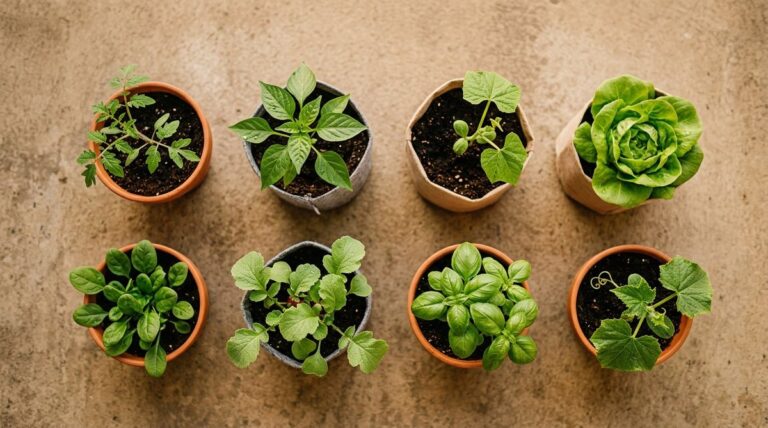
Leafy greens are the shade gardener’s best friend. Iowa State University Extension’s Yard and Garden program notes that while most vegetables need at least six hours of direct sun to produce a good crop, leaf lettuce, spinach, collards, Swiss chard, and kale can all be grown successfully in spots that get 3 to 4 hours of sun. The UC Master Gardeners’ guide agrees, adding arugula, endive, cress, radicchio, and mustard greens to the list of leafy crops that “tolerate partial shade quite well” on as few as three hours of sun — though leaves will grow more slowly and thinner than in full sun.
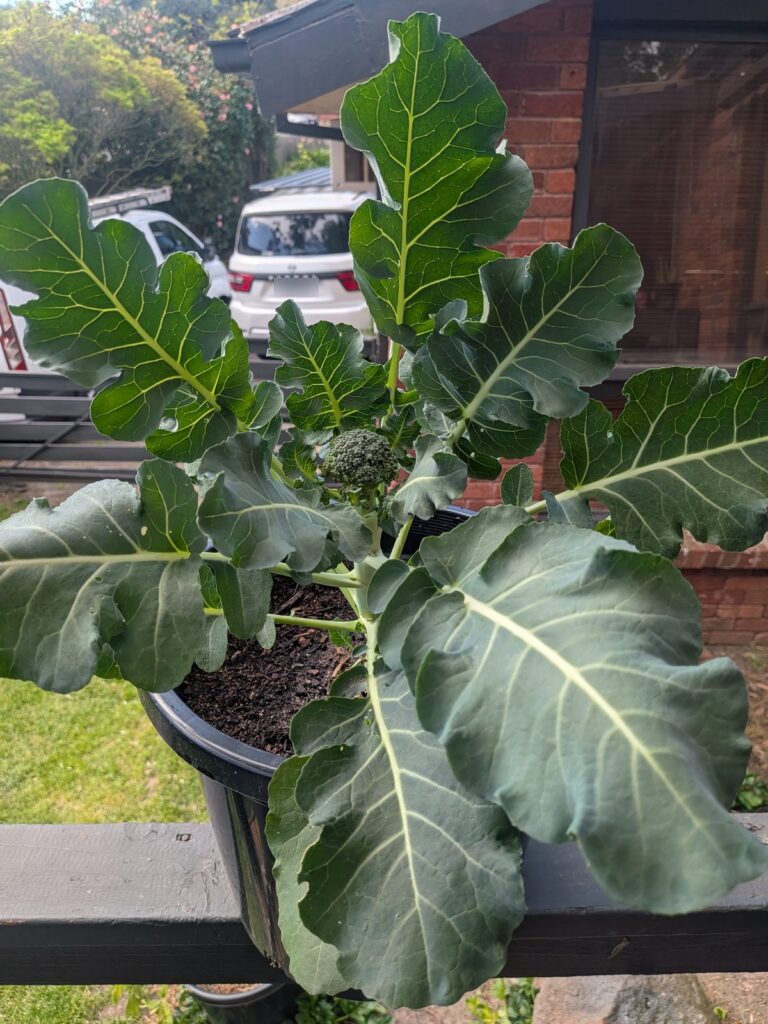
A step up, root and cool-season crops like radishes, beets, carrots, broccoli, Brussels sprouts, and cauliflower are worth trying with around 4 hours of sun, per the UC Master Gardeners. Iowa State also lists radishes, beets, broccoli, and cauliflower as partial-shade possibilities. If your balcony gets even a modest morning sun window, a fall crop of spinach on a balcony or a container of lettuce (see how many lettuce plants per container) is a very safe bet.
Herbs That Tolerate Lower Light
Herbs are more forgiving than most vegetables, though “tolerate” doesn’t mean “prefer.” University of Minnesota Extension notes that parsley “does best” with six to eight hours of direct light but “can tolerate some light shade,” while chives “thrive in full sun” yet also “tolerate light shade,” growing best with six to eight hours. Mint is famously shade-tolerant and, if anything, appreciates a break from harsh afternoon sun. Cilantro actually benefits from part shade in warm weather, since it slows the plant’s tendency to bolt (flower and turn bitter) too fast. Asian greens like bok choy and mizuna behave similarly to lettuce and tolerate partial shade well. For day-to-day care of a low-light herb pot, see basil, rosemary, and mint windowsill herb care.
Microgreens: The Shade Loophole
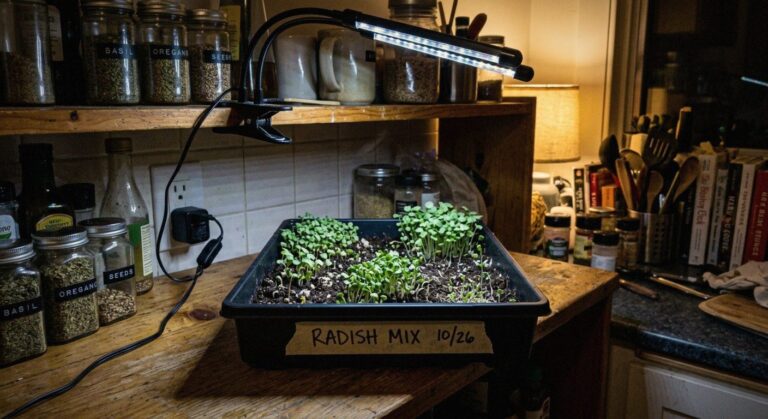
If your balcony gets almost no direct sun at all, microgreens are the one crop that genuinely doesn’t need it. According to the LSU AgCenter, microgreens “can be grown almost anywhere: indoors in front of a window, under grow lights, outdoors on a porch or in a greenhouse” — they don’t require direct sunlight, just a reasonably bright spot, and most are ready to harvest one to two weeks after they sprout. For a full walkthrough, see growing microgreens without sunlight.
Microgreens are also the easiest way to keep growing something edible through a stretch of gray winter weeks when even your shade-tolerant lettuce and herbs slow to a crawl. A tray of sunflower or pea shoot microgreens on a kitchen counter, nowhere near the balcony at all, still counts as fresh homegrown food — and it’s a good confidence builder while your outdoor pots are working through a low-light season.

Quick Reference: Minimum Sun Hours by Crop
| Crop | Minimum direct sun | Notes |
|---|---|---|
| Microgreens | No direct sun required | Bright window or grow light is enough (LSU AgCenter) |
| Lettuce, spinach, arugula, kale, chard, mustard greens | 3–4 hours | Slower, thinner growth than full sun (Iowa State, UC Master Gardeners) |
| Mint, cilantro | 3–4 hours | Actually benefit from some afternoon shade |
| Asian greens (bok choy, mizuna) | 3–4 hours | Behaves like lettuce; harvest as baby greens |
| Radishes, beets, carrots, broccoli, cauliflower | 4 hours | Root/cole crops; expect smaller yields (Iowa State, UC Master Gardeners) |
| Parsley, chives | 6–8 hours preferred; tolerates light shade | Will grow leggier in low light (UMN Extension) |
| Tomatoes, peppers, squash, cucumbers, eggplant | 6–8+ hours (8–10 ideal) | Not realistic in shade (Clemson HGIC, UC Master Gardeners) |
Tricks to Squeeze Out More Light
You can’t add hours of sunshine that aren’t there, but you can make better use of what you get.
- Use light, reflective surfaces. Clemson HGIC’s container gardening guide specifically recommends increasing available light with “reflective materials around the plants, such as aluminum foil, white-painted surfaces or marble chips.” A white balcony wall, light-colored planters, or even a sheet of foam board propped behind your pots can bounce meaningfully more light onto your plants.
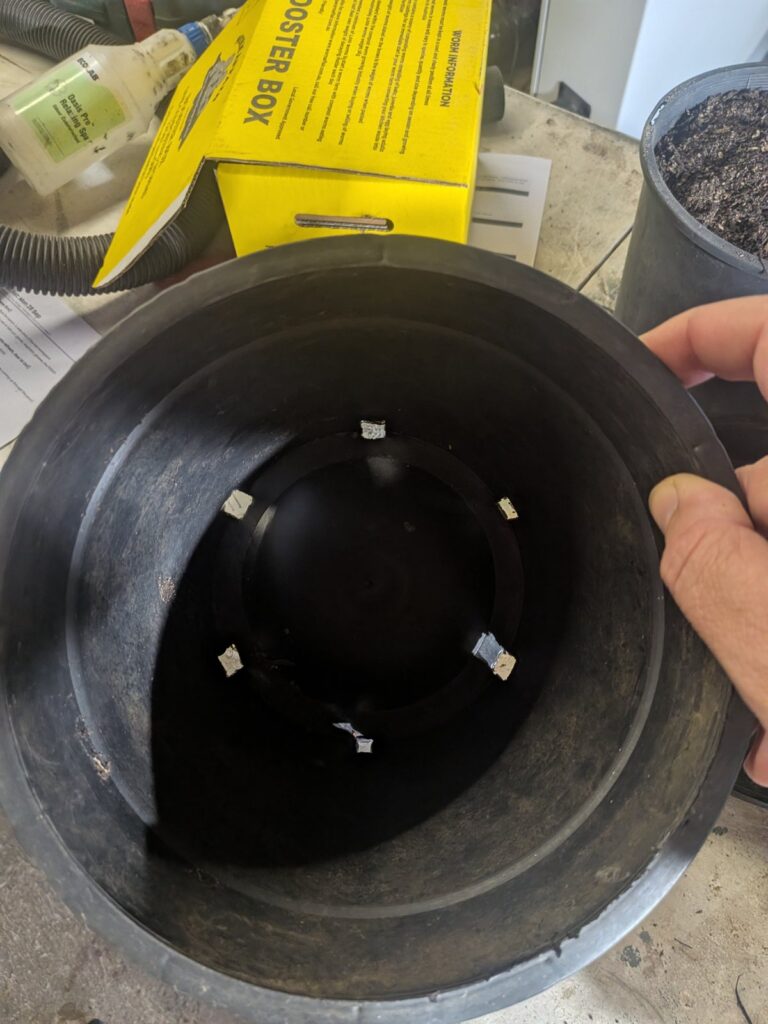
- Chase the sun with your pots. If one corner of your balcony gets an hour or two of direct sun that another corner doesn’t, move your pots there through the day or the season. This is much easier with lightweight containers — a set of fabric grow bags is far easier to shift around than a heavy ceramic or ridged plastic pot.
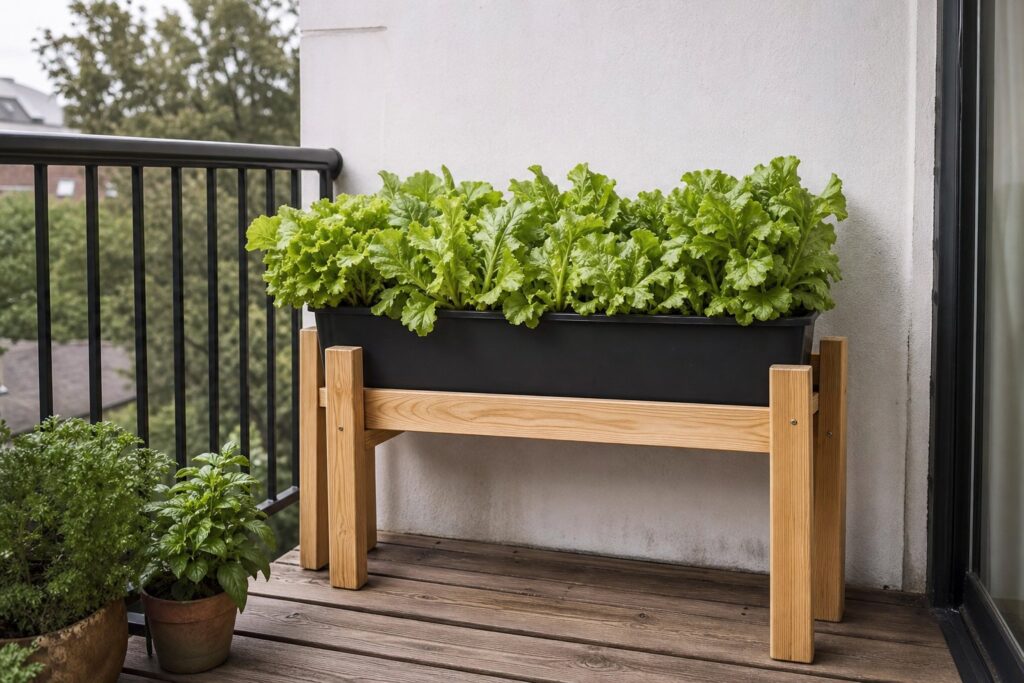
- Raise pots off the floor. A plant stand or upturned crate lifts your containers above a shading railing or low wall and into whatever light does reach the balcony.
- Use railing planters to catch the top edge of light. Mounting containers along the top of the railing, rather than on the floor, often puts them above nearby shadows. See best vegetables for hanging planters for what actually does well up there.
- Add a small grow light as backup, not a replacement. For a balcony that gets close to zero usable direct sun — or for extending herbs and greens through fall and winter — a compact clip-on grow light can make the difference between limping along and a real harvest. Our full breakdown is at best grow lights for small-space herbs.
Set Your Expectations Now, Not Later
Shade gardening works, but it isn’t a full-sun garden in disguise. Expect growth to be noticeably slower — a lettuce that would be ready in four weeks in full sun might take five or six in partial shade. Leaves will often be thinner and paler than the same variety grown in full sun, which is normal, not a sign of disease or a nutrient problem. And you’ll get more consistent success harvesting baby leaves rather than waiting for full heads — cut-and-come-again lettuce, spinach, and Asian greens at 3–4 inches tall are more forgiving of a shade-stunted plant and let you harvest sooner, before slow growth becomes a bigger problem like pests or bolting. Overall yields will be lower per pot than a sunny setup, so plan on more containers, not bigger ones, if you want a meaningful harvest.
The upside: shade gardens need less water (less evaporation), and cool-season leafy crops are far less likely to bolt in a shady spot during a warm stretch, which actually extends your harvest window compared to a full-sun setup. If your balcony faces north specifically, late spring and summer are when you’ll get the most direct light, because the sun rises and sets farther to the north at that time of year. In fall and winter, when the sun sits low in the southern sky, a north-facing space may get no direct sun at all. So plan shade-tolerant herbs and greens for spring and summer, and lean on microgreens or a grow light through the darker months. (South of the equator the seasons flip too, so a south-facing balcony there gets its best light from about November to February.)
Frequently Asked Questions
How many hours of direct sun counts as a shady balcony?
Extension guidance generally defines partial shade as about 3–4 hours of direct sun a day, and full shade as under 2 hours or filtered light only. Most fruiting vegetables need at least 6 hours, so anything below that is considered a shady setup for gardening purposes.
Can I grow tomatoes or peppers on a north-facing balcony?
Not realistically. Tomatoes, peppers, squash, and other fruiting vegetables need at least 6–8 hours of direct sun, and ideally 8–10, to set and ripen fruit. A north-facing balcony rarely provides that much direct light, so it’s better to focus on leafy greens, herbs, and microgreens instead.
What vegetables grow best with only 3–4 hours of sun?
Leaf lettuce, spinach, kale, Swiss chard, arugula, and Asian greens like bok choy all tolerate partial shade well with as little as 3–4 hours of direct sun, though they’ll grow more slowly than in full sun. Herbs like mint and cilantro also do fine in that range.
Do microgreens need direct sunlight to grow?
No. Microgreens grow fine in a bright window or under a small grow light without any direct sun at all, making them the best option for a balcony or indoor spot that gets almost no direct light.
How can I get more light on a shady balcony without moving?
Use light-colored or reflective surfaces (white walls, pale planters, foam board) to bounce more light onto your plants, raise pots up off the floor and above railings, and consider a small clip-on grow light as a supplement for herbs and greens during darker months.
Next step: Once you know your sun hours, set up your space properly with balcony setup for renters, pick your first pots from best vegetables for hanging planters if railing space is all you have, and if light is really tight, read best grow lights for small-space herbs before you buy anything.
Sources
- Clemson HGIC — Site Considerations When Selecting Plants (full sun/partial shade/shade definitions)
- Clemson HGIC — Container Vegetable Gardening
- Iowa State University Extension — Which Vegetables Will Grow in Partial Shade?
- UC Master Gardeners of Placer County — Growing Vegetables in Less Than 6 Hours of Sun
- University of Minnesota Extension — Growing Parsley in Home Gardens
- University of Minnesota Extension — Growing Chives in Home Gardens
- LSU AgCenter — Microgreens: A Guide to Growing Microgreens for the Home Gardener