Indoor Winter Vegetable Gardening: What’s Actually Worth Growing
Once the balcony gets too cold for most vegetables, the growing doesn’t have to stop — it just has to move. Indoor winter vegetable gardening isn’t a way to replace your summer harvest; it’s a smaller, faster category of crops that genuinely do well on a windowsill or under a small light, so you’re not staring at bare containers until March. Set expectations up front and this is one of the more satisfying things you can do in a small space over winter. Set them wrong — try to keep a full-size tomato alive on a countertop — and you’ll spend three months babying one sad plant for a handful of fruit. This guide is about the first kind.
This post contains affiliate links, meaning we may earn a small commission at no extra cost to you — full details are on our Affiliate Disclosure page.
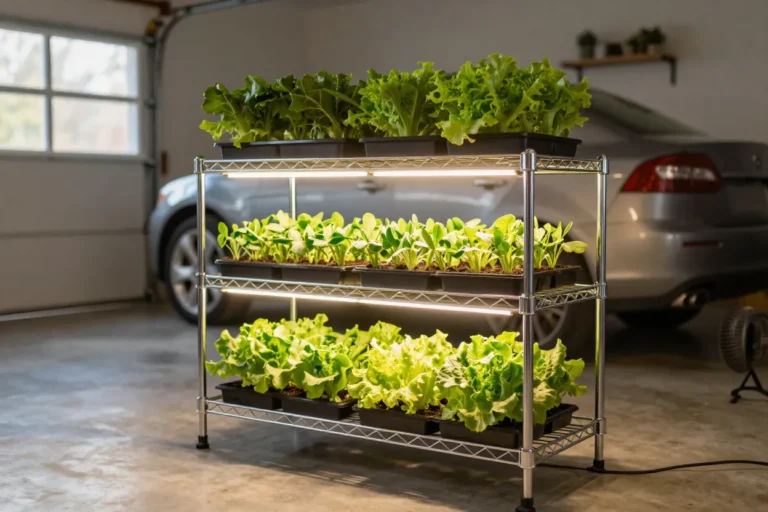
Quick answer: The winter vegetables that work indoors are the ones you eat as leaves or shoots: microgreens (ready in 7–21 days), pea shoots, loose-leaf lettuce, spinach, arugula and scallions regrown in water. Give them a grow light for 14–16 hours a day, 6–12 inches above the plants, keep the room around 60–70°F, and water only when the top inch of mix is dry. Leave tomatoes and peppers until spring.
In this guide: What’s worth growing · Light · Containers · Temperature and humidity · Watering and feeding · Common mistakes · FAQ
What’s Actually Worth Growing Indoors
The vegetables that do well indoors in winter all share one trait: you eat the leaves or shoots, not a fruit that takes months to ripen. That’s what makes them realistic under ordinary indoor light and a short winter day.
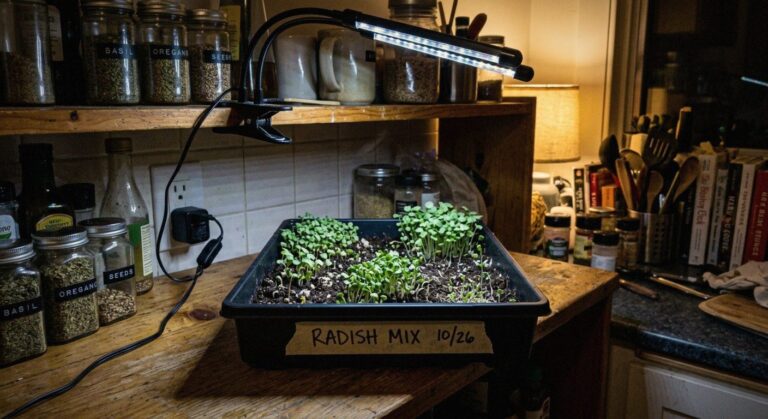
- Microgreens — the fastest win of all, ready in 1–3 weeks, and the easiest to fit in anywhere. A very sunny window can be enough, but the University of Maryland Extension notes they generally grow best under a grow light. See our guide to growing microgreens without sunlight for the full method.
- Loose-leaf lettuce and mesclun mixes — cut-and-come-again, so one tray keeps producing for weeks. Our lettuce spacing guide applies indoors the same as out.
- Spinach and arugula — both handle cooler indoor temperatures (nearer a drafty window is actually fine) better than most vegetables, and both regrow after a light harvest.
- Pea shoots — grown from dried snap or shelling peas, ready in about 2–3 weeks, and one of the most forgiving things you can start from a bag of pantry peas.
- Scallions regrown from kitchen scraps — stand the root ends of store-bought scallions in an inch of water on a windowsill and they’ll resprout in days. No grow light, no potting mix, no cost. It’s a good first project if you want to see something work before you invest in anything.
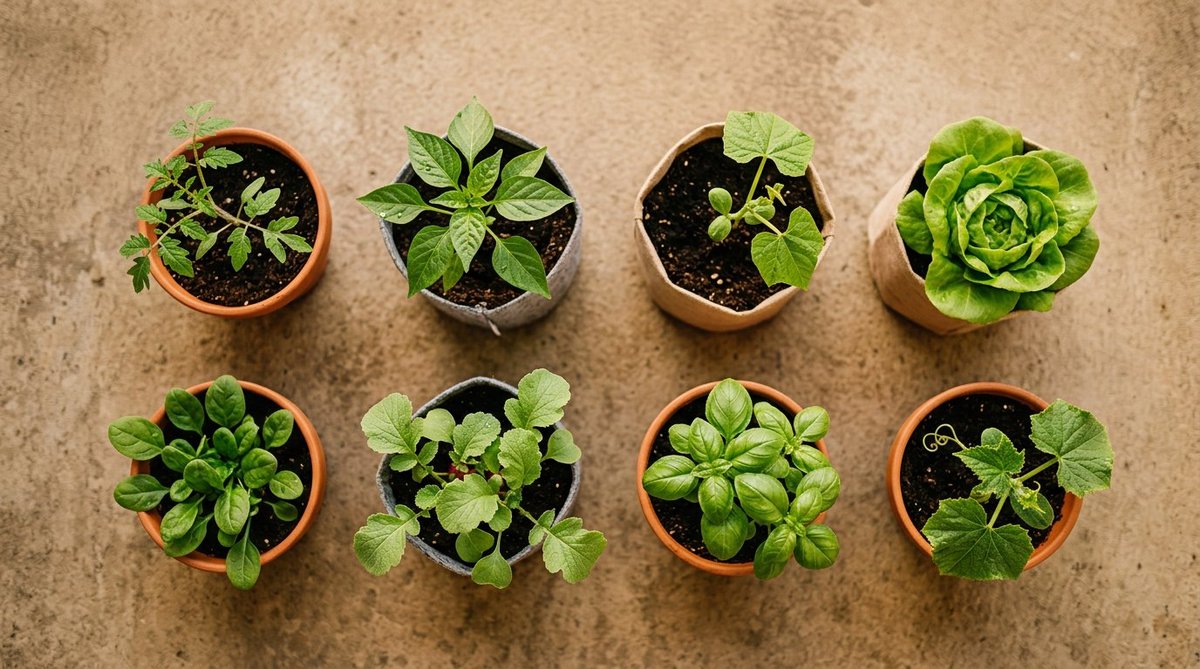
What to skip until spring: full-size tomatoes, peppers, and anything that needs months to flower, get pollinated, and ripen a fruit. Indoors, in winter, with weak light and no bees, these mostly turn into a lot of effort for one or two undersized results. If you want something to snack on rather than a real harvest, a compact cherry tomato under a strong light can work — just know it’s a novelty project, not an efficient use of your winter growing time.
Light Is the Make-or-Break Factor
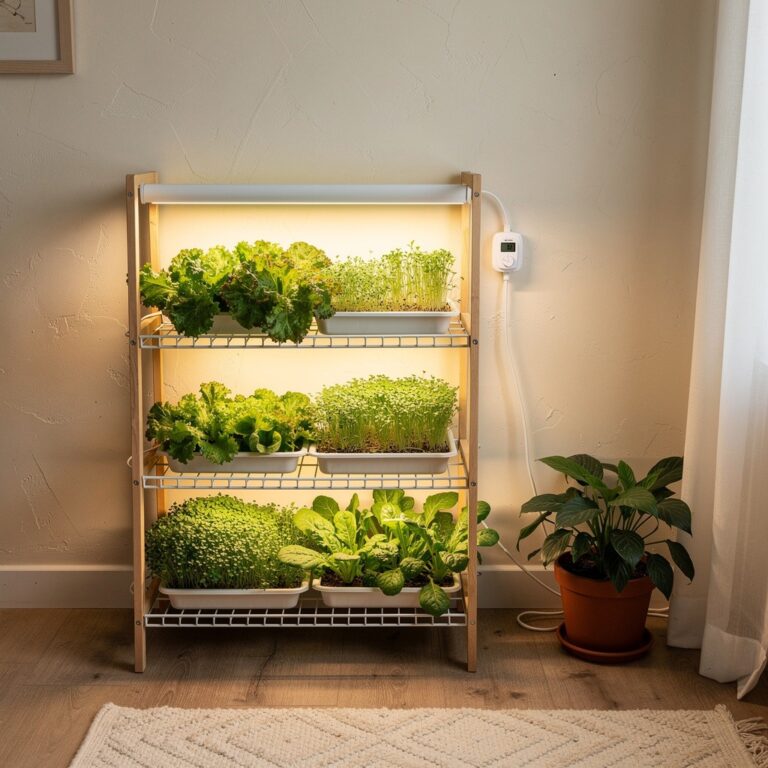
A bright south-facing window can carry leafy greens through early fall, but by November most U.S. locations don’t get enough hours or intensity through a window alone. The reliable fix is the same one we recommend for windowsill herbs: a small full-spectrum clip-on grow light on a timer. Illinois Extension says lettuce and herbs need 6–8 hours of bright light a day, and that’s hard to get through a winter window. Under lights, it suggests 14–16 hours a day with the lights 6–12 inches above the plants (the University of Maryland gives the same 6–12 inch range for microgreens). Strong LED panels can sit farther away, so check the maker’s recommended hanging height. Our grow lights guide covers the buying details (timer, full-spectrum white LEDs, avoiding oversized panels) in full — everything there applies here too.
Containers and Setup
Shallow-rooted greens don’t need deep pots — loose-leaf lettuce and arugula manage in about 6 inches of mix, though Colorado State Extension suggests 8 inches for leaf lettuce and spinach, which gives you more room for error. Microgreens and pea shoots only need a tray holding 1 to 1½ inches of moist mix (University of Maryland). Our pot size chart has the figures for 25 crops. What matters more indoors is what’s underneath: always use a saucer or tray, since a small drip that would soak into a balcony floor will happily soak into your actual floor instead. A self-watering container is worth considering for anything you’re growing for more than a couple of weeks — indoor air is drier and less predictable than outdoor air, and a reservoir forgives the days you forget to check the soil.
Temperature and Humidity
Most leafy greens actually prefer it a little cooler than the average heated apartment — 60–70°F is the sweet spot, and a spot near a drafty window is often fine for them even though it wouldn’t be for a tropical houseplant. The bigger issue is usually humidity: winter heating can drop indoor air well below what plants are used to outside. A small humidifier nearby helps more than misting the leaves, which dries out again in minutes and doesn’t meaningfully change the air. Illinois Extension also suggests grouping pots together, or standing them on a tray of pebbles with water just below the tops of the pebbles. Avoid setting containers directly above or beside a heating vent — the extra warmth and dry air right there stresses plants that are otherwise doing fine a few feet away.
Watering and Feeding
- Water less than you’d think. Without wind or direct sun pulling moisture out of the soil, indoor containers dry out slower than outdoor ones. Check the top inch of soil before watering rather than watering on a schedule.
- Feed lightly. Many potting mixes carry only a small starter dose of fertilizer, and greens you cut again and again use it up. A water-soluble fertilizer every 2–3 weeks, at label strength or weaker, keeps them productive (Illinois Extension advises no more often than every 2 weeks). Microgreens need no fertilizer at all, because you cut them before the seed’s own food runs out (University of Maryland).
- Run a small fan for an hour or two a day. Still indoor air with no breeze at all makes seedlings weak and leggy, and raises the odds of mold on damp soil surfaces. A fan on low, even just oscillating across the room, is enough.
Common Mistakes
- Relying on a window alone past October. It feels like enough light to the eye; plants disagree. Pale, stretched, leaning growth is the tell — add a grow light before the plant gets there, not after.
- Overwatering. The single most common way indoor container growing fails. When in doubt, wait a day.
- Picking the wrong crop. A windowsill tomato in January is a fun experiment, not a reliable food source. Start with something on the fast-win list above.
- No airflow. A closed, still room grows mold on wet soil faster than you’d expect. The fan fix above is genuinely enough.
This guide is about starting new crops indoors. If you want to bring in plants that are already growing outside, see bringing your container vegetable garden indoors for winter.
Frequently Asked Questions
What vegetables can I grow indoors in winter?
Stick to crops you eat as leaves or shoots: microgreens, pea shoots, loose-leaf lettuce and mesclun, spinach, arugula, and scallions regrown from kitchen scraps. They’re fast and don’t need to flower or be pollinated, so they cope with weak winter light far better than fruiting crops.
Do I need a grow light to grow vegetables indoors in winter?
Usually, yes. Illinois Extension says lettuce and herbs need 6–8 hours of bright light a day, which most windows can’t give in midwinter. Under lights, it suggests 14–16 hours a day with the lights 6–12 inches above the plants.
How long do microgreens take to grow indoors?
The University of Maryland Extension says microgreens are ready 7–21 days after sowing, when they’re 2–3 inches tall. Grow them in a tray with 1 to 1½ inches of moist mix. They need no fertilizer.
How deep should a pot be for indoor lettuce and spinach?
Loose-leaf lettuce and arugula manage in about 6 inches of mix. Colorado State Extension suggests 8 inches for both leaf lettuce and spinach, so go deeper if you can. Microgreens and pea shoots only need a shallow tray.
Can I grow tomatoes indoors in winter?
You can keep a compact cherry tomato going under a strong light, but expect a small harvest for a lot of effort. With short days and no pollinators, leafy greens are a much better use of winter space.
Sources we checked
- Illinois Extension: Grow Herbs and Lettuce Indoors this Winter
- University of Maryland Extension: Growing Microgreens and Baby Greens Indoors
- Colorado State University Extension: Vegetable Gardening in Containers (GardenNotes #724)
If you’re brand new to containers altogether, Start Here walks through picking your first pot and plant before you add winter’s extra variables on top. For the fuller indoor picture — light, containers, and a first-crop plan — see our complete guide to indoor vegetable gardening, and our grow lights for indoor vegetables roundup if you’re ready to pick a light. And our Recommended Gear page has the grow light and self-watering container mentioned above, plus everything else that’s actually earned a spot on our balcony.
Want to grow more than greens, or set up somewhere colder like a garage? Our guides to grow tents for vegetables and growing vegetables in a garage cover both.
If anything in your winter indoor setup looks off — yellowing, wilting, or stalled growth — our symptom-by-symptom troubleshooting guide is the fastest way to find the cause.