Grow Your Own Thanksgiving Herbs Indoors: A Sage, Thyme and Rosemary Plan
Thanksgiving is on November 26 this year, which gives you about eight weeks. That’s enough time to have your own sage, thyme and rosemary growing on a windowsill and ready to snip on the morning you cook, as long as you start the right way. The catch most guides skip is that these three herbs are slow from seed. The plan below starts with small plants instead, then covers light, watering and how much you can realistically harvest from a pot or two.
Quick answer: Start with small nursery plants (or pot up garden plants) of sage, thyme and rosemary by early October, not seed. Put them in 6–8 inch pots with drainage holes, in a spot with about 6 hours of direct sun or under a grow light for 14–16 hours a day. Keep the mix on the dry side, harvest lightly through October and November, and on Thanksgiving morning take no more than a third of each plant.
In this guide: Plants, not seed · The herb lineup · Week-by-week plan · Light · Temperature, water and pots · How much you can harvest · After Thanksgiving · Common mistakes · FAQ
The Honest Timeline: Start With Plants, Not Seed
If you sow sage, thyme and rosemary seed today, you won’t have much to cut by late November. Illinois Extension says rosemary seed germinates very slowly and that the plant is best started from stem cuttings. It says thyme is much easier from divisions or cuttings than from seed, and it recommends cuttings for sage too. Even parsley, the usual garnish, can take two to five weeks just to germinate, according to the University of Minnesota Extension.
So the realistic plan is one of these:
- Buy small nursery plants of each herb in the next week or two. Garden centers and many grocery stores carry them in fall. This is the easiest route and the one we’d pick for a first try.
- Pot up plants you already have outside, before nights drop to about 50°F. Our guide to bringing herbs indoors before frost covers the pest check and the gradual move.
- Root cuttings from a friend’s plant. This works, but rooted cuttings are small, so treat anything you cut from them this year as a bonus.
Your Thanksgiving Herb Lineup
Three herbs cover most of the classic dishes. Two optional extras round it out if you have the window space.
| Herb | Best for | Start with | Watering |
|---|---|---|---|
| Sage | Stuffing, brown butter, roast squash | Nursery plant or rooted cutting | Let the top of the mix dry between waterings |
| Thyme | Turkey, gravy, roast vegetables | Nursery plant or division | Keep on the dry side (Illinois) |
| Rosemary | Roast potatoes, turkey, bread | Nursery plant or cutting (seed is very slow) | Keep on the dry side; overwatering causes root rot |
| Parsley (optional) | Garnish, stuffing | Nursery plant (seed is slow to germinate) | Keep evenly moist |
| Chives (optional) | Mashed potatoes, garnish | Nursery plant | Water when the top feels dry |
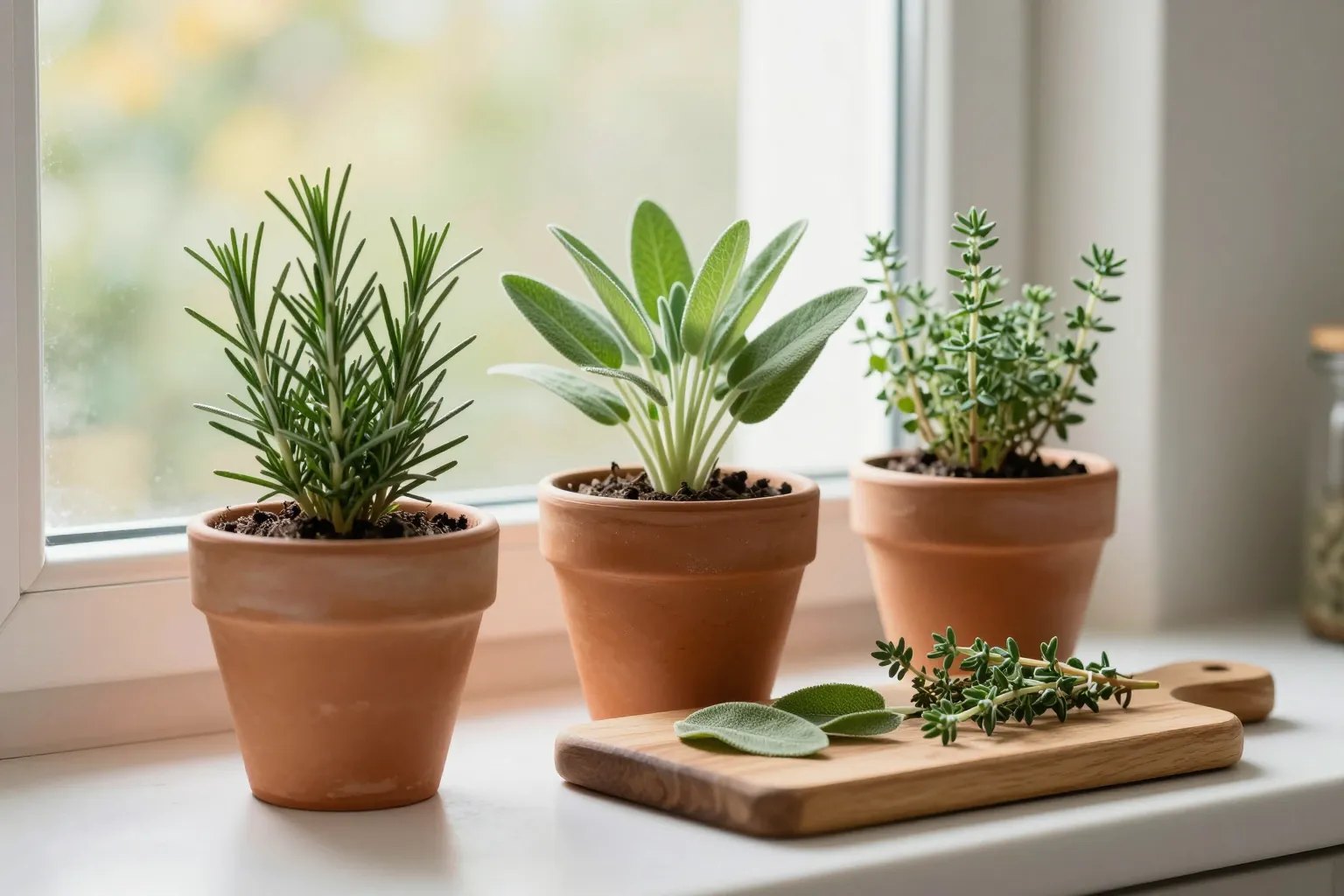
If you only have room for one pot, make it sage. It’s the herb most people associate with Thanksgiving stuffing, and the grey-green leaves are soft enough to chop straight into butter. For the full year-round care of rosemary, see our basil, rosemary and mint windowsill guide.
Week-by-Week Plan: Late September to Thanksgiving
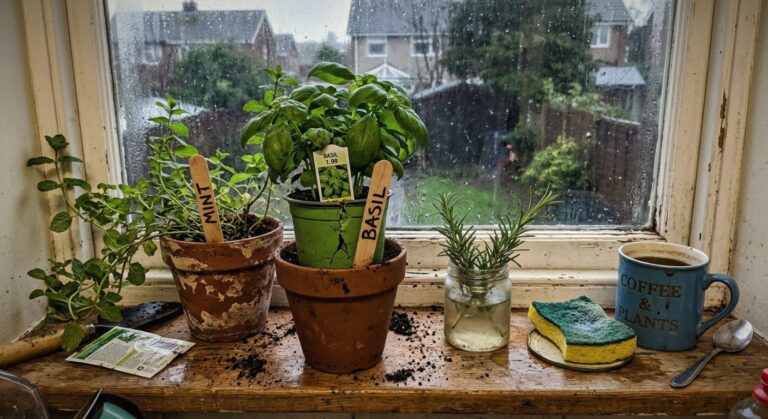
- Late September to early October: get your plants. Pot each one into a 6–8 inch pot with drainage holes and a good potting mix. Iowa State Extension notes that clay or terracotta pots suit herbs because the mix dries out well between waterings. Water them in once, then let the top of the mix dry before watering again.
- October: settle them in. Give them your brightest window or a grow light on a timer (see the light section below). Expect a week or two of slow growth or a few dropped leaves while they adjust. Snip only a sprig here and there.
- Early to mid November: light trims. Cutting the tender tips as you need them, which Illinois Extension says is fine for rosemary, keeps plants bushy. Feed with a low dose of water-soluble fertilizer every 2 weeks, as Penn State suggests, or use half-strength fertilizer now and then.
- The week before Thanksgiving: rest them. Stop cutting for a few days so there’s plenty of fresh growth to pick.
- Thanksgiving morning: harvest. Iowa State Extension suggests harvesting in the morning and taking no more than about a third of a perennial herb’s top growth at a time. Rinse, pat dry and chop just before cooking.
Light: The Part That Decides Everything
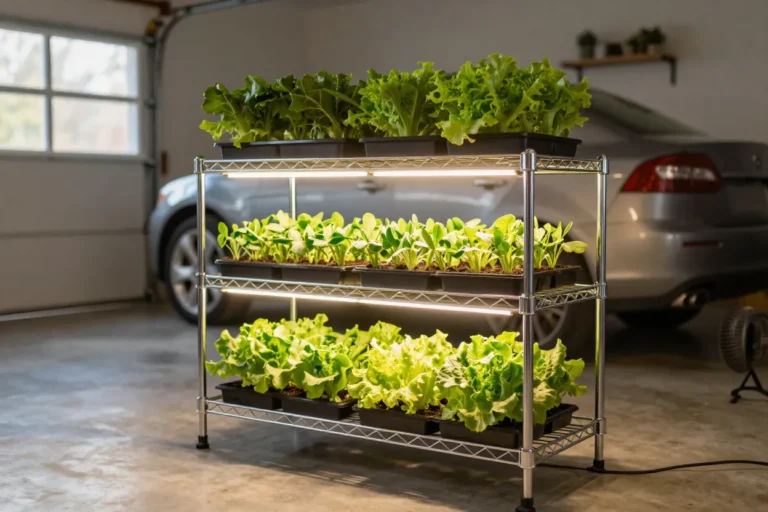
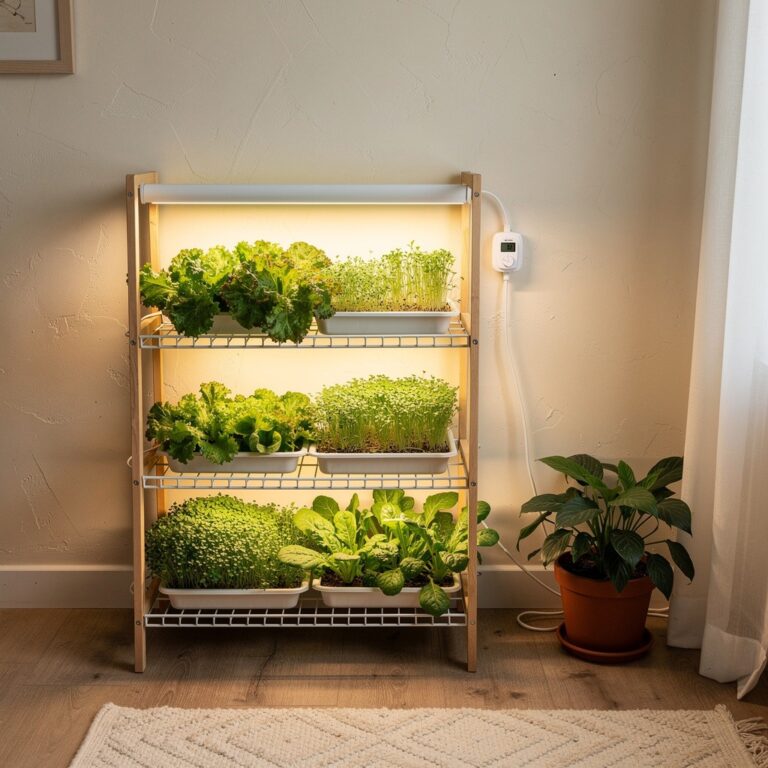
Short November days are the biggest challenge. Penn State Extension says most herbs need about 6 hours of direct sunlight, for example in a south-facing window. The alternative is to grow them 6–12 inches below lights for 14–16 hours a day. Iowa State Extension specifically names rosemary and thyme, along with bay laurel, as herbs that may need extra light from a full-spectrum LED or fluorescent grow light on a timer, running 12–16 hours a day.
If your plants start stretching toward the glass, with pale, widely spaced leaves, they need more light. A small clip-on LED is usually enough for three pots. Our grow lights for small-space herbs guide covers what to look for, and our pick is on our Recommended Gear page.
Temperature, Water and Pots
- Keep it on the cool side. Penn State suggests 65–70°F during the day and 55–60°F at night. Illinois Extension says rosemary indoors prefers a cool, even cold, sunny spot, so a bright window in a cooler room is ideal. Keep pots away from heating vents and radiators.
- Water less than you think. Illinois Extension says to keep thyme and rosemary on the dry side and warns that overwatering rosemary can cause root rot. Check with a finger and water only when the top inch is dry, then water until it runs from the drainage hole. Empty the saucer afterwards.
- Add a little humidity for rosemary. Heated winter air is dry, and dry air can brown rosemary’s leaf tips. Illinois Extension suggests standing the pot on a saucer of pebbles and water.
- Pot size. A 6–8 inch pot is fine for a young plant through winter. Full-size rosemary and sage want much more room (about 5 gallons, per the University of Maryland minimums in our pot size chart), so move them up to bigger pots in spring.
How Much Can You Actually Harvest?
Be realistic. A young nursery plant won’t give you armfuls, but most holiday recipes use a few tablespoons of chopped herbs or a handful of sprigs, not bunches. One healthy plant each of sage, thyme and rosemary is usually plenty for a family meal. If you’re making a big batch of stuffing, a second sage plant is the one worth adding.
Whatever you’re making, stick to the one-third rule on the day. Iowa State Extension recommends taking no more than about a third of a perennial herb’s top growth at once, and says the same for rosemary specifically. Leave the rest and the plant will keep growing for the rest of winter.
After Thanksgiving
Don’t throw the pots out with the leftovers. Sage, thyme and rosemary are all perennials, so they can keep growing on your windowsill through winter and go back outside in late spring once it warms up, as Iowa State advises. Next summer, take a few cuttings. Illinois Extension says sage cuttings taken in summer root easily and can be potted up for use indoors over winter, which gives you a head start on next Thanksgiving. For the full overwintering routine, see which herbs to bring indoors before frost.
A potted herb trio also makes an easy host gift. Our container gardening gift guide has more ideas.
Common Mistakes
- Starting from seed in October. Sage, thyme and rosemary are too slow from seed for a November harvest. Start with plants.
- Relying on a dim window. Pale, stretched growth means the plant needs more light. Add a grow light before it gets leggy, not after.
- Overwatering. This is the quickest way to lose rosemary indoors. Let the top of the mix dry before watering.
- Harvesting everything at once. Take no more than about a third, so the plant keeps going after the holiday.
- Parking the pots over a heat vent. Warm, dry air dries out leaf tips and stresses plants that would otherwise be fine a few feet away.
Frequently Asked Questions
Can I grow Thanksgiving herbs from seed in time?
Not really, for sage, thyme and rosemary. Illinois Extension says rosemary seed germinates very slowly and that thyme and sage are easier from cuttings or divisions. Start with small nursery plants in late September or early October instead.
Which herbs do I need for Thanksgiving?
Sage, thyme and rosemary cover most classic dishes: stuffing, turkey, gravy and roast potatoes. Parsley and chives are useful extras for garnish.
Do indoor herbs need a grow light in November?
Usually. Penn State Extension says most herbs need about 6 hours of direct sun, or 14–16 hours under lights placed 6–12 inches away. Iowa State notes that rosemary and thyme are among the herbs most likely to need extra light.
How much can I harvest from an indoor herb plant?
Iowa State Extension recommends taking no more than about a third of a perennial herb’s top growth at a time. For a small nursery plant, that’s usually enough for one holiday meal’s worth of a single herb.
How often should I water indoor rosemary?
Only when the top inch of the mix is dry. Illinois Extension says to keep rosemary on the dry side and warns that overwatering can cause root rot, but it also dries quickly indoors, so check it every few days rather than on a fixed schedule.
Sources we checked
- Illinois Extension: Rosemary
- Illinois Extension: Sage
- Illinois Extension: Thyme
- Penn State Extension: Growing Herbs Indoors
- Iowa State University Extension: Can I grow herbs indoors over the winter?
- Iowa State University Extension: Growing, Harvesting, and Drying Herbs
- University of Minnesota Extension: Growing Parsley