Bringing Your Container Vegetable Garden Indoors for Winter
As nights get colder, a lot of container gardeners end up standing on the patio wondering if that pepper plant or pot of rosemary is worth carrying inside, or if it’s time to let it go. It’s a fair question — not every plant pays for the closet space, the extra light, or the risk of bringing bugs into your apartment.
This guide walks you through which plants are usually worth saving, how to check them for pests before they cross your threshold, and how to move them in without shocking them. If you’re gardening in the Southern Hemisphere, your containers are heading into spring right now, not winter — bookmark this guide for around April or May instead.
This post contains affiliate links, meaning we may earn a small commission at no extra cost to you — full details are on our Affiliate Disclosure page.
Quick answer: Not every potted plant is worth bringing inside. Tender perennials like peppers and woody herbs such as rosemary, sage, and bay are usually worth trying to save, while tomatoes and basil, which are grown as annuals, are usually better composted once frost is near. If you decide to bring a plant in, inspect it for pests, wash it, and move it indoors gradually over about a week — before nights drop into the 40s°F, not after a cold snap forces your hand. Once inside, expect it to need bright light, less frequent watering, and a slow adjustment period.
In this guide: Should you bother? · Bring it in or let it go · The pest check · How to move plants without shocking them · Where it goes once it’s inside · What to expect the first few weeks · FAQ
Should You Even Bother Bringing It Inside?
Before you haul pots up the stairs, it’s worth asking whether the plant is actually worth the indoor real estate. A leggy, half-spent tomato plant that’s already given you most of its harvest usually isn’t — you’ll spend a windowsill’s worth of light on a plant that was going to die back on its own schedule anyway.
The best overwintering candidates are tender perennials and woody herbs — plants you can’t easily replace with a cheap seedling next spring. The University of Illinois Extension names sage, rosemary, and bay among the good candidates for overwintering. Peppers are a different case worth calling out on their own: the University of Maryland Extension describes peppers as a very tender warm-season perennial that’s grown as an annual, and notes that frost injures its top growth — which means a pepper plant you’ve had all summer can, in theory, keep going for another year if you get it through winter.
Tomatoes and basil are grown as annuals, planted each spring and finished by fall. You can keep a tomato plant alive as a houseplant, but for most beginners it isn’t worth the effort — it wants more light than most apartments offer, and starting fresh from seed in spring is usually less work. Basil is similar: it’s cheap to restart and cold-sensitive enough that babying it through winter isn’t worth the counter space for most people.
If you’d rather leave your containers outside and protect them in place instead of moving anything, our frost protection for containers guide covers that path, including when a floating row cover can buy a plant a few extra weeks outdoors.
Decide: Bring It In or Let It Go
Use this as a quick lookup before you commit time to the rest of this guide.
| Plant | Bring it in? | Why |
|---|---|---|
| Pepper plants | Yes, worth trying | A tender perennial grown as an annual — keep it growing with warmth and light, or let it go dormant for winter |
| Rosemary, sage, bay (potted herbs) | Yes | Named good overwintering candidates; woody perennial herbs that are slower to replace than annuals |
| Tomato plants | Optional, advanced only | Needs a lot of light to do much indoors; most beginners get better results starting fresh in spring |
| Basil (annual types) | No | Grown as an annual and cold-sensitive; cheaper and easier to start new plants next season |
| Leafy greens (lettuce, spinach in pots) | No | Cool-season crops handle a light frost outside better than the disruption of a move |
| Tender flowering or tropical plants sharing your pots | Yes, if worth keeping | Won’t survive frost at all; use the same pest-check and gradual move process below |
Before You Move Anything: The Pest Check
The step almost everyone skips is also the one that saves you the most trouble later. Bugs that were no big deal outdoors — where wind, rain, and predators kept them in check — can turn into a real problem once they’re trapped inside with your other plants.
- A few days before the move, give the plant a close look. Penn State Extension recommends checking for mealybugs, aphids, and scale, which like to hide under leaves or in the joints where leaf meets stem.
- Watch the soil surface for fungus gnats — small, dark, mosquito-like flies. Penn State Extension notes their larvae live in the top 2 to 3 inches of soil and that the whole life cycle, egg to adult, can complete in as little as 3 weeks, depending on temperature. Yellow sticky traps are an effective, low-effort way to catch and monitor the adults.
- Wash the plant before it comes in. Clemson HGIC’s process: gently hose the leaves and stems, let them dry, then spray the entire plant — both sides of the leaves — plus the soil and the pot with insecticidal soap. Leave the plant outside for several days, spray again, and bring it in two to three days after that. Some plants can get leaf burn from soap, so check the label and test a small area first. For a small pot, the University of Minnesota Extension notes some gardeners instead soak the whole thing in a bucket of water with mild dish soap so the soapy water reaches the soil, then rinse well.
- Once it’s inside, keep it away from your other houseplants for a couple of weeks at least — Penn State Extension recommends isolating any new plant for a few weeks, and the University of Minnesota Extension’s houseplant pest guide suggests one to two weeks as a minimum, checking for anything you missed at the door.
How to Move Plants Indoors Without Shocking Them
Timing and pace matter almost as much as the pest check. A rushed, same-day move on the night of the first frost warning is exactly what causes the leaf drop and wilting you’re trying to avoid.
- Bring tender plants in before nighttime temperatures drop below about 45 to 50°F. The University of Minnesota Extension notes temperatures in that range can already cause damage, depending on the species — don’t wait for an actual frost warning to force the issue.
- Peppers belong in that first group. The University of Maryland Extension notes frost injures their top growth, so they’re frost-tender and should come in early rather than last.
- Move gradually rather than all at once. Clemson HGIC recommends taking about a week to shift a plant from full sun to light shade to heavy shade and finally indoors — essentially hardening off in reverse.
- Consider a light prune before the move. The University of Illinois Extension notes that cutting a plant’s foliage back by about a third helps it focus its energy on root repair instead of supporting mature top growth during the transition.
Where It Goes Once It’s Inside
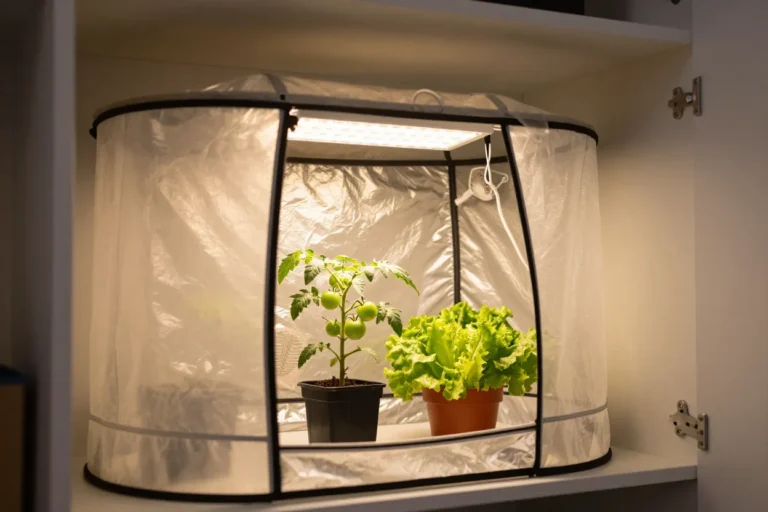
Give the plant your brightest window first. Most container vegetables and tender herbs want several hours of direct or bright indirect light a day, and few apartment windows deliver that reliably through winter. A small clip-on grow light, like the GooingTop clip-on grow light, closes that gap without taking up counter space. For the full comparison of options, see our grow light guide.
If a windowsill isn’t going to cut it and you’re setting up a dedicated space instead, our guides to growing in a grow tent and growing vegetables in the garage go further into building out that setup.
Peppers specifically have two paths once they’re inside, according to an Ask Extension expert answer. You can keep one actively growing and possibly fruiting, which needs nighttime temperatures above 50°F, daytime temperatures around 70°F, and artificial lighting. Or you can let it go dormant instead — trim it back, keep it cool, and limit watering so it simply rests until spring. The same source notes hot peppers tend to be hardier than sweet peppers, so they’re the safer bet if you’re only trying to save one plant. For the full pepper-specific process, including pruning cuts and what to expect from fruiting, see our guide to growing peppers in containers.
If it’s rosemary, sage, or bay you’re bringing in, our herb overwintering guide covers the herb-specific placement and care details we don’t repeat here.
What to Expect the First Few Weeks
Give the plant time before you judge whether the move worked.
- Some leaf yellowing or leaf drop is a normal adjustment to lower indoor light, per Clemson HGIC — it doesn’t necessarily mean something has gone wrong. A too-sudden move makes it worse: the University of Minnesota Extension lists yellow leaves, wilting, and dieback as the result of an abrupt transition specifically.
- Water when the top inch of soil is dry, and water until it drains from the bottom of the pot, per the University of Illinois Extension. Indoor plants generally dry out more slowly than they did outside in full sun, so check before you water rather than sticking to your old outdoor schedule.
- Keep an eye out for pests for several more weeks, even after quarantine. The University of Minnesota Extension’s houseplant pest guide suggests checking for insects whenever you water, fertilize, or clean your plants — indoor heat can hatch anything that was missed the first time.
- Set your expectations for peppers specifically: a dormant one won’t fruit over winter, and one you’ve kept actively growing may flower but could need help — the Ask Extension answer above notes you may need to hand-pollinate by gently shaking the plant, since there are no pollinators indoors.
If you’re also thinking about starting something new indoors this winter, rather than just relocating what you already grew, our indoor winter vegetable gardening guide covers that from scratch.
Frequently Asked Questions
Can I bring my tomato plant inside for the winter?
You can keep a tomato plant alive indoors as a houseplant, but it is grown as an annual and rarely fruits well without strong grow lights, so most beginners get better results starting fresh from seed in spring instead.
What temperature should I bring plants inside before?
Bring tender plants in before nights drop below about 45 to 50F, since temperatures in that range can already cause damage. Frost-tender vegetables like peppers should be among the first to come in.
How do I stop bugs from coming inside with my plants?
Inspect leaves and stems closely a few days before the move, wash the plant with a mild soap-and-water soak or an insecticidal soap spray, let it dry, and quarantine it away from other houseplants for a couple of weeks afterward.
Can pepper plants survive winter indoors?
Yes. Peppers are tender perennials. You can keep one growing with nighttime temperatures above 50F, daytime temperatures around 70F, and a grow light, or trim it back and keep it cool and dry so it rests until spring.
Do I need a grow light to overwinter container vegetables?
Not always, but a bright window is rarely enough on its own for a fruiting plant like a pepper, so a small supplemental grow light usually improves the odds.
Why are my plant’s leaves yellowing after I brought it inside?
Some yellowing, leaf drop, or a pause in growth is a normal adjustment to lower indoor light, not necessarily a sign something is wrong. A too-abrupt move tends to make it worse.
Sources we checked
- University of Minnesota Extension: When to bring houseplants inside for the winter
- Penn State Extension: Take a Close Look at Plants That Are Coming Inside for the Winter
- University of Illinois Extension: Save money and save plants with a garden of overwintered favorites
- University of Illinois Extension: Overwintering Tender Plants
- Clemson HGIC: Moving Plants Indoors and Outdoors
- Ask Extension: Overwintering peppers and herbs
- University of Maryland Extension: Growing Peppers in a Home Garden
- University of Minnesota Extension: Managing insects on indoor plants
For the plants staying outside, check our frost protection for containers guide, and see our fall container garden guide for the full seasonal picture. New to container gardening altogether? Start here for the basics before you dig into the specifics above.