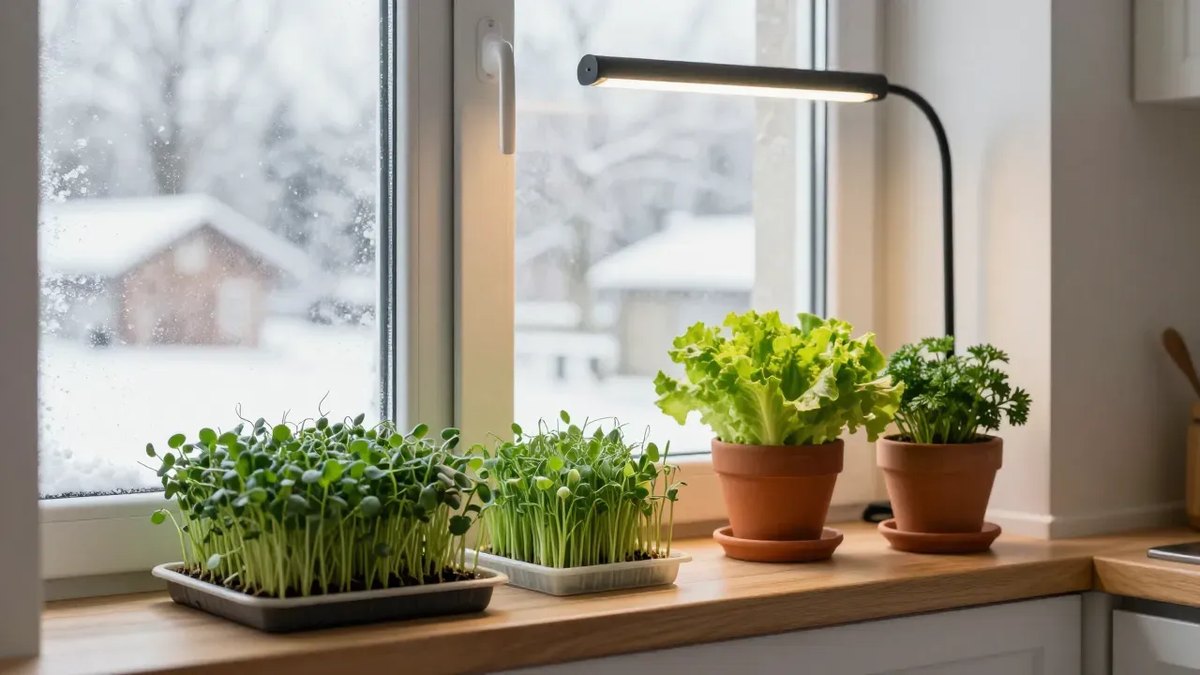
Winter Indoor Gardening: What Vegetables Actually Grow Inside
Quick answer: Grow vegetables you eat as leaves or shoots: microgreens (ready in 7–21 days, says University of Maryland Extension), pea shoots, loose-leaf lettuce, spinach, arugula, baby kale, radishes, and scallions regrown in water. Winter window light is weak, so most of these do better under a grow light on a timer; extension guides suggest about 12–16 hours a day, 6–12 inches above the leaves. Keep greens around 60–70°F (Oregon State Extension), keep leaves off cold glass, and save tomatoes and peppers for spring.
Winter indoor gardening isn’t about keeping a summer garden alive on the kitchen counter. It’s about picking the right crops. The ones that earn their space from November to February are quick and leafy: you eat them as shoots or young leaves, cut them, and sow again. Here are the eight worth growing, how much light they need when days are short, and the winter-only problems that catch people out.
This post contains affiliate links, meaning we may earn a small commission at no extra cost to you. Full details are on our Affiliate Disclosure page.
In this guide: 8 vegetables to grow · Lettuce, spinach and arugula · Fastest wins · Winter herbs · Is a window enough? · Small-space ideas · More winter ideas · November to February · Winter problems · What to skip · FAQ
What Vegetables Can You Grow Indoors in Winter?
The crops that cope with winter indoors have one thing in common: you eat the leaves, the shoots or a small root. They never have to flower, be pollinated and ripen a fruit, which is the part short days and indoor light make hard. These are the eight to start with:
| Crop | Ready in | Pot depth | Winter light |
|---|---|---|---|
| Microgreens | 7–21 days | 1–1½ in tray | Grow light best |
| Pea shoots | 1–2 weeks | Shallow tray | Bright windowsill |
| Loose-leaf lettuce | 3–6 weeks | 6–8 in | South window or light |
| Spinach | 4–8 weeks | 6–8 in | Grow light safer |
| Arugula | 30–40 days | 4–6 in | Copes with less light |
| Baby kale | 20–30 days | 10 in (full-size) | Grow light |
| Radishes | 3–5 weeks | 6–8 in | Grow light |
| Scallions (regrown) | No set time | Dish of water | Sunny window |
Lettuce, Spinach and Arugula Indoors in Winter
If you only grow one thing this winter, make it loose-leaf lettuce. Illinois Extension calls loose-leaf lettuce “your best bet” for growing indoors in winter and says it can be harvested at about 4 weeks. University of Maryland Extension’s indoor guide says to cut baby greens at 4–6 inches tall, 21–40 days after sowing, and they regrow for one or two more cuts. Choose a loose-leaf or mesclun mix, not a heading type, and keep the pot cool rather than cozy: Illinois says 70°F and below, away from direct heat.
Spinach is slower, 28–55 days from seed according to University of Maryland, so sow it first. It likes it cool (University of Wisconsin Master Gardeners put ideal spinach weather at 50–60°F), and Maryland notes it bolts as days get longer and warmer. That makes it the crop for the coolest bright spot you have, not the shelf above the heater.
Arugula is usually ready in 30–40 days in spring and fall, says Illinois Extension. It suits an average window: University of Maryland lists lettuce, arugula, mustards and Asian greens as crops that grow acceptably in less-than-ideal light.
None of these need a big pot. NC State Extension gives 6–8 inches for lettuce and a minimum of 4–6 inches for arugula; Colorado State suggests 8 inches for leaf lettuce and spinach. Our lettuce spacing guide shows how many plants fit each pot, indoors or out.
Baby kale
NC State Extension (Burke County) says baby kale can be harvested within 20 to 30 days, at 4–6 inches tall. Colorado State gives 10 inches of depth for full-size plants. No source we found gives a smaller figure for baby leaves, so a 10-inch pot is the safe choice. Colorado State lists kale among the crops wanting 8 hours of direct sun outdoors, so grow it under a light.
Fastest Wins: Microgreens, Pea Shoots and Scallions
- Microgreens are one of the quickest crops you can grow indoors. University of Maryland Extension says they’re ready 7–21 days after sowing, when they’re 2–3 inches tall, grown in a tray with 1–1½ inches of moist soilless mix, and they need no fertilizer. Light from a sunny window “may suffice in some cases,” Maryland says, but microgreens generally grow best under grow lights, about 16 hours a day. Unlike lettuce, they like it a bit warmer: they germinate and grow well at 70–75°F. Our guide to growing microgreens without sunlight has the full method.
- Pea shoots grow in a container of mix much like microgreens (University of Maryland lists peas as a microgreen crop). University of Vermont Extension says to keep them covered in a warm, dark place until they sprout, then move them to a well-lit spot such as a windowsill; soil-grown shoots are ready to eat within a week or two after sprouting.
- Scallions regrown from scraps cost nothing. Illinois Extension’s method: save the white bulbs with roots, stand them in a shallow dish of water and put it in a sunny window. From seed, Oregon State Extension says bunching onions grow indoors near a sunny window and can be picked once they’re 6 inches tall.
Also quick: radishes
Radishes are the one root crop worth trying indoors. University of Minnesota Extension says they’re ready three to five weeks after planting and do best in cool conditions. Along with kale, they need more light than anything else on this list (Colorado State gives both 8 hours of direct sun outdoors), so they’re a grow-light crop, not a windowsill one. A pot 6–8 inches deep is enough (Oregon State, Colorado State).
Winter Herbs on a Windowsill
Herbs are the other easy winter crop, and some cope with a windowsill better than any vegetable. Penn State Extension says chives and cilantro tolerate low light, managing on 2 to 6 hours. Illinois Extension lists chives, parsley and mint among the herbs that are easy indoors, and suggests a container at least 6 inches across for each.
Most herbs want more light than that, though. Iowa State says most want eight or more hours a day, which is hard to supply in winter, and Illinois suggests 12–14 hours under fluorescent lights 6–12 inches above the plants if your window falls short. Penn State says rooms should stay at least 65–70°F by day and 55–60°F at night.
The one to watch is basil. Penn State says it can’t survive below 50°F and should not stay on winter windowsills, and it shouldn’t be allowed to dry out completely. Grow it under a light, back from the cold glass. For more, see our guides to windowsill basil, rosemary and mint, grow lights for herbs and growing Thanksgiving herbs indoors.
Is a Winter Window Enough Light?
For a few crops, yes. For most, not on its own. Winter days are several hours shorter and the low sun carries less energy. A UC Master Gardener article puts winter sunlight at about one-third of midsummer’s, and that’s in Northern California; cloud cuts it by more than half again.
Which window matters too. Illinois Extension estimates a south window gives about 300 foot-candles and an east or west window about 150, so roughly half. Illinois also says lettuce and herbs need 6–8 hours of bright light a day, and that south-facing windows are great for this. Pale, stretched seedlings leaning hard toward the glass are the usual sign they aren’t getting enough.
Pea shoots, regrown scallions, chives and cilantro are the most window-friendly choices. For steady harvests of everything else, add a small grow light on a timer, such as a clip-on grow light. What the extension guides say:
- Hours: about 16 hours a day for microgreens and leafy greens (University of Maryland). Illinois Extension gives 14–16 hours for lettuce under two fluorescent tubes, and University of Minnesota gives 12–14 hours for hydroponic lettuce and herbs. Somewhere in the 12–16 hour range is a reasonable target, with microgreens at the top end.
- Height: 6–12 inches above the leaves is typical for fluorescent or LED lights, says University of Maryland, which adds that the right distance depends on the fixture’s intensity. For a strong LED panel, follow the maker’s recommended height.
- Darkness: don’t leave lights on around the clock. University of Minnesota says many plants need a dark period each night to develop properly. Maryland’s tip: use an outlet timer.
Our guide to grow lights for indoor vegetables covers which lights are worth buying.
Winter Indoor Gardening Ideas for Small Spaces
You don’t need a spare room. Three setups cover almost everyone, and in winter the choice mostly comes down to light and cold glass:
- A windowsill plus a clip-on light. The simplest start: a tray of microgreens, a pot of lettuce and an herb or two on the brightest sill you have, with a light to stretch the short days. Keep leaves from touching the glass on frosty nights. If you tend to forget watering, a self-watering container covers the days you don’t check, and any indoor pot needs a saucer underneath.
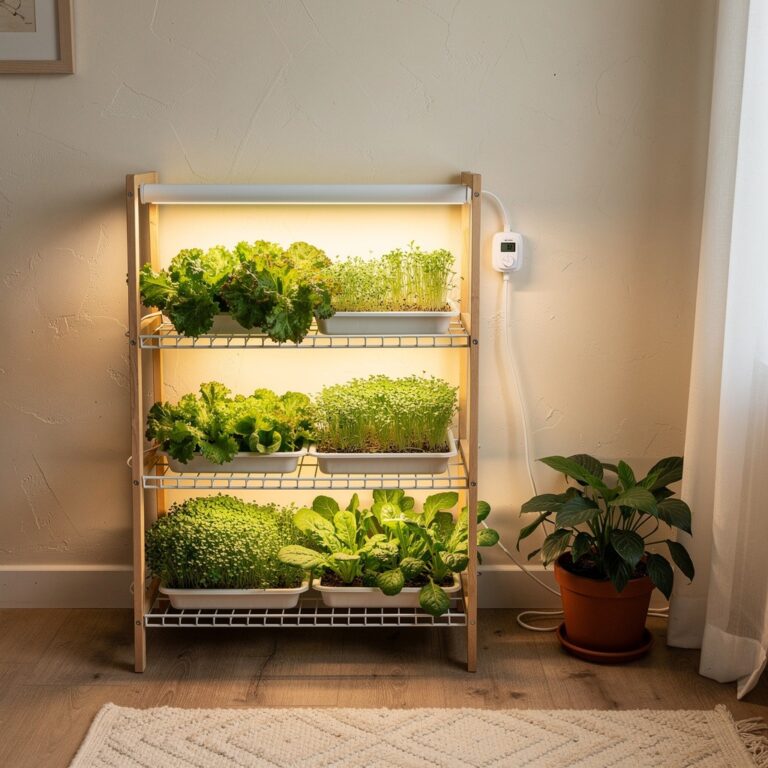
- A shelf with lights. If the sill is narrow or icy, a small shelf with a light over each level lets you pull plants back from the window and still give them full hours. It’s also the easiest way to keep several trays on rotation.
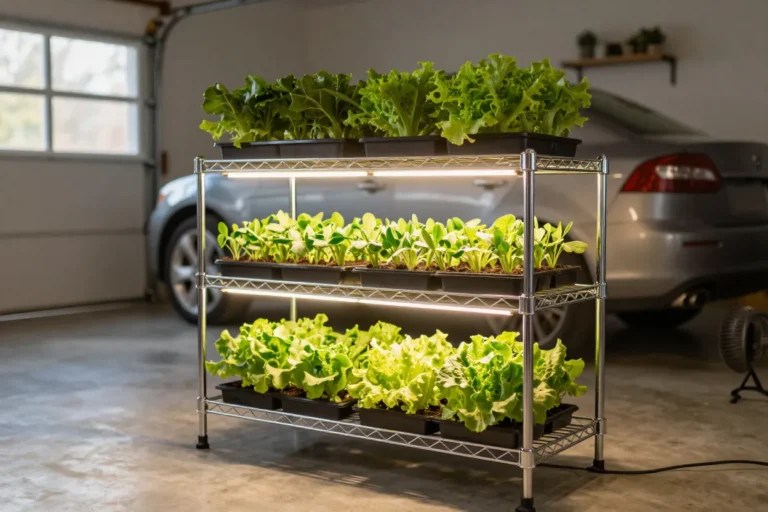
- A grow tent. More than most people need for greens, but worth a look if you want to grow a lot or start many seedlings in late winter. See grow tents for vegetables, or growing vegetables in a garage if that’s where your space is.
Our indoor vegetable gardening guide for beginners walks through each setup in detail, along with potting mix, containers and everyday watering.
More Winter Indoor Gardening Ideas: Start Seeds for Spring, Bring Herbs and Peppers In
- Start seeds for spring. The light you set up for greens doubles as a seed-starting station in late winter. University of Minnesota suggests keeping lights close for seedlings, no more than about 4 inches above them. When to start depends on your last frost date; our planting planner shows what you can sow now in your zone.
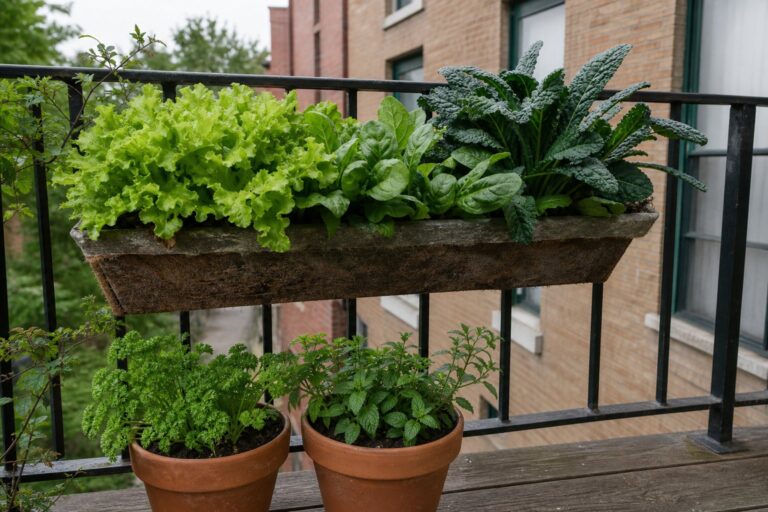
- Bring plants in from the balcony. Herbs and pepper plants can often come inside for winter instead of being lost to frost. See bringing your container garden indoors for winter and growing peppers in containers.
- Regrow kitchen scraps. Scallion ends in a dish of water are the easiest place to start (method above).
- Look after your houseplants too. The cold-glass and dry-air advice in the problems section below comes from extension guides written for houseplants, so the same fixes help them through winter.
What to Plant Indoors, November to February
University of Vermont Extension’s advice for winter greens is simple: every two or three weeks, plant more, and replant a container once it’s fully harvested. No source gives a month-by-month indoor calendar, so treat this as a suggested routine built on that advice and the harvest times above. In dim light, everything runs a little later.
- November: set up your light and timer. Sow a tray of microgreens, a tray of pea shoots, a pot of loose-leaf lettuce and a pot of spinach (the slowest, so it goes in first). Stand some scallion ends in water.
- December: cut your first microgreens and pea shoots, and sow a fresh tray each time one is finished. The first lettuce leaves should be ready around four weeks after sowing. Sow a second lettuce pot, plus arugula, radishes and baby kale.
- January: spinach, arugula, radishes and baby kale start coming ready. Keep sowing a new pot of greens every 2–3 weeks so there’s always one on the way.
- February: keep the rotation going. Lettuce pots give one or two more cuts as they regrow (University of Maryland), then replant them. If your spring seed-starting begins in late winter, the same light can take the seedlings.
Cold Windows, Dry Air and Other Winter Problems
- Cold glass and cold sills. Most leafy greens grow best in air of 60–70°F (Oregon State Extension Master Gardeners). Pots can be colder than the room suggests: University of Minnesota notes potting mix in indoor containers can run as much as 5°F below the air temperature, and a sill by cold glass is likely to be colder still. NDSU and UConn Extension both say not to let leaves touch cold window panes.
- Heater drafts. Keep pots well away from heating vents, stoves and other heat sources (UConn; NDSU). Illinois Extension says the same for lettuce and herbs: no direct heat.
- Dry air. NDSU Extension says homes can drop to 10–20% relative humidity in winter. Group pots with room for air to move, use a pebble tray with water just below the tops of the pebbles (Illinois), or run a small humidifier. Don’t overdo it: Penn State warns too much humidity brings root rot and fungal problems, and University of Maryland suggests a gentle fan to keep air moving.
- Soggy mix and fungus gnats. Colorado State Extension says the adults are strongly attracted to moist growing media, and their larvae can nibble roots. The adults are harmless and don’t bite. The fix is mostly watering: let the top 1–2 inches of mix dry between waterings, and use yellow sticky cards to catch adults. Our beginners guide covers what to do if they’ve already moved in.
- Feeding. Extension feeding advice for indoor winter growing is written for herbs: Illinois says every 2 weeks and no more often, and Iowa State suggests half or quarter strength. That light touch is a sensible place to start for greens you cut again and again. Microgreens need none (University of Maryland).
- Something still looks wrong? Our symptom-by-symptom troubleshooting guide helps you track down the cause.
What to Skip Until Spring
Full-size tomatoes, peppers and other crops grown for their fruit. Colorado State says tomatoes, peppers and eggplant need full sun, and nights above 55°F for pollen to develop. Even in greenhouses there often isn’t enough air movement to pollinate tomato flowers, so UConn Extension suggests vibrating each flower stem every other day around midday (a battery toothbrush works). Indoors you’ll need to do the same. An Ask Extension answer to a Michigan gardener about overwintering peppers is similar: they need artificial light, nights above 50°F, and possibly hand pollination.
A small tomato variety under strong light is possible, but Utah State Extension calls it “more of a novelty” that will likely give only enough fruit for an occasional salad or sandwich. If you already have a pepper plant outside, bringing it indoors for winter beats starting one now.
Frequently Asked Questions
What vegetables can I grow indoors in the winter?
Grow crops you eat as leaves, shoots or a small root: microgreens, pea shoots, loose-leaf lettuce, spinach, arugula, baby kale, radishes, and scallions regrown from kitchen scraps. Illinois Extension calls loose-leaf lettuce the best bet for indoor winter growing. These crops never have to flower and be pollinated, so they cope with short days far better than tomatoes or peppers.
Can you grow vegetables indoors in the winter without a grow light?
A few, yes. Pea shoots, scallions regrown in water, chives and cilantro all manage on a bright windowsill, and lettuce can work in a south-facing window. But Illinois Extension says lettuce and herbs need 6–8 hours of bright light a day, and a winter garden gets only about a third of midsummer’s sunlight (UC Master Gardeners). For steady harvests of most crops, add a grow light on a timer for about 12–16 hours a day.
How long do microgreens take to grow indoors?
University of Maryland Extension says microgreens are ready 7–21 days after sowing, when they’re 2–3 inches tall. Grow them in a tray with 1–1½ inches of moist soilless mix, ideally under a grow light for about 16 hours a day. They need no fertilizer.
How deep should a pot be for indoor lettuce and spinach?
6–8 inches of mix is enough. NC State Extension gives 6–8 inches for lettuce, and Colorado State Extension suggests 8 inches for leaf lettuce and spinach. Arugula manages in 4–6 inches, and microgreens and pea shoots only need a shallow tray.
Can I grow tomatoes indoors in winter?
You can try a small variety under strong light, but Utah State Extension calls an indoor tomato more of a novelty that will likely give only enough fruit for an occasional salad or sandwich. Tomatoes need full sun and nights above 55°F (Colorado State), and indoors you’ll have to pollinate the flowers by hand (UConn Extension). Leafy greens are a much better use of winter space.
What are some winter indoor gardening ideas?
Start a tray of microgreens or pea shoots, grow a pot of cut-and-come-again lettuce under a clip-on light, keep chives and parsley on the windowsill, regrow scallions from kitchen scraps, bring herbs or a pepper plant in from the balcony, and use the same light to start seeds for spring.
How do you grow vegetables indoors in the winter?
Pick fast leafy crops and give them a grow light on a timer for about 12–16 hours a day, 6–12 inches above the leaves (University of Maryland, Illinois and University of Minnesota Extension). Keep greens around 60–70°F (Oregon State Extension), keep leaves off cold glass and away from heating vents, let the top 1–2 inches of mix dry between waterings (Colorado State), and sow a new pot every 2–3 weeks (University of Vermont Extension).
Sources we checked
- Illinois Extension: Grow Herbs and Lettuce Indoors this Winter
- Illinois Extension: Arugula
- Illinois Extension: Herbs all winter, grow them indoors
- Illinois Extension: Make sure houseplants get enough light in winter
- Illinois Extension: Regrowing scrap veggies
- University of Maryland Extension: Growing Microgreens and Baby Greens Indoors, Salad Greens and Growing Spinach
- University of Vermont Extension: Growing greens in winter and Shoots
- University of Minnesota Extension: Growing radishes, Lighting for indoor plants and Starting seeds indoors
- NC State Extension Plant Toolbox: lettuce and arugula; NC State Extension, Burke County: Growing kale
- Colorado State University Extension: Vegetable Gardening in Containers (GardenNotes #724)
- Colorado State University Extension: Fungus Gnats as Houseplant and Indoor Pests
- Oregon State University Extension Master Gardeners: Growing Lettuce and Greens
- Oregon State University Extension: Onions, bunching and Radishes
- University of Wisconsin Extension Master Gardener: Spinach
- Penn State Extension: Growing Herbs Indoors
- Iowa State University Extension: Can I grow herbs indoors over winter? and How can I provide more light to my herbs indoors?
- UC Master Gardeners (UC ANR): Light in the Winter Garden
- NDSU Extension: Winter houseplant care
- UConn Home & Garden Education Center: Growing Houseplants (archived copy) and UConn IPM: Pollination of Greenhouse Tomatoes
- Ask Extension: Overwintering peppers and herbs
- Utah State University Extension: Growing tomatoes indoors
New to growing in containers? Start Here walks you through your first pot and plant, and Recommended Gear lists the grow light and self-watering container mentioned above.