Raised Beds vs. Containers: Which Should You Choose?
If you’re deciding between a raised bed and containers, here’s the short version: if you have a balcony, patio, fire escape, or you’re renting, containers almost always make more sense. If you have a yard, plan to stay put for years, and want to grow a lot of different crops at once, a raised bed can be worth the extra cost and effort.
This post contains affiliate links, meaning we may earn a small commission at no extra cost to you — full details are on our Affiliate Disclosure page.
Neither option is “better” in the abstract — they solve different problems. A raised bed gives you more total soil volume and an easier-to-reach growing surface, but it’s permanent, needs more water once it’s deep, and does you no good if you don’t own the ground under it. A container costs less to start, moves with you, and lets you chase the sun around a small space — but each pot holds a lot less soil, so it dries out faster and limits which crops you can grow well.
Most people reading this site are growing on a balcony or patio, so we’ll be upfront: for that setup, containers usually win. Below is the full comparison — cost, space, watering, mobility, weather, and a decision table — so you can see exactly why, and when a raised bed genuinely earns its keep instead.
The quick-answer decision table
If you only read one section, read this one. Match your situation to the left column.
| If you have this… | Choose this | Why |
|---|---|---|
| A balcony, patio, or fire escape only | Containers | There’s no ground to build a bed into, and pots fit railings and corners a bed can’t |
| A rental with no permission to alter the yard | Containers | You can take them with you when the lease ends; a built bed usually can’t come along |
| A yard you own or expect to stay in 3+ years | Raised bed (or a mix) | The upfront cost pays off over many seasons, and one bed can replace a dozen pots |
| Only one sunny spot at certain times of day | Containers | You can physically move a pot to chase the light; a bed is fixed where you build it |
| A tight budget this season | Containers | A grow bag or bucket costs a few dollars; a framed bed plus soil to fill it runs into hundreds |
| Poor, rocky, or shallow native soil, and a yard | Raised bed | You replace the soil entirely without excavating; extension guidance recommends this for poorly drained or low-quality sites |
| Want to grow a lot of crops at once in one spot | Raised bed | One 4×8 bed holds far more usable soil volume than most people can fit in pots on a balcony |
| Mobility limits (bending, kneeling) | Either — build the bed tall, or set pots on a stand | Both can be raised to waist height; extension sources note raised growing helps gardeners with physical limitations |
Cost: which one costs less to start
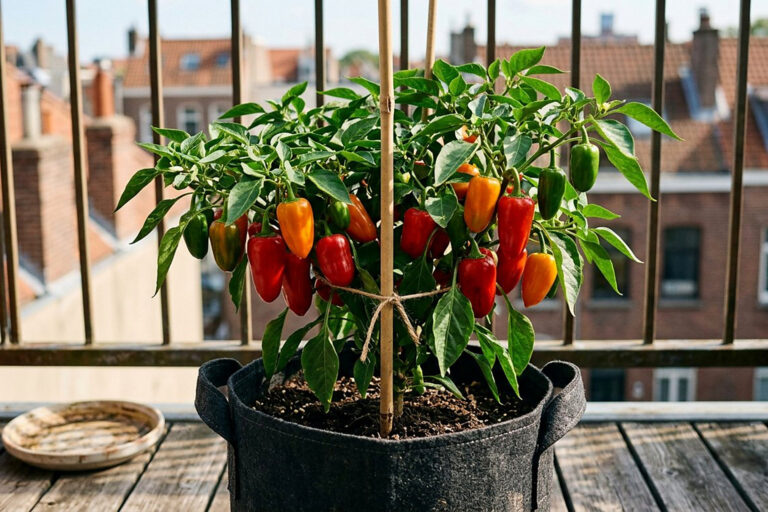
Containers almost always win on upfront cost, and it isn’t close. A 5-gallon nursery pot or a 10-gallon fabric grow bag costs a few dollars each, and a couple of bags of potting mix will fill several of them. You can start growing a tomato or a pepper for well under $40 total. See our pot size and drainage guide for how to pick the right size for what you’re growing.
A raised bed costs more because you’re paying for both the frame and the soil to fill it. Rot-resistant lumber, cinder blocks, or composite kits all cost money before you’ve bought a single seed, and then the bed itself needs to be filled — Purdue Extension notes that deeper beds need wall support (rot-resistant lumber such as cedar or redwood, cinder blocks, bricks, or layered rock), while shallow beds under 6 inches tall can get by with gently sloped sides and no walls at all. Either way, filling even a modest 4×8-foot bed at 12 inches deep takes roughly 32 cubic feet of soil — Clemson Extension recommends blending that with 10-20% compost by volume for good drainage and fertility, which adds up fast once you’re buying by the bag.
The bed is a one-time cost that pays off if you keep gardening in the same spot for years. But if you’re not sure how long you’ll be in your current home, that upfront spend is a real risk — you can’t take a built bed with you.
Space and soil volume: how much room roots actually need
Both options need to give roots enough depth and volume to work — the plant doesn’t care whether that soil is inside a wooden frame or a plastic pot, only how much of it there is. NC State Extension’s guidance on container-grown vegetables lists minimum depths of 4-6 inches for small crops like radishes (6 inches for scallions), up to 12-24 inches for tomatoes and squash. University of Maryland Extension gives similar numbers specifically for raised beds on hard surfaces like a patio or driveway: at least 8 inches for leafy greens, beans, and cucumbers, and 12-24 inches for peppers, tomatoes, and squash.
The practical difference is total volume, not depth per plant. A single raised bed spreads that depth across a whole footprint, so one 4×8-foot bed at 12 inches deep holds roughly the same soil volume as 40+ five-gallon pots. If you want to grow ten or more different crops in one growing area, a bed gets you there in one build. If you’re growing three or four things on a balcony, individual pots sized to each crop (see our guide to the best vegetables for pots) make more sense than trying to shoehorn a bed onto a small space you may not even be allowed to alter.
Watering: how often each one needs you
This is where the size difference bites hardest. Illinois Extension notes that container plants typically need watering on a daily basis, with exact frequency depending on the season, the container’s location, its material, and the plant itself — and that you should water until it drains from the bottom, since letting a pot dry out completely can cause flowers and fruit to drop. Our own guide to watering container vegetables walks through how to check for that without a fixed schedule.
Raised beds don’t escape this — they just delay it slightly. Clemson Extension is explicit that raised beds dry out more quickly than in-ground gardens and need more frequent irrigation during dry periods, especially since they warm up faster in spring. University of Maryland Extension adds that raised beds set on hard, non-permeable surfaces like a patio dry out especially quickly. A bed’s larger total soil volume does hold moisture a bit longer than a small pot on a hot day, but it’s still drying out faster than a garden planted straight in the ground. If daily watering during summer sounds unmanageable either way, a self-watering container is worth a look for containers — there isn’t a true equivalent for a raised bed, though drip irrigation on a timer gets close.
Mobility and renting: the case for containers
This is the biggest practical reason most renters and small-space growers should default to containers. A pot can be picked up and moved — to chase a sunnier spot through the season, to get it under cover before a storm, or to bring it with you when you move out. NC State Extension calls this out directly as one of the core advantages of container gardening: containers are mobile and can be repositioned as light and weather needs change, which a permanent structure simply can’t do.
That mobility matters even more once you factor in leases. Most rental agreements don’t allow permanent structures, and a framed raised bed built into a rented yard is exactly that — it typically can’t be removed without damage, and it becomes the landlord’s property, not yours, the day you move out. Even in the rare case where a landlord agrees to a raised bed, you’re building equity into a property you don’t own. Containers avoid all of that: nothing gets attached to the property, nothing needs written permission beyond “can I put some pots on the balcony,” and everything you’ve bought and grown comes with you in the moving truck. If you’re setting up on a balcony for the first time, our balcony setup guide for renters covers weight limits, railing rules, and what to check with your lease before you start.

Heat and cold: how each handles weather swings
Both raised beds and containers run hotter and colder than the ground, but containers swing further. NC State Extension notes that the growing medium in outdoor pots can fluctuate by as much as 30°F between day and night, and that dark-colored containers absorb more heat, drying the mix out faster and putting stress on roots in summer. A container on a south-facing balcony with reflected heat off pavement or a building wall can get noticeably hotter than the same plant would experience in the ground.
Raised beds have some insulation advantage from their larger soil mass, which is part of why Clemson Extension notes they warm up faster in spring, giving you an earlier start to the season. But that same above-ground exposure means a shallow bed’s edges and top few inches are still more exposed to cold snaps than an in-ground garden bed — it’s an earlier spring, but not necessarily a more forgiving fall. In either case, frost is the bigger risk than heat for most of the country outside the hottest zones. A lightweight frost cloth draped over pots or a bed on a cold night is one of the cheapest ways to buy yourself another few weeks of harvest at either end of the season.
Which crops suit each option
Most vegetables genuinely don’t care whether their roots are in a bed or a pot, as long as the depth and volume match what they need. But a few patterns are worth knowing:
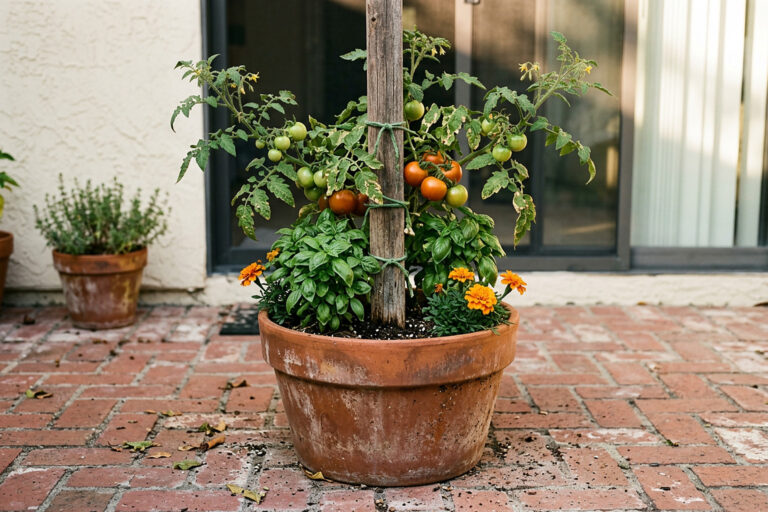
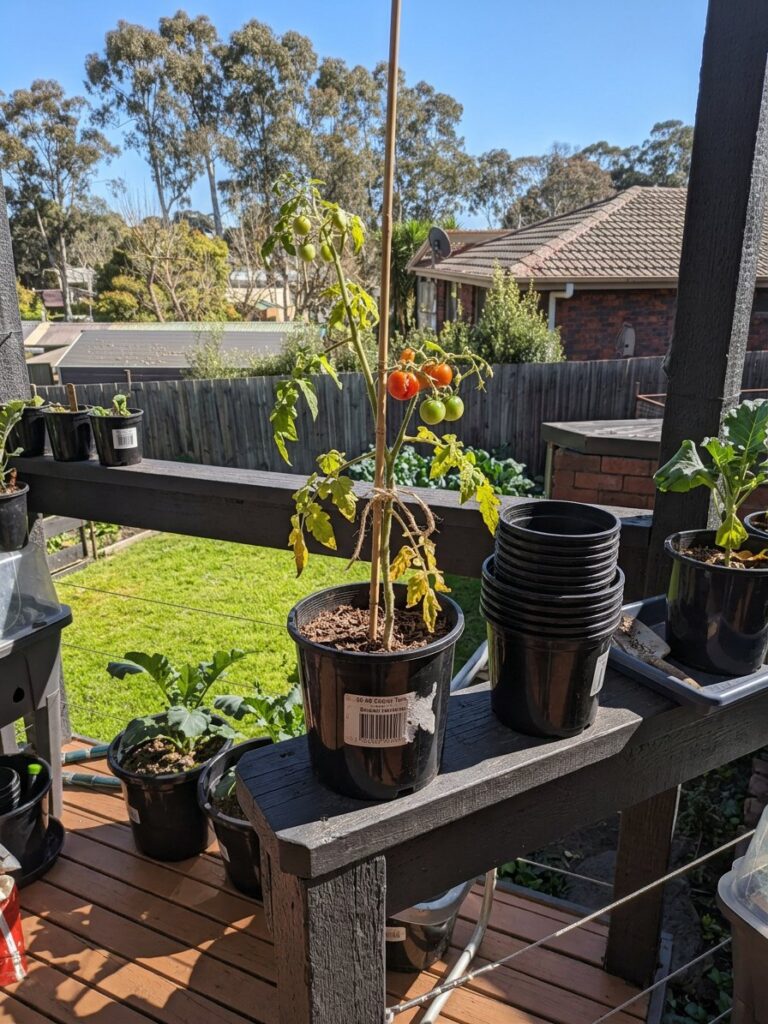
- Deep-rooted, single plants (tomatoes, peppers, squash) — do well in either. Clemson Extension recommends a 14- to 20-inch container or a 5-gallon bucket for compact tomato varieties, which matches the 12-24 inch depth extension sources give for raised beds too.
- Shallow, fast crops grown in bulk (lettuce, radishes, spinach, herbs) — suit containers well since they need only 4-8 inches of depth and you can fit several small pots in the space one plant would take.
- Sprawling or space-hungry crops (winter squash, melons, pole beans on a trellis) — favor a raised bed simply because they need more total square footage than most balconies have to spare.
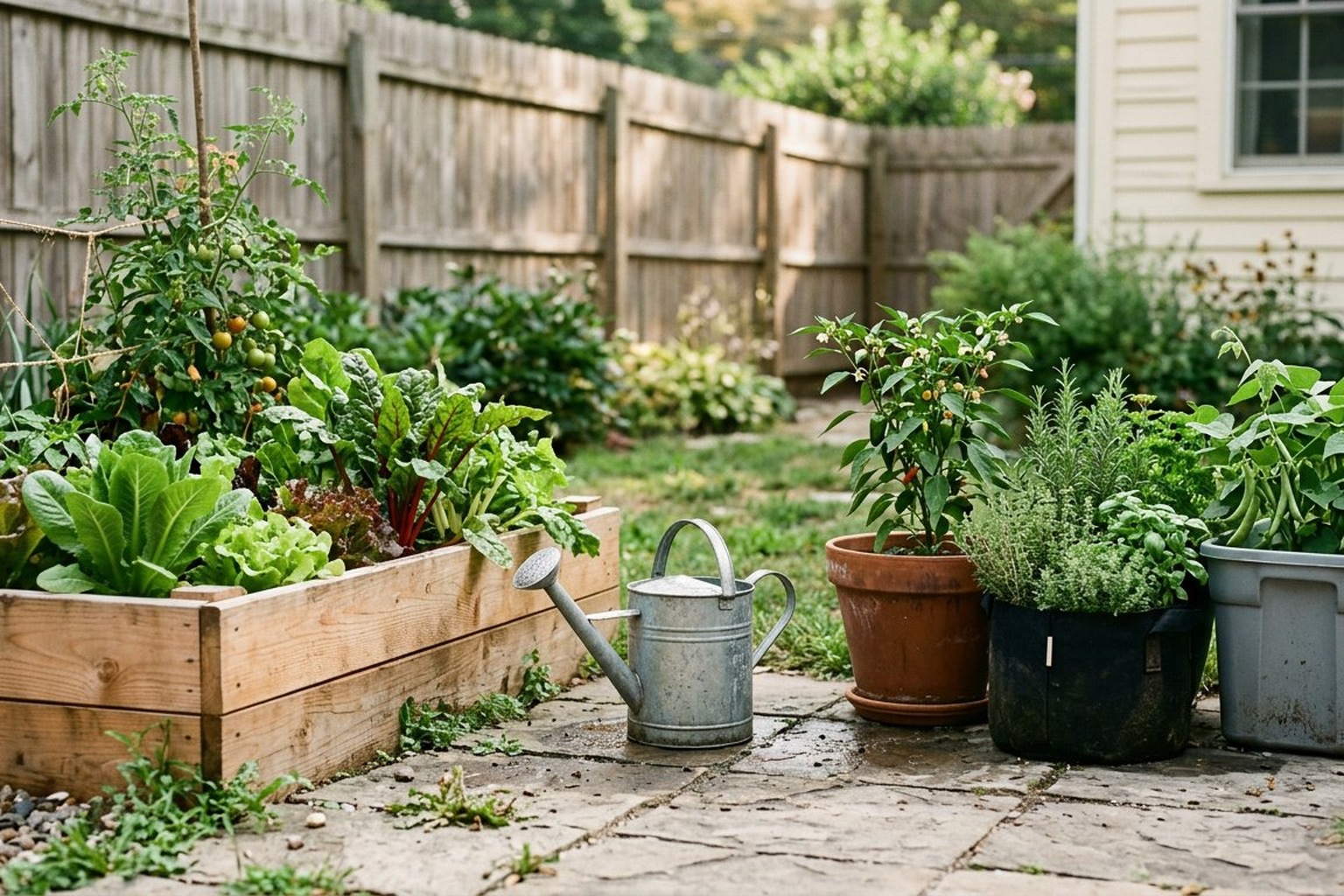
- A mixed, densely planted vegetable garden with many different crops — is genuinely easier to manage in one raised bed than in a scattered collection of a dozen individual pots, since the soil, watering, and mulching are all handled as one unit.
When a raised bed is genuinely the better choice
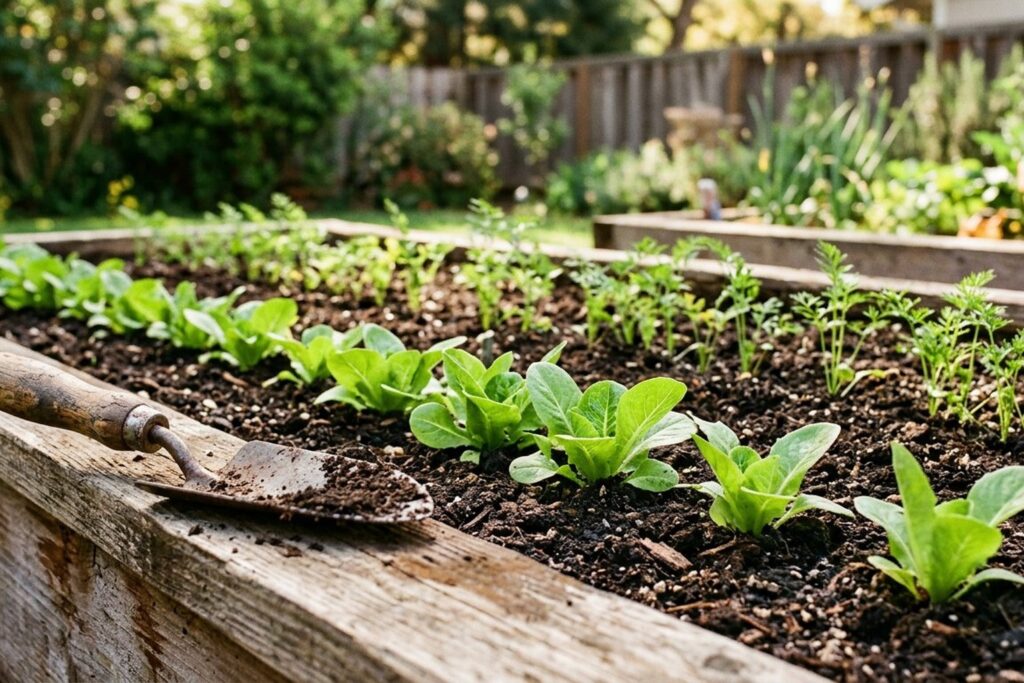
To be fair to raised beds: they’re not just a consolation prize for people with yards. If you own your home, or you’re a renter with a landlord who’s fine with a bed and you plan to stay for years, a raised bed solves problems containers can’t. Clemson Extension calls sites with steep slopes, poor drainage, or rocky, shallow, or low-quality soil ideal for raised beds, since you bring in the growing medium instead of digging out the yard. It also notes that raised beds are easier to look after, because only the defined space inside the bed needs weeding, watering, and mulch, and calls them a good choice for gardeners with physical limitations.
If that’s your situation — a yard, a long time horizon, and a wish list of ten crops instead of three — a bed is worth the bigger upfront cost. If it isn’t, containers will get you a full harvest for a fraction of the money, with the added bonus of taking it all with you the next time you move.
Frequently Asked Questions
Is it cheaper to start with containers or a raised bed?
Containers are much cheaper to start. A 5-gallon pot or grow bag plus a bag of potting mix costs well under $40, while a raised bed needs both a frame and enough soil to fill it, which usually runs into the hundreds of dollars once you add compost and topsoil.
Can I take a raised bed with me if I move?
Generally no. A framed raised bed is a permanent structure, so it typically stays with the property and often becomes the landlord’s when you leave. Containers are the better choice if you expect to move, since you can pack them up and take the soil and plants with you.
Do raised beds need less watering than containers?
Not really — both dry out faster than an in-ground garden. Raised beds hold more total soil volume so they can go slightly longer between waterings than a small pot, but extension guidance still recommends checking them frequently, especially during hot, dry weather.
What size container or raised bed do vegetables need?
Shallow-rooted crops like lettuce and radishes need only 4-8 inches of depth, while tomatoes, peppers, and squash need 12-24 inches, whether that depth comes from a container or a raised bed. Match the depth to the crop, not to the type of structure.
Which is better for a small balcony or patio?
Containers are almost always the right choice for a balcony or patio, since there’s no ground to build a bed into and pots can be sized, arranged, and moved to fit a small footprint in a way a fixed bed can’t.
Next step
If containers are the right call for your space, start with our Start Here guide to plan out your first setup, then check pot size and drainage and the best vegetables for pots to pick sizes and crops that match what you actually have room for.
Sources
- University of Maryland Extension — Soil to Fill Raised Beds
- University of Maryland Extension — Maintaining Container Grown Vegetables
- Purdue Extension — Raised Bed Gardening (HO-200)
- Clemson HGIC — Raised Beds
- Clemson HGIC — Tomatoes in Containers
- NC State Extension Gardener Handbook — Plants Grown in Containers
- University of Illinois Extension — Container Gardens: Watering