
Growing Peppers in Containers: Size, Care & Best Compact Varieties
Peppers make great container plants. They stay fairly compact, they don’t sprawl the way tomatoes do, and one healthy plant can keep you in peppers for weeks. Get a few basics right (a big enough pot, lots of sun, warm temperatures and steady watering) and a balcony or patio pepper will happily out-produce what you’d expect from its size. This guide covers pot sizes in gallons, soil, sun, temperature, watering, feeding, staking and harvesting, plus compact varieties that are proven in containers. We’ll also be straight about timing, since it’s late September and pepper season works differently in fall.
This post contains affiliate links, meaning we may earn a small commission at no extra cost to you — full details are on our Affiliate Disclosure page.
Quick Answer: Pepper Container Basics
| What | What to aim for |
|---|---|
| Pot size | 4–6 gallons for compact/dwarf and most hot peppers; 8–10 gallons for full-size bell peppers |
| Plants per pot | One |
| Soil | Bagged potting mix, never garden soil; pot must have drainage holes |
| Sun | At least 6 hours of direct sun; 8–10 is better |
| Temperature | Move outside once nights stay above 50°F. Flowers drop when nights fall below 50–55°F or it gets very hot (days above 90°F, nights above 70–75°F) |
| Watering | Keep moisture even. Uneven watering leads to blossom-end rot and flower drop |
| Feeding | Light feeding at planting, then again once the first fruits set |
| Harvest | Pick green once full size, or leave on the plant to ripen for sweeter, fully colored fruit. Cut the stems, don’t pull |
| Best time to start | Spring, outdoors. A pepper started in fall has to grow indoors under a grow light |
A Quick Word on Timing (It’s Fall Right Now)
Peppers are warm-season plants and can’t handle frost. Most of the US is only weeks from its first frost, so a pepper planted outside today won’t have time to produce. Outdoor pepper growing normally starts in spring: sow seeds indoors about eight weeks before your outdoor planting date, then move the plants outside once nighttime lows stay above 50°F, according to University of Minnesota Extension.
That leaves you three honest options this fall:
- Already have a potted pepper? You may be able to keep it through winter indoors. See the overwintering section below.
- Want to start one now? You can, but think of it as an indoor project that needs a grow light, not a balcony plant. Stick to a compact variety.
- Planning ahead? Use this guide to pick a pot and a variety now, then plant in spring.
Container Size: How Big a Pot Does a Pepper Need?
Pot size matters more than anything else on this list. University of Maryland Extension recommends at least 4–6 gallons of potting mix (8–12 inches deep) for dwarf peppers, and at least 8–10 gallons (12–16 inches deep) for standard-size plants. Its pepper growing guide gives 5 gallons as the minimum for any container pepper.
In practice:
- Hot peppers and compact varieties (jalapeños, Thai types, snack peppers, patio varieties): a 5-gallon pot works well.
- Full-size bell peppers: go up to 8–10 gallons. Bells carry heavy fruit and need the extra root room and water reserve.
- One plant per pot. Two peppers in a 5-gallon pot compete for water and roots, and you usually end up with less fruit than one plant would have given you.
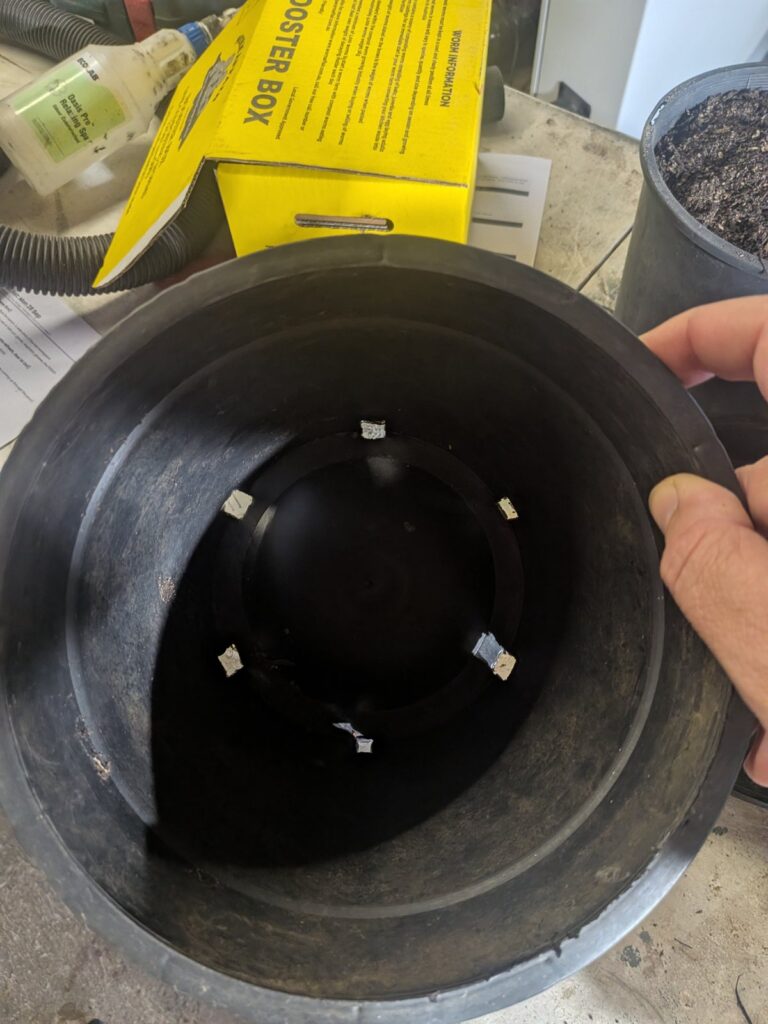
For compact peppers, a set of RooTrimmer 5-gallon nursery pots is an inexpensive choice with good drainage. For bell peppers, Gardzen 10-gallon fabric grow bags fall right in the 8–10 gallon range. They’re light, they fold flat for storage, and they drain very well. That also means they dry out faster in summer heat, so check them often. Whatever you use, it needs holes in the bottom. Our guide to pot size and drainage explains why.
If you’ve grown a tomato in a 5-gallon bucket, the setup is nearly the same. A compact pepper is actually the easier plant of the two for that size.
Soil: Use Potting Mix, Not Garden Dirt
Fill the pot with a fresh bagged potting mix. Garden soil packs down in a container, drains badly, and can carry pests and diseases. Peppers like a well-drained, fertile growing medium that still holds moisture, which is what a good potting mix is made to do. A standard mix such as Miracle-Gro Potting Mix works fine. Just remember that one 8-quart bag won’t fill a 5-gallon pot, which holds roughly 20 quarts, so buy enough. Our soil and fertilizer basics guide covers how to choose a mix.
Sun: 6 Hours Minimum, 8–10 Is Better
Peppers need full sun. University of Maryland Extension defines that as at least 6 hours of direct light a day and notes that peppers do best with 8–10. On a balcony, watch how many hours of direct sun each spot actually gets before you pick one. A south- or west-facing spot is usually best. If you only get 4–5 hours, you’ll still have a plant, but expect fewer peppers.
Temperature: Why Peppers Drop Their Flowers
Peppers are picky about temperature, and the first sign of trouble is usually flowers falling off before they set fruit. The key numbers from extension sources:
- Too cold: University of Illinois Extension says that when nights drop below 50–55°F, plants grow slowly, leaves may yellow, and flowers drop. Frost kills them outright.
- Too hot: University of Minnesota Extension advises keeping plants out of conditions above 90°F, or night temperatures above 70°F. University of Maryland Extension notes that nights above 75°F can slow or stop pepper production.
- Planting out: wait until nighttime lows stay above 50°F. Maryland Extension adds that soil should be at least 65°F, or the plants stall.
Pots help with both problems because you can move them. In a midsummer heat wave, slide the pot to a spot with afternoon shade. In a cold snap, bring it inside overnight. If your plant flowers heavily in July and sets nothing, heat is the usual cause. It generally starts fruiting again once the nights cool down.
Watering: Steady Moisture Prevents Blossom-End Rot
Blossom-end rot shows up as a sunken, dark, leathery patch on the bottom of the fruit, and it’s a common container pepper problem. University of Illinois Extension links it to drought and uneven water supply. UMN Extension recommends consistent soil moisture to prevent it. Dry spells also cause flower drop and small fruit.
Pots dry out much faster than garden beds, so “even moisture” takes some attention:
- Stick a finger into the mix. If the top inch or two is dry, water until it runs out the bottom of the pot.
- In hot summer weather, a 5-gallon pot or fabric bag may need water every day, occasionally twice.
- Don’t swing between bone-dry and soggy. That cycle is what leads to rot and dropped flowers.
- An inch of mulch (shredded leaves or straw) on top of the mix slows evaporation.
For a full routine by season and pot type, see how often to water container vegetables.
Feeding: Go Easy, Especially Early
Extension sources give a simple plan: a light starter feeding at planting, then a second feeding (side-dressing) once the first peppers have set. West Virginia University Extension’s guide to growing Lunchbox peppers uses a balanced fertilizer such as 10-10-10 at planting and adds more once fruit is visible. Container plants get watered often, which washes nutrients out, so a diluted liquid feed every couple of weeks after fruit set is a reasonable alternative. Follow the label.
What about nitrogen? UMN Extension warns that too much nitrogen makes plants “bushy, leafy and slow to bear fruit.” University of Illinois Extension points out that peppers can fruit well even under very high fertility, and that nitrogen often gets blamed when the real cause of poor fruiting is heat or dry soil. The practical takeaway: don’t push a high-nitrogen lawn-type fertilizer, and if a leafy plant isn’t fruiting, check temperature and watering before you blame the fertilizer.
Staking: A Little Support Saves Branches
University of Maryland Extension notes that pepper stems can become brittle and recommends supporting plants with cages or short trellises. In a pot, one sturdy stake pushed in at planting time is usually enough. Putting it in later can stab the roots. Loosely tie the main stem to it as the plant grows. Full-size bells with heavy fruit benefit most. Very compact varieties often need no support at all.
Harvesting: Green or Ripe?
A green bell pepper is simply an unripe pepper, and it’s fine to eat. UMN Extension notes that you don’t need to wait for red, since many varieties taste good green. If you leave the fruit on the plant, it ripens to its final color (red, yellow, orange and so on). University of Maryland Extension says fully colored peppers are sweeter and higher in vitamins A and C.
- Ripening takes extra time. All-America Selections lists the compact jalapeño ‘Pot-a-peno’ at 45–50 days from transplant for green fruit and 60–65 days for red, so allow a couple of extra weeks for color.
- Picking green first can increase yield. An early harvest lets the plant put energy into new fruit, which helps when the season is short.
- Cut, don’t pull. Use scissors or pruners. Maryland Extension warns that pulling can break branches.
- At the end of the season, if frost is coming and fruit is still green, pick everything. Green peppers are perfectly usable.
Compact Pepper Varieties That Suit Pots
Every variety below is listed by All-America Selections (an independent trialing organization) or a university extension service as suited to containers. Heights and days come from those listings.
| Variety | Type | Plant size | Days from transplant | Suggested pot |
|---|---|---|---|---|
| ‘Quickfire’ F1 (AAS 2022) | Hot, Thai-type (about 40,000 Scoville) | Very compact, about 6 in. tall | 50 | 3–5 gal |
| ‘Pot-a-peno’ F1 (AAS 2021) | Jalapeño | 12–15 in., bushy and mounded | 45–50 green; 60–65 red | 5 gal (AAS says 10–12 in. pots work) |
| ‘Sweetie Pie’ F1 (AAS 2017) | Sweet mini bell, 2.5–3 in. | 24–28 in. tall, 28–36 in. wide | 60–70 | 5–10 gal |
| ‘Chili Pie’ F1 (AAS 2017) | Mildly hot mini bell | 18–32 in. tall, 2–3 ft. wide | 65–70 | 5–10 gal |
| ‘Lunchbox’ (Red, Orange, Yellow) | Sweet snack pepper | 24–36 in. tall | About 60–70 | 3–5 gal minimum, per WVU Extension |
AAS describes ‘Quickfire’ as “perfect for container gardening,” ‘Pot-a-peno’ as compact enough for containers and hanging baskets, and ‘Sweetie Pie’ as “well-adapted to a container and small garden growing.” If you want one pepper for a first try, ‘Pot-a-peno’ or ‘Sweetie Pie’ in a 5-gallon pot fits our “One Plant, One Pot, One Harvest” approach well. For more crops that do well in small spaces, see our list of the best vegetables for pots.
Overwintering a Potted Pepper Indoors
Many people don’t know this: in their native tropical range, peppers are perennials. University of Maryland Extension calls the pepper a “very tender warm-season perennial, grown as an annual.” Since yours is already in a pot, you can bring it inside before frost and try to keep it alive until spring.
An Ask Extension expert (the Cooperative Extension network’s Q&A service) describes two ways to do it:
- Keep it growing: nights above 50°F and days around 70°F, with artificial lighting. A windowsill alone isn’t enough in winter. You may need to hand-pollinate any flowers, since there are no insects indoors. A small paintbrush works.
- Let it go dormant: trim the plant back, keep it in a cool spot, and water only sparingly until spring.
Some honest caveats. The same expert notes that sweet peppers are less resilient than hot peppers. A Texas A&M AgriLife Extension Q&A goes further and advises against overwintering bell peppers, because survivors don’t usually produce well the following year. Overwintering is most worthwhile with a hot pepper or a variety you really love. Before you bring any plant inside, check it for aphids and other pests.
For the full decide-and-move process across all your container vegetables, not just peppers, see bringing your container vegetable garden indoors for winter.
Starting Peppers in Fall: An Indoor Project
You can start pepper seeds in September or October. Just be realistic about what you’re taking on. Pepper seeds germinate best at 80–90°F (UMN Extension suggests a heat mat), seedlings take around eight weeks to reach transplant size, and most varieties need another 50–70 days after that to produce. A fall-sown pepper will spend the entire winter indoors, and short winter days mean it needs a grow light running most of the day. Start with a very compact variety like ‘Quickfire’ or ‘Pot-a-peno’ so it fits under the light. Our grow light guide covers setups that work in apartments.
If that sounds like more than you want to take on, that’s fine. Spring is the normal start, and in the meantime there are easier crops to grow over winter.
Pepper Container FAQ
Can I grow two pepper plants in one 5-gallon pot?
It’s better not to. University of Maryland Extension’s guidance is 4–6 gallons for a single dwarf pepper and 8–10 gallons for a standard one. Two plants in 5 gallons compete for water and nutrients, and they dry out faster, which raises the risk of blossom-end rot.
Why is my pepper plant flowering but not making peppers?
Temperature is the usual cause. Nights below 50–55°F, or heat above 90°F by day and 70–75°F at night, make flowers drop. Dry soil does it too. Keep watering steadily and wait for milder weather. Fruit set usually picks back up on its own.
Are green peppers just unripe red peppers?
For most varieties, yes. Green is the immature stage. Leave the fruit on the plant a couple of weeks longer and it turns its mature color and gets sweeter. A few varieties have white, lilac or purple immature fruit, which University of Illinois Extension says should be picked before they turn red.
Can a pepper plant live more than one year?
Yes. Peppers are perennials in frost-free climates, and a potted plant can be overwintered indoors under lights or kept dormant in a cool room. Hot peppers usually handle it better than bells.
Your Next Step
If a pepper is already on your balcony, check the forecast, and when nights head toward 50°F, decide whether it comes inside or you pick everything. If you’re starting fresh, choose one compact variety and one 5-gallon pot for spring. Want something to grow this winter in the meantime? Our indoor winter vegetable gardening guide covers crops that are much easier than peppers in the cold months.