Tomatoes in a 5-Gallon Bucket: What Actually Works
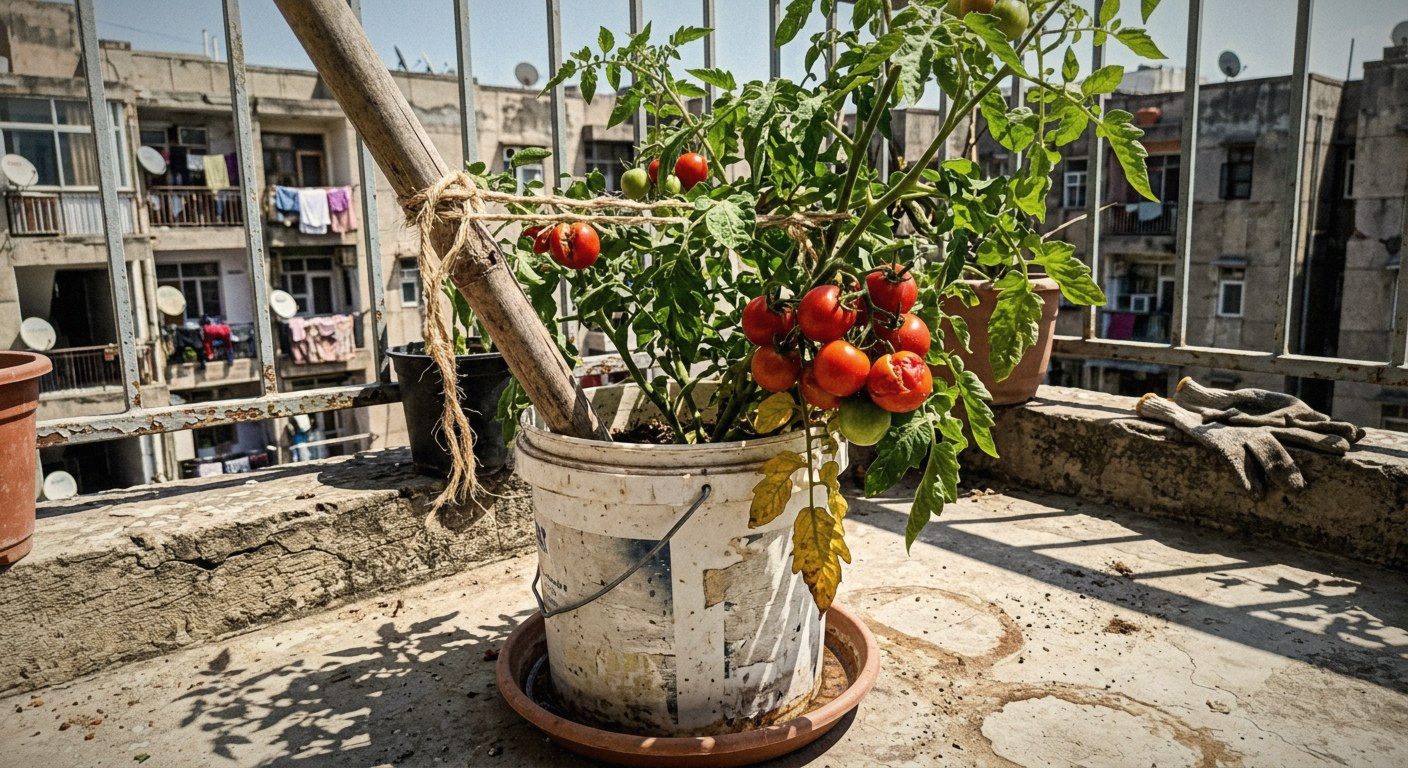
Growing tomatoes in a 5-gallon bucket sounds like a stretch, but it works — as long as you pick a variety bred for containers and give it what a bucket can’t provide on its own. Get those two things right and that same bucket can carry a compact plant through a full season of real tomatoes, not just a few sad fruit.
This post contains affiliate links, meaning we may earn a small commission at no extra cost to you — full details are on our Affiliate Disclosure page.
Quick answer: Yes, a 5-gallon bucket works for one tomato plant, and it is the minimum extension guides list for a standard tomato. Pick a compact patio, bush or dwarf variety, drill drainage holes, fill it with potting mix rather than garden soil, and put the stake in before the soil. Give it at least six hours of direct sun and check the soil every day, twice on hot days. Steady watering is what prevents blossom end rot and split fruit.
In this guide: Is 5 gallons enough? · Drainage · Varieties · Soil · Planting · Support · Watering · Sun · Problems · Harvest · FAQ
Can You Really Grow Tomatoes in a 5-Gallon Bucket?
Yes. Five gallons is the minimum that University of Maryland, Virginia Tech and Texas A&M extension guides all give for a standard tomato (see our pot size chart). It is a minimum, though. A “patio,” bush or dwarf variety is comfortable in it. A sprawling indeterminate slicer like Beefsteak or Cherokee Purple will grow, but it outgrows its support and can need water twice a day in midsummer, so give those a bigger container if you can. Match the plant to the bucket first, and most of the rest of this guide takes care of itself.
Choose a Bucket With Real Drainage
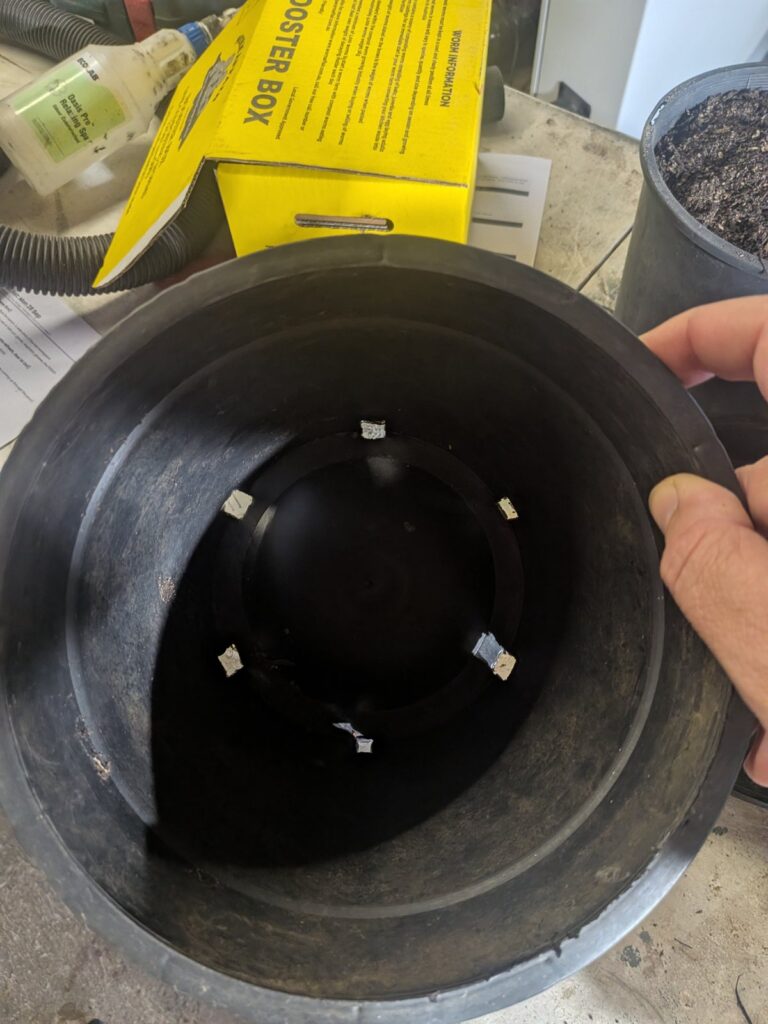
Almost any five-gallon bucket works, food-grade ones only, never one that held chemicals or paint. The bucket itself matters less than what you do to it before filling it with soil. Our guide to pot size and drainage covers exactly how many holes to drill and where to put them, but the short version is this: a bucket with no drainage holes leaves the roots sitting in water, and a waterlogged tomato goes downhill fast no matter how careful you are with watering. Prefer to skip drilling holes yourself? RooTrimmer’s 5-gallon plastic nursery pots come with drainage holes already punched in.
Pick a Tomato Variety Built for a Bucket
This is the step most bucket-tomato attempts skip, and it’s the one that decides whether you get a harvest at all. Look for anything labeled “patio,” “bush,” or “dwarf” on the seed packet or plant tag. A few reliable options:
- Patio Princess — a compact plant about 18–24 inches tall with round, 2½–3-inch fruit.
- Tumbling Tom — a trailing cherry tomato that looks good spilling over the bucket’s rim.
- Better Bush — a sturdy, thick-stemmed bush with medium-large fruit. Give it a cage.
- Bush Early Girl — an early, dependable producer bred to stay compact.
- Tiny Tim — the smallest option at about 12–15 inches tall (Virginia Tech), with cherry-size fruit, good if the bucket needs to sit on a narrow railing shelf or windowsill.
If you’re still deciding what to grow alongside it, our container vegetable roundup has more compact varieties worth trying in the same setup.
Fill It With the Right Mix, Not Garden Soil
Garden soil compacts hard inside a bucket and drains poorly. Use a bagged potting mix instead, ideally one with compost or aged manure already worked in — Espoma’s Organic Potting Mix (blended with earthworm castings and kelp meal) is a reliable option. Our soil and fertilizer basics guide walks through why container plants need a different mix than an in-ground bed, and the same rules apply here. Mix in a slow-release vegetable fertilizer at planting time. Virginia Tech notes that a mix with fertilizer added feeds plants for about eight to ten weeks; after that, use a water-soluble fertilizer every two to three weeks. A bucket’s soil runs out of nutrients faster than a garden bed simply because there’s less of it.
Plant It the Right Way
Bury the stem deeper than the plant came in its nursery pot, right up to the first set of leaves (pinch off any leaves that would end up below the soil). Tomatoes grow roots along any buried stem, and a deeper start means a sturdier plant later. Water it in well right after planting, then leave it alone for a few days before the next watering to let the roots settle.
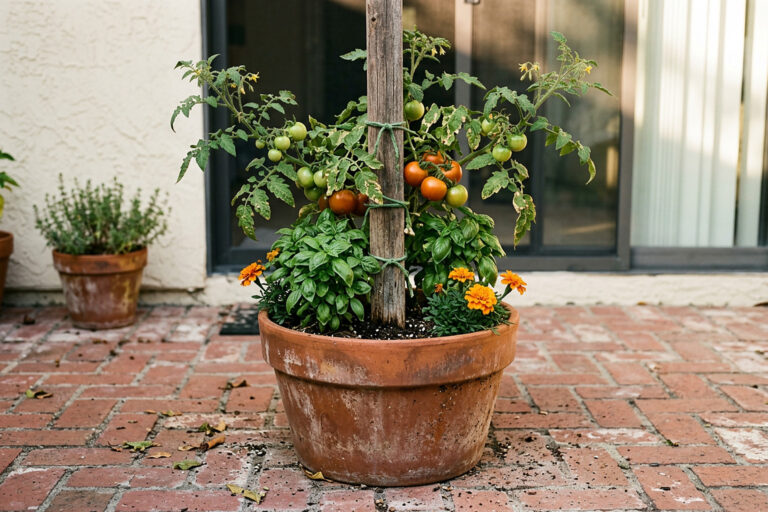
Tempted to tuck basil in beside your tomato? Keep the 5-gallon bucket for the tomato alone. Our guide to companion planting in containers explains which pairings need a 10-gallon pot.
Give It Something to Lean On
Even compact varieties need support once fruit weighs the branches down. Push a stake to the bottom of the bucket before you fill it with soil, not after, so it doesn’t damage the roots later. A small tomato cage that fits inside the rim works just as well. Tie the main stem loosely as it grows, checking every couple of weeks so the ties don’t cut into the stem.
Water Like the Bucket Depends on It, Because It Does
A five-gallon bucket dries out far faster than garden soil, especially once the plant is fruiting. A few habits make the difference:
- Check the soil at least once a day, and twice on hot, dry or windy days, as Virginia Tech advises. Stick a finger two inches down; water if it’s dry.
- Water at the base of the plant, not over the leaves, to keep foliage disease down.
- Add a layer of mulch on top of the soil to slow evaporation.
- Keep watering consistent. Letting the bucket dry out, then soaking it, is what causes blossom end rot and split fruit.
Want fewer waterings and less blossom end rot? You can turn two buckets into a self-watering planter. Our guide on whether self-watering containers are worth it includes the two-bucket build.
Give It Sun, at Least Six Hours of It
Tomatoes need at least six hours of direct sun a day to fruit, and Virginia Tech notes fruiting crops do better with eight to ten. Track the light on your balcony or patio for a day before you commit to a spot, since a corner that looks bright can still fall short of six hours. If you’re gardening on a rented balcony without permanent fixtures, our renter’s setup guide has ways to track and chase the light without drilling anything.
Common Problems in a Small Bucket, and What They Mean
- Blossom end rot (a dark, sunken patch on the fruit’s bottom) — the fruit is short on calcium, but the soil usually isn’t. Uneven watering stops calcium from reaching the fruit, so steady watering fixes it far more reliably than calcium additives (UConn Extension).
- Split or cracked fruit — usually a sudden heavy watering after the bucket ran too dry.
- Yellowing lower leaves — often just normal aging as the plant redirects energy to fruit, but check for a nitrogen top-up if it spreads upward.
- Leggy, stretched growth — a sign the spot isn’t getting enough direct light.
When to Harvest
Pick tomatoes once they’ve reached full color for the variety and give slightly under gentle pressure. A ripe tomato twists off the vine with barely any effort. Once the plant is fruiting steadily, check it every couple of days. Bucket-grown tomatoes ripen fast in warm weather, and a fruit left too long tends to split or draw pests.
A five-gallon bucket was never the limiting factor. The variety, the soil, and a watering routine that doesn’t swing between bone-dry and soaked are what decide whether you get a real harvest. Start with a container-bred variety and the rest is mostly just showing up with the watering can. New to container vegetables generally? Start Here walks through the basics before you plant your first pot.
And if a plant is already struggling, our guide to diagnosing dying container vegetables by symptom covers the most common causes.
If you’d rather grow that tomato indoors year-round, our guide to grow tents for vegetables covers the setup that makes it possible.
Frequently Asked Questions
How many tomato plants can I grow in a 5-gallon bucket?
One. Five gallons is the minimum University of Maryland, Virginia Tech and Texas A&M extension guides give for a single standard tomato, so there is no room for a second tomato or a basil plant beside it.
Do I need to drill holes in a 5-gallon bucket for tomatoes?
Yes. Without drainage holes, water collects at the bottom and the roots sit in it. Drill several holes in the base, or use a nursery pot that already has them.
How often should I water a tomato in a 5-gallon bucket?
Check it every day and water when the top two inches of mix are dry. Virginia Tech advises checking twice a day in hot, dry or windy weather, because a fruiting plant can empty a bucket quickly.
What causes blossom end rot on bucket tomatoes?
The fruit is short on calcium, but the soil usually is not. Uneven watering stops calcium from reaching the fruit, so keeping the mix evenly moist and mulching the top works better than adding calcium.
What are the best tomatoes for a 5-gallon bucket?
Compact varieties labeled patio, bush or dwarf, such as Patio Princess, Tumbling Tom, Better Bush, Bush Early Girl and Tiny Tim.
How much sun does a bucket tomato need?
At least six hours of direct sun a day. Virginia Tech notes fruiting crops do better with eight to ten hours.