Pot Size and Drainage: The Container Rules That Actually Matter
Quick answer: Every container needs drainage holes, and nothing (no gravel, rocks or pot shards) in the bottom. Leafy greens and radishes grow in ½–2 gallons. Bush beans, carrots, chard and cherry tomatoes need about 2 gallons. Standard tomatoes, peppers, cucumbers, eggplant and cabbage need at least 5 gallons, and summer squash does best in 10. Those are minimums: a pot one size bigger dries out more slowly. The full chart for 25 crops is below.
Most container vegetable problems trace back to one of two things: a pot that’s too small for what’s growing in it, or a pot that can’t drain. Get those two decisions right and almost everything else — watering schedule, feeding, even pest pressure — gets easier. Here’s what actually matters when you’re choosing a container, and what doesn’t.
This post contains affiliate links, meaning we may earn a small commission at no extra cost to you — full details are on our Affiliate Disclosure page.
In this guide: Why size and drainage matter · Sizing by plant type · Pot size chart · Drainage · Materials · Self-watering pots · Common mistakes · FAQ
First pot ever? Our beginner’s walk-through puts these rules to work on one 12-inch pot of lettuce, from empty pot to first harvest.
Why Size and Drainage Matter More Than Anything Else
A pot that’s too small forces roots to circle and choke the plant, dries out within hours on a hot afternoon, and stunts everything from leaf size to fruit set. A pot without real drainage does the opposite kind of damage — it holds water around the roots until they rot, often before you notice anything wrong above the soil line. Both mistakes are completely avoidable, and neither has anything to do with how much you spend on the container.
Sizing Your Container by Plant Type
As a rule of thumb, container size should scale with a plant’s root system and mature size, not just how big the seedling looks on day one. Leafy greens and small herbs are shallow-rooted and do fine in ½–2 gallon containers, though big herbs like rosemary, sage and parsley want 5 gallons or more, according to University of Maryland Extension. Compact or dwarf vegetable varieties can often succeed in 3-5 gallons. Full-size tomatoes, peppers, and other heavy fruiting plants need more room to establish a deep root system and stay hydrated through a hot week — that’s why our container guide for specific crops recommends larger pots for those plants. When in doubt, go one size up: UMD notes that small containers dry out faster than large ones, and that restricting roots too much means plants won’t grow well. Just don’t move a tiny seedling straight into a huge pot (see Common Mistakes below).
Peppers are a good example: dwarf types are happy in 4–6 gallons, while full-size bells want 8–10, as covered in our pepper container guide.
Pot Size Chart: 25 Vegetables and Herbs
The minimums below come from four extension guides: University of Maryland (UMD), Virginia Tech (VT), Texas A&M (TAMU) and Colorado State (CSU). They don’t always agree, so both figures are shown. The larger number is the safer choice on a hot, windy balcony. Days to harvest are Virginia Tech’s ranges and vary by variety. “—” means none of the guides gave a figure.
| Crop | UMD minimum | Other extension minimums | Light | Days to harvest (VT) |
|---|---|---|---|---|
| Radishes | 1 pint | 1 pint (VT) | Sun or part shade | 25–35 |
| Lettuce, leaf | ½ gal | ½ gal (VT); 1 gal for 2 plants (TAMU) | Part shade OK | 30–35 |
| Mustard greens | — | ½ gal (VT) | Part shade OK | 35–40 |
| Spinach | — | 1 gal for 2 plants (TAMU); 8 in deep (CSU) | 6+ hours (CSU) | — |
| Beets | ½ gal | ½ gal (VT); 8 in deep (CSU) | Sun or part shade | 50–60 |
| Swiss chard | 2 gal | ½ gal (VT) | Sun or part shade | 30–40 |
| Green onions | — | ½ gal (VT); 1 gal for 3–5 plants (TAMU) | Sun or part shade | 70–100 |
| Carrots | 2 gal | 1 qt for short types (VT); 12 in deep (CSU) | Sun or part shade | 65–80 |
| Beans, bush | 2 gal | 2 gal (VT, TAMU) | Full sun | 45–60 |
| Peas (dwarf) | — | 8 in deep (CSU) | Full sun | — |
| Turnips | — | 3 gal (VT); 2 gal for 2 plants (TAMU) | Sun or part shade | 30–60 |
| Tomato, cherry | 2 gal | 1 gal (VT) | Full sun | 55–100 |
| Tomato, standard | 5 gal | 5 gal (VT, TAMU); 12 in deep (CSU) | Full sun | 55–100 |
| Peppers | 5 gal | 2 gal (VT); 2–5 gal (CSU) | Full sun | 110–120 |
| Eggplant | 5 gal | 5 gal (VT, TAMU) | Full sun | 75–100 |
| Cucumbers | 5 gal | 5 gal (VT); 3+ gal (CSU) | Full sun | 70–80 |
| Squash, summer | 10 gal | 5 gal (VT, TAMU, CSU) | Full sun | 50–60 |
| Melons (compact) | — | 5+ gal per plant (CSU) | Full sun | — |
| Cabbage | 5 gal | 5 gal (VT) | Sun or part shade | 65–120 |
| Kale | — | 5 gal (VT, CSU) | Sun or part shade | 55–65 |
| Broccoli | — | 2 gal (TAMU); 5 gal (CSU) | 8 hours (CSU) | — |
| Potatoes | 5 gal fabric bag for 3 seed pieces | — | Full sun | — |
| Parsley | 5 gal+ | 1 gal for 3 plants (TAMU) | Part shade OK | — |
| Rosemary, sage, bay, lavender | 5 gal+ | — | Full sun | — |
| Dill, fennel | 5 gal+ | — | Full sun | — |
What can you plant right now? Our planting planner checks your pot size and frost dates and lists what is in season for you.
A few rules sit behind the numbers. UMD notes that bush, dwarf or compact varieties can go in smaller containers than full-size ones. VT says most plants need containers at least 6–8 inches deep. For more than one plant per pot, multiply: a 5-gallon pot is one tomato, not two. For crop-by-crop detail, see our guides to peppers and the best vegetables for pots.
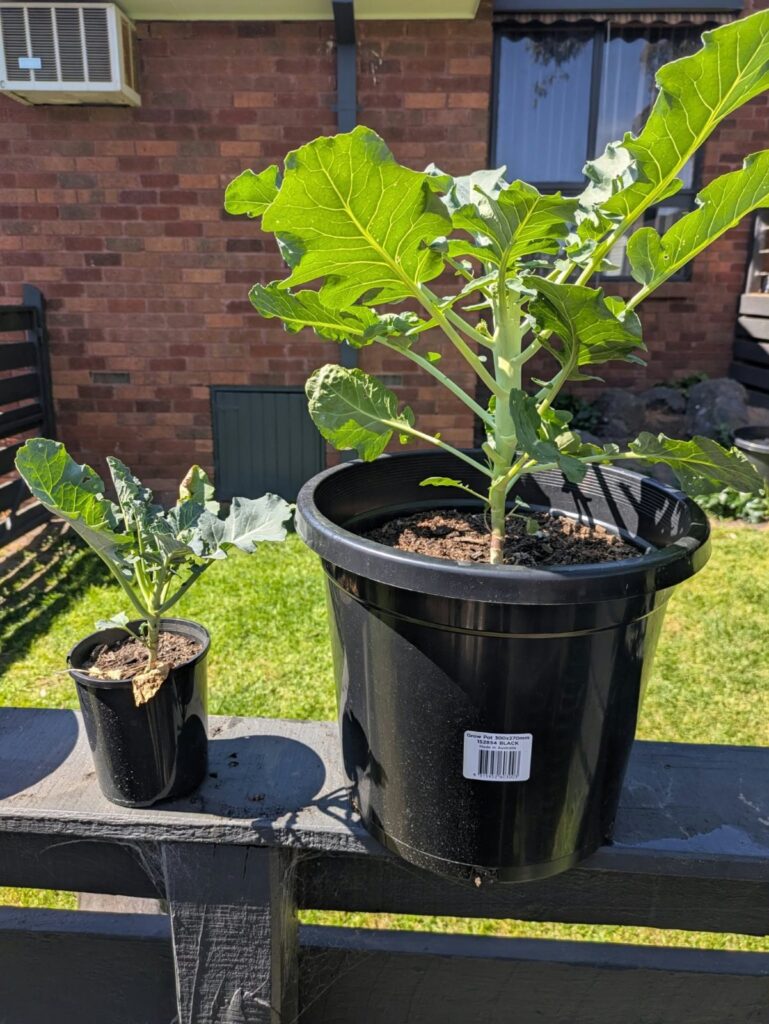
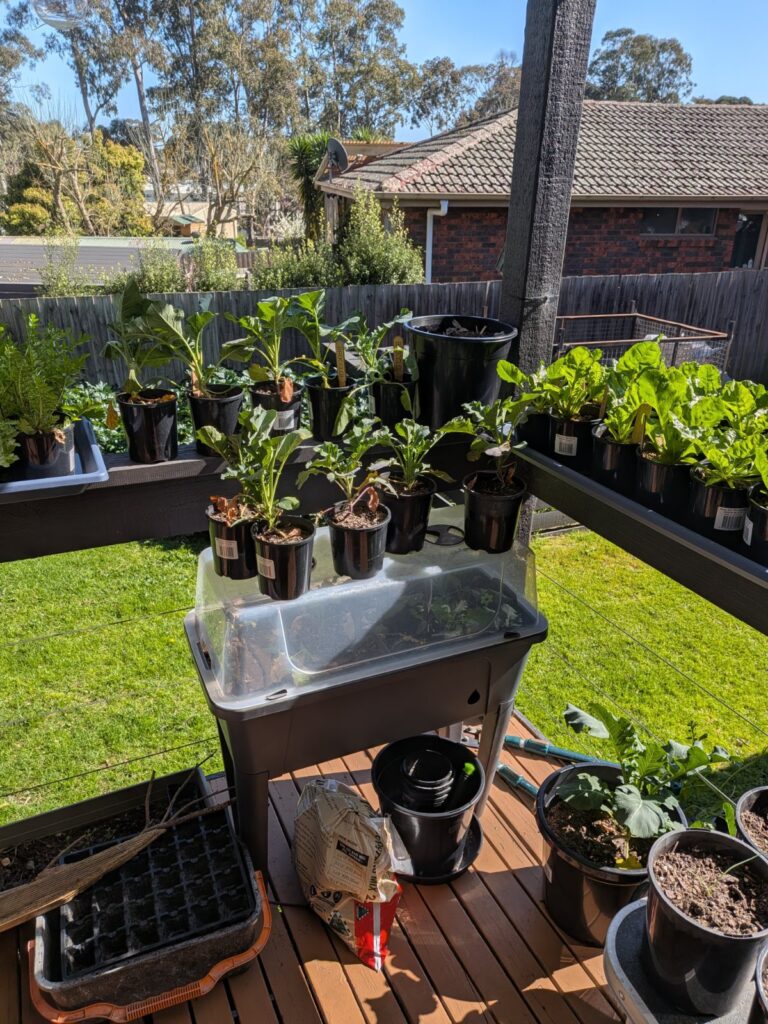
What this looks like in real life: these two broccoli plants in our Test Garden were sown at the same time. The one on the right is in a 300 × 270 mm pot (about 12 inches wide and 10½ inches deep, roughly 4 gallons). The one on the left stayed in a 5-inch nursery pot, which holds under half a gallon. Both grew in the same spot and were watered at the same time. The chart’s broccoli minimums are 2 gallons (TAMU) and 5 gallons (CSU). The big pot sits between them; the small one is nowhere close, and the plant shows it: a fraction of the size, with its lowest leaves already yellowing.
Drainage Is Non-Negotiable
Every container needs drainage holes, no exceptions. University of Maryland Extension says all containers need “adequate holes or slits” so roots don’t drown and rot. Don’t trust a single small hole in a decorative pot, because it clogs. Drill more, or use the pretty pot as an outer sleeve around a plain plastic pot that drains.
Skip the gravel layer. Plenty of older advice says to put gravel or broken pottery in the bottom for drainage (even a 2010 Texas A&M bulletin suggests it). UMD’s current guidance is clear: don’t add gravel, rocks or pot shards to the bottom, because they take up root space and can make drainage worse. Water doesn’t pass easily from fine potting mix into coarse gravel, so the soggy zone just sits higher in the pot. Fill the whole container with potting mix instead.
Don’t let the pot sit in a full saucer, where water can wick back up. Pot feet, a couple of bricks or even bottle caps under the rim let it drain freely. When you water, keep going until water runs out of the bottom. That tells you the whole root ball got wet, not just the top inch.
Choosing a Material
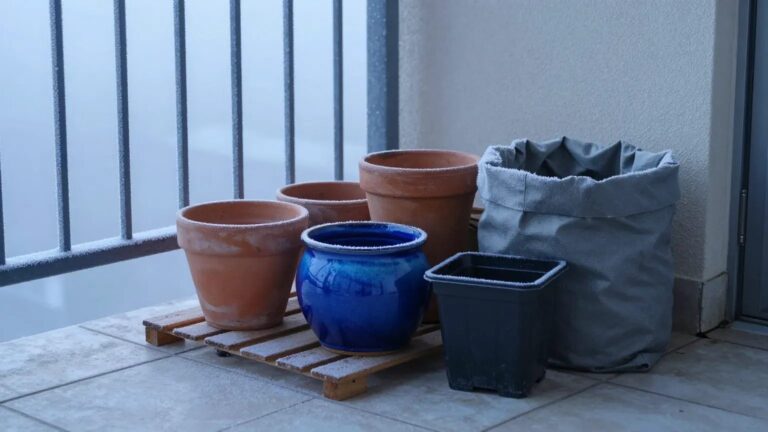
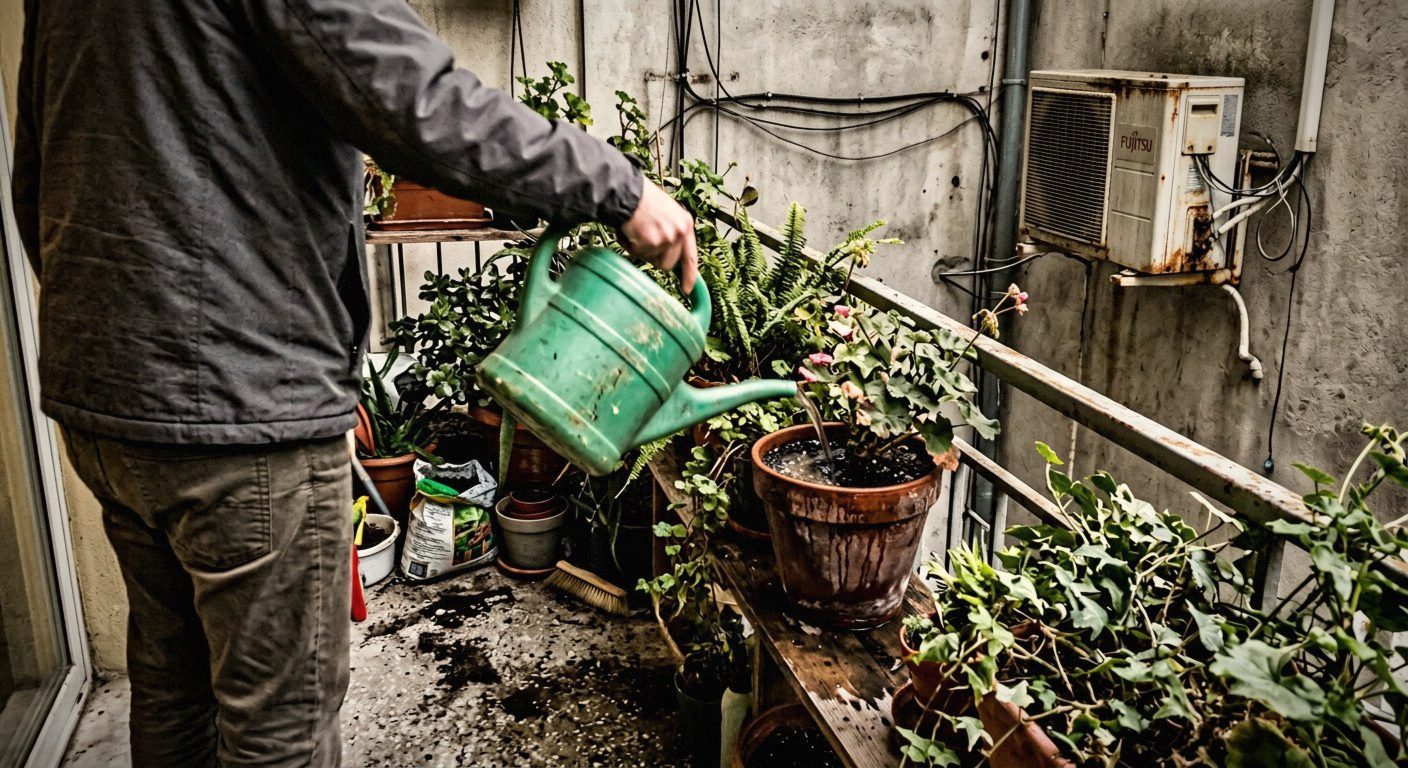
Plastic and resin pots are lightweight, inexpensive, and hold moisture longer between waterings — a real advantage on a hot balcony. Unglazed terracotta and other porous materials breathe and wick excess moisture away, which some growers prefer for plants that are sensitive to soggy roots, but they also dry out faster and need more frequent watering. Fabric grow bags fall somewhere in between: they drain freely and “air prune” roots at the fabric wall instead of letting them circle, which can produce a healthier root system, though they dry out faster than rigid plastic and need more frequent watering. Whatever material you choose, dark-colored containers absorb more heat in direct sun, which can stress roots on the hottest days — worth factoring in if your pots sit in full sun for most of the afternoon.
Are Self-Watering Containers Worth It?
Self-watering containers use a water reservoir in the base and a wicking system to pull moisture up into the soil as the plant needs it, instead of relying on you to water from the top on a schedule. The main benefit is consistency: plants are less likely to swing between bone-dry and soaked, which matters most for thirsty crops like tomatoes and cucumbers during hot stretches. They’re not maintenance-free, though — the reservoir still needs regular refilling, and in a stretch of heavy rain an outdoor self-watering pot needs an overflow hole so it doesn’t just become a different way to drown the roots. For a renter or beginner who tends to under-water, they’re a solid upgrade; for someone who already waters consistently, a well-drained standard pot works just as well.
For the full pros and cons, plus a cheap two-bucket DIY build, see our guide: are self-watering containers worth it?
Common Mistakes
Choosing a pot by looks alone is the most common one — a container that photographs beautifully but has no drainage hole (or one tiny hole that clogs with the first watering) sets a plant up to fail from day one. A close second is “upsizing” a struggling plant into a container that’s too big too fast, which can leave excess soil staying wet for days and inviting the same root problems as poor drainage. And a surprisingly common third: reusing a container from a previous plant without checking that its drainage holes are still clear, especially after a winter of sitting outside collecting debris.
Get the size and drainage right and you’ve solved the two problems that sink most container vegetable gardens before they even get started. Once your containers are sorted, what you put in them matters just as much — see our Soil and Fertilizer Basics for Container Vegetables guide for the potting mix and feeding routine that keeps them productive. From here, browse Soil Water and Container Care for more on keeping your setup healthy long-term, check Recommended Gear if you’re shopping for containers, or head back to Start Here if you’re just getting your pot garden off the ground.
If something’s already going wrong despite the right pot, our guide to diagnosing dying container vegetables by symptom can help you find the cause.
Once your container and drainage are sorted, watering habits are the next thing worth getting right — see our guide to how often to water container vegetables by plant type.
Frequently Asked Questions
What size pot do I need for a tomato?
At least 5 gallons for a standard tomato, per University of Maryland, Virginia Tech and Texas A&M Extension, and about 12 inches deep (Colorado State). Cherry tomatoes can get by in 1–2 gallons, but a bigger pot dries out more slowly.
Should I put rocks or gravel in the bottom of a pot?
No. University of Maryland Extension advises against gravel, rocks or pot shards in the bottom, because they take up root space and can make drainage worse. Fill the pot with potting mix and make sure it has real drainage holes.
How deep does a container for vegetables need to be?
Virginia Tech Extension says most plants need at least 6–8 inches. Deep-rooted crops need more: Colorado State suggests about 12 inches for tomatoes and carrots, and short carrot varieties are the easiest choice for pots.
Is a bigger pot always better?
Up to a point. Larger pots dry out more slowly, and UMD warns that restricted roots lead to poor growth. But moving a small seedling straight into a huge pot leaves a lot of soil that stays wet. Pot up one size at a time, or plant directly into the final pot and water lightly until roots fill it.
What can I grow in a 1-gallon pot?
Radishes, leaf lettuce, mustard greens, beets and green onions all have extension minimums of 1 gallon or less, and small herbs do well too. Texas A&M suggests a 1-gallon pot for two lettuce plants, two spinach plants or three to five green onions.
Sources we checked
- University of Maryland Extension: Growing Vegetables in Containers and Salad Tables
- University of Maryland Extension: Types of Containers for Growing Vegetables
- Virginia Cooperative Extension (Virginia Tech): Vegetable Gardening in Containers
- Texas A&M AgriLife Extension: Vegetable Gardening in Containers (E-545)
- Colorado State University Extension: Vegetable Gardening in Containers
If a plant that looked fine last week is suddenly wilting, yellowing, or dropping leaves, pot size and drainage are two of the most common root causes. Our full guide to diagnosing container vegetable problems by symptom walks through the complete list.