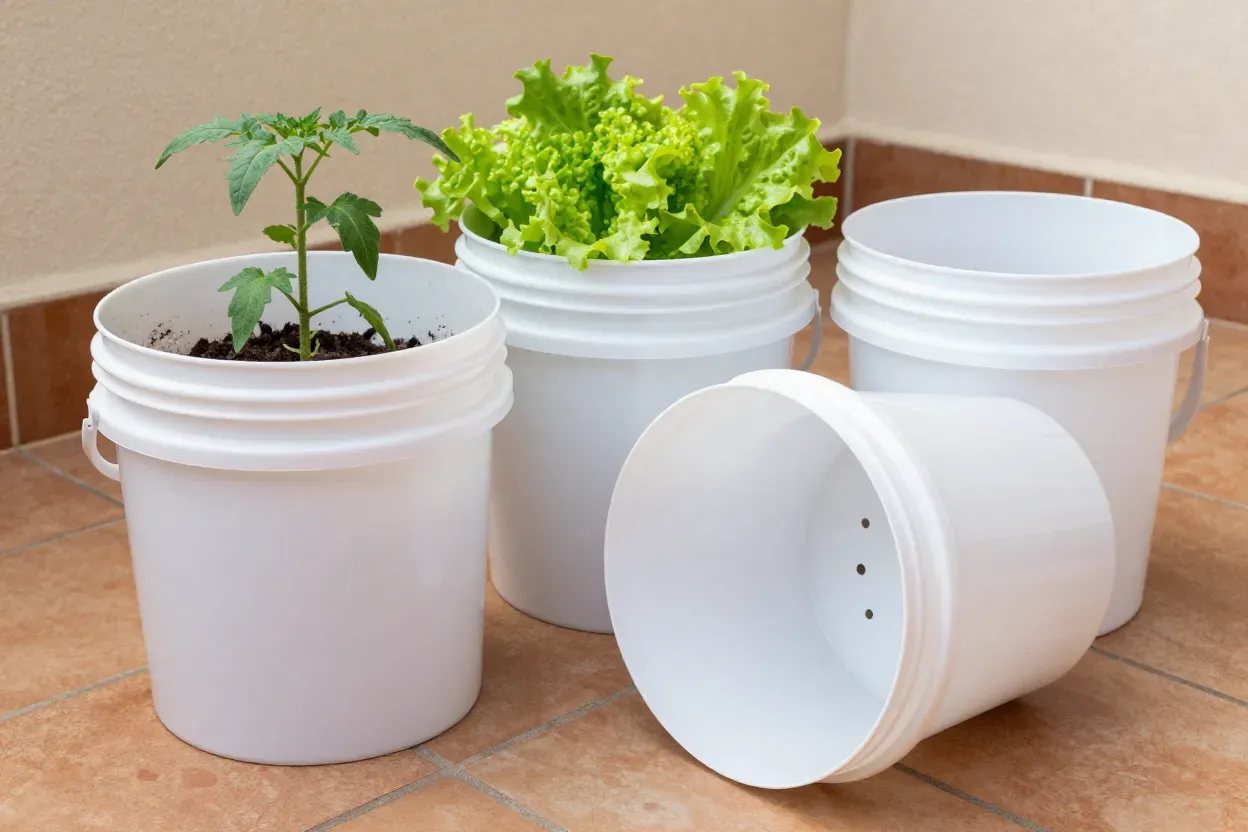
Are 5-Gallon Buckets Safe for Growing Vegetables? What to Check First
Quick answer: Yes, if you pick the right bucket. University of Maryland Extension says a repurposed plastic container should be rated food-grade, and that #2, #4 and #5 plastics are safe to use. Never grow food in a bucket that held paint, detergent, adhesives or other chemicals, even if it is #2 plastic. Skip buckets that are cracked or brittle, drill drainage holes, and keep dark buckets out of the hottest sun.
A 5-gallon bucket is one of the cheapest big pots you can get, and it is sometimes free. So the same question keeps coming up: is the plastic safe to grow food in?
The honest answer has two parts. Extension guides agree on the main rule: do not grow food in a bucket that held chemicals. Extension experts who have been asked also say there is little research on plastic containers and home-grown vegetables. This post sets out both, with the source for each point. It explains extension advice. It is not a report of tests on our own buckets.
In this guide: Which buckets, at a glance | What extension services agree on | What food grade means | The plastic numbers | Does plastic leach? | Three more checks | Getting a bucket ready | What to grow in it | Skipping plastic | FAQ
Which buckets are OK for vegetables, at a glance
| Bucket | Use it for vegetables? | Why |
|---|---|---|
| New bucket sold as food grade | Yes | University of Maryland Extension suggests buying new buckets sold as food-grade as the alternative to a used bucket that held chemicals. |
| Used food bucket from a restaurant or other food business | Yes, after cleaning | University of Arizona Cooperative Extension says food-safe plastic buckets make durable planters, and that restaurants and other food service businesses sometimes give away large plastic buckets. |
| New hardware-store bucket marked #2, with no food-grade label | Your call | Extension experts have not given one clear answer. See the section on leaching below. |
| Any bucket that held paint, detergent, adhesives or other chemicals | No | University of Maryland Extension says it is no longer food-safe, even if it is #2 plastic. |
| Bucket marked #3, #6 or #7 | No | University of Maryland Extension says to avoid these plastics. |
| Cracked, brittle or sun-damaged bucket | No | University of Maryland Extension says degraded plastic should not be planted with edible crops. |
Our reading: for a bucket with no recycling number at all, treat it like the last three rows and leave it for carrying tools. You can’t tell what it is made of.
What extension services agree on
The one rule that turns up in guide after guide is about what the container used to hold, not what it is made of.
- Virginia Cooperative Extension lists four things a vegetable container must do: be big enough for the full-grown plant, hold soil without spilling, drain well, and never have held products that would be toxic to plants or people.
- University of New Hampshire Extension says to avoid containers that might contain toxic substances, and gives plastic buckets that may have stored chemicals as an example.
- University of Arizona Cooperative Extension says a container should not be made of toxic materials or have been used to store them, and warns about residues that could leach into the soil.
- Cornell University’s Garden-Based Learning program says to choose a container that has never held toxic material.
- Alabama Cooperative Extension, in its supply list for a 5-gallon bucket garden, says to make sure the bucket is food-grade plastic and was not used to store toxic materials.
University of Maryland Extension goes into the most detail. It says repurposed plastic containers should be rated food-grade, names the plastics to use and to avoid, and says to avoid containers that previously held detergents, paint, adhesives or chemicals.
What "food grade" means, and how to spot it
University of Maryland Extension says to look for a label such as "food grade" or "FDA Approved", or the international food-safe symbol of a glass and fork. It describes #2 plastic (HDPE) as common and as the recommended plastic type for food storage, used for milk jugs, juice containers and many food-grade bulk pails.
The number alone is not the label. University of Illinois Extension notes that #2 HDPE is also used for household cleaner bottles. And University of Maryland Extension says any bucket that held chemicals such as paint or cleaning agents is no longer food-safe, even if it is made from #2 HDPE.
Behind the label is a food rule, not a gardening one. The U.S. Food and Drug Administration says a food contact substance that counts as a food additive must be authorized for that use before it is sold in the U.S., and that its safety review looks at how much of a substance moves from the material into food. Our reading: that tells you a food-grade bucket was made to hold food. It does not tell you anything was tested with wet potting mix and sun. An Oregon State University Extension expert made the same point when a gardener asked, saying such containers have probably not been tested for how they interact with soil.
The plastic numbers on the bottom of the bucket
| Number | Plastic | University of Maryland Extension says |
|---|---|---|
| #2 | HDPE (high-density polyethylene) | Safe to use. Common, and used for many food-grade bulk pails. |
| #4 | LDPE (low-density polyethylene) | Safe to use |
| #5 | PP (polypropylene) | Safe to use |
| #3 | PVC (polyvinyl chloride) | Avoid |
| #6 | PS (polystyrene) | Avoid |
| #7 | Other (polycarbonate, bioplastics, BPA and others) | Avoid |
The number sits inside a small triangle. On a bucket, check the base. It names the plastic. It does not say whether that bucket was made for food or what it has held since.
Do chemicals from the plastic get into the vegetables?
We could not find an extension study that measured this in vegetables grown in buckets. The extension experts who have been asked the question say much the same.
- A 2022 Ask Extension answer says there is little research on the risks of growing vegetables in food-grade plastic containers, and that it is generally considered safe as long as the containers have not been used for inedible items.
- A 2024 Ask Extension answer to a Minnesota gardener says the expert had not seen any research from the university showing harmful leaching from plastic flower pots into the soil.
- In 2023, an Oregon State University Extension expert called it a complex question with few clear answers. He thought food-grade containers were probably the safest choice for growing food, and added that many people have used black nursery pots for years without reported problems.
- In 2016, a Maryland gardener asked about a tomato growing in an orange hardware-store bucket marked #2. University of Maryland’s Home and Garden Information Center first replied that it would be safe to use for growing tomatoes. When the gardener wrote back that the store had said the bucket was not food safe, a second reply said the center did not have research on orange buckets and food safety, and to err on the side of caution when in doubt.
Those answers are why the hardware-store bucket is "your call" in the table. One extension reply first said a #2 bucket would be safe, then said there was no research and to err on the side of caution. University of Maryland’s current container page says repurposed plastic should be rated food-grade. Our reading: food-grade is the cautious choice and it costs little or nothing, so start there. If you already have a clean, new #2 bucket that never held anything, no extension source we found says vegetables grown in it are unsafe, and none has tested it either.
Three more things to check besides the label
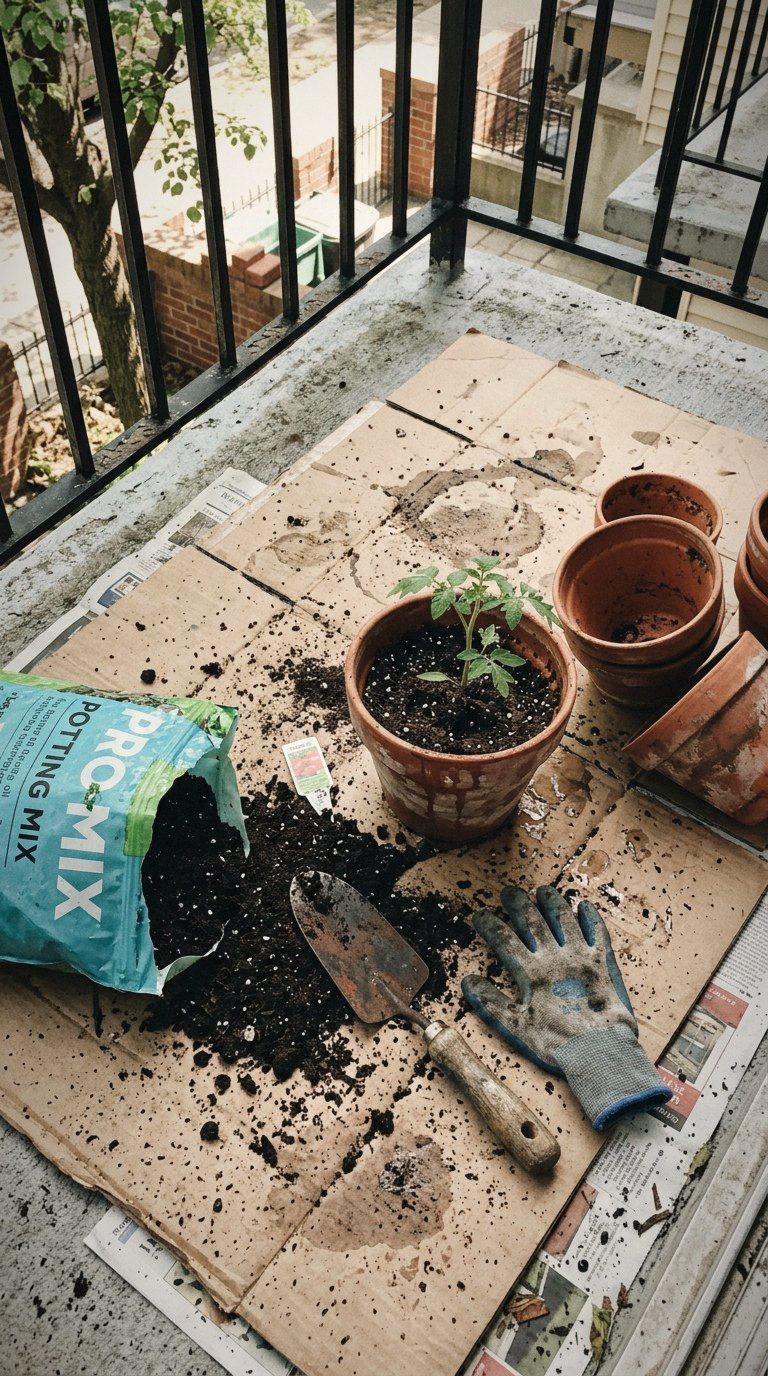
1. What the bucket held. This is the one point every guide above agrees on. University of Maryland Extension gives cleaning steps for reusing food-grade containers, and separately says to avoid ones that held detergents, paint, adhesives or chemicals. Our reading: the wash is for food buckets. It does not make a chemical bucket safe.
2. Sun and age. University of Maryland Extension says plastic containers not made for outdoor use can become brittle from exposure to the elements, and that cracked, degraded plastic releases microplastics and possibly toxins, and should not be planted with edible crops. The 2022 Ask Extension answer says plastics break down under UV light, and describes HDPE as having some UV resistance. The Oregon State expert noted that standard hardware-store buckets do not hold up well in sunlight. Our reading: check your buckets each spring, and retire any that have gone chalky, stiff or cracked.
3. Heat. University of Maryland Extension says dark container colors can raise the temperature of the potting mix and may injure tender roots. University of Illinois Extension says dark containers in full summer sun can get hot enough to damage roots, and suggests moving them into shade or shading the pot with trailing plants. The North Carolina Extension Gardener Handbook says dark-colored containers absorb more heat than light-colored ones, and that you should avoid placing dark containers in full sun. Our reading: a white or light-colored bucket is the simple fix.
How to get a bucket ready for planting
- Check the base. Look for #2, #4 or #5, and for a food-grade label or the glass-and-fork symbol.
- Ask what it held. If the answer is food, carry on. If it is paint, cleaning products, adhesives or any other chemical, or nobody knows, don’t plant food in it.
- Clean a used food bucket. University of Maryland Extension’s method: wash with soap and rinse with water, soak for 10 minutes in a 10% bleach solution, wash and rinse again, and let it air dry. Cornell’s guide also uses a dilute bleach scrub, about 10% bleach to 90% water. The North Carolina Extension Gardener Handbook recommends a non-bleach household disinfectant for used pots instead.
- Drill drainage holes. Alabama Cooperative Extension says to drill or punch holes every 3 inches across the bottom of the bucket. University of Arizona Cooperative Extension says several small holes are better than one large one. The North Carolina handbook adds that if a container sits flat on a solid surface such as a paved patio, the holes can go along the side, a quarter to half an inch from the bottom.
- Keep the mix in. University of Maryland Extension suggests covering the bottom with fiberglass window screening before filling, so potting mix does not fall through the holes.
- Fill with potting mix, not garden soil. Alabama Cooperative Extension’s bucket list says to avoid garden soil in containers. Our guide to soil and fertilizer explains why.
What to grow in a 5-gallon bucket
Virginia Cooperative Extension and Cornell both list one tomato plant per 5-gallon container. Our guide to tomatoes in a 5-gallon bucket covers varieties, support and watering. For leafy crops, see how many spinach, chard and kale plants fit in a bucket, and for peppers, our guide to growing peppers in containers.
A bucket dries out faster than a garden bed, so our guide to how often to water container vegetables is worth a read before summer. If you want fewer waterings, self-watering containers can be built from two buckets. New to all of this? Start with the beginner’s guide to container vegetables.
Prefer to skip plastic buckets?
You have options, and each has its own thing to check. University of Maryland Extension’s list of everyday objects that make suitable containers includes wooden crates and whiskey barrels cut in half as well as food-grade buckets. The same page covers fabric grow bags, and notes that they are made from natural or synthetic (petroleum-based) materials, or a mix of the two, so a fabric bag can be plastic-based too. University of New Hampshire Extension warns against treated wood. The 2024 Ask Extension answer says to avoid glazed ceramic pots with lead in the coating. If your pots stay out all year, our guide to leaving pots outside in winter covers which materials crack.
FAQ
Are all 5-gallon buckets food safe?
No. University of Maryland Extension says to look for a label such as food grade or FDA Approved, or the glass-and-fork symbol. A bucket that held paint, cleaning agents or other chemicals is no longer food-safe, even if it is made from #2 plastic.
Is a hardware-store bucket marked #2 safe for growing vegetables?
Extension answers differ. In 2016 University of Maryland’s Home and Garden Information Center first told a gardener that an orange hardware-store bucket marked #2 would be safe for growing tomatoes, then said it did not have research on orange buckets and food safety and to err on the side of caution. Its current container page says repurposed plastic containers should be rated food-grade. We found no study that tested either.
What does the number 2 on the bottom of a bucket mean?
It means the bucket is made of HDPE, high-density polyethylene. University of Maryland Extension lists #2, #4 and #5 as plastics you can safely use. The number names the plastic. It does not tell you whether the bucket was made for food or what it has held.
Can I use a bucket that held paint or cleaning products if I wash it out?
No. University of Maryland Extension says any bucket that held chemicals such as paint or cleaning agents is no longer food-safe, even if it is #2 plastic. University of New Hampshire Extension gives plastic buckets that may have stored chemicals as an example of containers to avoid.
How many drainage holes does a 5-gallon bucket need?
Alabama Cooperative Extension says to drill or punch holes every 3 inches across the bottom of the bucket. University of Arizona Cooperative Extension says several small holes are better than one large one.
Do black or dark buckets get too hot for vegetables?
They can. University of Illinois Extension says dark containers in full summer sun can get hot enough to damage roots, and suggests moving them to shade or shading the pot with trailing plants. The North Carolina Extension Gardener Handbook says dark-colored containers absorb more heat than light-colored ones.
Sources we checked
- Growing Vegetables in Containers and Salad Tables. University of Maryland Extension
- Five-Gallon Bucket Supply List (ANR-2663). Alabama Cooperative Extension System
- Vegetable Gardening in Containers (426-336). Virginia Cooperative Extension (PDF)
- Growing Vegetables in Containers fact sheet. University of New Hampshire Extension
- Container Gardening in the Southwest Desert (az1713). University of Arizona Cooperative Extension
- Vegetable and Herb Gardening in Containers. Cornell University Garden-Based Learning (PDF, 2016)
- Containers. University of Illinois Extension
- Understanding recycling: Resin identification codes. University of Illinois Extension
- Plants Grown in Containers, North Carolina Extension Gardener Handbook, chapter 18. NC State Extension
- Container vegetable gardening in plastic bins? Ask Extension, 2022
- Container garden: which containers are food safe. Ask Extension, 2024
- Is it safe to grow food in regular 5-gallon buckets? Ask Extension (Oregon State University Extension), 2023
- Food Safe Buckets. Ask Extension (University of Maryland Home and Garden Information Center), 2016
- Food Packaging and Other Substances that Come in Contact with Food: Information for Consumers. U.S. Food and Drug Administration