Most of this site is guidance: what to grow, which pot, how often to water. This page is the proof side. It’s a running log of real plants growing in real containers, photographed as they are, with the misses left in.
A note on seasons: the test garden is in the Southern Hemisphere, so its seasons run opposite to most of our US readers. When it’s fall where you are, it’s spring here. That’s useful: the warm-season crops you’ll plant next spring are going in here now, and you can see how they do before your turn comes.
Log entry 4: Lettuce and capsicum sown, broccoli side shoots, and a supermarket potato experiment
Posted October 1, 2026 (spring in the test garden)
Lettuce: two pots sown for the beginner’s guide
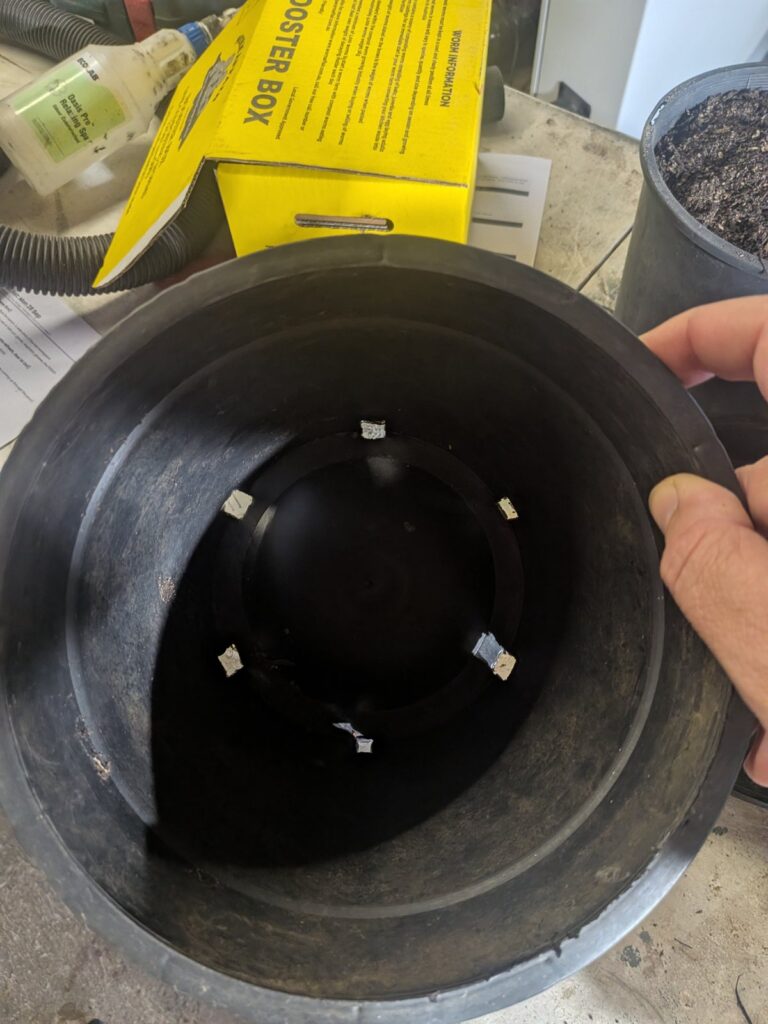
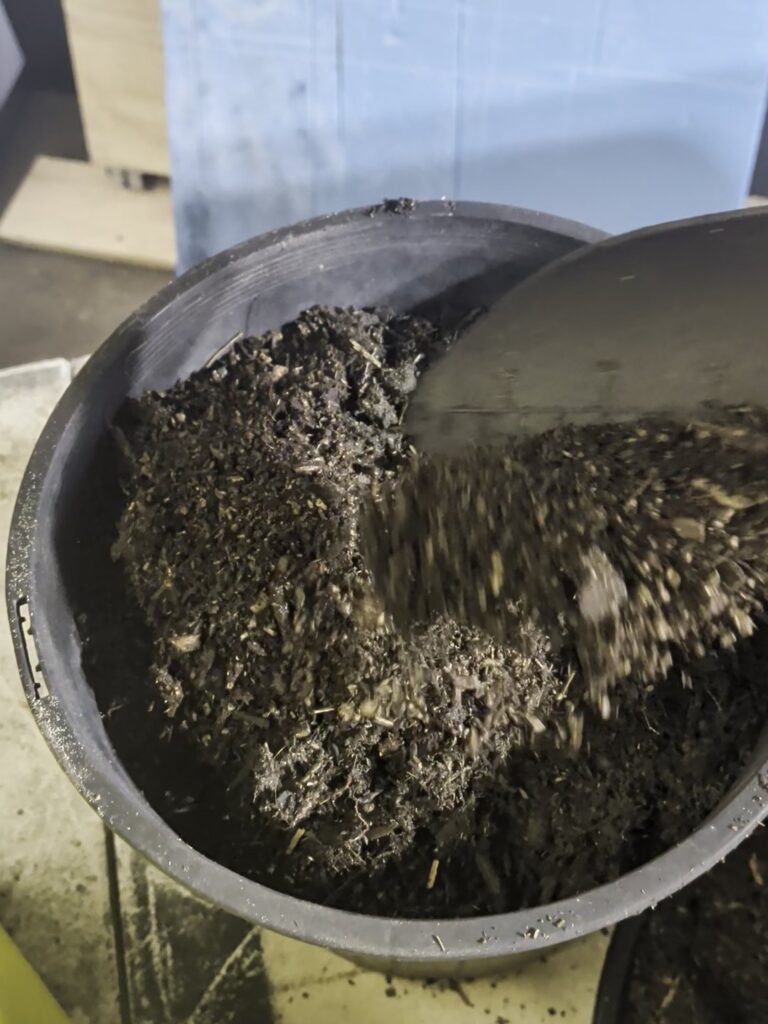
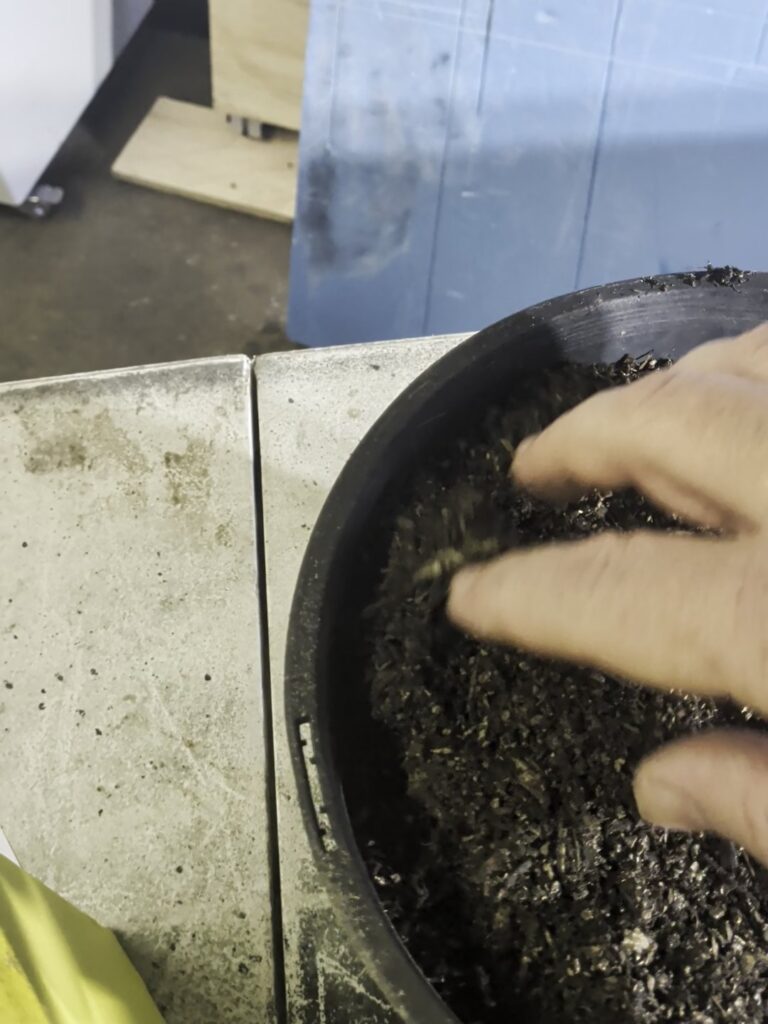
Today we sowed the lettuce from our container vegetable gardening for beginners guide, in two 8-inch nursery pots so we have a backup. At about 4 inches between plants, each pot will be thinned to roughly 3 lettuces. The seed is a mixed salad leaves blend: non-heading, cut-and-come-again types. The packet says to sow 3 mm deep (about ⅛ inch), expect sprouts in 6 to 10 days, and give the pots part shade. We checked the drainage slots, filled the pots with potting mix, scattered the seed thinly, covered it lightly and watered it in with a fine rose.

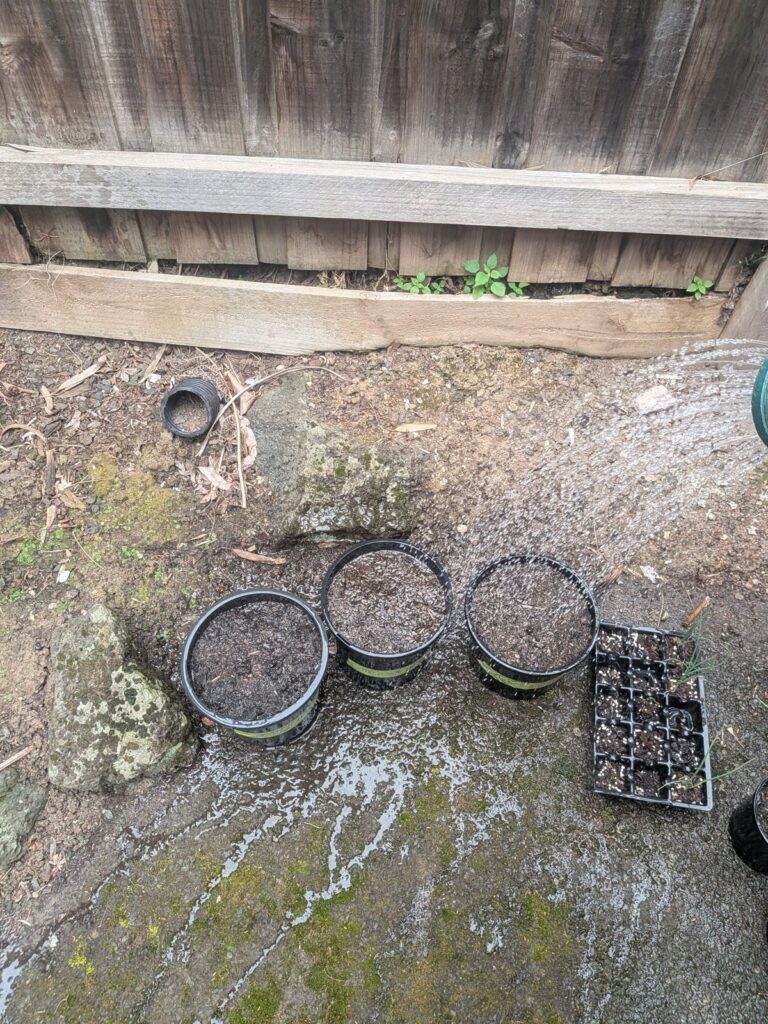
Next photo: the first seedlings, due around 7 to 11 October if the packet is right.
Capsicum: one pot sown for summer

The third pot, also 8 inches, holds Californian Wonder capsicum (a bell pepper), sown the same day. That pot is only a starting point: a full-size bell pepper needs 8 to 10 gallons of mix to crop well, so it will move up to a much bigger container once it’s a sturdy seedling. Peppers like warmth to sprout, so we expect this one to be slower than the lettuce. It’s the start of our summer pepper log, which will feed into our growing peppers in containers guide.
Broccoli: side shoots after the main head

We’ve cut the main head from one of our broccoli plants. Don’t pull the plant out at that point. Smaller side shoots grow from the leaf joints along the stem, and you can keep cutting those as they size up. Ours already has two. More on pot size for broccoli in our pot size guide.
Garlic: the first shoot
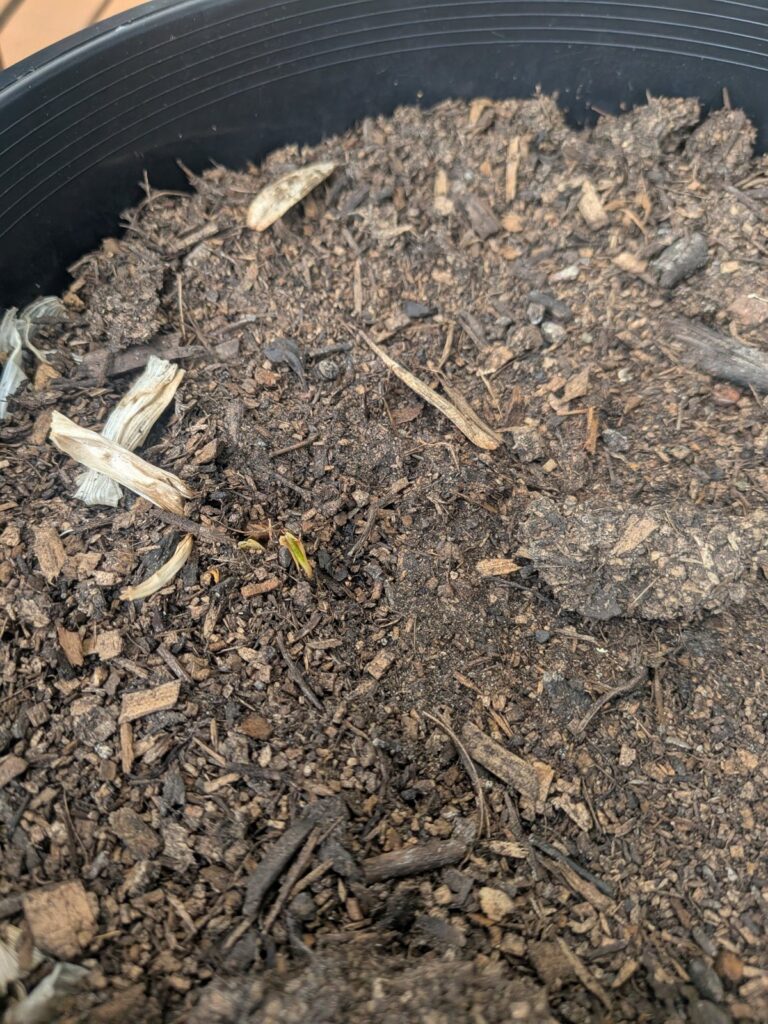
Garlic cloves we planted in a 250 mm (about 10 inch) pot two weeks ago have put up their first green shoot. Spring is late for garlic, which is normally planted in autumn, so treat this pot as an experiment: we may get small bulbs, or we may end up using it as green garlic. The usual way to do it is in our garlic in containers guide.
Onions and pumpkins: settling in
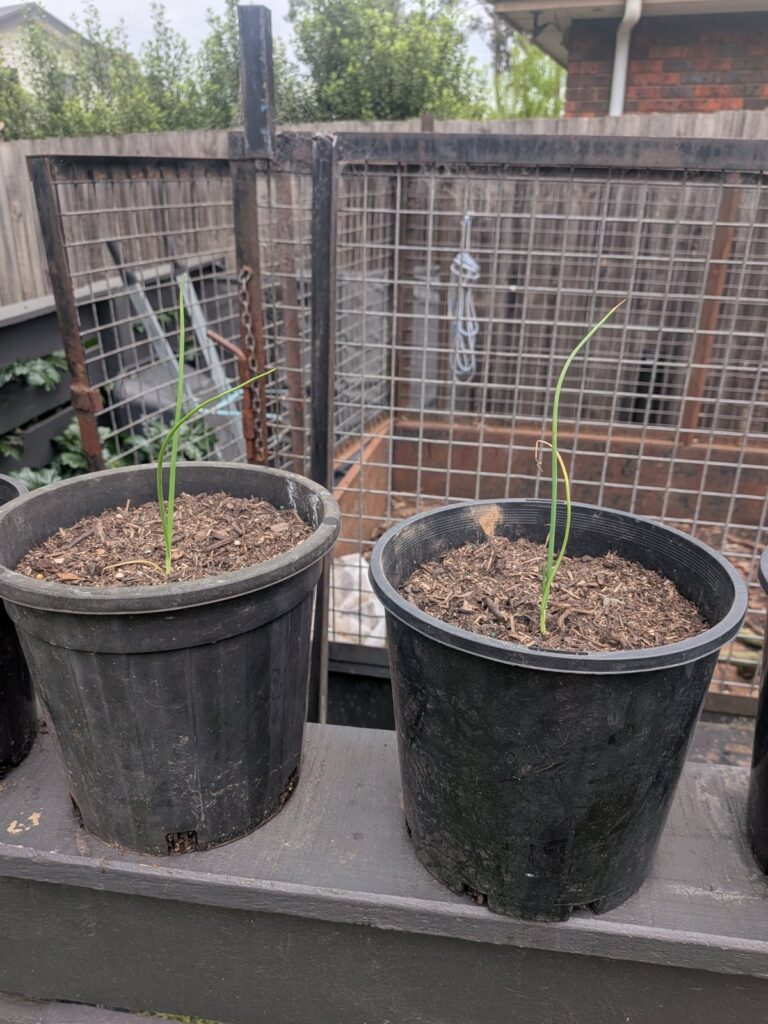
The brown onions we potted up in entry 2 are standing up and putting on new growth.

The Kent pumpkins now have their first proper rough leaves. They still need a much bigger container before the vines start to run.
An experiment: supermarket potatoes grown through winter
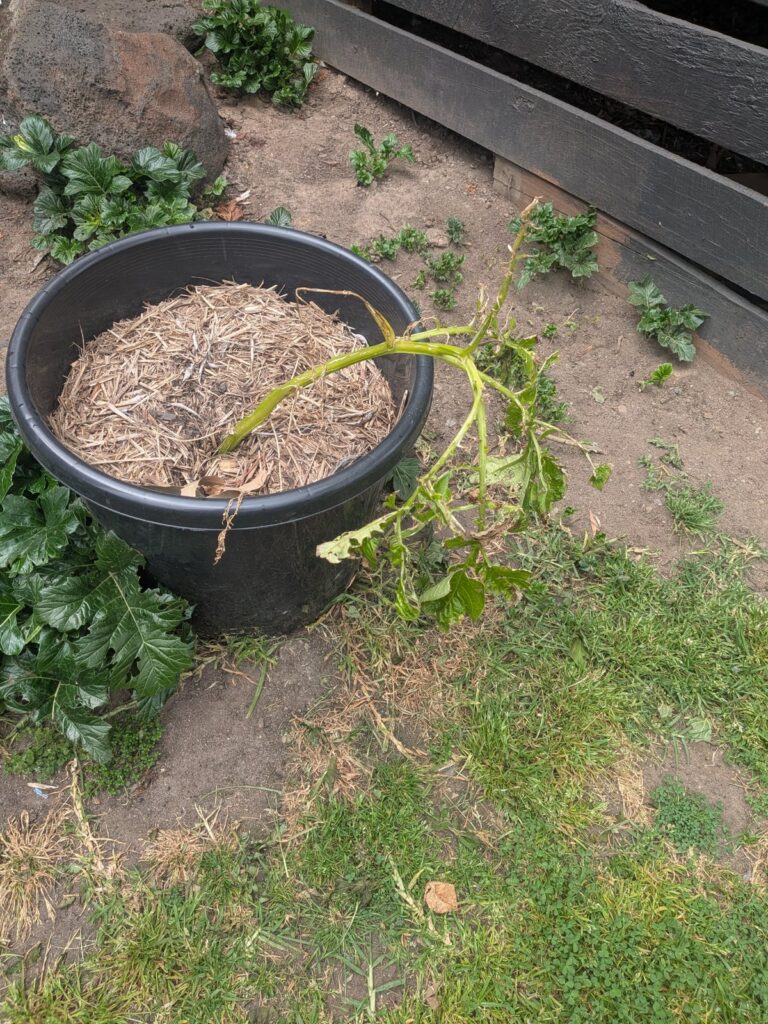
In June we planted a few potatoes from the supermarket in a big pot, mulched with straw, to see what they would do over winter. The plant grew, but the main stem has now snapped and the leaves are dying back. We’ll tip the pot out soon and show exactly what we got. Most guides recommend certified seed potatoes instead, because shop potatoes can carry disease and are sometimes treated to slow sprouting. This pot is our small test of whether that matters in a home container.
Log entry 3: Broccoli shows why pot size matters, and the rocket goes to seed
Posted September 30, 2026 (spring in the test garden)
Broccoli: same sowing day, two pot sizes
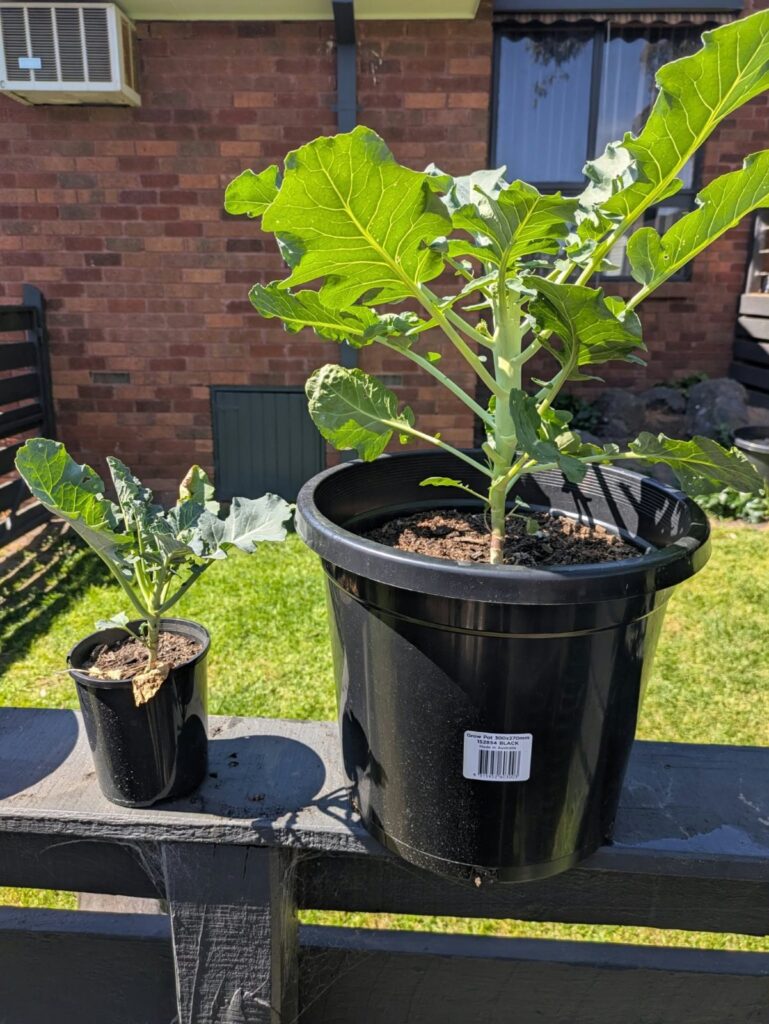
These two broccoli plants were sown at the same time. The one on the right went into a 300 × 270 mm grow pot: about 12 inches across and 10½ inches deep, or roughly 4 gallons of potting mix. The one on the left stayed in a 5-inch nursery pot, which holds under half a gallon. Both grew in the same part of the deck, the big pot on the boards and the small one up on the handrail, and both were watered at the same time. We didn’t note the sowing date.
The difference is hard to miss. The big-pot plant is several times the size, with a thick stem and broad leaves. The small-pot plant is stunted, and its lowest leaves have gone yellow and papery. With that little mix, the roots have far less room, water and food to draw on. Extension guides put broccoli’s minimum at 2 gallons (Texas A&M) to 5 gallons (Colorado State), and the small pot is well short of both. Our pot size chart has the minimums for 25 crops.
Rocket (arugula): the whole tray has gone to seed
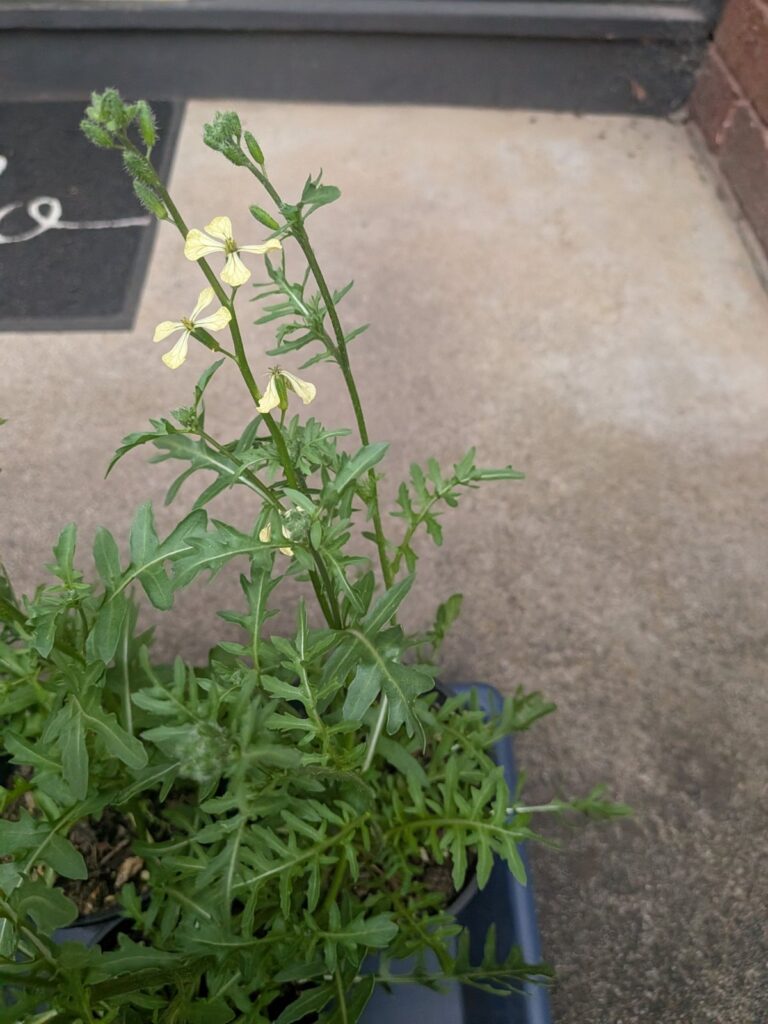
Nearly every pot in our tray of rocket has sent up flower stalks. That’s right on schedule for spring here: lengthening days are one of the main triggers, and small black pots that heat up and dry out quickly don’t help. The flowers are edible, and pods left to dry on the stalk give seed for an autumn sowing. More photos, and what to do with a bolted plant, are in our new guide: why is my arugula bolting?
Log entry 2: Onions into pots, pumpkins split up
Posted September 25, 2026 (spring in the test garden)
Brown onions: out of the tray and into pots
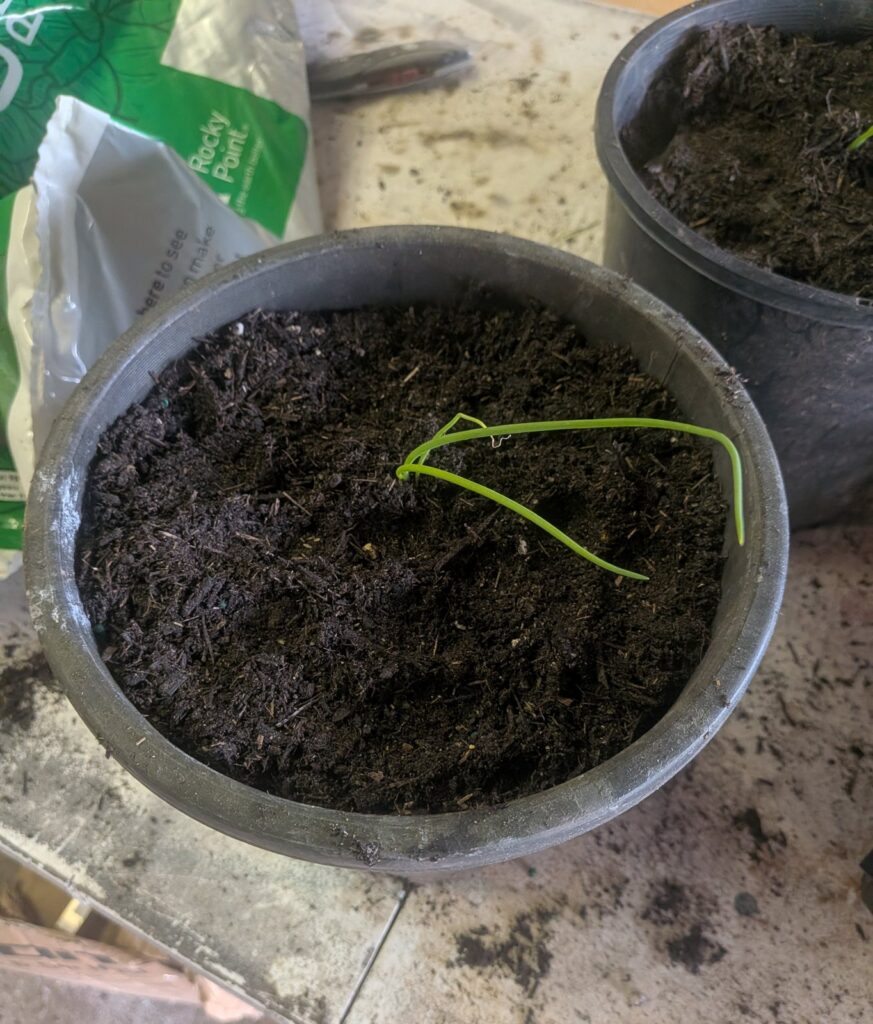
The brown onions we started from seed in a cell tray had got long and tangled, flopping over the sides of their cells, so it was time to move them. Each cell held a small clump of seedlings. We tipped the plugs out, teased the seedlings apart (onions don’t mind bare roots), and set them into nursery pots of potting mix.
What we’d do differently: give them a haircut in the tray. Iowa State Extension recommends trimming onion seedlings back to 4 inches once they reach 5 inches tall, which keeps them upright and easier to handle. We skipped it, and the floppy leaves made planting fiddly. The full step-by-step, with more photos from this batch, is in our new guide to growing onions from seed in containers.
Kent pumpkins: three pots instead of one

In entry 1, three Kent pumpkin seedlings were sharing one small pot. We went with the “keep all three” option: tipped the pot out while they were still small, pulled them apart with as much mix on each root ball as possible, and gave each one its own pot.

All three now have their first true leaf showing. These pots are only a stop-over: a pumpkin vine needs a far bigger container than this (our pot size chart has the numbers), and waiting too long risks the roots circling the pot, as covered in why is my vegetable root-bound?

Log entry 1: Broccoli heading up, pumpkins just up
Posted September 24, 2026 (spring in the test garden)
Broccoli: one plant, one pot, one head on the way
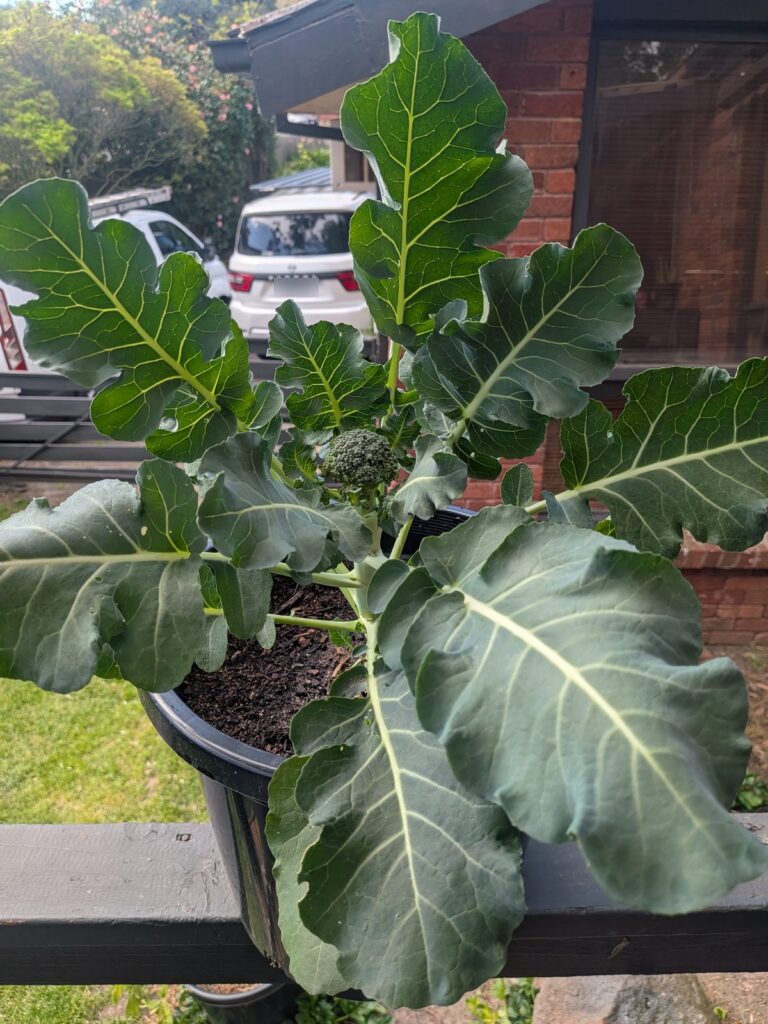
This is one broccoli plant in one container, sitting on a deck railing. The leaves are big, dark and healthy, with only a few small holes. The part you eat is the small green dome in the centre: that’s the main head, and it’s still small.

What to watch for: the University of Minnesota Extension says to harvest broccoli “while they are still tight and before flower buds have opened.” Once you see yellow, the head is turning to flowers and the texture goes downhill fast. After the main head is cut, many plants send up smaller side shoots, so a container plant can keep producing for a while after the first cut.
If you’re growing broccoli for fall, it’s one of the cool-season crops that copes with partial sun (see vegetables for a shady balcony) and it keeps growing after light frosts. For more cold-hardy crops that suit a pot, see the best fall and winter vegetables for containers.
Pumpkins: three seedlings, one small pot

Three pumpkin seedlings came up in the same small nursery pot. Right now they only have their seed leaves (the first pair of rounded, fuzzy leaves); the true leaves come next. They look healthy, but three pumpkins can’t share a pot this size for long. Pumpkins are big, hungry vines, and their roots fill a small pot quickly.
What they need next: the University of Maryland Extension’s advice is to “pinch out all but the strongest seedling” and to “disturb the root system as little as possible” when transplanting. In practice you have two choices:
- Keep one: snip the two weaker seedlings off at soil level with scissors. Cutting rather than pulling leaves the keeper’s roots undisturbed.
- Keep all three: tip the pot out gently while the seedlings are still small, tease them apart with as much soil on each root ball as you can, and give each one its own larger container.
Wait too long and the roots tangle together and circle the pot, which is exactly the problem covered in why is my vegetable root-bound? For choosing the next pot, see pot size and drainage.
What’s next
New entries go at the top of this page as the plants change: the broccoli harvest and whether side shoots follow, what happens with the pumpkins, and whatever goes wrong along the way. If something here is different from what one of our guides says, we’ll say so and update the guide.
New to container growing? Start with Start Here, then how often to water container vegetables.
Sources
- Growing broccoli in home gardens, University of Minnesota Extension
- Growing pumpkins in a home garden, University of Maryland Extension