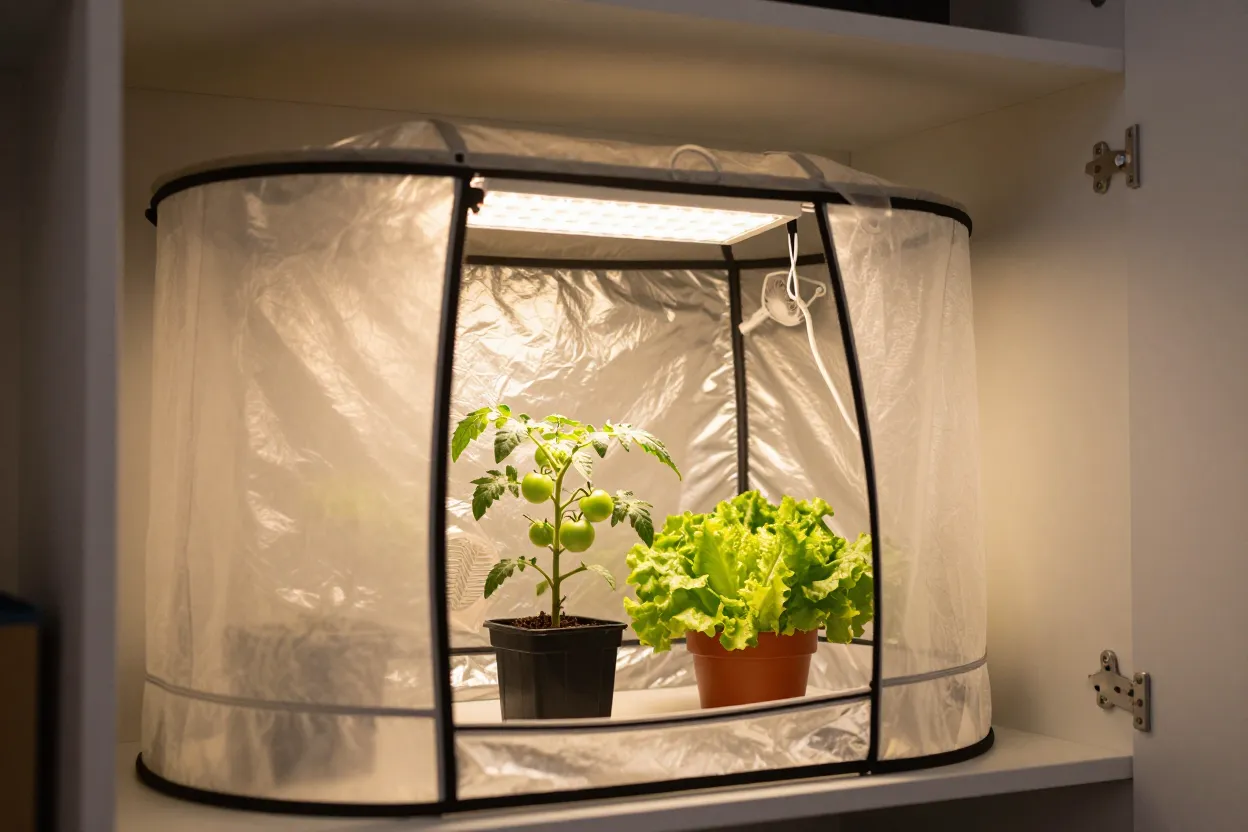
Best Grow Tents for Growing Vegetables Indoors (5 Small-Space Picks)
A grow light on a shelf is enough to keep lettuce and herbs going through winter. It is not enough for a tomato, and it’s not much use in a garage or basement where the problem isn’t just light but cold, dry, still air. That’s the gap a grow tent fills. It’s a fabric box with reflective walls, a frame strong enough to hang a real light from, and a floor tray that doesn’t care about spills — and inside it you control the light, the warmth, and the humidity instead of taking whatever the room gives you.
One thing to know before you shop: almost all grow tent marketing is aimed at people growing something other than vegetables. Ignore that. The tents work exactly the same for peppers, and the sizes that suit a small apartment, a closet, or one bay of a garage are the small ones at the start of every range. The five below run from a 2-foot square that fits in a closet up to a 3-by-3 mini garden, and every one of them is a tent we’d put a pot of tomatoes in. If you’re mainly after light for a shelf of greens, our best grow lights for indoor vegetables guide is the cheaper place to start.
This post contains affiliate links, meaning we may earn a small commission at no extra cost to you — full details are on our Affiliate Disclosure page.
Quick answer: You only need a grow tent for fruiting crops like tomatoes and peppers, a cold garage or basement, or to keep a bright light out of your living space. For lettuce and herbs, a light on a shelf is enough. Pick the tent by footprint and height: a 2×2 holds one big pot, a 2×4 holds two or three 5-gallon buckets, and a 3×3 holds four pots. Our overall pick is the AC Infinity CLOUDLAB 642, because at 71 inches it leaves room for a full-size determinate tomato. Always add a 4-inch exhaust fan and a timer.
In this guide: Quick picks · Do you need one? · What to look for · The 5 tents · Which fits · Lighting · Fan and air · Setup · What to grow · Mistakes · FAQ
Quick Picks
- Best starter tent for a closet or corner: Mars Hydro 2×2 grow tent
- Best all-in-one kit (tent, light, and fan in one box): Mars Hydro 2×2 grow tent kit with TS600 (currently out of stock)
- Best value for a wall or a garage bay: VIVOSUN S425 2×4 grow tent
- Best build and best height for tomatoes (our overall pick): AC Infinity CLOUDLAB 642 2×4 grow tent
- Best for a mixed mini garden: VIVOSUN S336 3×3 grow tent
- Don’t forget: a 4-inch exhaust fan for any tent that doesn’t come with one, a plug-in outlet timer for the light, and a small thermometer/hygrometer so you know what’s happening inside
Do You Actually Need a Grow Tent?
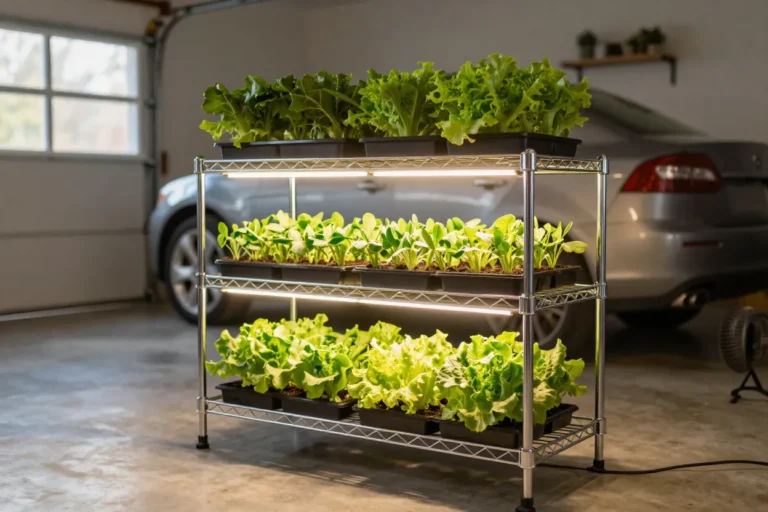
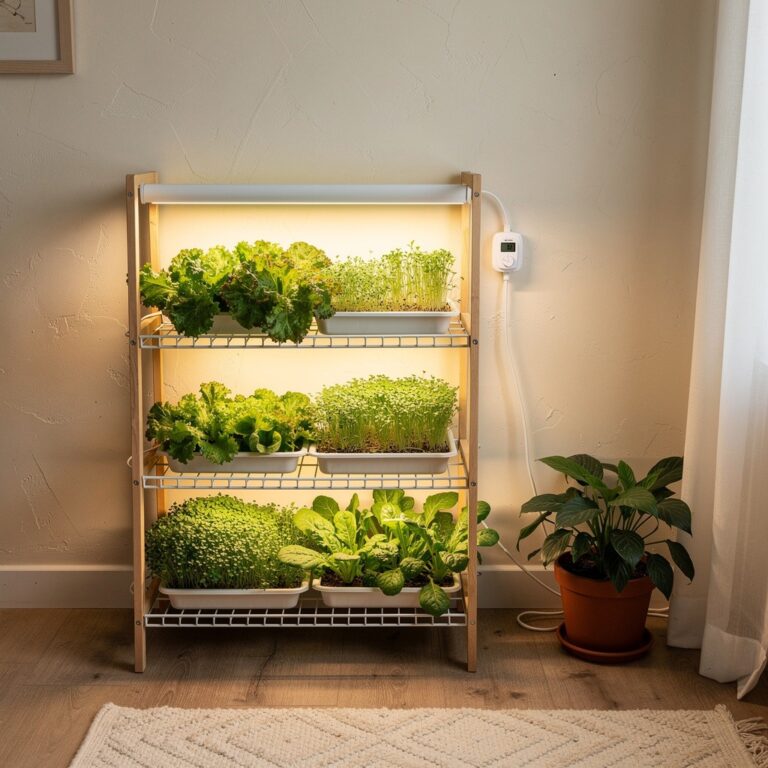
Not always, and it’s worth being clear about when you don’t. If you’re growing lettuce, spinach, microgreens, or herbs in a heated room, a light on a shelf does the job and a tent adds cost without adding much. A tent earns its place in four situations:
- You want to grow fruiting crops indoors. Tomatoes, peppers, bush beans, and compact cucumbers need a strong light hung at the right height, warmth that a winter room doesn’t hold overnight, and somewhere for a plant that’s 2–3 feet tall to live. A tent gives you a frame to hang from and walls that bounce light back onto the plant, so a 100-watt panel does the work of a bigger one.
- Your growing space is a garage, basement, or spare room that’s too cold. A light running inside a closed tent warms the air around the plants by several degrees, and the walls hold that warmth in. In a space that sits at 50°F, that’s often the difference between plants that grow and plants that sulk. Our guide to growing vegetables in your garage goes into that setup in detail.
- The light has to stay out of your living space. A vegetable-grade grow light running 16 hours a day in a studio apartment or a bedroom is hard to live with. Zip it inside a tent and the room stays a room.
- You want the mess contained. Potting mix, drips, fungus gnats, and a curious cat all stay on the tent’s side of the zipper. For renters, a tent with a floor tray is also the tidiest way to run an indoor garden on carpet.
What to Look For in a Grow Tent
- Footprint first, then height. A 2×2 tent holds one big pot or three or four small ones; a 2×4 holds two or three 5-gallon buckets in a row; a 3×3 holds four pots with room to reach them. Then do the height math: tent height, minus the light and the 12–24 inches of clearance it needs above the plants, minus the height of the pot, is how tall your plants can get. In a 48-inch tent that’s often only 18–24 inches of plant — fine for greens and a dwarf tomato, not for anything that climbs.
- Canvas thickness. Tents are rated in “D” (denier): 600D is the budget standard, 1680D is thicker and more light-tight, 2000D is the heaviest. For vegetables the light-tightness matters less than it does for the growers those numbers were invented for; what you’re paying for at the higher end is durability and zippers that don’t snag.
- Frame strength. Look at the pole diameter and the rated load of the roof bars. A 16mm frame rated to 100 pounds carries a small LED panel and a fan comfortably; a 1-inch frame rated to 250 pounds carries anything you’d hang in a home setup with a lot to spare. Don’t hang a light off the fabric — always off the bars.
- Ports. You need at least one 4-inch duct port for the exhaust fan, a smaller cable port for power cords, and a few passive intake vents low down (usually mesh-covered flaps). Every tent here has all three.
- A window and a floor tray. A viewing window means you can check the plants without unzipping the door and letting the warm air out. A removable floor tray catches overflow and lifts out to rinse.
- Measure the spot before you buy. A 72-inch tent doesn’t fit under a 72-inch closet shelf, and a 2×4 needs a clear 4 feet of wall with room to open the door in front of it. It sounds obvious; it’s the mistake people make most.
The 5 Best Grow Tents for Vegetables
These run roughly from the smallest and least expensive to the biggest. Buy for the space you have and the crops you’ll actually grow this winter — a tent that’s too big for the room ends up as a very expensive closet.
1. Mars Hydro 2×2 Grow Tent — Best Starter Tent for a Closet or Corner
The Mars Hydro 2×2 is a 24-by-24-inch tent that stands 55 inches tall, with 1680D canvas, a viewing window, a floor tray, and roof bars rated to around 88 pounds. It’s the tent Mars Hydro designed around its own TS600 light — the same 100-watt panel we recommend for a small table of indoor vegetables — and the pair fit together as if they were sold as one thing. It goes in a closet, an alcove, or the corner of a garage, and the footprint is smaller than a laundry basket.
What fits: one 5-gallon bucket with a dwarf tomato or a pepper, or four 8-inch pots of lettuce, herbs, and scallions, or a couple of seed trays in spring. The 55-inch height is the reason to pick it over the many 48-inch 2×2 tents — that extra 7 inches is the difference between a dwarf tomato having headroom and being pressed against the light.
What to know: it’s a tent only — no light, no fan. Budget for the Mars Hydro TS600 (or a light you already own) and the exhaust fan below. And “2×2” is a hard limit: it’s a one-big-plant tent. If you’re picturing tomatoes plural, look at the 2×4 tents.
2. Mars Hydro 2×2 Grow Tent Kit with TS600 — Best All-in-One Kit
Stock update (September 2026): this bundled kit is currently unavailable on Amazon. You can build the same setup from parts we already recommend: the Mars Hydro 2×2 tent, the Mars Hydro TS600 light and the AC Infinity CLOUDLINE S4 fan. Bought separately, the tent and light usually cost less than the kit did.
If you’d rather open one box and be growing by the weekend, the Mars Hydro 2×2 kit bundles the same 24x24x55 tent with the TS600 light, a 4-inch exhaust fan with speed controller and ducting, and a small clip-on fan for air movement inside. That’s every part of a working setup except the pots and the timer, and it’s the kit we’d point a complete beginner at — not because the parts are the best in their class, but because they’re matched, and matching parts is where first-time buyers usually go wrong.
What to know: the ventilation kit includes a carbon filter, which you don’t need for vegetables — you can leave it in the box and run the fan straight through the duct, or fit it anyway; it does no harm. Mars Hydro sells several 2×2 kits with slightly different accessory bundles, so check the listing for what’s in yours. As with the tent-only version, it’s a one-big-pot tent.
3. VIVOSUN S425 2×4 Grow Tent — Best Value for a Wall or Garage Bay
Step up to a 4-foot-wide tent and you go from one plant to a row. The VIVOSUN S425 is 48 by 24 inches and 60 inches tall, with 600D canvas over a 16mm steel frame rated to 100 pounds, an 11.8-inch viewing window, a removable floor tray, and plenty of ports (two 4-inch, four 6-inch, one 8-inch). It’s the shape that fits real spaces: along a wall in a spare room, under a garage window, or at the end of a basement. At about 17 pounds it’s also easy to move.
What fits: two or three 5-gallon buckets side by side — a tomato, a pepper, and a pot of bush beans is a good winter combination — or a full shelf’s worth of greens on the floor with room to spare. This is the least expensive way to get a row of fruiting crops indoors.
What to know: 600D is the thinnest canvas here. Indoors, out of the sun, it lasts fine, but treat the zippers gently and don’t lean things on the walls. It’s 60 inches tall, which after the light and clearance leaves you about 2 to 2½ feet of plant height — plenty for dwarf and determinate tomatoes, not for a vining one. And a 2×4 tent needs a 2×4 light: either two TS600 panels side by side or a single 200-watt-class panel. No fan included.
4. AC Infinity CLOUDLAB 642 2×4 Grow Tent — Best Build and Best Height for Tomatoes
Same 2×4 footprint, a foot taller, and built like a piece of furniture. The AC Infinity CLOUDLAB 642 is roughly 47 by 24 inches and 71 inches tall, with 2000D canvas, 1-inch (22mm) steel poles, and roof bars rated to 250 pounds. The viewing window is a big 14-by-39-inch panel instead of a porthole, so you can check every plant without unzipping, and there’s a mounting plate on the front for a fan controller with a light-tight passthrough for the cables. Ports are generous: four 4-inch, four 6-inch, one 8-inch.
The height is the point. At 71 inches you can hang a light, give it full clearance, and still have 3½ to 4 feet of plant underneath — enough for a caged determinate tomato to grow to its full size, or a compact cucumber up a short trellis. Between this and the VIVOSUN, the AC Infinity is the one to pick if you know you’ll be running it every winter for years, and the one we’d buy for ourselves.
What to know: it’s the most expensive tent per square foot on this list, and 71 inches needs a ceiling that clears it with room to hang the light from the bars — measure. Like the VIVOSUN it needs a 2×4 light and its own exhaust fan; AC Infinity’s own CLOUDLINE fan below fits the controller plate.
5. VIVOSUN S336 3×3 Grow Tent — Best for a Mixed Mini Garden
A 3-by-3-foot tent is the smallest size that feels like a garden rather than a cupboard. The VIVOSUN S336 is 36 by 36 inches and 72 inches tall, same 600D canvas and 16mm steel frame as its 2×4 sibling, same 100-pound bar rating, window, and floor tray, with two 4-inch, two 6-inch, and three 8-inch ports. The square shape is easier to light evenly with a single panel than a long rectangle is, and you can fit four 5-gallon pots in a grid and still reach all of them from the door.
What fits: a tomato, a pepper, a cucumber on a trellis, and a tray of lettuce on the floor between them — an actual winter salad garden in the footprint of a washing machine. It’s also the size at which you can start all your spring seedlings inside the tent in March without the greens having to move out.
What to know: the light bill goes up with the footprint. A 3×3 tent wants somewhere around 150 to 250 real watts of LED to grow fruiting crops, which is a bigger purchase than the tent itself. And it’s 3 feet each way plus door clearance — in a small apartment that’s most of a closet. If your crops are mostly greens, the 2×4 tents give you the same growing area in a shape that’s easier to place.
Which Tent Fits Your Space
| Tent | Size (W × D × H) | Canvas / frame | Holds about | Light and fan included? |
|---|---|---|---|---|
| Mars Hydro 2×2 | 24 × 24 × 55 in | 1680D / ~88 lb bars | One big pot or 4 small ones | No — add the TS600 and a fan |
| Mars Hydro 2×2 kit | 24 × 24 × 55 in | 1680D / ~88 lb bars | One big pot or 4 small ones | Yes — TS600, exhaust fan, clip fan |
| VIVOSUN S425 | 48 × 24 × 60 in | 600D / 16mm, 100 lb | 2–3 five-gallon buckets in a row | No |
| AC Infinity CLOUDLAB 642 | 47 × 24 × 71 in | 2000D / 1 in, 250 lb | 2–3 buckets, with room for tall tomatoes | No |
| VIVOSUN S336 | 36 × 36 × 72 in | 600D / 16mm, 100 lb | 4 pots in a grid plus a tray | No |
If you’re between two sizes, think about the light before the tent. A bigger tent with a light that’s too small for it grows worse than a smaller tent lit properly.
Lighting the Tent
The reflective walls make a tent an efficient place to run a light, but they don’t make a weak light strong. As a rough guide for fruiting vegetables under white LEDs: a 2×2 tent wants around 100 real watts (one TS600), a 2×4 wants around 200 (two TS600s or one larger panel), and a 3×3 wants 150 to 250. Ignore “equivalent” watts in listings and go by the actual power draw. Leafy greens can get by on about half those figures.
- Hang the light from the roof bars using the adjustable rope hangers that come with most lights (or a pair of cheap ratchet hangers), and start it high — 18 to 24 inches above the plants for a 100-watt panel — then lower it as they grow.
- Run it 14–16 hours a day for greens and 16 for fruiting crops, always with a dark period overnight. A plug-in outlet timer does this for you; none of the tents above includes one.
- Use the dimmer, if the light has one, for seedlings and freshly transplanted plants, and turn it up over a couple of weeks.
Air, Heat, and Humidity: Why the Fan Isn’t Optional
A closed tent with a light running inside it gets warm and humid quickly — and warm, humid, still air is exactly what mold and damping-off want. The fix is an exhaust fan: a small inline fan mounted in one of the top duct ports pulls warm air out, fresh air is drawn in through the low vents, and the whole tent’s air changes every minute or two.
- Get a 4-inch inline fan with a speed controller. The AC Infinity CLOUDLINE S4 is the one we’d buy for any of the tent-only picks above: 226 CFM on full, ten speeds, and quiet enough on low that you’ll forget it’s running. In a 2×2 or 2×4 tent it spends most of its life on the bottom two or three settings.
- Skip the carbon filter. Filters are sold for odor control and vegetables don’t need it. A fan and a short length of duct is the whole system.
- Add a small clip fan inside pointed across the plants, not at them. Moving air keeps leaves dry, strengthens stems, and helps tomatoes and peppers set fruit.
- Watch the numbers. A small digital thermometer/hygrometer hung at plant height tells you what’s actually going on. Aim for roughly 65–78°F and 40–60% humidity while the light is on. Too hot or too humid, turn the exhaust fan up; too cold in a garage, turn it down so the light’s warmth stays in.
Setting It Up: A Simple Order of Operations
- Assemble the frame where the tent will live — the poles push together without tools, and the canvas zips around the frame like a fitted sheet. Two people make it a ten-minute job; one person can do it in twenty.
- Hang the light and the fan from the roof bars before any plants go in. Run the fan’s duct out a top port and the power cords out the cable port, then close the port sleeves around them.
- Put the floor tray in, then set the pots on it. Fabric pots and 5-gallon buckets both work; our guide to tomatoes in a 5-gallon bucket covers the pot setup that suits a tent best. Leave a few inches between pots for air.
- Plug the light into the timer and the fan into the wall, set the timer, and check the thermometer after an hour with the door zipped.
- Water in the tent, not out of it. Carrying dripping pots through the house is how tents end up abandoned. Keep a watering can beside the tent and let the tray catch the overflow.
What to Grow in a Small Grow Tent
- In a 2×2: one dwarf or “micro” tomato, one compact pepper, or a pot of bush beans as the centerpiece; loose-leaf lettuce, spinach, scallions, and herbs around the base. Our lettuce spacing guide helps you make the most of the floor space.
- In a 2×4: two or three fruiting crops in buckets — a determinate tomato, a pepper, a compact cucumber on a short trellis — with greens in between.
- In a 3×3: all of the above at once, plus a tray of microgreens on the floor and your spring seedlings from February on.
- Not worth it: vining tomatoes and cucumbers (they outgrow every tent here), squash, corn, and root crops beyond radishes. Our indoor winter vegetable gardening guide has the full list of what pays off indoors.
One thing that surprises people: tomatoes and peppers in a tent need you to do the bees’ job. Give each flowering plant a gentle shake every day or two, or brush a finger over the flowers, and fruit will set. Skip it and you’ll get a plant full of flowers and nothing else. Cucumbers are different: most need pollen moved from male to female flowers, so for a tent choose a seedless greenhouse (parthenocarpic) variety, which sets fruit with no pollination at all.
Common Mistakes
- Skipping the height math. A 48-inch tent with a light hung inside it leaves less than 2 feet for plants. Work out plant headroom before you buy, not after the tomato hits the panel.
- Buying the tent and not the fan. A sealed tent with a light and no exhaust turns into a damp, hot box within a day. The fan is part of the tent’s price, not an upgrade.
- Running the exhaust fan on full in a cold garage. You’ll pull out all the warmth the light makes. Low and steady is the setting for winter.
- Putting the light too high “to be safe.” Small LEDs only work up close. If seedlings stretch and lean, lower the light.
- Zipping it up and forgetting it. Open the door daily: check the soil, shake the tomato flowers, look under leaves for pests. A tent hides problems as well as it hides plants.
- Overfilling. Four pots in a 2×2 are fine when they’re seedlings and a jungle by week six. Plant for the size the plants will be, and thin without guilt.
Frequently Asked Questions
What size grow tent do I need for vegetables?
A 2×2 tent holds one 5-gallon pot or three to four small ones. A 2×4 holds two or three 5-gallon buckets in a row, and a 3×3 holds four pots in a grid with room to reach them. Then check height: tent height minus the light, its 12–24 inches of clearance and the pot is how tall your plants can grow.
Do I need a grow tent to grow vegetables indoors?
Not for lettuce, spinach, microgreens or herbs in a heated room; a grow light on a shelf does the job. A tent earns its place for fruiting crops like tomatoes and peppers, in a cold garage or basement, or when you need to keep a bright light out of a living space.
Does a grow tent need a fan?
Yes. A closed tent with a light inside gets hot and humid quickly, which invites mold and damping-off. A 4-inch inline exhaust fan with a speed controller, plus a small clip fan inside, keeps the air moving. A carbon filter is only for odor, so vegetables do not need one.
What temperature and humidity should a vegetable grow tent be?
Aim for roughly 65–78°F and 40–60% humidity while the light is on. Tomatoes set fruit poorly when it drops below about 55°F, and peppers drop flowers when nights fall below 60°F, so in a cold garage run the exhaust fan on low to keep the light’s warmth inside.
Can you grow tomatoes in a grow tent?
Yes. Pick a dwarf or determinate variety, give it a 5-gallon pot, hang a light of about 100 real watts per 2×2 feet, run it 16 hours a day, and shake the flowers every day or two so they pollinate. A taller tent like a 71-inch 2×4 gives a caged determinate tomato room to reach full size.
Sources we checked
- University of Maryland Extension: Poor Blossom and Fruit Set of Vegetables
- University of Alaska Fairbanks Cooperative Extension: Growing Cucumbers in Greenhouses
- University of Minnesota Extension: Lighting for Indoor Plants and Starting Seeds
- University of Illinois Extension: Grow Herbs and Lettuce Indoors This Winter
If the tent is going in a garage or basement, our guide to growing vegetables in your garage covers the cold, the dark, and the car — everything the room brings that the tent has to deal with. For the crops, start with indoor winter vegetable gardening and tomatoes in a 5-gallon bucket. If you’re new to growing food in a small space altogether, Start Here. And everything we actually use, including the pots and mix that go inside these tents, is on our Recommended Gear page.