
Frost Protection for Containers: Keep Growing Past the First Freeze
The first frost is coming. You know it. Your phone weather app knows it. And right now, your balcony spinach and lettuce are growing like they’ve got all the time in the world. They don’t.
This post contains affiliate links, meaning we may earn a small commission at no extra cost to you — full details are on our Affiliate Disclosure page.
Quick answer: A light frost (28–32°F) doesn’t hurt spinach, kale, lettuce, or parsley, so leave them be. When the forecast drops below about 28°F, water the pots in the afternoon, drape frost cloth over them in the late afternoon (held off the leaves and weighted at the edges), and take it off the next morning. Medium-weight cloth adds about 4–6°F. Below about 24°F, move pots against the house or into an unheated garage. Basil, tomatoes, and peppers can’t be saved by covers for long.
In this guide: Frost levels · When to protect · Frost cloth · Moving pots · What to protect · Checklist · If plants freeze · FAQ
But here’s the thing: the first frost doesn’t have to mean game over.
Container plants are actually easier to protect than in-ground gardens. You can move them. You can cover them. You can create tiny greenhouses. If you’re growing cold-hardy crops — spinach, kale, hardy herbs — they can handle freezes. Those same freezes would kill tender tomatoes.
The trick is knowing how to protect them, and when to bother. A light frost? Your plants are probably fine without any intervention. A hard freeze? That’s when you act.
Here’s your field guide to frost protection for containers.
Understanding Frost: What Actually Kills Plants?
Not all freezing is the same. Your plants’ survival depends on how cold it gets and how long it stays cold.
Light frost (28–32°F): Happens on clear, calm nights and usually lasts just a few hours. It kills tender annuals like basil, tomatoes, and peppers. Cold-hardy plants come through fine — South Dakota State Extension lists spinach, kale, lettuce, chard, and parsley as tolerating a light frost.
Moderate freeze (24–28°F): Colder and longer. Kale and other hardy crops ride it out (Iowa State rates them hardy into the mid-to-low 20s), but spinach and lettuce, which Iowa State rates to the upper 20s, can be damaged, lettuce especially. This is when covers earn their keep.
Severe freeze (below 24°F): Ice forms inside plant cells and ruptures them. Unprotected lettuce is usually finished, and even kale and spinach need a heavy cover or a move to shelter. Pots freeze faster than garden beds, because the roots have no surrounding ground to hold warmth.
The secret: most container vegetables you’re growing (spinach, lettuce, arugula, kale, hardy herbs) can handle a light frost with no problem. It’s the moderate and severe freezes that need protection.
Check your first frost date by searching “[your city] average first frost date” or asking your county extension office. The USDA Hardiness Zone Map won’t tell you: it shows average winter lows, not frost dates. Your average first frost date is roughly when a light frost becomes likely. Know this number and plan around it.
The Simple Rule: When Do You Need to Protect?
Light frost coming? Do nothing. Let the plants sit. They’ll be fine.
Moderate freeze (24–28°F) coming? Cover lettuce, spinach, and chard, or move them against a wall.
Severe freeze (below 24°F) coming? Use a heavy cover and move pots to shelter, or bring them into an unheated garage for the night.
That’s it. You don’t need to panic over every weather alert — just know your frost date and watch the forecast the week before.
Method 1: Frost Cloth (The Best Option)
Frost cloth is lightweight fabric that lets light and water through but traps heat. It’s the simplest method for beginners.
Fabric slows the loss of the heat the soil stored during the day, and how much it helps depends on its weight. University of Maryland Extension gives about 2°F of protection for lightweight cover (0.45 oz per square yard), 4–6°F for medium weight (0.5–1.0 oz), and up to 8°F for heavyweight (1.5–2.2 oz). So on a 26°F night, pots under a medium cover might sit at 30–32°F — enough to spare lettuce. Water and some light pass through, so plants keep growing.
Cost: budget-friendly for a roll that covers multiple pots, reusable for years.
How to apply frost cloth:
- Drape it loosely over your containers. Don’t pull it tight against the leaves: plants can freeze where they touch a cover. Heavier cloth is best held up on stakes, hoops, or an upturned basket.
- Secure the edges with stakes, rocks, clothespins, or binder clips so wind doesn’t blow it off. The biggest protection failure is wind ripping cloth away overnight.
- Water first. If you know a freeze is coming, water your containers in the afternoon so the soil is moist. Moist soil retains heat better than dry soil.
- Leave it on overnight. Remove it the next morning if temps climb back above freezing during the day. Prolonged covering limits light to plants.
Look for “frost cloth” or “row cover” at a garden center or hardware store. Weights run from about 0.5 oz (lightest, lets the most light through) to 1.5 oz and up (more protection, but it blocks half or more of the light, so take it off during the day). A 1.0–1.5 oz cloth is a good all-round choice for balcony pots.
Frost cloth is the easiest, most reliable method for renters and apartment gardeners. One cloth covers multiple pots, and you can reuse it all season. This should be your first choice. Gardzen’s 1.5 oz floating row cover (10×10 ft, easy to trim down for a couple of pots) is a reusable option worth keeping on hand once the nights start dropping into the 20s.
Method 2: Sheets, Blankets, or Burlap (The Free Option)
Don’t have frost cloth? Old bedsheets work. They’re not as efficient, but they’re way better than nothing.
Heavy fabric (cotton sheets, blankets, burlap) traps heat much like frost cloth but is less breathable. Expect a few degrees of protection, a little less than frost cloth.
How to apply: drape it loosely over containers, leaving slack the same way you would with frost cloth. Secure it so wind doesn’t steal it — clothespins, rocks, or stakes work. Water first, since moist soil retains more heat. Remove it in the morning if temps warm up. Bedsheets hold moisture, and prolonged covering can invite fungal issues.
Don’t lay plastic sheeting directly on plants. Leaves freeze where they touch a cover, and plastic traps moisture. If plastic is all you have, hold it off the plants on a frame and take it off in the morning so it doesn’t cook them in the sun. Old sheets and blankets are free if you have them. Test this method on one pot first, so you know how well it works in your spot.
Method 3: Move Containers Inside (The Nuclear Option)
If a severe freeze (below 24°F) is forecast and you’re determined to save your plants, move the pots inside. An unheated garage, a basement, a cool room, or an unheated attic all work, as long as it stays above freezing. The ideal spot is cold (just above freezing) and dark. Your plants will slow down or go dormant, but they’ll survive.
Move containers inside the day before the hard freeze is forecast. Water lightly so the soil isn’t soggy. Leave them overnight. Then move them back outside the next day once temps warm up.
Reality check: this works for a night or two. But hauling heavy containers in and out every time frost comes is unsustainable. It’s useful for a one-time killing freeze, not for repeated hard freezes. If bringing pots fully inside isn’t an option, try moving them closer to the building instead — building heat radiates outward and can raise temps by 2–3 degrees.
Method 4: Wall-O-Water or Cloches (The Fancy Option)
A Wall-O-Water is a plastic ring filled with water that surrounds a plant. The water absorbs daytime heat and releases it at night. Colorado State Extension says water walls typically give frost protection down to the mid-teens. They cost more per plant than frost cloth, but they’re reusable.
The catch: these work best for individual plants, like tomatoes, peppers, or eggplant. They’re not great for dense greens like spinach, since the water channels around the plant and can be fiddly to install in a container. If you’re trying to extend the life of a single prized tomato plant, this is worth it. For spinach and lettuce, frost cloth is simpler.
What’s Actually Worth Protecting?
Not everything deserves frost protection. Be honest about what you’re growing and whether it’s worth the effort.
Worth protecting in a freeze: lettuce, spinach, arugula, chard, cilantro, and Asian greens — productive crops that a moderate freeze can damage. Kale, parsley, and chives are tougher and only need covering for a severe freeze.
Move, don’t cover: basil. Its leaves can blacken in the 40s°F and any frost kills it, so bring the pot indoors before nights drop to about 50°F, or harvest the lot.
Don’t bother protecting: tomatoes, peppers, eggplant (tender; a hard freeze kills them regardless), or dead annuals (if frost kills them, they’re done anyway).
Honest question: if the plant is at the end of its productive life anyway, is protecting it worth your time? Sometimes the answer is no.
Common Frost Protection Mistakes
“I covered plants in the morning.” Frost happens at night when heat radiates away from the ground. Cover in late afternoon, before temps drop, and remove in the morning once it warms up.
“I used plastic sheeting.” Leaves touching plastic freeze where they touch, and plastic traps moisture. Use cloth — frost cloth, a bedsheet, or burlap — not plastic.
“I didn’t secure the cloth, and it blew away.” Wind is the enemy. A loose frost cloth is no frost cloth. Use stakes, rocks, or clothespins to secure edges.
“I didn’t water before the freeze.” Moist soil is warmer soil. Water in the afternoon before a hard freeze is forecast — it’s a small step, but it matters.
“I left the cloth on for three days straight.” Plants need light and air circulation. Frost cloth is for overnight protection during an actual freeze, not a permanent cover. Prolonged covering encourages mold and weakens plants.
“I tried to protect tender plants during a severe freeze.” No amount of frost cloth will save a tomato at 15°F. Frost cloth buys you a few degrees, not a total escape. Know your plants’ limits.
Your Frost Protection Checklist
Here’s what to do before a hard freeze is forecast:
- Know your first frost date (search online)
- Have frost cloth or an old sheet ready this week, not the day before
- Identify which containers you’ll protect (spinach, lettuce, herbs)
- Test your covering method on one pot so you know how to do it under pressure
- Check the forecast every evening once nights drop into the 30s
- When a hard freeze is forecast, water containers in the afternoon
- Cover containers in the late afternoon, while the soil still holds the day’s warmth
- Uncover in the morning once temps warm above 32°F
What Happens If Your Plants Freeze Anyway?
Sometimes frost catches you. Covers fail, or temps drop harder than forecast. If plants are frozen solid in the morning, don’t panic and don’t pick them. Bring frozen containers into shade first, so they thaw slowly rather than in direct sun. Leave them alone for a few hours while they thaw. By afternoon, you’ll see which leaves survived (still perky and green) and which didn’t (blackened, mushy). Pick off the dead parts and see what comes back.
Many cold-hardy plants actually bounce back from a light freeze. Spinach, lettuce, and kale are tougher than they look — give them 24 hours before you assume they’re dead.
The Bottom Line
Frost protection is simple: cover with cloth, know when to do it, and move inside if things get real. For most apartment gardeners growing spinach and lettuce, frost cloth plus knowing your frost date is enough. That’s all it takes to extend your harvest into November.
It’s the difference between harvesting in October and harvesting into November. For a beginner balcony gardener, that’s huge.
Next Steps
If you planted your fall spinach and lettuce on time — following our 30-day fall container setup plan and our guide to growing spinach on a balcony in fall — you’ll be picking baby leaves three to four weeks after sowing, often before the first frost arrives, so no protection is needed yet.
But keep an eye on the forecast. Once the forecast starts showing nights in the mid-20s°F, pull out your frost cloth and get ready. By then, you’ll have the system figured out.
Growing in a hanging planter or a railing box? Vertical setups face frost differently — more wind exposure, less soil mass, and hardware that can ice up. See our Pre-Frost Checklist for Hanging Planters and Railing Gardens for what to protect, bring in, or let go.
Not sure what to plant under that frost cloth? Start with our list of the best fall and winter vegetables for containers.
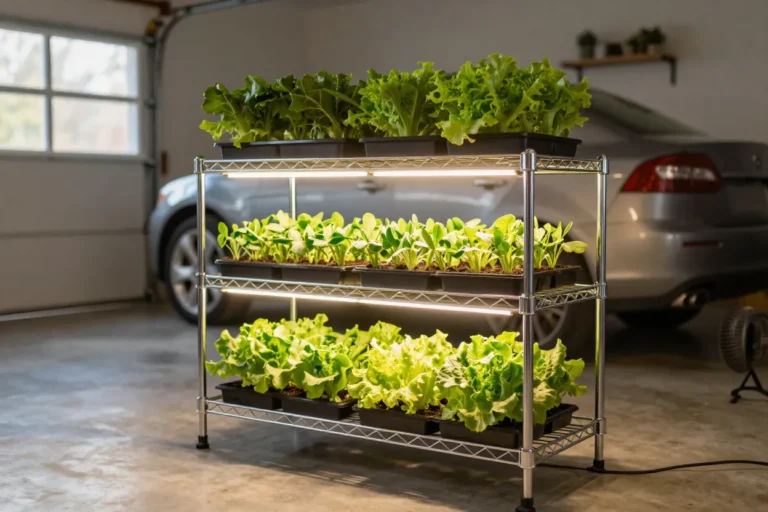
If the real problem is that your growing space is too cold rather than just frosty, our guide to growing vegetables in a garage covers keeping a whole setup warm through winter.
Rather move a plant indoors than protect it in place? Our guide to bringing your container vegetable garden indoors for winter covers which pots are worth saving, the pest check and how to move them without shock.
Frequently Asked Questions
What temperature should I cover container plants?
Cover cool-season greens when the forecast drops below about 28 F. South Dakota State Extension calls 28 to 32 F a light frost, which spinach, kale, lettuce and parsley handle. From 24 to 28 F lettuce and spinach can be damaged, and below 24 F even hardy greens need a heavy cover or shelter.
Does frost cloth really work?
Yes, within limits. University of Maryland Extension gives about 2 F of protection for lightweight row cover, 4 to 6 F for medium weight and up to 8 F for heavyweight. It works by holding in heat the soil stored during the day, so it cannot save a plant on a night far below its limit.
Can I use plastic to protect plants from frost?
Not laid directly on the leaves. Colorado State Extension notes that plants freeze where they touch a cover, so any cover should be held off the plants. Plastic also traps moisture and overheats in sun, so take it off in the morning.
When should I cover and uncover plants for frost?
Cover in the late afternoon, before the soil loses its daytime warmth, and uncover the next morning once it is above freezing. Covers need to come off in the day so the sun can warm the soil again for the next night.
Should I bring container plants inside for a frost?
Only for a severe freeze or for tender plants like basil. Hardy greens do better outside under cloth. For a very cold night, move pots into an unheated garage or against the house wall, then put them back out the next day.
What should I do if my container plants froze?
Leave them alone until they thaw, ideally out of direct sun, and do not handle frozen leaves. After a day you will see which leaves stayed green and which turned dark and mushy. Pick off the damaged ones; hardy greens often regrow from the center.
Sources we checked
- South Dakota State University Extension: Fall Frost Tolerance of Common Vegetables
- Iowa State University Extension: Fall Planting of Vegetables
- University of Maryland Extension: Row Covers
- Colorado State University Extension: Frost Protection and Extending the Growing Season (GardenNotes 722)