Companion Herbs: What to Plant Together in One Windowbox
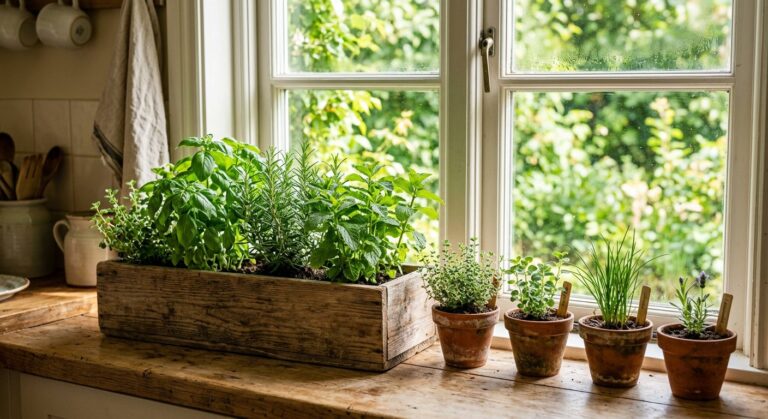
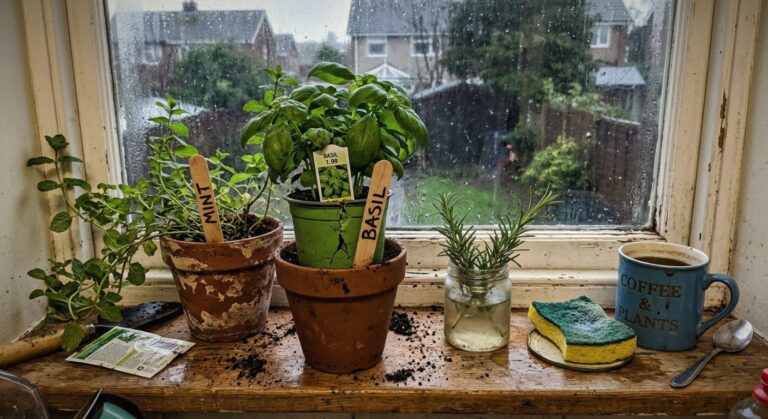
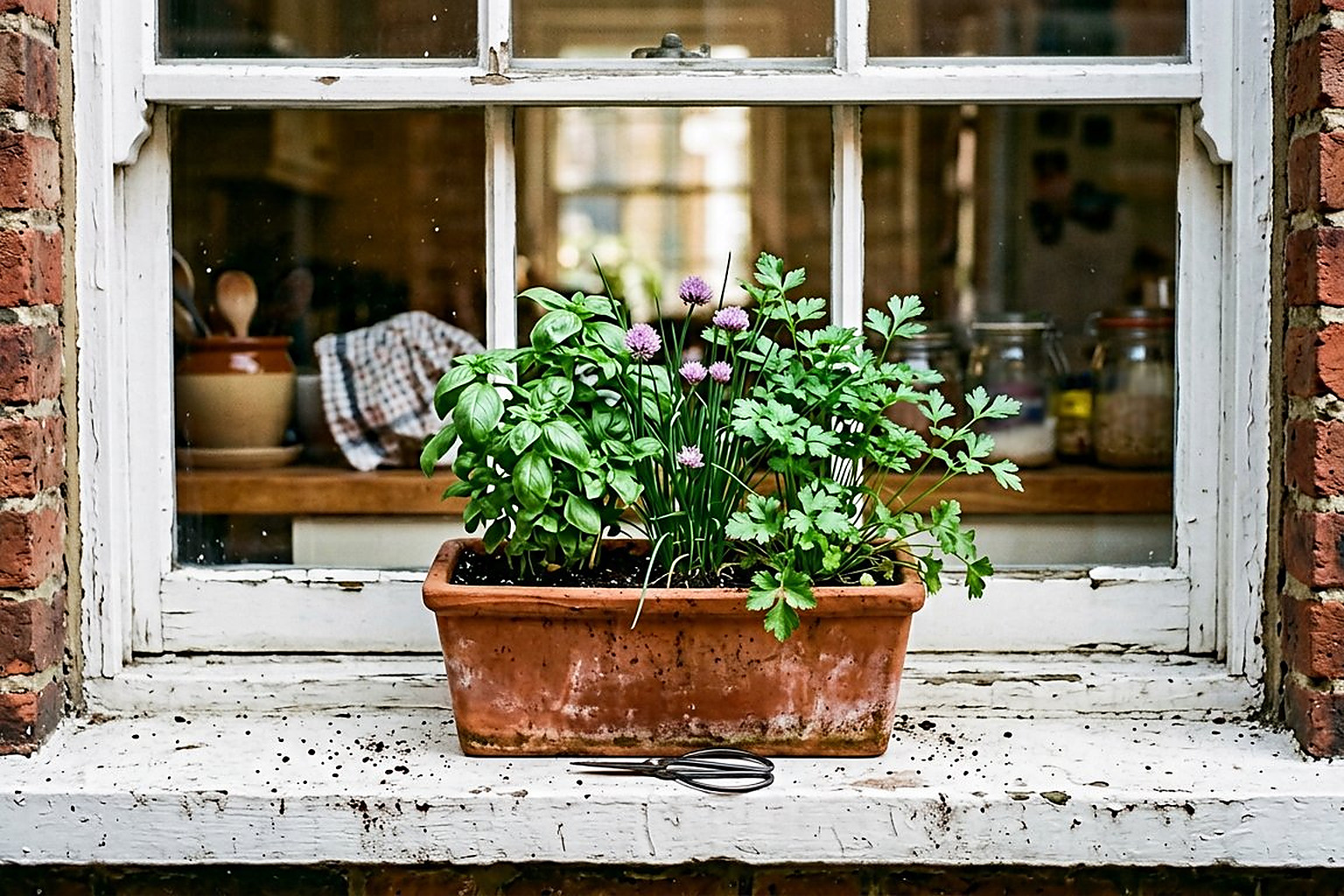
A windowbox full of herbs sounds simple until the rosemary rots at one end while the basil wilts at the other. The fix isn’t a secret “companion chart.” It’s grouping herbs that want the same amount of water, sun, and drainage. This guide sorts the most popular kitchen herbs into groups that really do share a box, gives you four ready-to-plant windowbox combos with layouts, and explains why mint almost always gets a pot of its own.
This post contains affiliate links, meaning we may earn a small commission at no extra cost to you — full details are on our Affiliate Disclosure page.
Quick Answer: Which Herbs Can Share a Windowbox?
- Dry-and-sunny group: rosemary, thyme, oregano, sage, and lavender. They like full sun, fast-draining soil, and drying out between waterings.
- Evenly moist group: basil, parsley, cilantro, and chives. They like steady moisture and richer potting mix.
- Plant alone: mint. It spreads by underground runners and will crowd out anything it shares soil with.
- Box size: aim for 24–30 inches long and at least 8 inches deep. That fits 3–5 herbs, depending on how big they get.
The simple rule: don’t mix the two groups in one box. A box that gets watered enough for basil stays too wet for thyme, and a box kept dry enough for thyme leaves basil thirsty.
What “Companion Herbs” Really Means (and What It Doesn’t)
Search for herb companion planting and you’ll find confident claims: basil “repels” flies, rosemary “keeps pests away,” chives “prevent” aphids. It’s worth being honest about the evidence. An Illinois Extension educator notes that many recommended companions “are not always tested out in a research study” and may be more anecdotal. Someone grew two plants together, things went well, and the pairing became folklore. UMN Extension goes further. It points out that some popular pest-repelling pairings have little research behind them, and a few have been contradicted by studies.
There is real research showing that aromatic herbs and flowers can help in a mixed garden. They can confuse some pests and draw in beneficial insects. But those effects often need a lot of plants in an open garden. A 30-inch box on a fourth-floor sill won’t create them. So in this guide, “compatible” means something practical you can count on: these herbs want the same water, sun, and soil, so one box can keep all of them happy. If you want to know how herbs fit into vegetable pots, we cover the evidence in more detail in companion planting for container vegetables.
The Two Herb Groups (Plus Mint)
Group 1: Mediterranean, dry-loving, full-sun herbs
Rosemary, thyme, oregano, sage, and lavender come from hot, rocky hillsides with lean soil. Clemson Cooperative Extension’s HGIC advises planting thyme “in full sun in very well drained soil that stays dry” and notes that Mediterranean herbs need excellent drainage to avoid disease. University of Maryland Extension lists oregano, sage, and thyme among the herbs that “need to dry out between watering.”
- Sun: 6–8+ hours of direct sun. A south- or west-facing window is ideal.
- Water: water thoroughly, then let the top inch or two of soil dry before watering again.
- Soil: a lean, gritty mix. Try about two parts potting mix to one part perlite.
- Biggest risk: root rot from soggy soil, especially in cool, cloudy weather.
Group 2: Moisture-loving herbs
Basil, parsley, cilantro, and chives are leafy herbs that grow fast. They get stressed quickly when the soil dries out. Clemson notes that basil does best with extra soil moisture and that parsley and cilantro prefer rich, moist conditions. UMN Extension says the carrot-family herbs (parsley, cilantro, dill) “prefer slightly moist soil with good depth and drainage.”
- Sun: 6 hours is best. Parsley, chives, and cilantro can handle 4–5 hours or bright afternoon shade.
- Water: keep the soil evenly moist, like a wrung-out sponge. It should never be bone-dry and never waterlogged.
- Soil: a standard, rich potting mix that holds moisture but still drains.
- Biggest risk: wilting and bolting (going to seed) when a small box dries out on a hot day.
These herbs don’t all like the same temperatures, and that matters for timing. Basil is a warm-season herb that UMN says prefers soil near 60°F, and it sulks in chilly nights. Cilantro and parsley are cool-season herbs, and Clemson notes that cilantro “bolts quickly” once the weather heats up. Chives are a tough perennial that handles both.

The loner: mint
Mint gets its own category for a simple reason. According to Illinois Extension, mints “aggressively spread by underground rhizomes,” and the university suggests growing them in containers. In a shared windowbox, those runners weave through the whole root zone within a season or two and crowd out slower herbs like thyme and parsley. Mint also likes moister soil than the Mediterranean group. Clemson lists mint among the herbs that do well in consistently moist conditions.
Quick-Reference Herb Compatibility Table
| Herb | Sun | Water | Soil | Good boxmates | Keep apart from |
|---|---|---|---|---|---|
| Rosemary | 6–8+ hrs | Dry between waterings | Gritty, fast-draining | Thyme, oregano, sage, lavender | Basil, parsley, cilantro, mint |
| Thyme | 6–8+ hrs | Dry between waterings | Gritty, fast-draining | Rosemary, oregano, sage | Basil, parsley, mint |
| Oregano | 6–8+ hrs | Dry between waterings | Gritty, fast-draining | Thyme, rosemary, sage | Basil, parsley, mint |
| Sage | 6–8+ hrs | Dry between waterings | Gritty, fast-draining | Rosemary, thyme, oregano | Basil, cilantro, mint |
| Lavender | 8+ hrs | Driest of the group | Very sharp drainage | Rosemary, thyme | Anything moisture-loving |
| Basil | 6–8 hrs | Evenly moist | Rich potting mix | Parsley, chives | Rosemary, thyme, lavender, mint |
| Parsley | 4–6 hrs | Evenly moist | Rich, deeper mix | Basil, chives, cilantro | Mediterranean herbs, mint |
| Cilantro | 4–6 hrs (cool weather) | Evenly moist | Rich, deeper mix | Parsley, chives | Mediterranean herbs, mint |
| Chives | 4–6+ hrs | Moderately moist | Standard potting mix | Basil, parsley, cilantro | Mint |
| Mint | 4–6+ hrs | Consistently moist | Rich potting mix | Only other mint (one variety per box is best) | Everything else |
Windowbox Size: How Big, and How Many Plants?
Most store-bought windowboxes are 24, 30, or 36 inches long. Depth matters more than length. Shallow 5–6 inch boxes dry out fast and cramp the roots, and moisture-loving herbs suffer first. For most herbs, look for:
- Length: 24–30 inches is the sweet spot for one window. Longer boxes get very heavy once the soil is wet, so check your railing or bracket rating.
- Depth: 8 inches or more. Parsley and cilantro grow a long taproot and appreciate 8–10 inches. Thyme and chives manage in 6 inches but need water more often.
- Width (front to back): 7–9 inches gives you room for a back row and a front row.
- Drainage: holes every 6–8 inches along the bottom. Every extension guide we checked says the same thing: no drainage holes, no healthy herbs.
How many plants fit? In a 24-inch box, plan on 3 herbs, or 4 if one is small, like chives or thyme. In a 30-inch box, plan on 4–5. Space them about 6–8 inches apart. Big growers like rosemary, sage, and Genovese basil count as one full spot each. Thyme and chives can squeeze in closer. It’s tempting to fill the box with six starts from the garden center. Overcrowded herbs compete for water and stay small, so leave room. For more on picking containers, see our pot size and drainage guide.
4 Windowbox Combos That Actually Work
Each layout below uses three positions. Back is the tall, upright plants against the window or wall. Front is shorter, bushy plants. Trailing edge is low, spreading herbs along the lip of the box, where they can spill over.
Combo 1: The Mediterranean Sun Box (30-inch box)
- Back: 1 rosemary (center) and 1 sage (one end)
- Front: 1 Greek oregano
- Trailing edge: 1–2 creeping or common thyme along the lip
- Sun: 6–8+ hours. Your hottest, brightest window.
- Soil: potting mix blended with about one-third perlite
This is the most forgiving box for people who forget to water. It honestly does better with a little neglect than with daily attention. Swap the sage for lavender if you get 8+ hours of sun, but know that lavender is the fussiest of the group about wet feet. Rosemary will eventually outgrow a windowbox. Plan to move it into its own 2–3 gallon pot after a season or two, or bring it inside in fall (see overwintering herbs before the first frost).
Combo 2: The Italian Kitchen Box (24–30-inch box)
- Back: 2 basil plants (Genovese or another sweet basil)
- Front: 1 flat-leaf parsley
- Trailing edge: 1 small bushy basil (like a ‘Spicy Globe’ type) or a clump of chives at one end
- Sun: 6–8 hours
- Soil: rich, standard potting mix with no extra perlite
This is a summer box. Plant it after nights stay reliably above 50°F. Basil and parsley both want steady moisture, so they share a watering schedule well. In July heat, UMN notes that outdoor container herbs “may need daily watering.” Pinch basil tips often to keep it bushy and stop it from shading the parsley.

Combo 3: The Cool-Season Salsa & Garnish Box (24–30-inch box)
- Back: 1 curly or flat-leaf parsley
- Front: cilantro, direct-sown in a 6–8 inch patch
- Trailing edge: 1 clump of chives at each end
- Sun: 4–6 hours. This is a good box for an east-facing window.
- Soil: rich potting mix, at least 8 inches deep
Plant this box in spring or early fall, when cilantro is least likely to bolt. When cilantro starts sending up flower stalks, pull it and resow a new patch every 3–4 weeks. The chives and parsley keep going. It’s the best choice for a window that doesn’t get blazing afternoon sun.
Combo 4: The Mint Box (any size, mint only)
- Whole box: 1–2 plants of a single mint variety (spearmint, peppermint, or mojito mint)
- Sun: 4–6+ hours. Mint handles part shade.
- Soil: rich potting mix, kept consistently moist
If you love mint, give it a whole short box (18–24 inches) or its own 8–12 inch pot. It fills the space by midsummer. If you plant two different mints together, the stronger one usually takes over, so one variety per container is best. Some gardeners set a potted mint inside a larger windowbox. It can work, but the runners will escape over the rim if you don’t trim them, so check the edge every couple of weeks.
Soil and Drainage: Set Up Each Box Differently
Once you’ve grouped your herbs, the soil is where you tailor each box. University of Maryland Extension says well-draining containers and potting mix are “the key to success” for herbs. It suggests a lightweight soilless mix, or “two-parts soilless potting mixture and one-part perlite.”
- Mediterranean box: use that 2:1 potting mix to perlite blend. Skip the compost top-dressing and go light on fertilizer. Lean soil gives stronger flavor and less floppy growth.
- Moisture-loving box: straight, good-quality potting mix. Something like Espoma Organic Potting Soil Mix holds moisture well for basil and parsley. A light feed every few weeks helps these fast-growing leafy herbs.
- Both boxes: never use garden soil or topsoil. It compacts in containers and drains poorly. Don’t put a gravel layer in the bottom either. It doesn’t improve drainage and actually raises the wet zone.
For a deeper look at mixes and feeding, read our soil and fertilizer basics.
Sun and Watering: Match the Box to Your Window
UMN Extension says most herbs “need at least six hours of direct sunlight daily,” with south or west exposures working best. Pick your combo based on the light you actually have:
- South or west, 6–8+ hours: Combo 1 (Mediterranean) or Combo 2 (Italian Kitchen)
- East, 4–6 hours: Combo 3 (Salsa & Garnish) or Combo 4 (Mint)
- North or under 4 hours: herbs will struggle outdoors. Consider growing indoors under a light. Our guide to grow lights for small-space herbs covers affordable options.
For watering, use the finger test instead of a fixed schedule. Push a finger an inch into the soil. For the moisture-loving box, water when it feels just barely dry. For the Mediterranean box, wait until it’s dry at 1–2 inches. Water until it drips from the drainage holes. Windowboxes are small and exposed to wind, so check them daily in summer heat. Our container watering guide walks through it step by step.
Common Mistakes to Avoid
- The “one of everything” box: rosemary, basil, mint, and parsley all in one planter. Something will always be too wet or too dry.
- Overplanting: six starts in a 24-inch box looks full on day one and crowded by July.
- Forgetting mature size: rosemary and sage become small shrubs, so give them an end or back spot and plan to repot.
- Trusting pest-repellent claims: don’t skip checking leaves for aphids and spider mites just because you planted “pest-repelling” herbs.
FAQ
Can basil and rosemary be planted together?
They can survive together, but neither does its best. Basil wants evenly moist, rich soil. Rosemary wants gritty soil that dries out between waterings. Give them separate boxes or pots. If you only have room for one container, pick the group that matches the herbs you cook with most. For care details on each, see our basil, rosemary, and mint care guide.
Why can’t mint share a windowbox?
Mint spreads by underground rhizomes. In the tight root space of a windowbox, it tangles through the whole box and crowds out its neighbors. It also likes more moisture than Mediterranean herbs. A dedicated pot or box keeps it in check.
How deep should a windowbox be for herbs?
Aim for at least 8 inches of soil depth. Thyme and chives can manage in 6 inches but dry out fast. Parsley and cilantro, which form taproots, are happiest with 8–10 inches.
Do herbs really keep pests away from each other?
Mostly not in a windowbox. Some research shows aromatic herbs can help in larger mixed gardens, but many popular pairings are anecdotal, and extension educators say so openly. Pair herbs for matching care needs, and keep checking leaves for pests.
Your Next Step
Pick the combo that matches your sunniest window, buy just 3–4 starts, and plant one box this week. One well-matched box that thrives beats three mixed-up boxes that struggle. Once your herbs are growing, head to our basil, rosemary, and mint windowsill care guide to keep them harvesting all season.