

Pre-Frost Checklist for Hanging Planters and Railing Gardens
A hanging pocket planter or a railing box doesn’t experience frost the same way a pot sitting on the ground does. It’s up in open air on all sides, it usually holds less soil (less thermal mass to buffer a cold night), and it’s attached to your balcony with clamps or hooks that can ice over before the plants even show damage. If you’ve been treating your vertical garden like any other container going into fall, this is the piece that’s easy to miss — and if you’re renting, there’s a second question underneath the first: what actually needs saving, and what can just come down for the season without turning into a chore.
This post contains affiliate links, meaning we may earn a small commission at no extra cost to you — full details are on our Affiliate Disclosure page.
Quick answer: Hanging planters and railing boxes lose heat faster than pots on the floor, because cold air reaches every side and they hold less soil. Before your first frost, sort each one. Cover hardy herbs like thyme, oregano and sage with frost cloth on cold nights. Bring tender herbs such as rosemary inside when nights dip to about 50°F, after a rinse and a pest check. Move strawberry planters to an unheated garage. Empty, clean and store the rest, and treat the first cool snap as the end for basil.
In this guide: Why vertical is different · Protect, bring in or let go · Protecting what stays out · Bringing it inside · Teardown · Timeline · Mistakes · FAQ
Why Vertical Setups Are Different in Cold Weather

- More exposure. A railing box or hanging planter has air moving around it on every side, not just the top — it loses heat faster than a pot sitting against a wall or floor.
- Less soil mass. Shallow railing boxes and small pocket planters hold less soil than a deep tub, and less soil means less insulation for the roots inside it.
- Hardware matters. Clamps, S-hooks and brackets can ice over in freezing rain or a hard frost, and plastic clamps and ties get more brittle as they get colder, so they can snap or stick when you try to release them. Worth knowing before you’re trying to unclamp a frozen bracket in January.
- You may not want it up there all winter anyway. Unlike a tub of dirt that can just sit through winter, a dead or dormant hanging planter is a visible eyesore right at eye level — often a bigger reason to take it down than the cold itself.
Decide: Protect, Bring In, or Let Go
Before doing anything, sort what’s currently hanging or clamped into three groups. Most vertical gardens end up with a mix of all three by the time the season turns.

- Worth protecting in place — perennial or cold-tolerant trailing herbs (thyme, oregano, sage) that can ride out a light frost with a cover, and anything you’d rather not repot right now.
- Worth bringing inside — tender herbs you want to keep through winter (rosemary, bay, lemongrass), especially in a hanging setup that’s small and light enough to carry through a doorway without a production.
- Worth letting go — frost-killed annuals (basil is usually first to go, often before a “hard” frost even arrives), or anything that had a rough summer and isn’t worth the shelf space indoors. Empty it, rinse the container, and store it — see the teardown section below.
Basil in particular can’t take temperatures below about 50°F (Penn State Extension), so it blackens and collapses well before a true hard freeze. If you’re growing it in a hanging setup, treat the first cool snap of fall as its natural end date rather than waiting for an official frost warning.
Strawberry planters are the exception. Strawberries are hardy plants, but Iowa State University Extension warns that potted strawberries left outdoors over winter are likely to be badly damaged or killed, and a warm living room isn’t the answer either. Move the planter into an attached, unheated garage in November. Or pull the plants, store the empty planter, and replant in spring.
Protecting What Stays Outside

- Cover, don’t just wrap the pot. With a hanging or railing planter, the whole plant is exposed, not just the roots — drape a frost cloth loosely over the entire planter for the coldest nights, letting it hang down past the container so cold air can’t sneak up underneath. Take it off the next morning once temperatures climb: Colorado State University Extension warns that covers left closed on a sunny day can overheat plants, and trapped moisture encourages rot and mildew.
- Move what you can to a more sheltered spot on the same balcony. Tucking a railing box against the building wall instead of the open railing edge, or moving a hanging planter to a covered corner, cuts wind exposure meaningfully without bringing anything indoors.
- Check hardware before a hard freeze, not during one. If a clamp or hook looks like it’s holding water that could freeze and expand, dry it off or reposition it slightly. It’s a five-minute check that avoids a stuck bracket later.
- Group hanging planters together where possible. The same principle as clustering ground pots applies — planters hung or clamped close together buffer each other slightly better than one isolated planter out on its own.
Bringing a Hanging Planter Inside
This is usually easier than moving a heavy ground container, which is one of the real advantages of vertical growing going into winter — most pocket planters and small railing boxes are light enough to unclip and carry through a door without help. A few things make the move smoother:

- Check for pests first. Look under the leaves, then rinse all the foliage while the planter is still outside and let it dry. Iowa State University Extension also suggests keeping it apart from your houseplants for 3–4 weeks, because a hitchhiking pest is far easier to deal with before it spreads.
- Expect some leaf drop. The light indoors is dimmer and different than outside even in a sunny window, and it’s normal for a plant to shed a few leaves adjusting to the move. Don’t panic and don’t overwater in response — that’s the more common mistake.
- Give it a saucer or tray. A pocket planter that dripped harmlessly onto a balcony floor outside will drip onto your actual floor inside. This is the one step renters most often skip and regret.
- Cut back if it’s leggy. A trailing plant that stretched all summer can be trimmed back by a third when you bring it in — it recovers faster indoors with less to support, and you can usually root the cuttings in water for free extra plants.
Tearing Down and Storing What’s Done
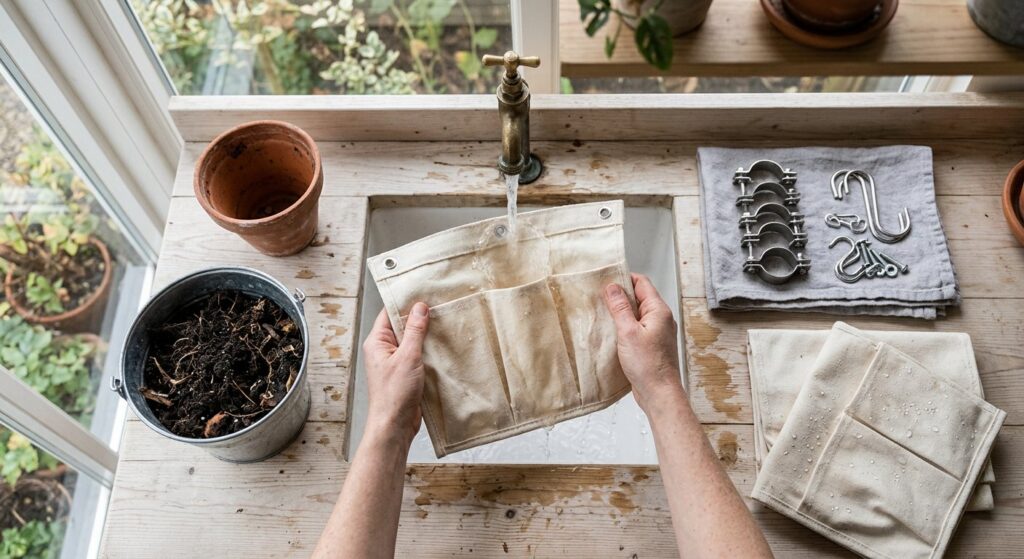
For anything you’re not saving, a clean teardown now is faster than dealing with a frozen, brittle mess in January. Empty spent soil (it can usually go straight into a garden bed or a neighbor’s compost if you don’t have your own), rinse the container, and let it dry fully before storing — trapped moisture in a stacked planter is a common source of mildew smell come spring. Unclip any railing clamps or hooks you won’t be using over winter rather than leaving hardware exposed to ice and UV for months longer than it needs to be. If you’re renting and this setup came down easily, that’s the whole point of building it this way in the first place — see our deposit-safe container garden guide if you’re planning next year’s vertical setup and want to build in that flexibility from day one. For a fuller list of what actually grows well in this kind of setup, see our guide to the best vegetables for hanging planters.
A Simple Timeline

- 2–3 weeks before your average first frost date: sort your vertical garden into protect / bring in / let go, and move anything headed indoors to a shadier corner of the balcony so the drop in light is less of a shock.
- When nights dip to about 50°F (1 week before frost at the latest): rinse, pest-check and move anything coming inside. Check railing hardware.
- Night of a frost warning: cover what’s staying out with frost cloth in the late afternoon, so it holds in warmth the pot and soil soaked up during the day. Clear, calm nights are the riskiest, because that’s when radiation frosts form (Colorado State University Extension).
- After the first hard freeze: tear down and store anything you decided to let go, so it’s not sitting frozen on the railing for the rest of winter.
Common Mistakes
- Waiting for an official hard-freeze warning. Tender plants like basil often die at temperatures well above freezing. Watch nighttime lows, not just frost alerts.
- Wrapping only the pot, not the plant. On a hanging or railing setup, the foliage is just as exposed as the container — cover the whole thing.
- Bringing pests inside along with the plant. A five-minute check outside saves weeks of dealing with them on your houseplants.
- Leaving frozen, dead planters clamped up all winter. It takes the same five minutes to unclip a dead planter in November as it does in March — doing it sooner just means you’re not looking at it for four months.
If you’re new to vertical growing altogether, our balcony garden setup for renters guide covers picking renter-safe hanging and railing hardware in the first place. For frost protection on your other, ground-level containers, see our broader frost protection for container plants guide, and check pot size and drainage if you’re deciding what to repot before bringing anything indoors. Our Recommended Gear page has the frost cloth mentioned above, plus everything else we actually use.
Frequently Asked Questions
When should I take down hanging planters for winter?
Take basil and other tender annuals down at the first cool snap, since basil is damaged below about 50°F. Bring tender herbs in when nights dip to about 50°F. Everything you are letting go can come down after the first hard freeze.
Should I cover the whole hanging planter or just the pot?
The whole planter. On a railing or hook the leaves are as exposed as the roots, so drape frost cloth over everything and let it hang below the container. Take it off the next morning once it warms up.
How much does frost cloth protect plants?
University of Maryland Extension puts it at about 2°F for lightweight row cover, 4 to 6°F for medium weight and up to 8°F for heavyweight. That is enough to carry hardy herbs and greens through a light frost, not a deep freeze.
Can I bring a strawberry hanging planter inside for winter?
Not into a warm room. Iowa State University Extension suggests moving potted strawberries into an attached, unheated garage in November, or pulling the plants, storing the empty container and replanting in spring.
How do I avoid bringing bugs inside with my planter?
Check under the leaves, rinse all the foliage while the planter is still outside and let it dry. Then keep it away from your houseplants for 3 to 4 weeks, as Iowa State University Extension recommends.
Sources we checked
- University of Maryland Extension: Row Covers
- Colorado State University Extension: CMG GardenNotes #722, Frost Protection and Extending the Growing Season
- Iowa State University Extension: How and when do I bring my houseplants back indoors?
- Iowa State University Extension: How to Overwinter Strawberries
- Penn State Extension: Growing Herbs Indoors