Soil and Fertilizer Basics for Container Vegetables
Quick answer: Fill containers with a soilless potting mix (peat or coir, perlite, vermiculite, bark or compost), never plain garden soil. Mix a slow-release fertilizer in at planting. It lasts about 2–3 months. Long-season crops like tomatoes and peppers also get a light liquid feed about every two weeks. If your mix is half compost, halve the fertilizer. More isn’t better: too much builds up salts that burn roots.
Once you’ve got the right container with real drainage, the two things that decide whether your vegetables thrive or just survive are what’s in the pot and what you feed it. Container growing runs on different rules than in-ground gardening — the soil and the fertilizer schedule both have to work harder, because there’s no surrounding earth for roots to fall back on. Here’s what actually matters.
This post contains affiliate links, meaning we may earn a small commission at no extra cost to you — full details are on our Affiliate Disclosure page.
In this guide: Why garden soil fails in pots · Choosing a potting mix · Why pots need more feeding · Reading N-P-K · Slow-release vs. liquid · Organic vs. synthetic · Reusing potting mix · FAQ
Setting up your very first pot? Our container vegetable gardening for beginners guide shows the potting mix and feeding steps in order, using one pot of lettuce.
Why Container Soil Is Different From Garden Soil
Garden soil holds water in tight, fine pore spaces that work fine in the ground but turn dense and soggy in a container, starving roots of the oxygen they need and setting up the same rot risk as a pot with no drainage. It also compacts over time in a way that’s much harder to fix in a small container than in an open bed. A good soilless potting mix solves this — it’s lightweight, drains well while still holding moisture and nutrients, and comes free of the weed seeds and soil-borne pests that garden soil can carry in.
What to Look for in a Potting Mix
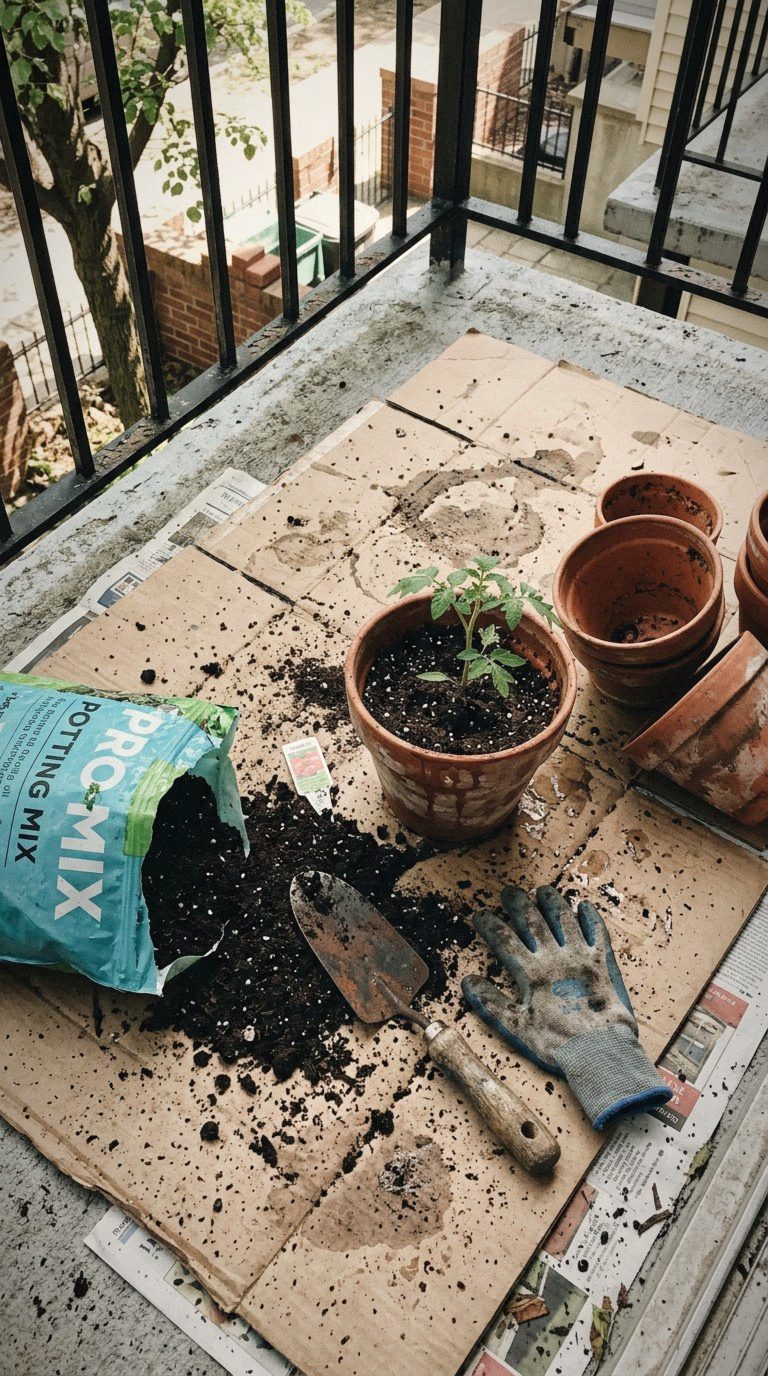
Look for a soilless mix. University of Maryland Extension lists the usual ingredients as sphagnum peat moss, perlite, vermiculite, composted bark, compost and coconut coir. Most bagged mixes also include a little starter fertilizer and some lime to bring the pH to about 6.2. A good mix feels light and fluffy in the bag, not heavy or clumped. Compost is a good addition: UMD says it can make up 50% or more of a container mix. Leave out garden soil. UMD notes it weighs about 75 pounds per cubic foot and is too dense for air and water to move around roots. If you do add topsoil to stretch a mix, UMD says to use it only in very large containers and keep it under 10% of the volume.
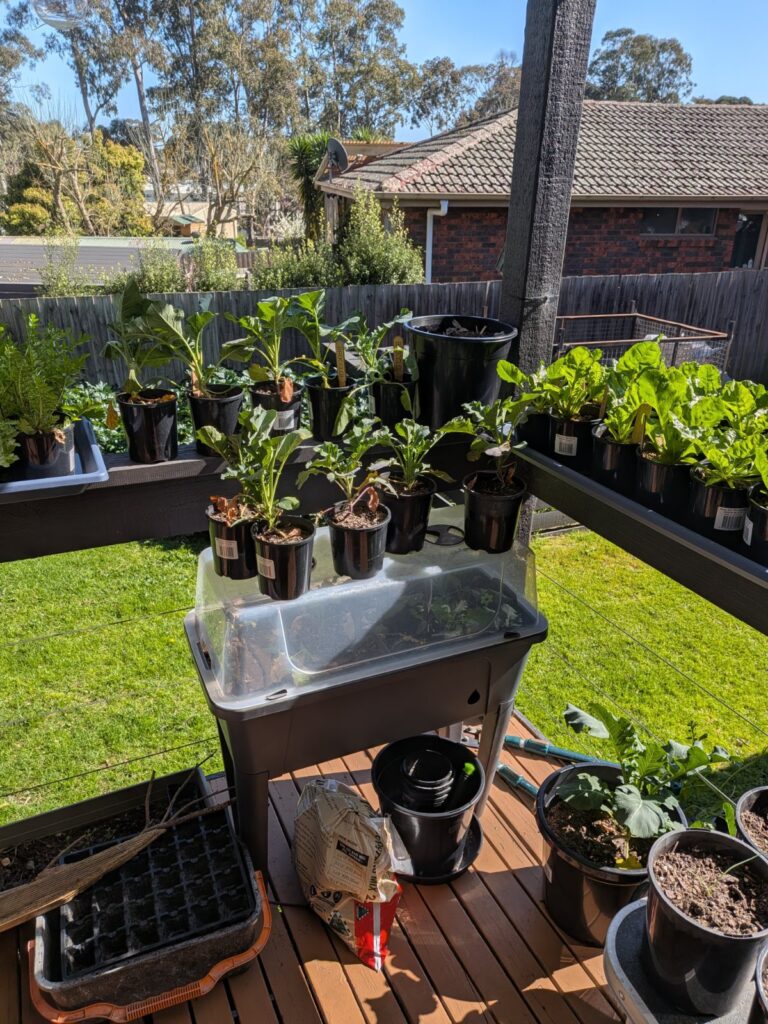
Why Container Plants Need More Feeding
In the ground, a plant’s roots can spread out and tap into a much larger reservoir of nutrients over time. In a container, the roots only ever have access to what’s in that pot — and every time you water, some of those nutrients wash out through the drainage holes with the excess water. That’s why container vegetables generally need more frequent feeding than the same crop planted in a garden bed, even if you’re using a rich potting mix with compost blended in. Skipping fertilizer entirely is one of the most common reasons a container vegetable garden looks great for the first few weeks and then stalls out.
Reading Fertilizer Labels: What NPK Means
Every fertilizer package lists three numbers, always in the same order. Clemson Extension explains that they’re the percentage by weight of nitrogen (N), phosphorus expressed as phosphate (P2O5), and potassium expressed as potash (K2O). A 100-pound bag of 10-10-10 holds 10 pounds each of nitrogen, phosphate and potash. The other 70 pounds is inert carrier that makes it easier to spread. As for what each one does, University of Minnesota Extension sums it up: nitrogen promotes leafy growth (too much can delay fruiting), phosphorus supports roots and fruiting, and potassium supports disease resistance and hardiness. For container vegetables, UMD suggests looking for a fertilizer with roughly a 3-1-2 ratio of N-P-K, such as 12-4-8. Clemson notes that plants need more nitrogen and potassium than phosphorus.
Slow-Release vs. Liquid Fertilizer
The most reliable approach combines both kinds. Mix a slow-release granular fertilizer into the potting mix at planting. UMD Extension says slow-release products can feed plants for 2 to 3 months. Liquid fertilizers need to be applied more often. UMD suggests that long-season crops such as tomatoes, cucumbers, eggplant and peppers may need a light feeding every two weeks. Two adjustments matter. If your mix is about half compost, UMD says to halve the fertilizer and wait until plants are actively growing. And don’t overdo it: too much fertilizer builds up salts in the container that can stress or kill roots. If you see a white crust on the soil or pot rim, water deeply so it drains out the bottom, then feed less.
Organic vs. Synthetic Fertilizer
Organic fertilizers such as compost, worm castings, fish emulsion and bone meal release nutrients as soil microbes break them down. University of Minnesota Extension notes that they’re generally slow-release and less likely to burn plants. Synthetic fertilizers deliver nutrients right away in precise ratios, but have a higher burn risk if you overdo them. UMN also points out that plants take up nutrients as the same ions whatever the source, so neither type is more nutritious. Choose by convenience. Many container growers use a slow-release granule at planting and an organic liquid like fish emulsion for boosts during the season.
Reusing Potting Mix Next Season
You don’t have to buy fresh mix every year. UMD Extension suggests removing old roots, dead leaves and plant tags, then mixing last year’s mix 50:50 with fresh potting mix and/or compost. Fertilize regularly, because the old mix is low on nutrients. One exception: don’t reuse mix if root diseases were a problem in it.
Common Mistakes
Using leftover garden soil straight from the yard is the single most common one — it looks free and convenient, but it compacts and suffocates roots in a pot the way it never would spread out in a bed. A close second is assuming compost alone will feed a plant all season; it’s a great supplement but breaks down too slowly to be a plant’s only nutrient source through months of active growth. And a subtle third: fertilizing on a fixed calendar regardless of how the plant actually looks — a container that’s clearly pale and stunted needs feeding sooner than a rigid every-three-weeks schedule would suggest, while a plant that’s growing vigorously may need less than the label recommends.
Get the soil right and feed consistently, and your containers will keep producing all season instead of stalling out after the first flush of growth. For more on keeping your setup healthy long-term, browse Soil Water and Container Care, check Recommended Gear when you’re shopping for potting mix or fertilizer, or head back to Start Here if you’re just getting going.
If a plant already looks off, our guide to diagnosing dying container vegetables by symptom can help you spot the cause before it gets worse.
Soil and fertilizer are only half the equation — pair this with our guide to how often to water container vegetables to avoid the most common beginner mistake.
Frequently Asked Questions
Can I use garden soil in containers?
Not on its own. University of Maryland Extension says garden soil is too dense for air and water to move around roots in a pot, and it weighs about 75 pounds per cubic foot. If you add any topsoil, keep it under 10% of the volume and only in very large containers.
What do the three numbers on fertilizer mean?
They’re the percentage by weight of nitrogen, phosphate (P2O5) and potash (K2O), in that order. A 10-10-10 bag is 10% of each; the rest is inert carrier (Clemson Extension).
How often should I fertilize container vegetables?
Mix a slow-release fertilizer in at planting; UMD says it lasts about 2–3 months. Long-season crops such as tomatoes, peppers, cucumbers and eggplant may also need a light liquid feed about every two weeks.
Is organic fertilizer better for container vegetables?
Not for the plant’s nutrition. University of Minnesota Extension notes that plants take up the same nutrient ions from either source. Organic fertilizers are slower and less likely to burn roots; synthetic ones are faster and easier to dose exactly.
Can I reuse last year’s potting mix?
Yes, if the plants in it didn’t have root diseases. UMD suggests clearing out old roots and debris, then mixing it 50:50 with fresh mix or compost and fertilizing regularly.
Sources we checked
- University of Maryland Extension: Growing Vegetables in Containers and Salad Tables
- Clemson Cooperative Extension HGIC: Reading a Fertilizer Label
- University of Minnesota Extension: Quick guide to fertilizing plants
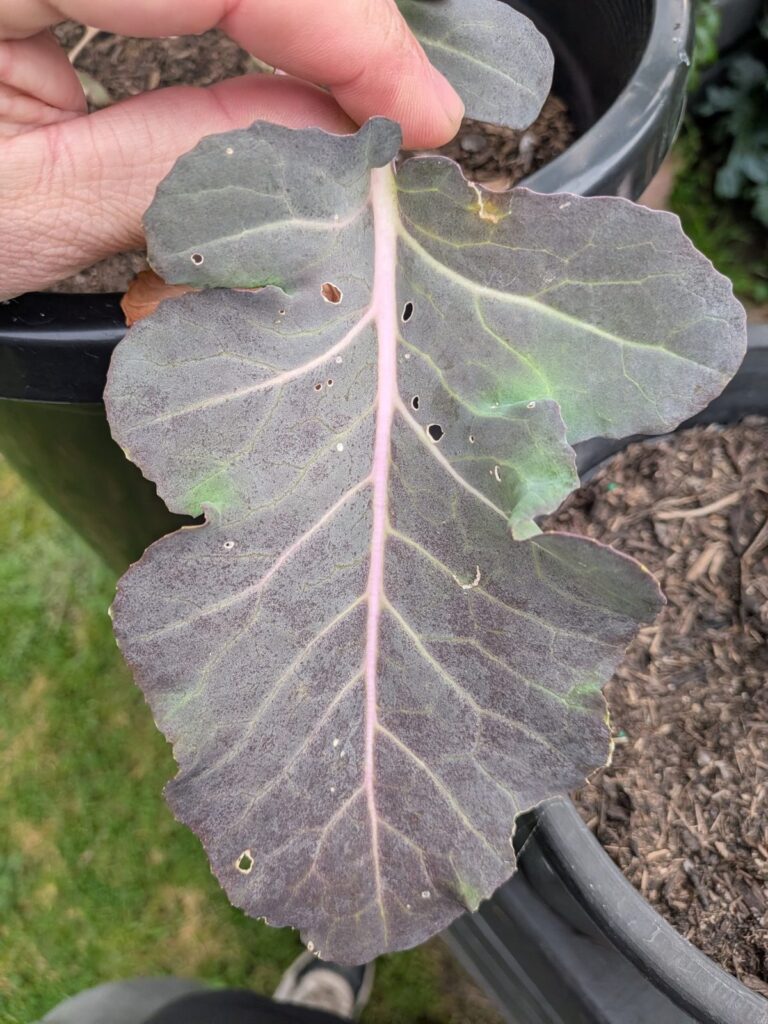
Pale, yellowing, or stunted growth often traces back to soil and feeding rather than watering — see our symptom-by-symptom guide to why container vegetables die (and what actually fixes it) for how to tell the difference.