Fall Container Setup: Your 30-Day Plan to Extend Your Growing Season
When September hits, most apartment gardeners think their growing season is over. But here’s the thing: fall is actually perfect for container gardening. The days are getting cooler. Watering needs drop. And you’ve got a whole new crop of cold-loving vegetables waiting for their moment.
This post contains affiliate links, meaning we may earn a small commission at no extra cost to you — full details are on our Affiliate Disclosure page.
Quick answer: Work back from your area’s average first frost date. Take the days to maturity on the seed packet, add about two weeks because growth slows as fall days shorten, and sow cool-season greens (leaf lettuce, arugula, spinach, kale) by that date in pots at least 6–8 inches deep. Give them four or more hours of direct sun, check the soil every day or two, and pick baby leaves three to four weeks after sowing. A light frost won’t end the season for these crops.
In this guide: Why fall · 30-day timeline · Mistakes · Harvest · Cold protection · FAQ
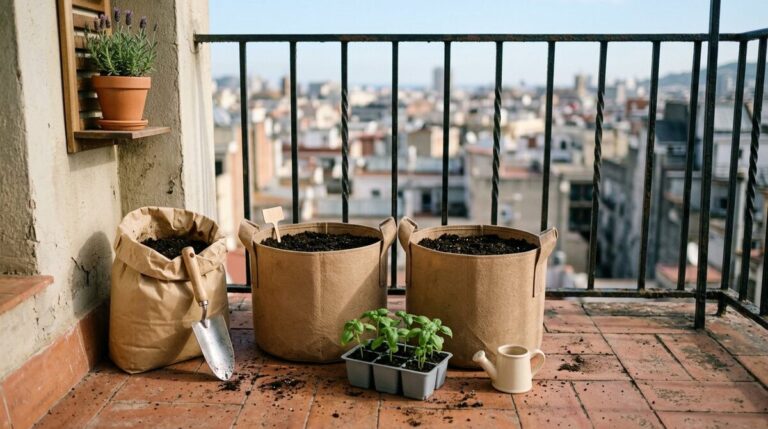
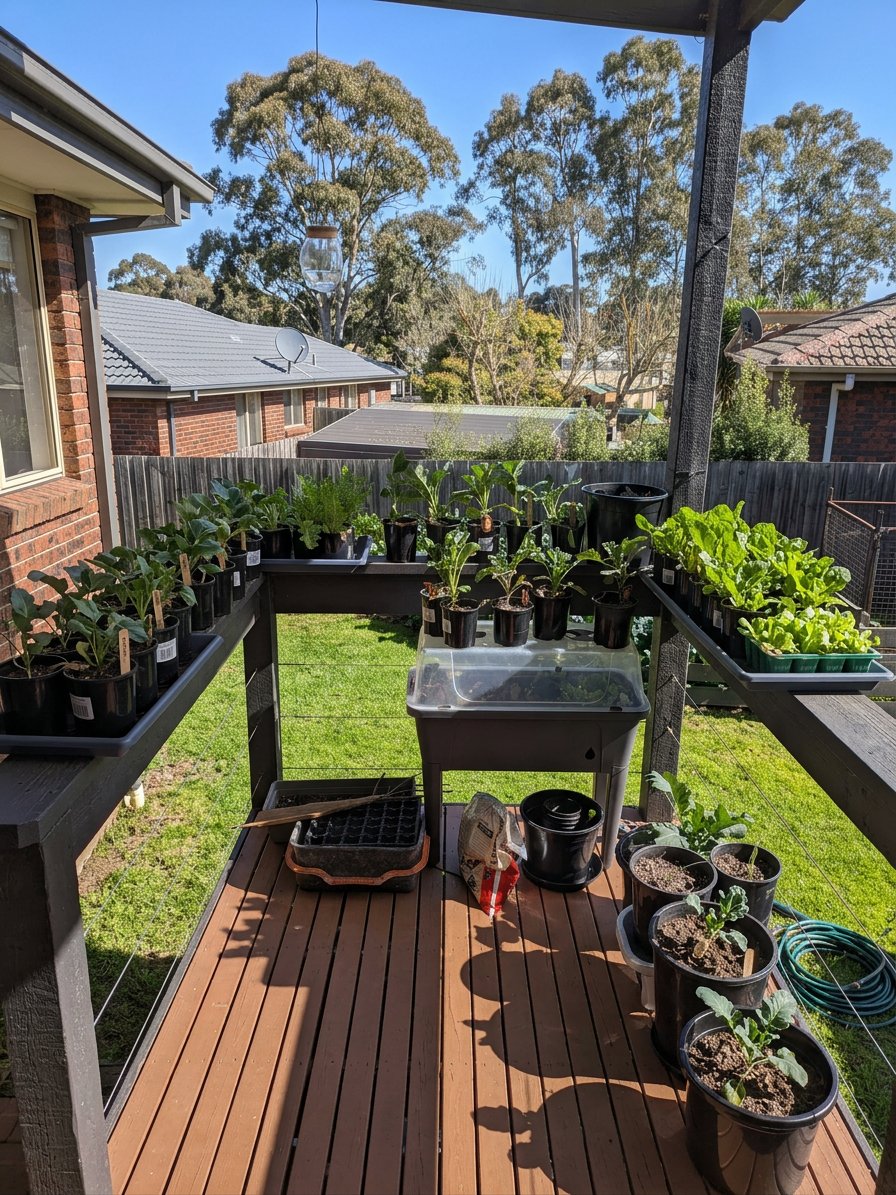
Do you have a balcony, windowsill, or railing with a few hours of sun? Then you can grow spinach, lettuce, kale, and herbs well into fall, and the hardiest of them keep going after the first light frosts. The trick is a solid 30-day setup plan that gets everything sown early enough to size up before the days get too short.
Here’s your week-by-week roadmap to make it happen.
Why Fall Container Gardening Is Actually Easier (and Better)
Before we dive into the plan, let’s talk about why fall is such a sweet spot for small-space growers:
- Less watering. Cool temps mean your containers won’t dry out as fast. You’ll check soil maybe every other day instead of daily. (Still check it though — containers dry faster than ground beds.)
- Fewer pests. Most garden insects are winding down, and spider mites fade with the heat. Aphids are the exception: they like cool weather, so check the undersides of leaves once a week.
- Extended harvest window. Instead of racing against summer heat, you’re racing against shortening days and the first hard freeze. That gives you 4 to 8 weeks, depending on your location. It’s a full crop cycle.
- No heat stress. Remember your lettuce bolting in July? Not happening in fall. Leafy greens actually taste better in cool weather.
The catch? You need to plan backward from your first frost date, and add about two weeks because plants grow more slowly in the shorter, cooler days of fall. Virginia Tech calls this the “fall factor” and the University of Maryland the “short-day factor.” Maryland also notes that growth becomes very limited once days drop below about 10 hours of light, so the aim is to have plants mostly grown by then.
Don’t know your first frost date? Search “[your city] average first frost date” or ask your county extension office. (The USDA Hardiness Zone Map is handy, but it shows your average winter low, not your frost dates.) Write the date down — you’ll need it.
Your 30-Day Setup Timeline
Week 1 (Days 1–7): Assess & Prep
Day 1–2: Figure out what you’re growing. Your first frost date is your deadline. Most leafy greens and herbs need 25–60 days from seed to harvest, and longer in fall. Take the days on the seed packet, add about 14 days for the fall slowdown, and count backward from your frost date to find your sowing deadline.
Example: say your first frost is October 28 and you’re sowing a 40-day lettuce. Add 14 days and count back 54 days. That puts you at September 4, so early September is your sowing deadline for full-size leaves. Baby leaves and fast crops like arugula can go in a couple of weeks later.
Cold-hardy crops that work great in fall containers:
- Spinach (45–60 days to full size, baby leaves sooner; the seed germinates poorly in soil above about 80°F, so sow after the first cool spell)
- Leaf lettuce (45–60 days to full size, baby leaves in 3–4 weeks)
- Arugula (3–4 weeks, peppery and tough)
- Kale (55–75 days, slower, but the most cold-hardy of the group)
- Cilantro, parsley, chives (4–6 weeks, herbs you’ll actually use)
Pro tip: leaf lettuce and arugula are the easiest start for beginners. They’re fast and forgiving. Spinach is just as rewarding once it’s up, but it sulks in warm soil, so don’t rush it in during a September heat wave.
Day 3–5: Scout your space and gather materials. Walk your balcony or windowsill at different times of day. You need at least 4 hours of direct sun for leafy greens. 6 or more hours is ideal. Morning sun is better than afternoon, since it’s less intense. But any sun works.
Gather what you already have. That means containers from our pot size and drainage guide (at least 6–8 inches deep for greens), leftover potting soil, and any seeds or starter transplants you might have.
Day 6–7: Make your shopping list and order seeds. Don’t overthink this. Get fall spinach seeds, cold-hardy lettuce seeds, fresh potting soil (if you’re low — here’s why it matters), and any extra containers you need — RooTrimmer’s 5-gallon plastic nursery pots are a solid pre-drilled option. Order now. September is peak fall-gardening season, and stock runs out fast. Aim to have everything by Day 10.
Week 2 (Days 8–14): Prep Containers & Start Seeds
Day 8–10: Clean and fill containers. If you used these pots in summer, rinse them out. Make sure each has drainage holes. Fill containers to about an inch below the rim with fresh potting mix — Miracle-Gro’s Potting Mix works well here. Avoid reusing old summer soil if you can help it — it’s depleted. On a tight budget, mix old soil 50/50 with fresh.
Fresh potting mix drains well, and most bagged mixes carry a starter charge of fertilizer for the first few weeks. You’re racing the shortening days, so give yourself every advantage.
Day 11–14: Sow seeds. Read the seed packet first — it tells you how deep to plant and how far apart. Here’s a rough guide:
- Spinach: 1/2 inch deep, 3 inches apart.
- Lettuce: 1/4 inch deep, 2 inches apart (thin to 4–6 inches once seedlings emerge).
- Arugula: 1/4 inch deep, 2 inches apart.
After sowing, water gently with a mister or a watering can set to a fine spray. Keep soil moist, not soggy, until seedlings pop up. Move containers to a spot with morning sun and afternoon shade, if possible. Early fall sun is still intense.
Day 14 checkpoint: do you see tiny green sprouts poking through the soil yet? Good — you’re on track.
Week 3 (Days 15–21): Seedlings Emerge and Grow
Your seedlings are now 1–2 inches tall with their first true leaves. This is the quiet growth phase. Water more carefully now. The soil surface dries faster as seedlings shade it. Check daily, and water when the top inch feels dry.
Fall days are already down to about 12 hours and shrinking, so give seedlings the sunniest spot you have. Growth slows sharply once days drop below about 10 hours, which is why an early sowing date matters more than anything you do later.
Thin if needed. Once seedlings have their second set of true leaves (about 3 inches tall), check for spots where two sprouted from the same hole. Snip off the weaker one with scissors — don’t pull, since that disturbs the roots of the one you’re keeping. Final spacing: about 3 inches for spinach and arugula, and 4–6 inches for lettuce you want to pick as full-size leaves (closer if you’re cutting baby greens).
Day 21 checkpoint: seedlings should be 2–3 inches tall with 2–4 true leaves.
Week 4 (Days 22–30): Harden Off and Final Countdown
Seeds you sowed straight into outdoor pots can skip this step. It’s for seedlings started indoors or bought from a greenhouse, which need to adjust to outdoor sun and wind. This process is called “hardening off.” Spend 3–4 days moving pots outside for increasing amounts of time. Start with a couple of hours in dappled shade on day one. Build up to full sun, and let them stay out overnight by day four or five.
Seedlings raised in protected spots get soft. Sudden exposure to wind and full sun will “sunburn” them (bleached, papery leaves). Gradual exposure builds tougher plants.
Run through this final checklist before frost hits:
- Are your containers at least 6 inches deep?
- Is the soil moist but not waterlogged?
- Are plants getting 4 or more hours of sun?
- Is your first frost date still 3–4 weeks away?
If you’ve ticked all these boxes, you’re on track to harvest by mid-to-late October.
Common Fall Container Mistakes (and How to Avoid Them)
“I planted everything on the same day.” Stagger your plantings by 7–10 days instead. That way you’re not harvesting everything at once, and you get a continuous supply of baby greens.
“My containers are in shade half the day.” Leafy greens can grow in part shade, but they’ll be slower and smaller. Use a spot with at least 4 hours of morning sun, if you have one. This isn’t the time to compromise on light.
“I used the same soil from my summer tomato pot.” Summer soil is depleted. Use fresh potting mix for fall instead, especially in a small container. That gives plants the quick nutrition they need.
“I watered less because it’s cooler.” Containers still dry out. Cool weather just means slower drying, not no watering. Check the soil — if the top inch is dry, water.
Your First Fall Harvest
Here’s the good part: if you follow this timeline, you’ll start picking baby leaves about three to four weeks after sowing, and bigger leaves a few weeks after that.
For lettuce and spinach, pick the outer leaves first and leave the center to keep growing. Picked this way, one sowing keeps going for weeks, and spinach and kale keep producing slowly even after the first light frosts. For herbs, just pinch off what you need as you cook — parsley and cilantro keep producing even as it cools down.
Don’t wait for perfect, massive heads. Fall is about succession harvesting — a little bit frequently, rather than one big harvest.
Next Steps: Cold Protection
Most of these crops shrug off a light frost. Iowa State Extension rates kale as hardy into the mid-to-low 20s°F, and spinach and lettuce into the upper 20s. If your first frost is late October or later, you might have time for a second planting. If frost is creeping up on you instead, read our guide on frost protection for containers to extend your season past the first freeze. And if spinach is on your list, check out our full guide to growing spinach on a balcony in fall.
For now: get your seeds ordered, clean your pots, and commit to the 30-day timeline. You’ve got this.
If a plant looks like it’s struggling along the way, our guide to diagnosing dying container vegetables by symptom can help you catch the cause early.
Frequently Asked Questions
When should I start a fall container garden?
Count back from your average first frost date. Take the days to maturity on the seed packet, add about 14 days because growth slows in the shorter, cooler days of fall (Virginia Tech and the University of Maryland both use this adjustment), and sow by that date. In many areas that means late August to mid-September for full-size greens.
What vegetables grow best in containers in fall?
Fast cool-season crops: leaf lettuce, spinach, arugula, kale, and herbs such as parsley, cilantro and chives. Skip tomatoes, peppers and basil, which stall in cool weather and are killed by the first frost.
How deep should fall containers be for greens?
At least 6 to 8 inches for leafy greens and herbs. Width matters more than depth for greens, because you are growing a carpet of leaves. Every pot needs drainage holes.
Will frost kill my fall container vegetables?
Not a light frost. Iowa State Extension rates kale as hardy into the mid-to-low 20s F, and spinach and lettuce into the upper 20s F. Below that, cover the pots or move them against a wall or into an unheated garage.
Do seeds sown outdoors need hardening off?
No. Hardening off is only for seedlings started indoors or bought from a greenhouse. Seeds sown straight into outdoor pots grow up used to sun and wind.
Sources we checked
- Iowa State University Extension: Fall Planting of Vegetables
- Virginia Cooperative Extension: Fall Vegetable Gardening (426-334)
- University of Maryland Extension: Fall Vegetable Gardening
- Utah State University Extension: Leafy Greens Planting and Spacing